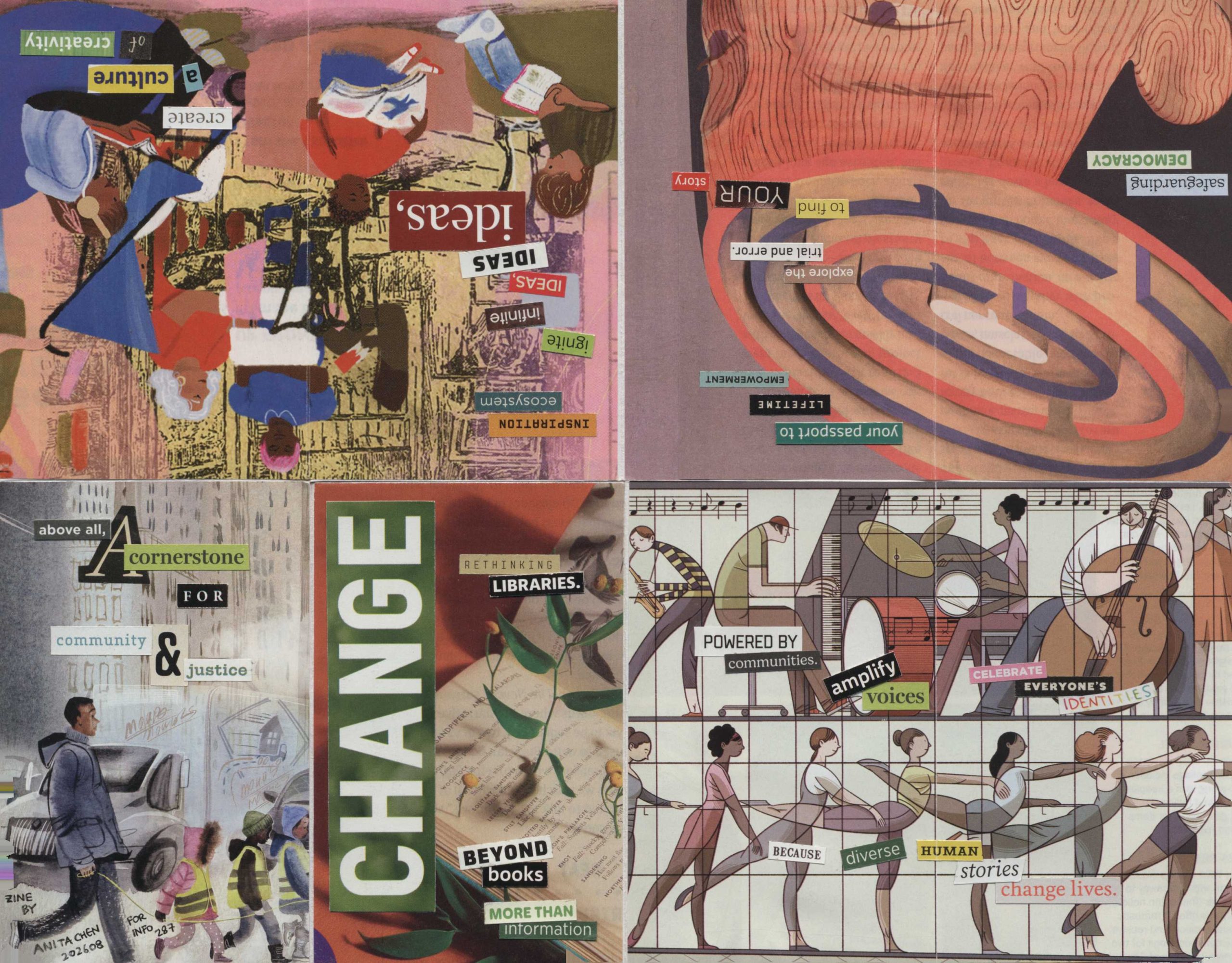
I had a lot of fun in this class, so I decided to lean into the fun with the Virtual Symposium! I like to collect text and images from mail, brochures, magazines, etc. and I usually make them into collage pin-back buttons, but I figured they would also be great to use for a zine. So here is a zine I made to summarize my key takeaways from this course:
Below is the full letter-size sheet view. Feel free to print/assemble it for yourself!
In “Embracing the Long Game” Greenwalt describes the Oak Park Public Library’s Idea Box, a participatory space where the community’s contributions build upon each other. The library’s customer service manager Monica Harris had cited inspiration from the way communities emerge and develop online, referring to the way that people “might want to talk about the same things you want to talk about.” However, especially in the anecdote about adding checkmarks to people’s favorite books, I think the Idea Box managed to go beyond that, as the participants not only responded to the given prompt but also gave it a new life. The resulting creative process defied expectations, making it more akin to a public play area than simple “conversation.”
Play is something that everyone should engage with, regardless of their age. As the architect of the British skate park F51 puts it, “Play doesn’t just stop when you get older. If anything, you should make sure you can incorporate play even more” (Dowdy, 2022). Examples of play in this module includethe DOKK1 Urban Mediaspace andthe LEGO Art Machines at the Exploratorium. In the latter example, workshop facilitator Amos Blanton stresses the importance that such activities be “open-ended.” I especially enjoy when play occurs socially and in unprecedented ways, especially among audiences who are typically thought to have “aged out” of play, so the fact that the Idea Box participants were able to take the activity’s guidelines and make something new out of it was rather inspiring to me. (Side note: The playful riff on existing structures reminded me of Grand Theft Hamlet, a documentary about two actors who managed to put on a production of Hamlet in Grand Theft Auto Online with other players during 2020, as well as Goncharov, a 1973 Scorsese mafia film that has a large fanbase on Tumblr and… doesn’t actually exist, as it was collectively fabricated in 2022 based on a photograph.)
Based on the list of recent topics and the photos onits webpage, it seems like the Idea Box has focused less on public participation and more on displays and exhibits instead, eventually going on hiatus earlier this year, to “clarify vision and establish formal policies and clear procedures.” This is understandable, as play was likely not the original point of the Idea Box. Though themed displays exhibiting local artists and highlighting important holidays are still valuable in community spaces like the OPPL, I do find it unfortunate that the participation and open-endedness has become rather limited in the Idea Box. Then again, I also understand that it is more difficult to measure and monitor play than it is to measure and monitor something with more structure. Still, I hope that the OPPL (and other libraries) are able to provide community members with other/more opportunities to engage with each other in open-ended play.
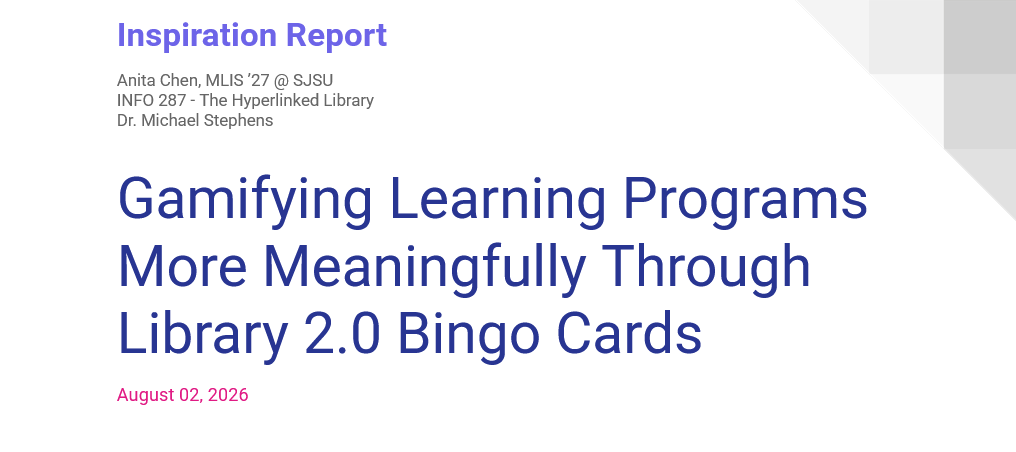
The preview screenshot below links to my inspiration report on gamifying summer learning through Library 2.0 bingo cards that would allow for greater participant autonomy and therefore more effective learning than Beanstack reading challenges.
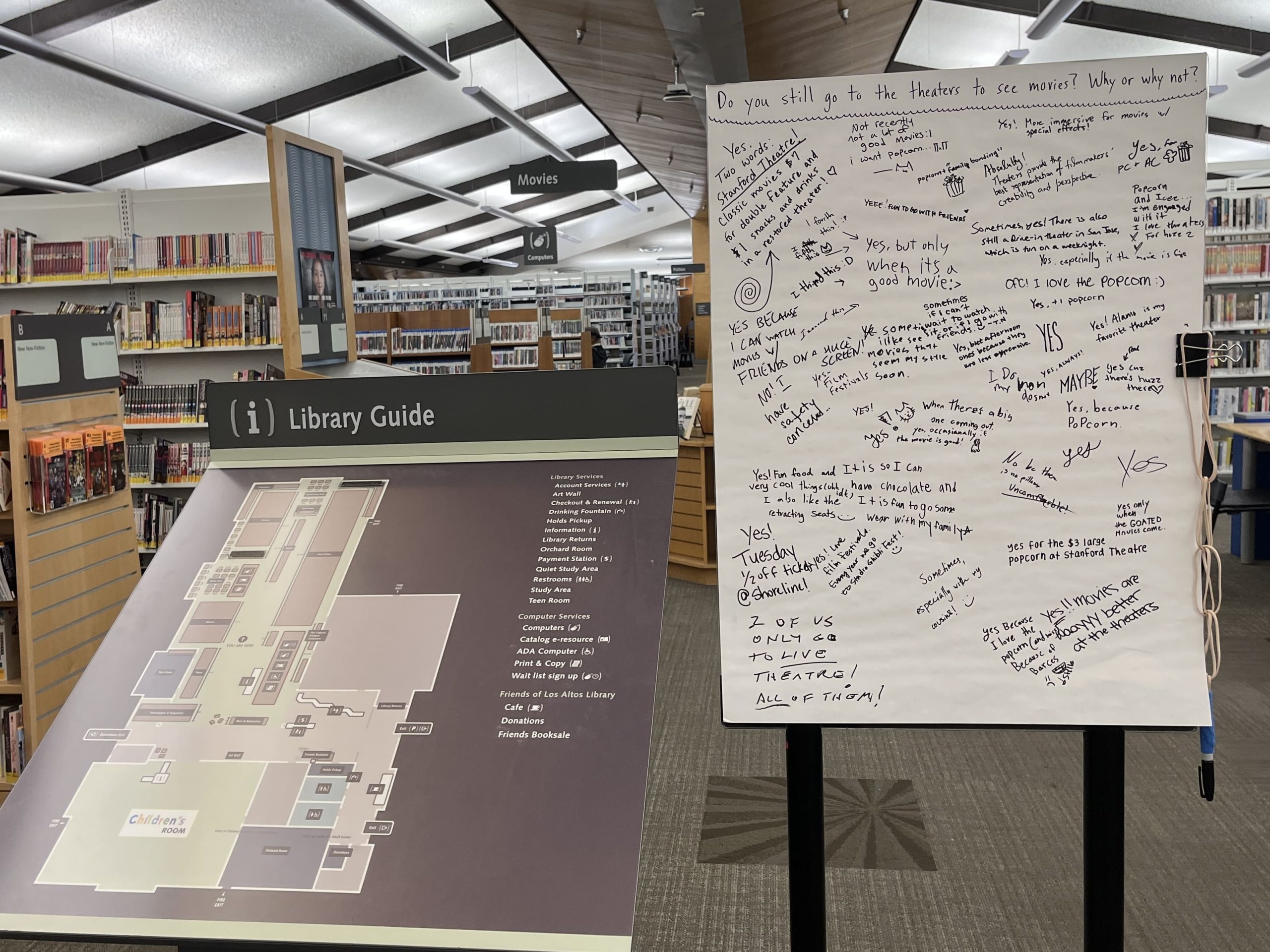
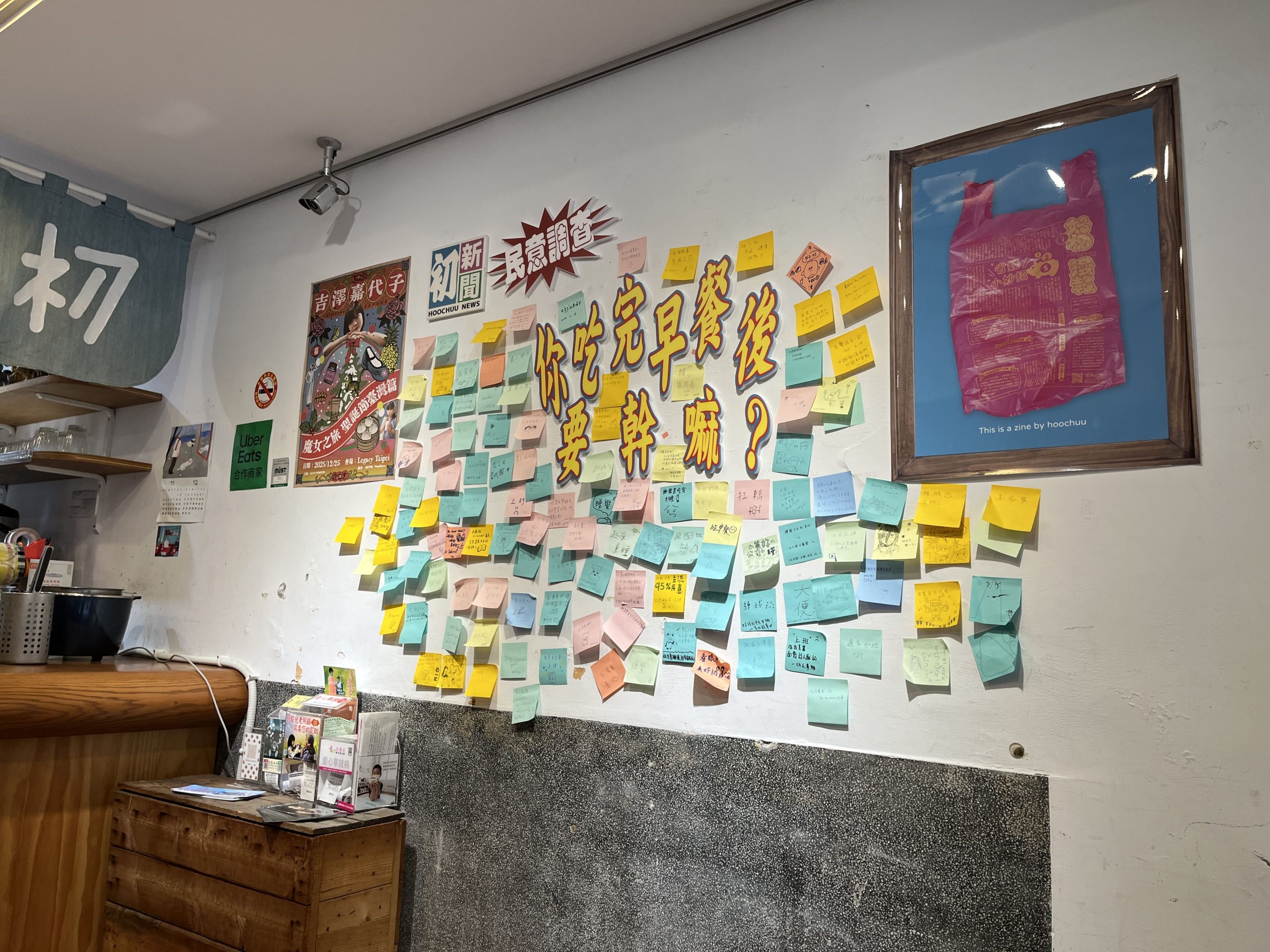
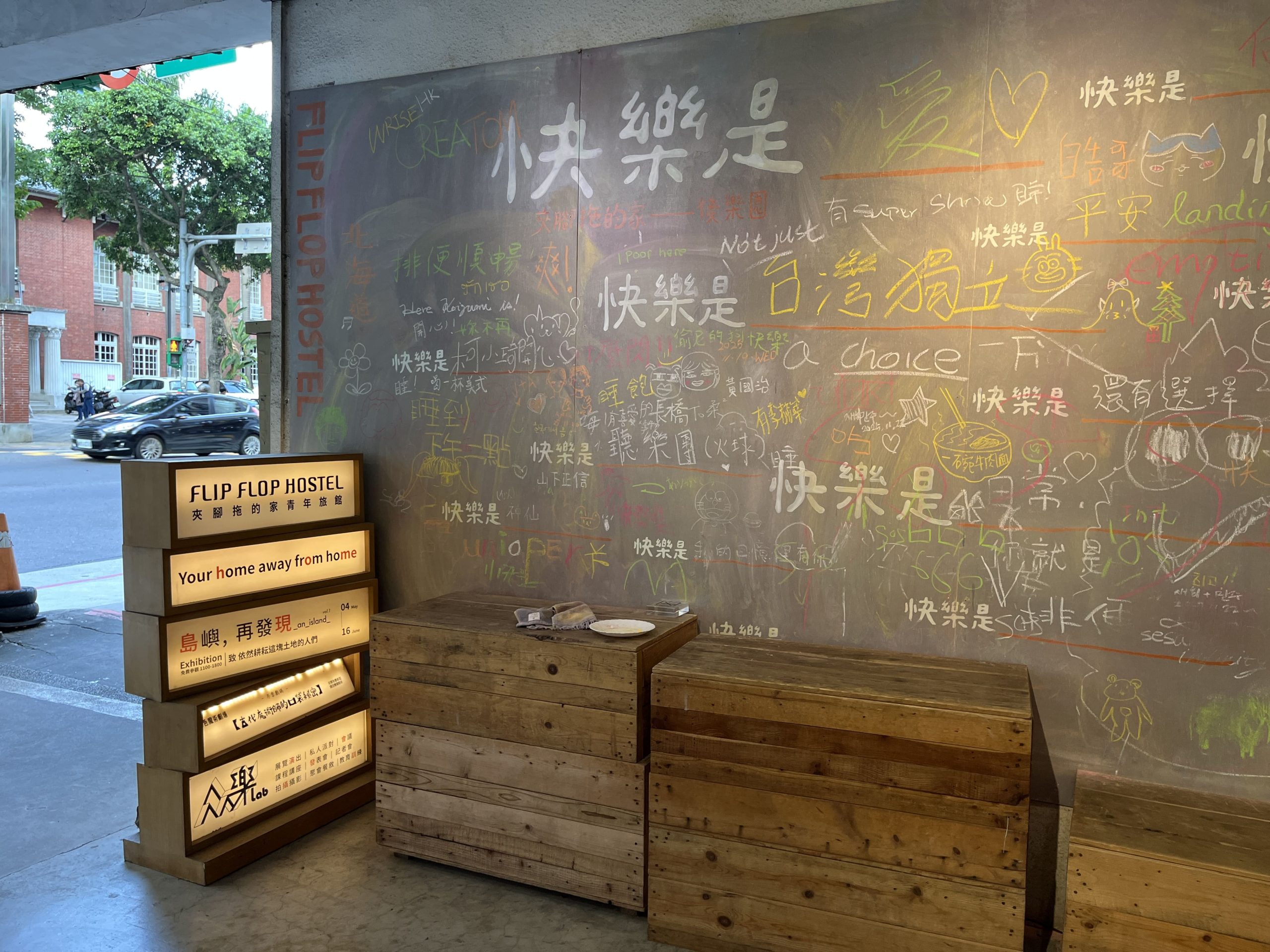
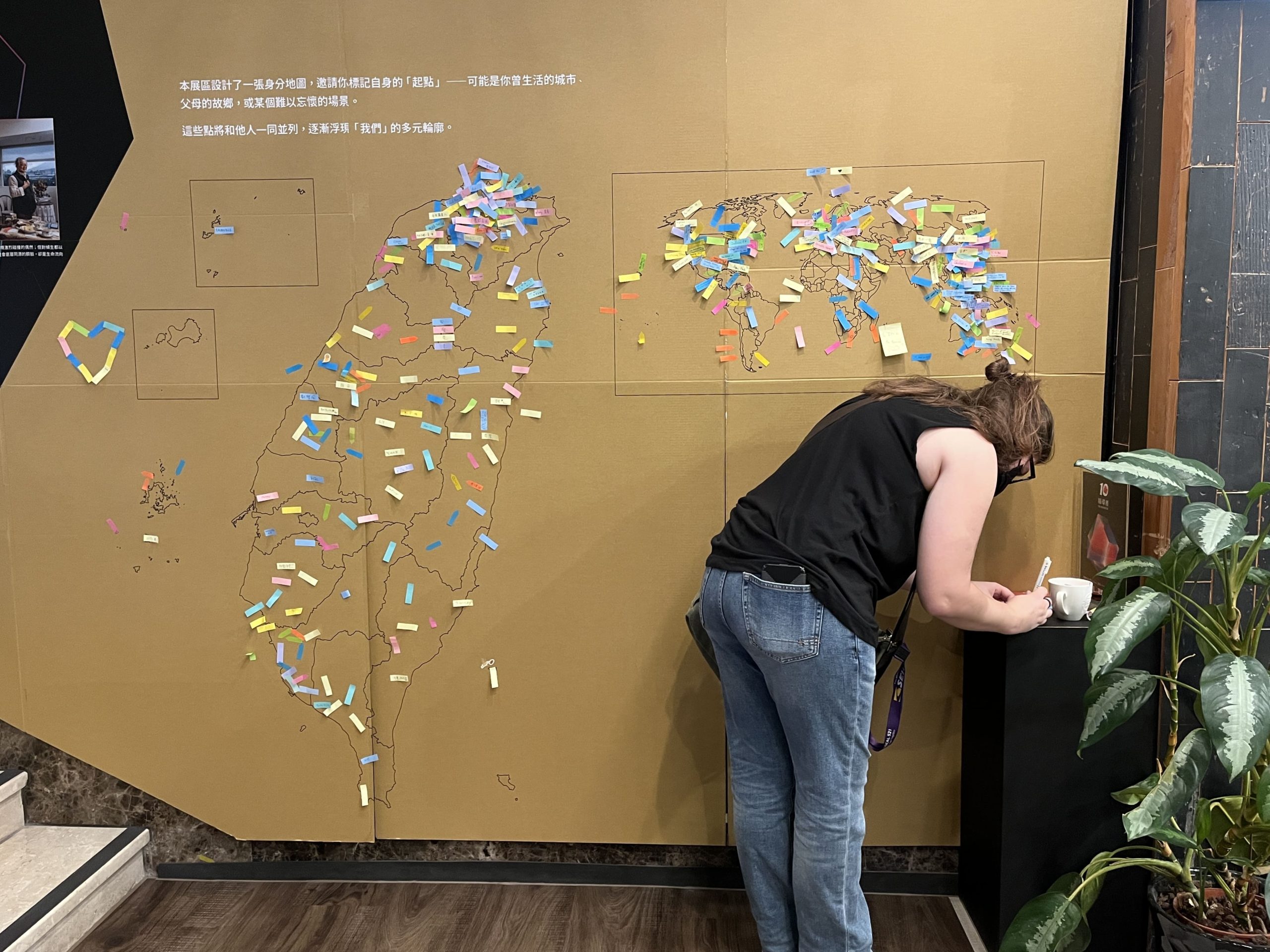
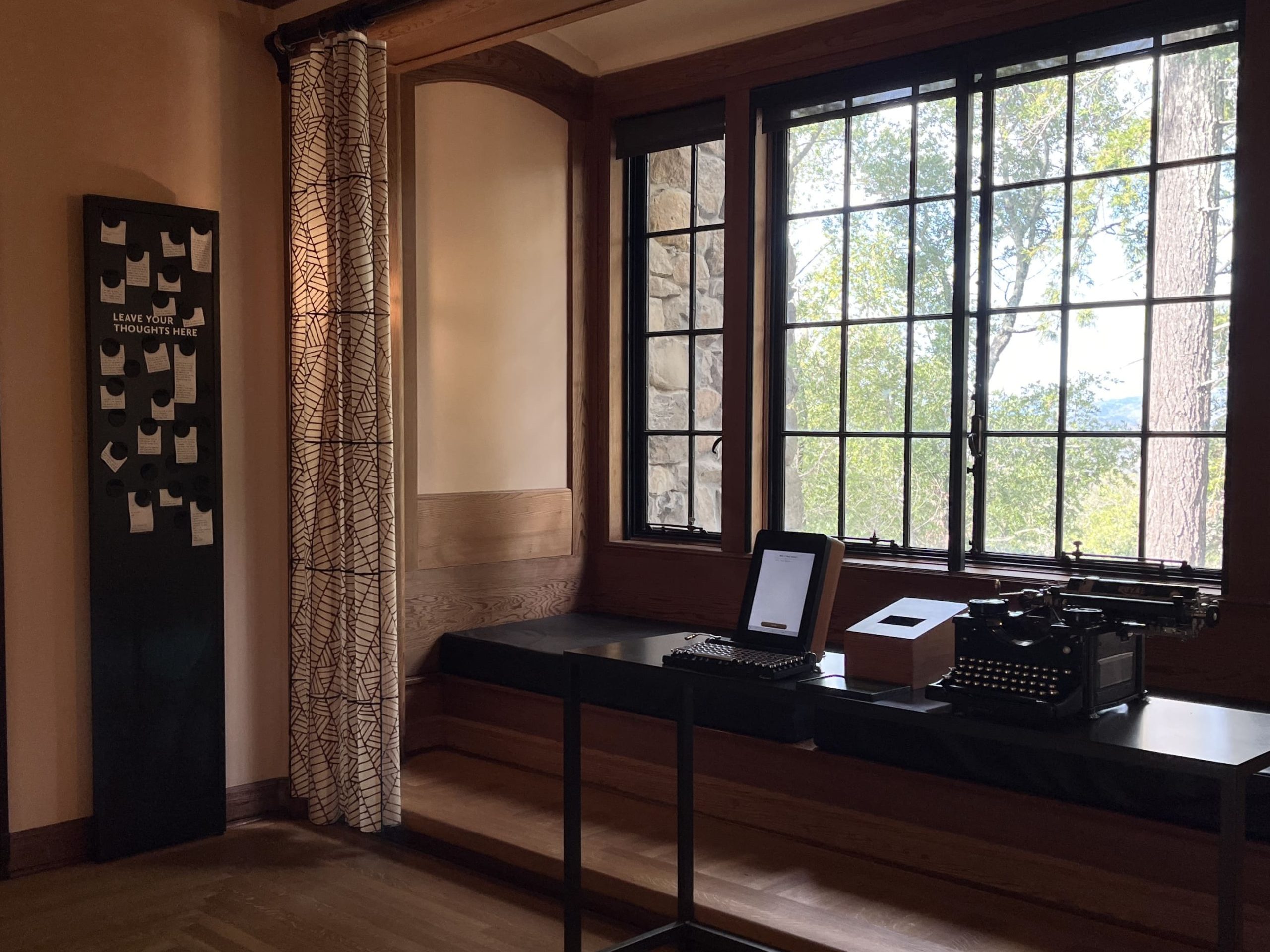
As a fan of participatory storytelling, I keep my eye (and camera) out for displays that invite the public to contribute glimpses into their own minds and lives. Below are just a few that I’ve documented in the last two years:
At Los Altos Library’s movies section, an easel board asking “Do you still go to the theaters to see movies? Why or why not?”
At Hoochuu Breakfast in the Zhongshan District of Taipei, a “public survey” asking “What are you up to after breakfast?”
At Owlstay Story Agency’s Flip Flop Hostel in Taipei, a chalkboard wall with the prompt “Happiness is…”
At Taipei’s National Theater, maps displaying “starting points” (a city you once lived in, your parents’ hometown, or a place that has stayed with you).
At Jack London State Historic Park, typewriters with tablets prompting “What is your story?” and a magnetic board to hold the stories.
In addition to these personal examples, this module on the power of stories reminded me of social media projects such as Humans of New York and A View from a Bridge, as well as the popularity of street interview TikToks, all of which are a little less participatory for the general public but are able to offer deeper, more intimate looks at the lives of everyday strangers than small slips of paper.
Most crucially, however, this module reminded me that storytelling is most effective as a two-way experience—the audience’s participation is just as important as (if not more important than) the telling of the story. It can be easy to simply leave your own sticky note on a board and walk away, but you can stay to read the other responses. Still, these vignettes are often just too short to provide much insight into other people’s lives. And while putting your own story out there can make you feel like part of something bigger, you can connect better by engaging with the storytellers in person.
I think the importance of listening in the equation of storytelling is best exemplified by the Human Library, which has literally changed lives when “readers” interact with the human books (Ray, 2019). There’s value in meeting the storyteller in person too, as an individual, as opposed to simply hearing a recording of their story—it humanizes them. Reading about this project, however, also reminded me of the YouTube channel Jubilee, which often puts members of different groups in the same room (frequently it’s “liberals” vs. “conservatives”). Being first and foremost a YouTube channel means that Jubilee selects participants, structures conversations, and edits content to sensationalize topics for views—their methods are not without controversy, as demonstrated by the lengthy “Criticism” section on their Wikipedia page.
In spite of this, I still see the merit in having people “read human books” and converse with those from different backgrounds. These interactions should be genuine attempts at connection, not recorded and published for the attention economy. Such connection is especially important in this age of increasing loneliness (OSG, 2023), increasing polarization (Pew, 2022), and disappearing “third places” even before the COVID-19 pandemic (Finlay et al., 2019). I was sad to learn that the Reading Garden in Copenhagen had to close down when the majority of the Human Library’s 200+ U.S. partnerships ended because of DEI rollbacks here (Coe, 2025), but I hope that libraries and other organizations, in the U.S. and beyond, are able to run similar programs to better foster empathy within our communities, both because of and in spite of this.
Finlay, J., Esposito, M., Kim, M. H., Gomez-Lopez, I., & Clarke, P. (2019, November). Closure of ‘third places’? Exploring potential consequences for collective health and wellbeing. Health & Place, 60, Article 102225. https://doi-org.libaccess.sjlibrary.org/10.1016/j.healthplace.2019.102225
Office of the Surgeon General. (2023). Our epidemic of loneliness and isolation: The U.S. Surgeon General’s advisory on the healing effects of social connection and community. U.S. Department of Health and Human Services. https://www.ncbi.nlm.nih.gov/books/n/surgepidlonliness/pdf
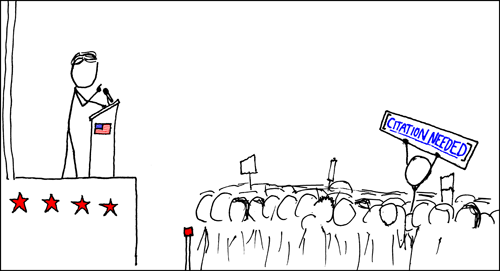
I enjoyed reading the comparison of ChatGPT and Wikipedia in Fister & Head’s article “Getting a Grip on ChatGPT,” and I agree that Wikipedia was comparatively over-vilified as an information source, considering the processes that go into maintaining it—sources are required for each statement, and citations are checked and flagged. An xkcd comic popularized the editing tag “[citation needed],” and I recently happened upon the tag “[failed verification],” which I’d never seen before but was pleased to learn existed. LLMs, on the other hand, are black boxes unable to show their work, famously making up sources and even providing sources that don’t always back up their answers (Mickle et al., 2026). Though Wikipedia has been a top domain cited worldwide by LLMs (at 9.53% of citations according to Semrush data), it’s surpassed by Reddit (11.29%) and LinkedIn (11.03%) and is immediately followed by YouTube (8.77%) and Medium (5.83%). Most of these are questionable as cited sources and should always warrant further research.
The xkcd comic “Wikipedian Protestor,” posted July 4, 2007.
This topic is especially interesting when, according to the IFLA Trend Report 2024, trust in authority is declining. On one hand, questioning authority is part of thinking critically—“authority is constructed and contextual,” after all (ACRL, 2015). This could explain why marginalized groups are more likely to be distrusting of mainstream media, as cited in the trend report. On the other hand, the distrust should not be reactionary—we should not reject information simply because we disagree with it. Trump’s cries of “fake news” reflect such a sentiment, appealing to those who seek a truth different from what they see, closer to what they personally believe or hope to be true. It’s therefore unsurprising to me that podcasts, video essays on YouTube and TikTok, and articles on Medium and Substack have become popular sources of information in recent years.
But even though there’s value in hearing stories from underrepresented voices and/or alternative sources, we must continue to think critically. In other words, the declining trust in authority isn’t inherently bad, but that doesn’t mean we should simply place our trust in other entities instead, even if they seem to project confidence and claim to have supporting data. This includes but is not limited to LLMs that provide sources that don’t always corroborate their answers, governmental documents that use imaginary sources and mischaracterize real ones (Jacobs, 2025), and social media creators who might misrepresent cited research to better sell their services (I was just sent one such video by a well-intentioned friend).
Being vigilant about information in casual contexts can be difficult, especially when you’re passively scrolling through social media, as opposed to actively research a topic you’re interested in. Even I get exhausted trying to navigate the vast, rich information landscape that we have at our fingertips these days. But this is precisely why it’s more important than ever that we are checking for sources and verifying them as we encounter information in our day-to-day lives, and that we as LIS professionals effectively promote literacy skills to the public.
References
Association of College and Research Libraries. (2015, February 9). Framework for information literacy for higher education. American Library Association. Retrieved July 18, 2026 from https://www.ala.org/acrl/standards/ilframework
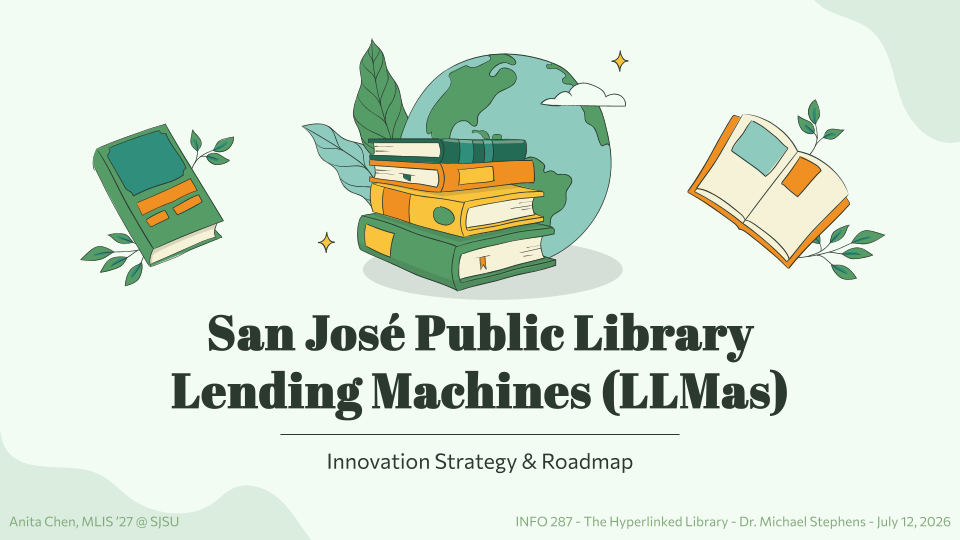
The cover slide below links to my presentation on how San José can utilize the technology of library material “vending machines,” which I have coined the library lending machine, or the LLMa (pronounced “llama”)!
Note: This is a completely hypothetical plan, as I do not currently work for the SJPL and therefore do not have a clear picture of the actual process/entities involved in getting such projects approved. However, the data and research presented in this slide deck are real.
Going through the Pew research and AI readings in the Hyperlinked Environments module, I kept thinking back to one line from danah boyd’s “What World Are We Building?” from the previous module:
“[T]oday’s technology is valued — culturally and financially — based on how much it’s used by the most privileged members of our society.”
This is the case with AI, as it has been used by employers to screen applicants, by large tech companies to serve as the new reference desk, and, perhaps most egregiously, by the government to identify and arrest suspects. This is problematic because AI hiring tools can perpetuate racism (Bommasani et al., 2026), Google’s AI overview provides inaccurate content and sources that don’t corroborate the information (Mickle et al., 2026), and people of racial minorities have been incorrectly identified and wrongly arrested because of facial recognition technology (Liang, 2026).
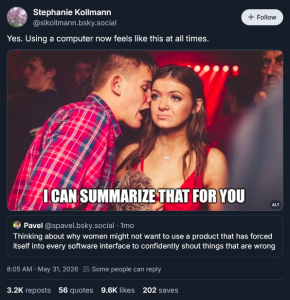
A popular Bluesky post using a meme to demonstrate how AI summaries feel to some users.
AI also affects women and men differently. In a 2025 report, the UN estimated that women are 2–3 times as likely to be in the jobs at greatest risk of being replaced by AI, especially in high-income countries (Gmyrek et al., 2025, p. 43–44). Research has also shown that women are less likely to use AI, not necessarily due to lack of access, however, but due to other factors such as perceived usefulness, institutional support, social legitimacy, and trust/privacy/risk concerns (Cranney et al., 2025).
Some argue that the fix is to ensure equal access to AI. After all, awareness of AI in everyday activities correlates to levels of education, income, and internet use, per Pew research (Kennedy et al., 2023). Cranney et al.’s conclusion was most concerned with increasing women’s usage of AI so they don’t fall behind in their careers and so that they can participate more in AI development. When asked about AI during the Fall 2025 “Ask Me Anything,” then-director of the SJSU iSchool Anthony Chow also said, “It’s our job to really debunk any fears about AI,” though the fears he emphasized were more about not knowing how to use new tools (Winslow, 2025, 00:24:25–00:27:08).
The issue is much more complex, especially when public attitudes toward AI in the U.S. have become increasingly negative throughout the years despite increased usage: data privacy is a major concern; majorities of Americans have low confidence in both government regulation and corporate responsibility (Tyson & Kikuchi, 2023; Kennedy et al., 2025; Gottfried et al., 2026). Though these are just sentiments, we’ve already seen concrete ways AI has perpetuated systemic oppression, in the first paragraph. These issues will not go away once everyone uses AI. These issues are not for librarians to “debunk.”
Honestly, I don’t know what role libraries can play beyond fostering community and literacy. But I do know that literacy goes beyond simply knowing how to use a tool. In the meantime, I hope that we can help the public think more critically amidst all the misinformation and slop that AI has helped proliferate (PBS, 2025) and find ways to decentralize our technological needs.
Gmyrek, P., Berg, J., Kamiński, K., Konopczyński, F., Ładna, A., Nafradi, B., Rosłaniec, K., Troszyński, M. (2025, May). Generative AI and jobs: A refined global index of occupational exposure [working paper]. International Labour Organization. https://www.ilo.org/sites/default/files/2025-05/WP140_web.pdf
Liang, G. (2026, May 30). In the image of injustice: A critical examination of AI, surveillance, and systemic racism in the United States. Race and Justice. https://doi.org/10.1177/21533687261455743
In “The Healing Power of Books: Using Reading to Address Social and Emotional Needs,” Jessica Klinker describes how books serve as both mirrors and lenses, showing readers both themselves and others. I agree with this wholeheartedly, as this idea has been a major through-line in various stages of my life. Because I grew up moving around, I learned to recognize differences between cultures at a young age, and because books were my constant, I was able to further practice the skills of stepping into other people’s shoes. This is what led me to major in Narrative Studies in college and then teach reading and writing to middle- and high-school students. It is also how I ended up in bookselling and then chose to pursue an MLIS. Especially in this time of increasing isolation and the loss of third-spaces, it is more important than ever that we build and practice empathy, and I believe that stories are a great way to achieve this.
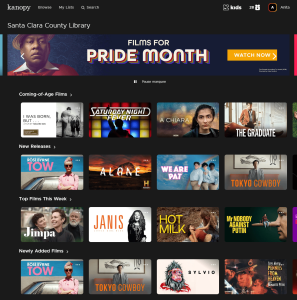
However, I would venture to say that it’s not just books that are healing—though Klinker brings up audiobooks, e-books, large print, and languages, we can also engage with stories through other media, including but not limited to movies, theatre, TV shows, and even video games. (I hesitate to use the word “consume” here because the purpose of engaging with stories should not be simply to intake a certain amount, but to meaningfully interact with them instead.) I feel like this shift can be seen in how we no longer listen to the radio because we now have other technology, but we get our news through other formats and we still listen to podcasts through our smartphones. Though fewer people are reading physical books, more formats of storytelling have cropped up, and the fact that libraries now have whole DVD collections, video game collections, and even partnerships with streaming platforms such as Kanopy reflects this. Access and choice are important, as Klinker points out, and it is for this reason that we must remember to think beyond just the printed word.
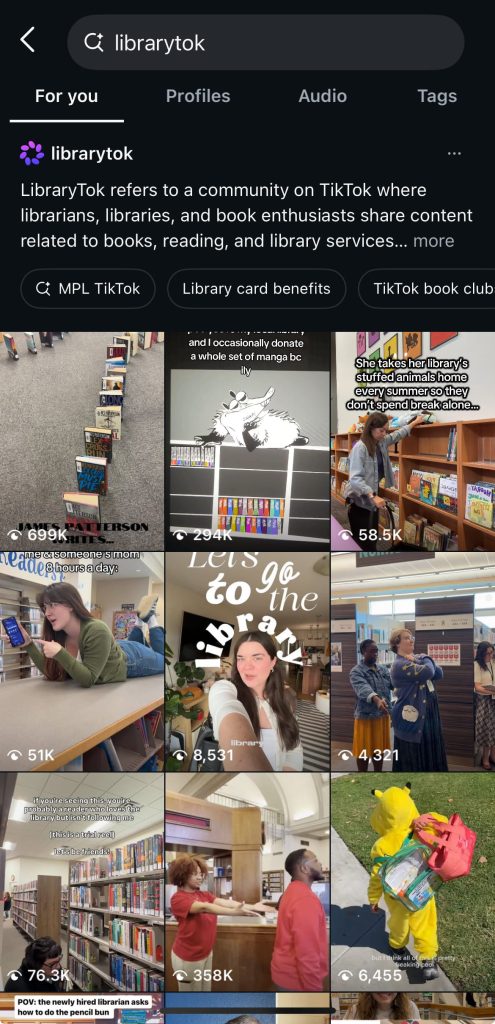
Back in 2016, Facebook was by far the most popular social media platform in the United States (Greenwood, Perrin, & Duggan, 2016), and it was a critical tool in the information landscape of the time, as the older course readings demonstrate through their frequent mentions of it (Stephens; 2016, p. 10; 2019, p. 23). In the decade since, however, social media and the information landscape have drastically changed. Though Facebook is still used by many, TikTok was one of the most-used platforms among U.S. teens in 2025, with 61% of teens using it daily (Faverio & Sidoti, 2025), and an increasing number of adults are using it as well (McClain & Eddy, 2026). As a result of TikTok’s popularity, other platforms such as Instagram and YouTube have also joined in on hosting vertical short-form videos, and the four most-used and fastest-growing social media platforms now are YouTube, Facebook, Instagram, and TikTok (Gottfried & Park, 2025). Since so much of our attention is now dedicated to short-form videos, marketing strategies have shifted from simply posting static text posts or graphics to promote their offerings, to generating lip-syncing videos or even skits in hopes of landing on people’s for-you pages. It therefore makes sense for libraries to join in on creating video content, to reach the teens that they have struggled to reach (Casey & Savastinuk, 2007, p. 62) , as well as anyone else the content resonates with. This has led to the #LibraryTok hashtag, which could be a great tool in both reaching the “long tail” (p. 64) and changing the public’s perceptions of libraries (i.e., it’s not just books!).
LibraryTok posts on Instagram.
Sure, the top posts on #LibraryTok do include #BookTok creators visiting libraries, and some posts from libraries are more book-centric, but many videos show audiences what libraries are like and what they offer. Trends function a bit like templates, allowing libraries to make their own versions of videos about seeing James Patterson books in every section, or the frustrations of patrons dog-earing books, or forgetting how to spell, or needing to sing the alphabet when shelving. Participating in #LibraryTok is a great way to give your library personality, especially since it shows the faces of and helps build personal connections with the real people working there (Stephens, 2016, p. 27). People can now interact with librarians even when they are not at the library. Milwaukee Public Library, in fact, was so successful with their TikTok account that viewers from outside the U.S. have traveled specifically to the library (Arata, 2026).
One, however, can subsequently argue that such content might not reach the people in the library’s own communities, especially since social media feeds are now more algorithmic and discovery-based, showing fewer posts from local accounts we actually follow, so why invest the time and effort into making videos the local community might not even see? After all, it requires extensive planning, consistent posting, and ethical considerations, and, as one LibGuide puts it, it “may be the hardest platform to target individual groups of users” (PALNI, 2026). Making regular video content might not be feasible for every library, but I do find #LibraryTok to be beneficial to all libraries. I had seen Milwaukee Public Library’s posts before I started my MLIS, and I have non-librarian friends who have shared non-local #LibraryTok posts with me because it showed up on their feeds. Because #LibraryTok videos can have such a far reach, I am hopeful that it can help change the general public’s perception of libraries from simply being quiet bookstacks to being fun places where you can talk to librarians about more than just books.
Hello all! My name is Anita, and I go by they/she pronouns. I am based in the San Jose area, and my professional background is in education, graphic/UX design, and bookselling. I am currently a volunteer for the Organization for Transformative Works. In my spare time, I enjoy reading, playing video games, hoarding craft materials, and writing fanfiction.
Though my chosen career pathways have more to do with information and data, I am a firm believer that libraries are centers of not just knowledge but connection. As someone who grew up in multiple countries and speaking different languages, I have particular interest in how we empathize with those beyond our immediate social and cultural groups.
I am also interested in how technology has shaped our relationship with information—my CYOA-style discussion posts in prior courses such as Reference/Information Services, Information Literacy, and Information Architecture tended to focus on how Google, other major tech companies, and LLMs have influenced our information behaviors. I look forward to exploring this topic further in this course!
Currently reading: Babel, by R. F. Kuang Currently playing: Pokopia
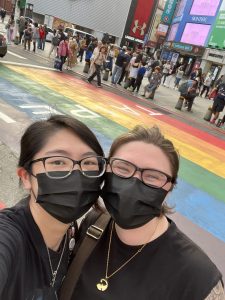
A selfie taken while showing my partner around Taipei last Thanksgiving:


 (I hesitate to use the word “consume” here because the purpose of engaging with stories should not be simply to intake a certain amount, but to meaningfully interact with them instead.) I feel like this shift can be seen in how we no longer listen to the radio because we now have other technology, but we get our news through other formats and we still listen to podcasts through our smartphones. Though fewer people are reading physical books, more formats of storytelling have cropped up, and the fact that libraries now have whole DVD collections, video game collections, and even partnerships with streaming platforms such as Kanopy reflects this. Access and choice are important, as Klinker points out, and it is for this reason that we must remember to think beyond just the printed word.