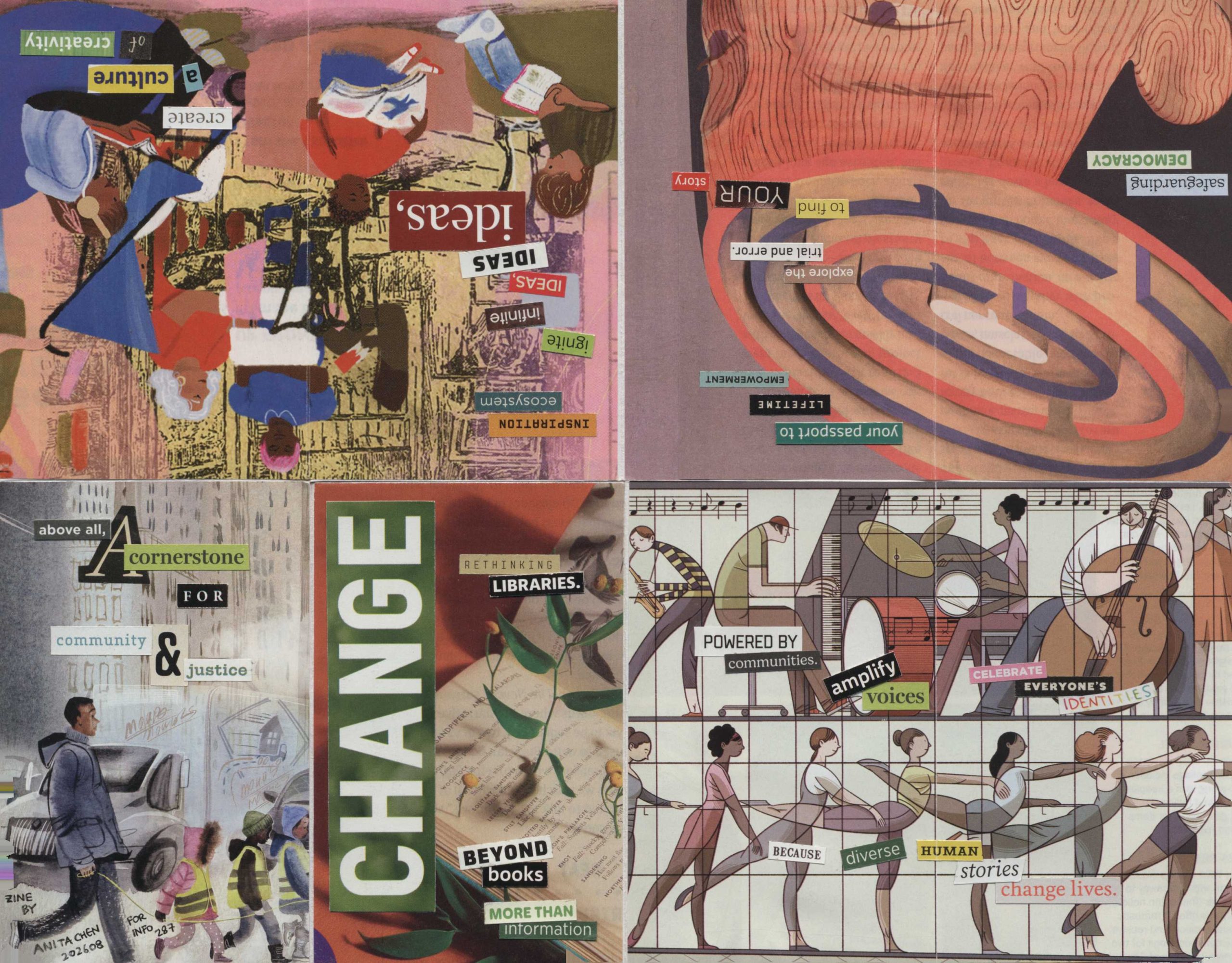
I had a lot of fun in this class, so I decided to lean into the fun with the Virtual Symposium! I like to collect text and images from mail, brochures, magazines, etc. and I usually make them into collage pin-back buttons, but I figured they would also be great to use for a zine. So here is a zine I made to summarize my key takeaways from this course:
Below is the full letter-size sheet view. Feel free to print/assemble it for yourself!
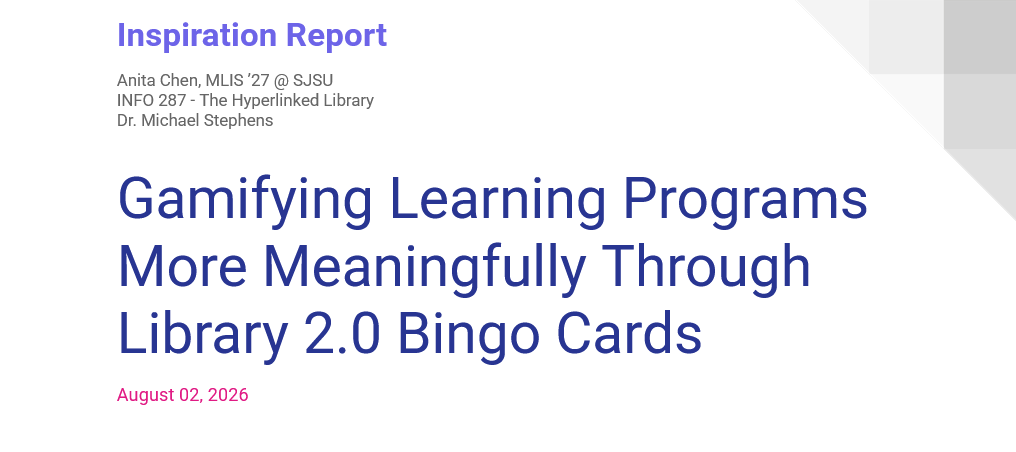
The preview screenshot below links to my inspiration report on gamifying summer learning through Library 2.0 bingo cards that would allow for greater participant autonomy and therefore more effective learning than Beanstack reading challenges.
The cover slide below links to my presentation on how San José can utilize the technology of library material “vending machines,” which I have coined the library lending machine, or the LLMa (pronounced “llama”)!
Note: This is a completely hypothetical plan, as I do not currently work for the SJPL and therefore do not have a clear picture of the actual process/entities involved in getting such projects approved. However, the data and research presented in this slide deck are real.
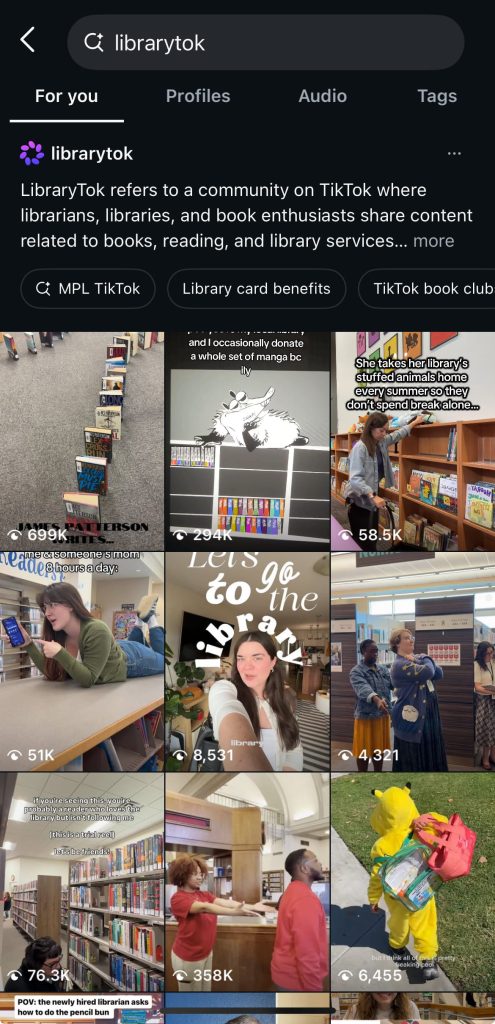
Back in 2016, Facebook was by far the most popular social media platform in the United States (Greenwood, Perrin, & Duggan, 2016), and it was a critical tool in the information landscape of the time, as the older course readings demonstrate through their frequent mentions of it (Stephens; 2016, p. 10; 2019, p. 23). In the decade since, however, social media and the information landscape have drastically changed. Though Facebook is still used by many, TikTok was one of the most-used platforms among U.S. teens in 2025, with 61% of teens using it daily (Faverio & Sidoti, 2025), and an increasing number of adults are using it as well (McClain & Eddy, 2026). As a result of TikTok’s popularity, other platforms such as Instagram and YouTube have also joined in on hosting vertical short-form videos, and the four most-used and fastest-growing social media platforms now are YouTube, Facebook, Instagram, and TikTok (Gottfried & Park, 2025). Since so much of our attention is now dedicated to short-form videos, marketing strategies have shifted from simply posting static text posts or graphics to promote their offerings, to generating lip-syncing videos or even skits in hopes of landing on people’s for-you pages. It therefore makes sense for libraries to join in on creating video content, to reach the teens that they have struggled to reach (Casey & Savastinuk, 2007, p. 62) , as well as anyone else the content resonates with. This has led to the #LibraryTok hashtag, which could be a great tool in both reaching the “long tail” (p. 64) and changing the public’s perceptions of libraries (i.e., it’s not just books!).
LibraryTok posts on Instagram.
Sure, the top posts on #LibraryTok do include #BookTok creators visiting libraries, and some posts from libraries are more book-centric, but many videos show audiences what libraries are like and what they offer. Trends function a bit like templates, allowing libraries to make their own versions of videos about seeing James Patterson books in every section, or the frustrations of patrons dog-earing books, or forgetting how to spell, or needing to sing the alphabet when shelving. Participating in #LibraryTok is a great way to give your library personality, especially since it shows the faces of and helps build personal connections with the real people working there (Stephens, 2016, p. 27). People can now interact with librarians even when they are not at the library. Milwaukee Public Library, in fact, was so successful with their TikTok account that viewers from outside the U.S. have traveled specifically to the library (Arata, 2026).
One, however, can subsequently argue that such content might not reach the people in the library’s own communities, especially since social media feeds are now more algorithmic and discovery-based, showing fewer posts from local accounts we actually follow, so why invest the time and effort into making videos the local community might not even see? After all, it requires extensive planning, consistent posting, and ethical considerations, and, as one LibGuide puts it, it “may be the hardest platform to target individual groups of users” (PALNI, 2026). Making regular video content might not be feasible for every library, but I do find #LibraryTok to be beneficial to all libraries. I had seen Milwaukee Public Library’s posts before I started my MLIS, and I have non-librarian friends who have shared non-local #LibraryTok posts with me because it showed up on their feeds. Because #LibraryTok videos can have such a far reach, I am hopeful that it can help change the general public’s perception of libraries from simply being quiet bookstacks to being fun places where you can talk to librarians about more than just books.