
Reflection 5: Infinite Learning in Libraries: Embrace the Messiness

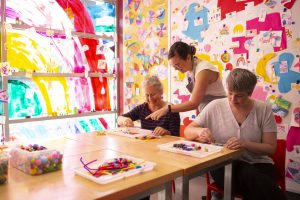
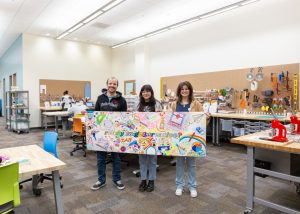
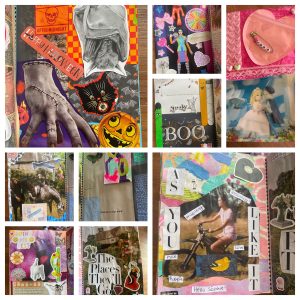
(Left: A collage of some of my junk journaling products, where I embraced the art of letting go and messiness in pursuit of artistic creation. Right: A gorgeously messy artistic workspace.) 

After marinating on the wondrous materials provided these past couple of weeks showcasing the infinite possibilities that unfurl within the library as classroom, there is much to be inspired by and ideas to be appreciative of. A couple of articles in particular drew my attention and heightened my reflective abilities in what I want to take with me amidst my information professional career. The first article that I greatly resonated with was this one here about embracing messy learning. I adore the first sentence relayed within this article; “Learning is a messy process– and authentic, project-based learning immerses us in unique parts of this mess” (Block, 2014). They do a great job at showing the creative process and the areas of discomfort that typically arise with authentic work. This point is succinctly stated here; “I am slowly learning to embrace the struggles that students experience as they engage with authentic work. If I don’t allow learning to be messy, I eliminate authentic experiences for students as thinkers and creators. I find it is important to regularly remind myself that frustration leads to insights and that learning is not necessarily the equivalent of master” (Block, 2014). 

This steers me toward my own mindfulness and concepts I have well-engrained within my own approach towards life, especially when it comes to teaching both myself and others. This brings up two specific areas in my life that I would regularly employ similar sentiments. The first being in my yoga practice, my teachers would often say “find comfort in your discomfort,” not only as a means to literally melt into a pose more to broaden my body in ways I may not push myself towards without this mantra. It also equips myself mentally in having to inevitably face and embrace suffering, as this fact is an undeniable part of life. In my yoga teacher training, we spoke often about how life is filled with suffering at times, no matter what, everyone must face this notion, yet we learn immensely how we grapple with this pain, and learn much about ourselves and how we react in growing through these experiences. 

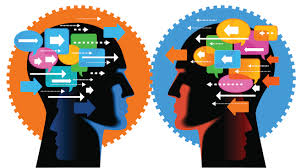
My second life experience that is relevant to this idea is possessing and modeling the importance of the growth mindset vs. fixed mindset mentality when it comes to teaching and learning. The growth mindset approaches learning in a much more open, positive, and circular process. It capitalizes on the attitude that through hard work, dedication, and persistence that one’s intelligence, talents, and abilities can be harnessed and increased through continued efforts, trials and tribulations, that we learn and grow through our mistakes along the way. Whereas a fixed mindset takes the perspective that one’s intelligence and talents merely are innate, fixed, and unchangeable. Fixed is linear and growth is circular. I love the growth mindset because it embraces this very idea that we learn immensely through exploring both play and mistakes. In fact, I am a firm believer in that one typically learns more from their “failures” than one does through their “wins.” Thus, I am fond of this concept of embracing messiness when it comes to learning. This idea also coincides with what Dr. Stephens said when introducing the hyperlinked library model, that there will inevitably be some sort of chaos when it comes to trying something new, therefore it is best to embrace it. 

I am an artist for fun in my free time and have learned this hands on many times when I am creating. As someone who is a bit of a control freak when it comes to work, I had to learn to relish this art of letting go when it comes to creating a while ago. When I let my guard down, ceding this idea of control, that is when I truly created such amazing things. It is almost like a flow state if you will, you let that monkey part of your mind that overthinks go and the creativity truly shines during those moments of surrender. This makes me ponder how I can illustrate this important concept to my students in their learning. It is easier said than done, but this is such a pivotal idea for students not only when it comes to learning and creating, but having in their toolkit in facing many difficult experiences in life. Lastly, for this article, I especially admired the last section in which they prominently give voice to Frederick Douglass and how he declared that struggling is essential in order to progress. The article writes; “The abolitionist Frederick Douglass provides us with a poignant historic reminder that, ‘If there is no struggle, there is no progress.’ Struggle is necessary for growth but facing discomfort is not easy for people of any age. In classrooms where students engage with authentic, rigorous work, strategic support and modeling enable learners to progress past discomfort. As teachers we must be willing to accept messy days and remind ourselves that struggle and frustration are inherent parts of the process of creation” (Block, 2014). This conclusion also further instills my beliefs aforementioned in this post. 

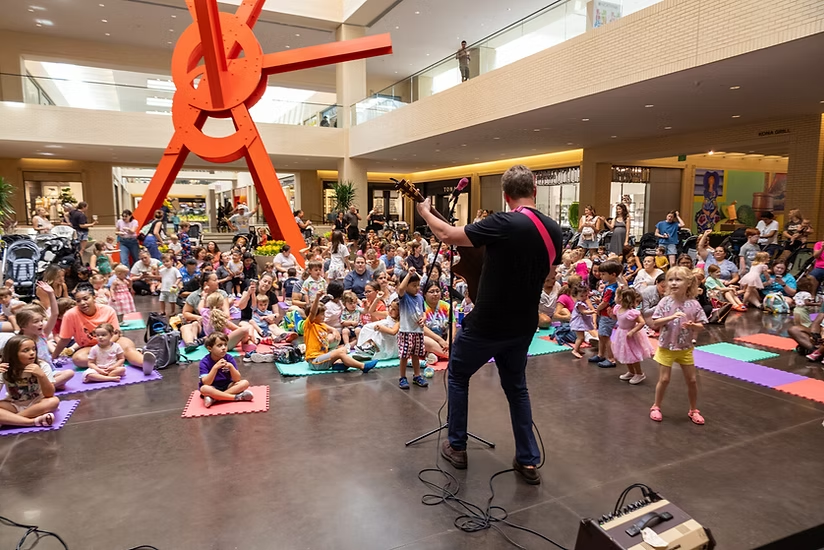
In addition, I thoroughly enjoyed perusing the article about 8 Awesome Ways Libraries Are Making Learning Fun. It is fantastic to continue to witness the fun and creative ways libraries carry on in showing up with a diverse range of innovative and appealing programming and events for folks of all ages. It is important for libraries to persevere, to push the envelope in this way, in staying relevant and proving to be a viable place for people of all walks of life to learn, connect, and spark joy in the process. These events all look so fun and interesting to me, but especially the fairy hunt for myself! This proves that creativity truly is such a gift and librarian superpower, and with this power libraries have the ability to serve as safe places for communities to learn and grow together. 

Lastly, I wanted to depart this post by sharing some of my favorite quotes from reading Dr. Stephens chapter on infinite learning this week from  The Heart of Librarianship; 

“My thoughts turn again to the concept of librarians as facilitators of learning. It becomes clear to me that as learning goes on the move, we not only must keep up with the significant changes in education environments but aim to become connector and collaborators within our users’ learning spaces. 

It was a fun, chaotic, and messy experience. In our weekly group chats online, the mantra has become ‘Learn by doing.’ Real-world messiness offers a level of experience unmatched by classroom activities.

These include themes I write about often: innovation management; learning by play, exploration, and creation; emotional intelligence; meaningful activities; and networking with the real world. 

In A New Culture of Learning, authors Douglas Thomas and John Seely Brown write, ‘Where imaginations play, learning happens.’ This could and should define our services for now and in the future. The library as creative classroom means we approach the learning opportunities we create with thought, user-directed planning, and insights from research. This classroom may include physical spaces for instruction and discovery as well as online, multiscale platforms aimed at social learning and participation” (Stephens, 2016). 

Thanks for reading and happy infinite learning, teaching, and creating everyone (now and always) ! 

References: 

Block, J. (2014, January 7). Embracing messy learning. George Lucas Educational Foundation. Edutopia. https://www.edutopia.org/blog/embracing-messy-learning-joshua-block

Bookey, J. L. (2015, April 29). 8 Awesome ways libraries are making learning fun. HuffPost. https://www.huffpost.com/entry/8-awesome-ways-libraries-_b_7157462

Stephens, M. (2016). The Heart of Librarianship: Attentive, Positive, and Purposeful Change. American Library Association.
Reflection 4: The Power of Stories within Libraries: Fostering Human Connection, Kindness, and Empathy


This momentous idea of the power of storytelling highlighted this week burrows deeply within my    heartspace, especially within this field. I believe this gargantuan theme is more or less the bread and butter of what comprises the key tenets of librarianship. Having a plethora of voices and stories shared and represented within our local communities and from around the world is such a beautiful and powerful way to connect with one another. It is through the magnificent power of storytelling that ultimately was a catalyst for me pursuing this field to begin with. I recognize the notion that libraries have evolved far past being mere book repositories (another recurring key theme within our course), yet it is through books and stories that essentially lead me to this pathway.

It is through traversing numerous landscapes around the world and in imaginationland, meeting incredible yet varied personalities (human and creatures alike) along the journey, transporting myself within the reading universes that I was able to learn immensely through these stories about others and myself in the process. Reading inspires not only creativity, entertainment, pursuit of knowledge, but especially empathy. It is through these stories I have better honed in on my capacity for empathy, compassion, and understanding. When I started to fall down the rabbit hole of chasing librarianship, I recall sharing this affinity and love of books/stories was a key motivator in me pursuing this trajectory. When delving deeper into this sphere, I realized it wasn’t just stories I wanted to help share with others, but empowering people with all kinds of information and improving their lives in myriad ways.   

Possessing the ability to step outside of oneself and ATTEMPT to put oneself in another’s perspective further promotes these important ideals that create an informed citizenry but simultaneously heightens our emotional intelligence and fosters human connection and kindness within our world. We are able to learn greatly from one another when these narratives are shared with each other. As Dr. Stephens poignantly notes, “The dialogue that stories can create benefits all who participate” (Stephens, 2019).  

It was wonderful perusing the impactful and innovative ways that libraries are showing up to facilitate and amplify people’s stories. Representation matters, it is amazing seeing these voices showing up more readily within books and/or information sources themselves, but also having people show up and exchange these narratives verbally and in person. In addition, having the library promote and cherish these types of stories, further instills that the library is truly a welcoming and safe place for ALL. One of the sources that I connected with deeply was learning more about the Human Library programs. I have never heard of this type of programming before and felt it was both compelling and inspiring to witness. This article explains the idea here; “Human libraries function similarly to other libraries except that in a human library, people—rather than books—are available for checkout. Those who volunteer to be “human books” are “people with a particular personal experience or perspective on life” and have often been stereotyped in some way. The human books agree to converse openly with other members of the community, called “readers.” Anyone who wants to participate in the program can be a reader. After browsing through a catalog with a title and a description for each book, a reader selects a book to check out for a short period of time. The reader then meets the book for a one-on-one conversation. Readers are able to ask questions, seek advice, learn about alternate perspectives, and find common ground. The conversations have no prescribed direction and develop organically, making each loan period unique” (Wentz, 2013).

What a gorgeous yet creative way to connect with one another. I loved seeing this concept put into action in Copenhagen within the video below:

It was fascinating to browse the impact study formulated based on these kinds of human libraries. It was noted; “The first impact study of the Human Library online format shows that Human Library events help Readers understand a broader scope of diversity and recognize that inclusion is more than acceptance – it requires action”(Aarne-Skidmore, 2021). I am in agreement that this approach certainly feels more actionable. Through sharing and vulnerability, we are able to harness better understanding and kindness for each other through these conversations. Once again, these resources made me wonder how these ideas could permeate into my current and future work in libraries? How can we empower ourselves and those we serve through voicing our unique stories? In a world that feels increasingly hostile and divisive, what are some common ground ways or conversations that could be had to reunite us as human beings? Libraries are a fantastic place to start to initiate and encourage these heartening dialogues from all walks of life. I am eager to see how libraries shall continue to show up, promote, and broadcast these incredible and meaningful stories to share with each other and the world. 

References: 

Aarne-Skidmore, E. (2021, April 8). New study on the impact of the human library. Human Library. https://humanlibrary.org/new-study-on-the-impact-of-the-human-library/

Human Library Organization. (2023, April 25). The human library reading garden in Copenhagen [Video]. YouTube. https://www.youtube.com/watch?v=rxukgiVqb5A

Stephens, M. (2019). Telling stories. In Wholehearted librarianship: Finding hope, inspiration, and balance. ALA Editions.     

Wentz, E. (2013, April 26). The human library: Sharing the community with itself. Public Libraries Online. https://publiclibrariesonline.org/2013/04/human_librar/

Reflection 3: New Models: Biophilic and Hygge Trends

There were bountiful resources this week showcasing the amazing and innovative ways that libraries continue to show up and evolve for their community and their rapidly evolving informational wants and needs. One of the themes from this week’s module that immediately resonated with me was the concept of hygge impacting our libraries. Hygge is a Danish and Norwegian word that loosely translates to “coziness, comfort, and a deep sense of everyday well-being.” According to Dr. Stephens; “Some might argue that it’s a feeling, a vibe, a state of mind. Others says it’s connections, conversations, and comfort. This definition shared on an Instagram post by Joe Pickard resonated deeply with me; ‘[Hygge] can be defined as the art of building sanctuary and community, of paying attention to what makes us feel alive. A feeling of belonging to the moment and celebrating the everyday’”(Stephens, 2019). I have been familiar with this hygge idea for quite some time now but thoroughly enjoyed learning more extensively about this cozy and communal philosophy and how it is being incorporated within our libraries. 


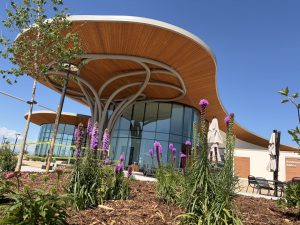
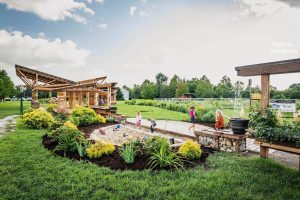
(Anythink Library in Thorton, CO)

One of the resources that I deeply connected with and appreciated tremendously was exploring the Anythink Nature library page located in Thorton, CO. I heard about this library when it opened up and have been enthralled and awestruck ever since. Further investigating into this magical library and its offerings was wonderful and inspiring. As a fond lover of nature since I was a child, it brought tears to my eyes to see the marriage of some of my favorite attributes in this world all within one space; community, nature, wellness, librarianship, comfort, healing, joy.

I am hoping that these new models continue to pop up and proliferate our library systems around the world. I live in a heavily outdoorsy area and thinking of the prospect of this in our community, I firmly believe it would be a hit. I dream of a library system like this coming to our community one day. I recognize the extensive planning, funding, orchestration, and many other nuanced components that go into creating and executing a new or revamped library design, especially one of this nature (no pun intended)…but it made me question what would one have to do to advocate and plan for something like this in my own community? It made me think of the years of ornate planning and details that had to be undertaken in Thorton for this library not only to be conceived upon but to actually come to fruition. If one cannot feasibly execute an institution of this grandeur or as intensive as the Anythink libraries, what are some elements that could easily translate to our current institutions? What ideas, programming, or services can be inspired or seamlessly implemented into our current establishments? How can we borrow some of these hygge and naturalistic concepts and apply them within our own spaces? I am now dead set on having to visit this library one day at the very least to witness this breathtaking and truly spectacular library system in person. 

Just listing off the impressive and substantial offerings they have listed on the website makes me exhilarated with excitement; 

“Anythink Nature Library features

Designed for exploration in every season, the Nature Library offers a variety of spaces and experiences that help visitors connect with the outdoors in meaningful ways:

  • Indoor/outdoor programming spaces, including a nature lab, a bright sunroom, and a calming dark room for both active learning and quiet reflection.
  • Exterior gardens that invite hands-on discovery as well as peaceful moments among plants. Want to tour the gardens and learn about the plants?
  • An open-air kinship garden at the heart of the building, blending art, nature, and community.
  • A trail loop that winds through the property for walks, wonder, and fresh air.
  • Nature-focused materials and TryIts selected to spark outdoor learning and adventure.
  • A café with indoor/outdoor seating, perfect for gathering, resting, and enjoying the surroundings.
  • A trailhead connection to the 140-acre Aylor trail systems, expanding opportunities for exploration right from the library’s doorstep” (Anythink Library, n.d.). 

Additionally, they highlight they are equipped with a; kids space, teen space, fireplace, study rooms, wireless printing, public computers, and even a community garden! If you have not gathered by now, I am a lover of plants and gardening, thus having a community garden at one’s local library is another one of my numerous dreams. 

Furthermore, perusing their breadth of varied and interesting upcoming  scheduled and frequent events blows me away all the more. Taken from their events section, some highlights include; creatures of the night (evening walks to see the wonders of the night) yoga flow classes, Colorado Women in Stem tour, fantastical paper art, animals and their habitats with Dandelion Arts Collective, neurodivergent in nature, critter candles, Wildings: Tickle the Clouds (looking up to learn the science of the clouds as they engage with their senses with puffy, fluffy play), and so much more! I am astounded by how amazing and creative these offerings are to their community. 


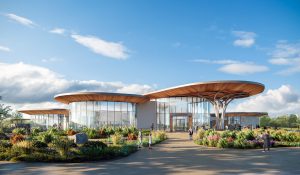
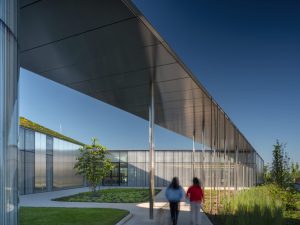
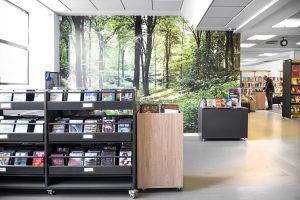
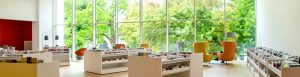
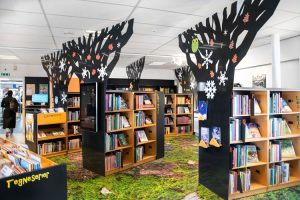
(Springdale Library in Toronto, Canada and Horsens Public Library in Denmark)


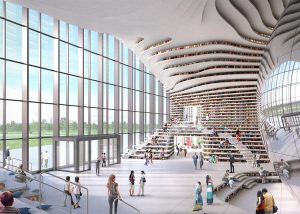
(Guldborgsund Public Library, Denmark below; Tianjin Binhai Library in China)

Exploring this idea allowed me to fall down a fun and curious rabbit hole of inspiration in discovering other libraries capitalizing on this designing with nature trend. The official term for this trend is “biophilic design.” I found this incredible website highlighting this style of design in mind outlined by a Scandinavian design company. They explain this concept of biophilic design; 

“Biophilic design strives to reconnect people with nature, recognizing its profound impact on mental health and physical well-being.

In today’s predominantly urbanized world, where individuals spend over 90% of their time indoors,  integrating biophilic principles into libraries and public buildings becomes paramount. By introducing biophilic design into libraries and other public buildings we can accommodate our innate need to affiliate with nature in the modern world. 

By fostering environments that echo natural settings, we aim to create spaces that enhance mental clarity, reduce stress levels and promote overall psychological resilience. The concept of “biophilia” rooted in humanity’s ancient affinity for nature, gained renewed prominence in the 1980s through the work of biologist Edward O. Wilson. Today, it influences urban planning, community design and architectural practices, particularly in spaces like libraries.

The Covid-19 pandemic underscored this need for connection with nature, accelerating the biophilic interiot design trend as people seek environments that nurture both body and mind” (We are library people, 2017). This proved to be such a valuable resource chock filled with interesting and relevant information within this sector. They gave such wonderful examples of libraries employing these concepts within their designs. 

In addition, I found a couple more delightful and intriguing sites while pursuing this realm. This site showcases green libraries with inspiring designs in 2024. Lastly, this example does not specifically illustrate libraries that are influenced by nature, but rather illustrating library designs that are immensely ornate and enchanting. I wanted to add this for mere fun in case anyone wants to check out these grandiose and majestic designs. 

Further reflecting and exploring these concepts of biophilic designs and hygge elements within these newer models of libraries certainly gave me a lot to ponder and dream about. Again, even if I cannot scale up these massive design elements, what are some smaller ways I could incorporate them into my current workspace for the library I work in? What are some ways I can invite more elements of nature and/or coziness for all to enjoy? Living in Minnesota, where Scandinavian culture is deeply ingrained, I believe we could certainly tap into these hygge elements more seamlessly compared to certain other areas around the world. Lastly, since our area is passionate about nature and the outdoors, I wholeheartedly think that biophilic designs would be greatly appreciated here as well. I shall continue to look forward to seeing what the future holds, especially with these unique and inventive designs on the horizons for our libraries and respective communities. 

(Pierre Moinot à Niort Public Library, France)

References: 

Anythink Library (n.d.). Anythink nature library. https://www.anythinklibraries.org/anythink-nature-library/?fbclid=IwAR2DgO-k8nU6kNUODo7vTlRXKiEiYSoSeQMC8Aq0QnoLMZoT3d-QKpbSl5M

Mesku, M. (2019, April 9). Enchanting pictures of beautiful libraries around the world. National Geographic Travel. https://www.nationalgeographic.com/travel/article/photos-of-beautiful-libraries-around-the-world

Rote, L. (2024, February). Green libraries with inspiring designs in 2024. Gb&D Magazine. https://gbdmagazine.com/green-libraries/

Stephens, Michael – Wholehearted Librarianship: Finding Hope, Inspiration, and Balance, 2019. ISBN: 978-0-8389-1906-4.

We are library people. (2017). Biophilic library design. https://wearelibrarypeople.com/inspiration/biophilic-library-design

Reflection 2: CYOA Hyperlinked Environments

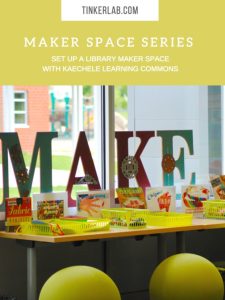
There were many nuggets of wisdom and inspiration once again with this Choose Your Own Adventure module. I decided to pursue the School Libraries route, as I currently work in a high school library and although I would be open to various routes of librarianship, my current dream role would be a school librarian. I loved witnessing the amazing examples of school libraries adapting, innovating, and evolving to keep up with our rapidly changing digitized society. I especially marveled at the astute examples of these environments pushing the envelope by transforming their traditional school book warehouses into malleable, imaginative, and creative makerspaces and learning commons. If you cannot infer by now I adore this trend and the participatory nature that is associated with these community hubs. One article that especially resonated with me was the article; “Reinvented School Libraries Unleash Student Creativity” by Sara Luster from 2018. This subtitle of the article caught my attention immediately; “No longer zones of silence, school libraries are now bustling hubs of student social activity that enhance learning and nurture imaginations.” I am enamored with this statement and idea. 

It made me once again ponder upon my current work atmosphere and reflect upon what kind of library I would love to envision myself in for the future. I know it would be difficult to pull off revamping our library completely into having a designated learning commons space, especially since unfortunately the higher ups in our organization tend to have the “we don’t have time for that” and “we’ve always done it this way” mentalities, but it did have me wondering if we could snippet some of these integral concepts and incorporate them into our current program? What if we transformed our central space within our own library to host more frequent, engaging, and creative events? Could we host craft nights, poetry slams, concerts, a plethora of workshops, STEM experiments, robotics challenges, author talks, game nights, seed trading…etc? 

In addition, I would love to gain direct patron feedback. Where can we put a suggestion board or box in our school library? What would the students want their library to be transformed into? What things would they keep vs. discard, what things would they change? What local organizations could we partner with to put on educational and appealing communal events? Could we partner with an animal rescue and have service animals come in to read with our kids? Should we have the kids design and install a trinket trade box in our library, to encourage whimsy? The possibilities are endless, yet it would be illuminating and impactful to see what the users wanted to see within these special and dedicated learning spaces. Even better would be trying to implement and dabble with some of these ideas if feasible. This is the kind of library I want to work in, where curiosity, ideas, and imagination are rampant. I want the users to feel empowered, heard, and valued, where all walks of life along with their ideas are welcome. After all, our main mission is to serve them and our communities. As their needs change, libraries ought to do the same, especially if they want to stay relevant within our rapidly changing informational landscape. 

I believe more than ever we need to capitalize on opportunities for social connection and engagement amongst our peers whilst simultaneously pursuing hands-on learning through these creative ventures. With the inundation and overwhelm of information we experience daily, these creative hubs can serve as a form of reprieve for our minds. There is an inexplicable joy and therapeutic benefit that comes with cultivating curiosity and creativity with your hands with these types of experiences (in my humble opinion). This is such a novel and alternative way for students to learn within our modern society. With the advances in technology, I have been able to witness firsthand that students, regardless of walk of life or age, can tend to have a hard time focusing or sitting too long within a classroom setting these days. As someone who has never been officially diagnosed but recognizes that I have ADHD tendencies, this type of learning is a breath of fresh air for people like me. This participatory trend helps alleviate some of this pressure, in allowing students to move, connect, experiment, and learn hands-on material through this creative and engaging process. This also further heightens students’ abilities for problem solving skills. 

Another excellent library example mentioned within our course that excels in this maker space genre is The Bubbler in Madison, Wisconsin. I currently work in Wisconsin, and I hope to go there in person one day to see this incredible learning space firsthand. I dream of working in a library where we have a dedicated carved out area employed for various means of tinkering, creativity, collaboration, learning, and imagination such as this. I have been an artist for quite some time and have participated in myriad workshops throughout my lifetime and hope to continue to do so as they inevitably bring me tremendous amounts of joy and personal growth. I wish I had more chances such as this to engage with as a learner when I was growing up in school in my own library. I am thankful for my experiences that I had, especially being surrounded by books, but it is fascinating to see the massive amounts of innovation and exploration that libraries have achieved in veering in this direction. I look forward to seeing greater possibilities that blossom from this movement. I will leave you with some of my favorite quotes from the article below; 

“ ‘Back in the day, people were information seekers and consumers,’ explains Priscille Dando, coordinator of library information services in Fairfax County, Virginia. ‘Now, information is easier to come by so people want to create something.’ 

‘Librarians are a change agent,’ says Dando. ‘Certified librarians get the chance to work with everyone in the school and make a difference in the way people operate, teach, and learn.’ 

Jones believes librarians should take this unique opportunity to shape and influence their school, staying up to date with changing times and innovative ways to teach. ‘Being a teacher is about adapting,’ says Jones, ‘and education is a practice.’” 

Reflection 1: Hyperlinked Communities: Libraries as Third Spaces Capitalizing on Health and Joy

There are numerous facets and key themes that have brought tremendous insights and modes of inspiration thus far within this course. One idea that has permeated throughout this course and within this Hyperlinked Communities module that resonated with me was the importance of libraries being designated safe places, inviting joy, creativity, and connection, whilst simultaneously serving as healing havens to many. Libraries not only promote healing through the power of books but through a variety of ways in allowing people to gather, connect, create, and unite together for innovation, enjoyment, entertainment, and even wellness. It is awe inspiring and invigorating to witness the profound examples on how these spaces push the envelope and are able to ignite pure joy and improve people’s lives in a plethora of ways for health and their overall well being. 

This idea of libraries serving as third spaces relates to some of my recent work experience in the high school library I currently work in. This is my very first library gig, and it has had many challenges to say the least (that is a whole other story, I would love to share sometime), but I absolutely adore the daily work and the diverse students I serve. An anecdote from the other day illuminates the essential duty that libraries and librarians have in providing these safe yet joyful spaces, all the while ideally improving mental health for their range of patrons while present in these sacred refuges. There is some variation of course, but for the most part we have the same groups of kids every morning that come in and hang out in the library before their day of classes begin. One of the students I have become close with, she shared with me she is trans and gay and that this current administration has made her feel incredibly uneasy, even at school, yet she feels safe in the library. I told her how delighted I was in her sharing this with me and wanted to reiterate that everyone here in the library is invited, included, welcome, celebrated, and safe in my book. She finished this encounter with me by literally stating; “Being here at the library with my friends every morning is the best part of my day. It really helps me ground myself before the day ahead.” These sentiments were warming music to my ears and pulled at my deep and massive heartstrings. These are the kinds of values and feelings I hope to embody, encourage, and invite to ALL that come to our library (no matter what library I work in). 

This exchange made me wonder how we can take this a step further? How can we continue to reach out to all of the students and beyond to make them feel even more welcome, to spark joy, acceptance, and curiosity? In addition, it got me thinking about how these comforting feelings hopefully improved this student’s sense of belonging, well-being, and community all in one in knowing she has a safe place she can always come to throughout the school day. How can we reach the populations in the school that may be struggling, that are nonusers, that could utilize these spaces to promote a better sense of belonging and well-being? How can we continue to improve their lives? What are some ways to better capitalize on health, wellness, and overall well-being for all within our school? Students, teachers, and staff? How can we inspire and promote these feelings beyond a diverse and inclusive collection of books (which we luckily and proudly have)? 

I do not have these multifaceted answers yet, but it has certainly been illuminating and encouraged me to be ever more reflective in compiling ideas and concrete strategies to better serve these communities whilst simultaneously improving their lives in the process. In my opinion, these kinds of experiences fully encapsulate the mission and values that ought to be firmly established within any and all information organizations.

This module had some wonderful examples on how libraries play an instrumental role in improving their patrons lives, especially in regards to benefitting their health and simultaneously harnessing joy. The Senior Project Manager for the Victorian Public Library System stated how their libraries collaborated with various focus groups and health organizations to employ programs and toolkits to become more equipped in addressing health and well-being within their communities. He writes; “Libraries for Health and Wellbeing:  A strategic framework for Victorian public libraries towards 2024 outlines the role and priorities for Victoria’s public libraries in supporting community health and wellbeing. It helps to provide solutions for how libraries can contribute to better health and wellbeing outcomes through programs, services, and partnerships under three impact areas: social connection, mental wellbeing and physical health” (Greenwood, 2022). 

This integral tenet was echoed in the article titled; ‘Free, non-judgemental, accessible’: How your local library is a sanctuary of health and wellness. This article conveys several critical points that I resonated with deeply in my heart as an information professional. The essential points asserting; “A recent survey shows 92% of the people think of libraries as a safe place, libraries are home to more than just books, these safe spaces can help fight loneliness and find new friends, experts say” (Hasan, 2022). This article was beautiful and poignant in showcasing how libraries are places of refuge, have filled voids for many, and benefit the human connection in allowing unexpected friendships to blossom whilst simultaneously combating loneliness and promoting fun. It also further instills this massive concept that continues to recur throughout this course, that libraries are evolving well past mere book repositories. These spaces continue to evolve into learning commons, informational and community hubs. It is promising and exciting to see the proliferation of programming, services, and events in libraries that are increasing, catering to improving health and wellness across the board for patrons. As an avid yogi and mindfulness proponent, I would love to incorporate some wellness inspired events within our own library to serve as healthful options for our users. 

Jina DuVernay, Adult Services Manager at Gwinnett County Public Library in Georgia succinctly claims the importance of increasing joy in everyday life, especially when it comes to the workings of our libraries. She claims; “Joyous library programming can be a game-changer for many patrons. In a world with so much going on–oppositions, debates, challenges and uncertainties—the library can be a reprieve for folks, especially those who take advantage of the library’s programming. We all need a little (or a lot) more joy in our lives. Programming that provides a bit of fun, a chance to learn something new and meet new people helps patrons feel good. People may not feel joyful in the workplace, the world, or even in their homes, but library programs can supplement a sense of joy and lightheartedness in everyday life” (2024). She pointedly illuminates that we can capitalize on this joy by being: inviting, inquisitive, and interested with our users and their varied interests. I wholeheartedly agree that with how fast paced and overwhelming our everyday lives have become, having tiny pockets of whimsy, joy, and solace needs to be encouraged whenever possible. I think it is amazing that libraries are capitalizing on this integral trend. More joy = a more healthful, well rounded, and fulfilling life, period. It is more vital than ever to take care of ourselves and one another, it is nearly impossible to give to others when your own cup is depleted. I hope to inspire those around me with my embodiment of joy, passion, and empathy, this type of energy is infectious to those around you. 

These sentiments were further strengthened in reading Dr. Stephen’s article; Beyond Buzzwords Ten Invitations to Build Library Connection and Community. These were all fantastic insights on building connections between users and our libraries, yet the ones that popped out to me that built upon these themes were: honoring small moments and cultivating a connection of care. Dr. Stephens eloquently and thoughtfully emphasizes in honoring small moments; “Sometimes a single conversation can shift someone’s view of what the library is”, and when cultivating a culture of care; “Infuse every touchpoint with kindness. Celebrate contributions. Make space for reflection and rest. Center the emotional labor that often goes unseen. Kindness scales” (Stephens, 2025). As librarians, we have several superpowers, yet I feel that the power of promoting joy, kindness, wellness, a love of learning, and inclusivity, is needed more than ever in building hope, acceptance, and connection within our modern society. I hope to promote these ideals and more within my own library experiences now and in the future.  

References: 

DuVernay, J. (2024, June 12). There is joy for all: Tips for joyous library programming | programming librarian. Programminglibrarian.Org. https://programminglibrarian.org/articles/there-joy-all-tips-joyous-library-programming

Greenwood, C. (2022). Healthy library, healthy life. Incite, 43(6). https://doi.org/10.3316/informit.764132483269438

Hasan, T. N. (2022, October 20). ‘Free, non-judgemental, accessible’: How your local library is a sanctuary of health and wellness. SBS Language. https://www.sbs.com.au/language/bangla/en/article/free-nonjudgmental-and-accessible-how-your-local-library-is-a-sanctuary-of-health-and-wellness/t15blzsi9

Stephens, M. (2025). Beyond buzzwords: Ten invitations to build library connection and community. https://www.dropbox.com/scl/fi/f05u6l0d50k8js28vgokz/Beyond-Buzzwords-Ten-Invitations-to-Build-Library-Connection-and-Community.pdf?rlkey=2i1b76g18h9t2qxmq3s1y7q90&st=of4tisuf&e=1&dl=0

Assignment X; Participatory Services: How Active and Engaged Communities Shape Our Libraries

Introduction: One area that greatly resonated within the hyperlinked library realm thus far is the concept of libraries employing participatory service to foster connectedness, value, and trust with their users. According to Dr. Stephens (2012) there are three parts to this idea; engaging users to add library services, offering the chance for users to plan with libraries, and offering a mechanism for evaluation. Allowing the users to be more involved with their libraries, gives them a greater sense of ownership within their own communities. In addition, this model further instills the idea that libraries and information professionals are facilitators in promoting lifelong learning for themselves and their patrons. As libraries shift well beyond mere book collections, and are being transformed further into informational community hubs and maker spaces, allowing this kind of culture for participation and creation is vastly intriguing and appealing to the community. At the end of the day, the utmost goal of the library is to best serve and connect with its users, along with meeting their dynamic informational wants and needs. 

What better way for this to occur other than having the users be involved with this integral process throughout? Their feedback is invaluable and has the capacity to better mold ideal everyday practices, programming, and services that the library is able to offer. An excellent remark I appreciated from his presentation; “Anytime we talk about technology, we’re not really talking about technology, we’re talking about how we can connect to our users, how we can connect to our users on a level of the human heart” (Stephens, 2012). How can we take this idea to the next level? What are deeper, more meaningful ways we can connect heart to heart through our libraries?

Dr. Stephens further asserts the importance of engagement from his Heart of Librarianship book in stating; “Building collections and seeking ways to engage the public and promote curiosity challenge us all…The era of participatory culture demands that cultural and information professionals play an active, visible role in our communities” (2016). Esteemed fellow librarian Michael Casey also succinctly suggests that “the importance of this participation cannot be overstated” (2011).  There are a plethora of techniques to engage the public through this model yet I shall share a handful of meaningful highlights below.

*Note feel free to check out Dr. Stephen’s iconic lecture here. Fun fact: this lecture greatly inspired me to take this course. 

 ACCESS ACCESS (be all about it): One major requirement for user engagement is that the library needs to be chock full of a variety of desirable, innovative, interesting, and engaging materials and resources. This ranges from cutting edge useful technologies, to diverse, inclusive digital and physical collections, unique programming, and if possible incorporating maker spaces or learning commons (more on that below) that are appealing and valuable to community members. Innovative solutions capitalizing on this motif showcased in the module are tremendous examples of libraries providing robust experiences and/or access to a collection of assorted useful things. 

For example, some of the neat free things the San Francisco Library can provide includes; seasonal exhibits, free passes to local museums and other amazing places (such as gardens, galleries, and even swimming pools), vehicle passes to CA state parks, access to vinyl, and even family and genealogy research (Ferrell, 2022). The popular trend of libraries providing access to a repertoire of an incredible yet versatile “collection of things” continues to grow. Toy and game libraries are becoming more widely available across the country (Free, 2020) , along with libraries offering access to things that range from “popcorn makers to ukuleles” (Rivenberg, 2022).  I look forward to witnessing further where this trend will continue to evolve and the imaginative ideas and solutions community members and their libraries develop henceforth. Here’s another rad article highlighting 200 random things that aren’t books that users can check out for free from the Beaverton City Library in Oregon (Glum, 2019). 

(Community gardens from Muncie Public Library in Indiana)

Innovative Maker Spaces and Learning Commons 

It is remarkable to witness the numerous institutions that are creatively embracing this movement when it comes to converting libraries into maker spaces and learning commons. Observing the creativity, innovation, and participation from the communities and libraries in building these beloved yet multi functional spaces has been awe inspiring to say the very least. It is genuinely amazing to see what some of these organizations have done by listening to their patrons in providing appealing spaces, tools, and events for them to connect, learn, and enjoy. Having this adaptability and capability further allows libraries to possess tremendous value amongst the competitive internet sphere, rampant cafes, and bustling bookspaces within our modern society. These 3rd space community centers are inviting informational hubs that are catalysts for LEARNING for our users. I loved the examples provided within our modules. It was incredible to see San Francisco Public Library create “The Mix” program (Obrien, 2019) and spaces specifically designed for their teen populations along with Dokk1, the main library in Aarhus, Denmark. This massive library is a multifunctional learning commons and cultural hub, featuring maker spaces, inventive workshops and exciting local events, engaging community areas, and much more. They even have a cafe, various spaces for entertainers, and engaging playgrounds for all to enjoy. 

(The Makery, makerspace in Cal State San Marcos Library)

In researching makespaces, I discovered the Maker[Space] Ship which was created by the San Jose Public Library. This was an initiative developed and executed by our very own San Jose State University MLIS grad Erin Berman. Check out the brief video below, it is a splendid  mobile makerspace with a variety of interesting programs, promoting access to patrons beyond library walls. 

Continuous Patron Feedback 

Inviting and involving user feedback in terms of planning, developing, and executing ideas or major decisions required for libraries is absolutely critical as well. As technologies and our society continues to evolve, it is imperative that information organizations continuously embark on gathering feedback from their users. This is an ONGOING, DYNAMIC, and ITERATIVE process. With our society changing, our needs and wants from our users will simultaneously change. We need to actively listen along the way. 

The Los Angeles Public Library did a great job in surveying the public in asking specifically what they wanted from their organization. They inquire to their users; “We’ve been inspired by the Maker Movement so we’re asking ourselves if libraries should have makerspaces, loan out tools or even become a seed bank? Should there be an area to create your own media– like YouTube videos, book trailers, music, and more? And do people want workshops on how to fix bikes, learn Arduino or Scratch, or design video games? We also need to know whether people still want quiet areas, study rooms, meeting rooms, multipurpose rooms and performance spaces. How should the services and information in the library be organized? Would you charge late fines or offer a fine free amnesty period? Do people still want cafes at the library? There are so many exciting possibilities—we are full of ideas—but we need your help honing our focus. We can’t design the library of the future without your help—no city can. Answer our brief two minute survey and tell us your vision” (Mack, 2013). What an explicit yet inspiring example to invite direct feedback from their users, in allowing them to have power to mold the future capabilities of their own libraries. 

Further Reflections 

This major theme stood out to me because I feel the prospective communities that libraries serve are the bread and butter or heart and soul in all that we do. Without our patrons and communities, libraries would cease to exist. Ultimately it is our main purpose, in doing all that we can to empower, support, and aid our communities in any means possible, this is where our creativity, resourcefulness, and innovation truly shines. This pivotal idea permeates through the entire mission and values that libraries embody and execute daily within their localities. Without this mutualistic partnership, patrons feel undervalued and are less inclined to visit their library. It is through these wondrous opportunities that we are able to harness learning, human connection, curiosity, empathy, enjoyment, entertainment, kindness and much more. As librarians we are ideally beacons of both joy and knowledge. We are hopefully inspirational role models in showcasing the importance of lifelong learning. It is through these interactions, however they come to fruition that we are able to learn and inspire one another. I connect deeply with these ideals with my past, present, and future endeavors for education and librarianship. Being well versed in customer service and education has allowed me to work with and cater to a diverse range of learning styles, needs, and walks of life. Stressing this relevant experience assisted me in landing my current position at a high school library. I shall continue to discover from those that I work with and serve, doing my absolute best in inviting their stories, feedback, and participation to ensure we provide the most meaningful library experience possible when interfacing with one another. 

References: 

Casey, M. (2011, October 20). Revisiting participatory service in trying times – a TTW guest post by Michael Casey. Tame the Web. https://tametheweb.com/2011/10/20/revisiting-participatory-service-in-trying-times-a-ttw-guest-post-by-michael-casey/

Free, C. (2020, January 22). This growing trend lets kids check out games and dolls from a toy library. The Washington Post. https://www.washingtonpost.com/lifestyle/2020/01/22/this-growing-trend-lets-kids-check-out-games-dolls-toy-library/

Ferrell, J. (2022, September 15). 13 Awesome free things you can do with an SF public library card. Secret San Francisco. https://secretsanfrancisco.com/sf-public-library-card/

Glum, J. (2019, May 16). 200 Random things libraries will let you check out for free — From instant pots to skulls. Money. https://money.com/library-of-things-check-out-free/

Mack, C. (2013, February 17). Crowdsourced design: Why Los Angeles is asking the public to create the library of the future. Good.Is. https://www.good.is/crowdsourced-design-why-los-angeles-is-asking-the-public-to-create-the-library-of-the-future/

O’Brien, C. (2019, June 24). How San Francisco’s public libraries are embracing their changing role. Shareable. https://www.shareable.net/how-san-francisco-public-libraries-are-embracing-their-changing-role/

Rivenburg, R. (2022, August 3). What can a library card get you? Try a popcorn maker or ukulele. The Christian Science Monitor. https://www.csmonitor.com/Arts-Culture/Books/2022/0803/What-can-a-library-card-get-you-Try-a-popcorn-maker-or-ukulele

San Jose Public Library. (2016, December 20). Maker[space]ship launch! [Video]. YouTube. https://www.youtube.com/watch?v=35eUew7HvVE

Schneider, K. (2006, June 3). The user is not broken: A meme masquerading as a manifesto. Free Range Librarian. https://freerangelibrarian.com/2006/06/03/the-user-is-not-broken-a-meme-masquerading-as-a-manifesto/

SJSU School of Information. (2012, April 17). Michael Stephens: Hyperlinked libraries. [Video]. YouTube. https://www.youtube.com/watch?v=CTmZtKGHcKk&t=661s

Stephens, M. (2016). Heart of librarianship: Attentive, positive, purposeful change. American Library Association.

An Introduction to Sophie

Hi Everyone, 

My name is Sophie. I am originally from Charlottesville, VA, but recently moved from Honolulu, Hawaii to our forever home in Duluth, MN. My husband and I, along with our furry family, lived there for nearly six years. We loved it and it was a truly magical and beautiful chapter in our hearts that we will forever cherish but we are beyond eager and excited for this next adventure to unfurl. I have only lived here for a little over two weeks but already adore this area and the vibes here.

I graduated with a B.S. in Appropriate Technology ages ago from Appalachian State University in Boone, NC. Thereafter I moved back to Charlottesville and accrued nearly a decade of experience in hospitality in working in upscale french restaurants and was a part of the management team there. When we moved to Hawaii I pivoted completely into the elementary educational realm, I am so thankful I took this plunge and fell into this community. I was an academic tutor with a focus on Language Arts through the YMCA at an afterschool program at a local elementary school. I worked with that program for three years. I then ended up substitute teaching at a prestigious private school, Punahou School for a little less than two years. I was able to substitute for the Junior School which included grades K-5. I also worked four summers there as an afternoon enrichment instructor for kindergarten or first grade.

I genuinely loved my time in these roles, especially at Punahou. This was by far my greatest working experience to date. Punahou is truly such a special place chock full with amazing educators, I had the privilege and pleasure of working with a plethora of people from diverse backgrounds. I worked closely with many talented, caring, creative, and thoughtful individuals. I learned immensely from these role models along with the students I taught as well. During this timeframe I received a certificate in Special Education and Inclusion through Leeward Community College in Pearl City, Hawaii. In addition I was able to serve my yoga community in Honolulu by working as a studio support member for nearly 2.5 years.

Librarianship has been on the back of my mind for a while now. I knew I wanted to be in education but in a different capacity than a traditional teacher. I know in my heart librarianship is where I want to venture when it comes to my career and goals. I genuinely enjoy serving my unique communities and empowering and helping them in any way that I can. This will be my third year with the MLIS program at SJSU, but I have taken it incredibly slow thus far. The first two years I only took one class per semester due to my taxing work schedule and wanting to wade cautiously into the program. I am now increasing my workload up to two classes per semester as I feel more grounded and better equipped to do so responsibly.

I am ecstatic to share that I just landed my first library gig officially this past week. I begin tomorrow in my new role as a library assistant at a local high school in the area. This library must be rather large since they have four library assistants. I am anxious in that I do not have immense experience working with high school students (elementary has been more my forte) and I have never professionally worked in a library setting other than subbing in ours a couple of times. I am incredibly excited though, I am going in with the growth mindset mentality. I recognize how great of an opportunity this is and that I will learn tremendously through this endeavor. I know it will be fulfilling and heartwarming to serve my community here, there are many facets I am looking forward to!

In addition, I am looking forward to increasing my workload and exploring my librarian journey further this semester! This semester officially allows me to dive into electives for the first time since starting this scholastic adventure and I am thrilled about that. I appreciated my core classes but am eager to delve deeper into more niche areas of librarianship and information services. I chose this course because I immediately connected to and enjoyed Dr. Stephen’s passionate and informative lectures that comprised a majority of INFO 200. He inspired me greatly witnessing his creativity, thoughtfulness, and wealth of knowledge for this course. In regards to our hyperlinked library course, I am exultant to cover concepts of participatory culture, curiosity, the human touch involved within the hyperlinked library sphere, amongst many other possibilities and prospects.

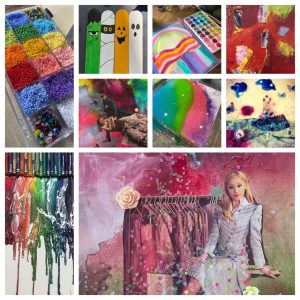
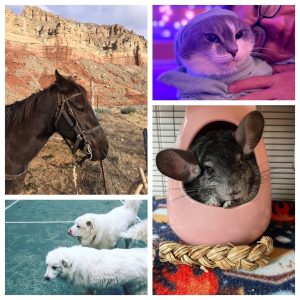
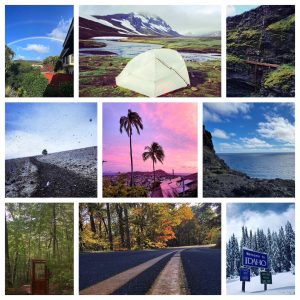
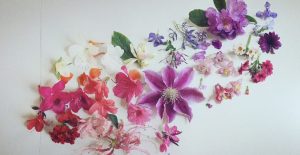
In my spare time I love reading, creating art (especially junk journaling), photography, floral design, being outside (especially gardening and hiking), practicing yoga, baking, and spending time with loved ones, in particular with our five fur babies; three chinchillas and two kitties. One of our newest members is our kitten who is about to turn one, he is a pirate tuxedo cat named Turbo. He is wild and we are so grateful to have rescued him from a beach in Hawaii. I am looking forward to an amazing and learning filled semester with you all! Thanks for reading!

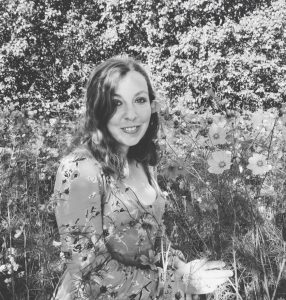
Below I have included some photos. (In order from left to right and top to bottom: collage of some of my various art pieces and mediums I dabble with, collage of some of my fave animals, collage of some of my favorite shots whilst exploring the great outdoors, one of my favorite sunset encounters whilst living in Hawaii, my favorite floral design forage, greetings from our pirate baby Turbo.

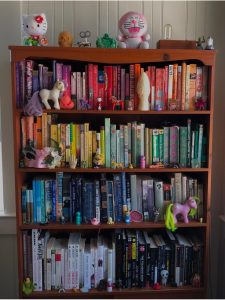
Lastly the photo in the middle of this post is my beloved bookshelf adorned with trinkets and some of my favorite reads.)