


There are numerous facets and key themes that have brought tremendous insights and modes of inspiration thus far within this course. One idea that has permeated throughout this course and within this Hyperlinked Communities module that resonated with me was the importance of libraries being designated safe places, inviting joy, creativity, and connection, whilst simultaneously serving as healing havens to many. Libraries not only promote healing through the power of books but through a variety of ways in allowing people to gather, connect, create, and unite together for innovation, enjoyment, entertainment, and even wellness. It is awe inspiring and invigorating to witness the profound examples on how these spaces push the envelope and are able to ignite pure joy and improve people’s lives in a plethora of ways for health and their overall well being.
This idea of libraries serving as third spaces relates to some of my recent work experience in the high school library I currently work in. This is my very first library gig, and it has had many challenges to say the least (that is a whole other story, I would love to share sometime), but I absolutely adore the daily work and the diverse students I serve. An anecdote from the other day illuminates the essential duty that libraries and librarians have in providing these safe yet joyful spaces, all the while ideally improving mental health for their range of patrons while present in these sacred refuges. There is some variation of course, but for the most part we have the same groups of kids every morning that come in and hang out in the library before their day of classes begin. One of the students I have become close with, she shared with me she is trans and gay and that this current administration has made her feel incredibly uneasy, even at school, yet she feels safe in the library. I told her how delighted I was in her sharing this with me and wanted to reiterate that everyone here in the library is invited, included, welcome, celebrated, and safe in my book. She finished this encounter with me by literally stating; “Being here at the library with my friends every morning is the best part of my day. It really helps me ground myself before the day ahead.” These sentiments were warming music to my ears and pulled at my deep and massive heartstrings. These are the kinds of values and feelings I hope to embody, encourage, and invite to ALL that come to our library (no matter what library I work in).
This exchange made me wonder how we can take this a step further? How can we continue to reach out to all of the students and beyond to make them feel even more welcome, to spark joy, acceptance, and curiosity? In addition, it got me thinking about how these comforting feelings hopefully improved this student’s sense of belonging, well-being, and community all in one in knowing she has a safe place she can always come to throughout the school day. How can we reach the populations in the school that may be struggling, that are nonusers, that could utilize these spaces to promote a better sense of belonging and well-being? How can we continue to improve their lives? What are some ways to better capitalize on health, wellness, and overall well-being for all within our school? Students, teachers, and staff? How can we inspire and promote these feelings beyond a diverse and inclusive collection of books (which we luckily and proudly have)?
I do not have these multifaceted answers yet, but it has certainly been illuminating and encouraged me to be ever more reflective in compiling ideas and concrete strategies to better serve these communities whilst simultaneously improving their lives in the process. In my opinion, these kinds of experiences fully encapsulate the mission and values that ought to be firmly established within any and all information organizations.
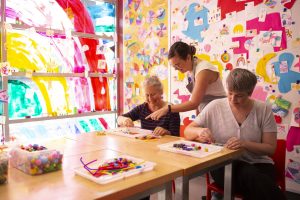 This module had some wonderful examples on how libraries play an instrumental role in improving their patrons lives, especially in regards to benefitting their health and simultaneously harnessing joy. The Senior Project Manager for the Victorian Public Library System stated how their libraries collaborated with various focus groups and health organizations to employ programs and toolkits to become more equipped in addressing health and well-being within their communities. He writes; “Libraries for Health and Wellbeing: A strategic framework for Victorian public libraries towards 2024 outlines the role and priorities for Victoria’s public libraries in supporting community health and wellbeing. It helps to provide solutions for how libraries can contribute to better health and wellbeing outcomes through programs, services, and partnerships under three impact areas: social connection, mental wellbeing and physical health” (Greenwood, 2022).
This integral tenet was echoed in the article titled; ‘Free, non-judgemental, accessible’: How your local library is a sanctuary of health and wellness. This article conveys several critical points that I resonated with deeply in my heart as an information professional. The essential points asserting; “A recent survey shows 92% of the people think of libraries as a safe place, libraries are home to more than just books, these safe spaces can help fight loneliness and find new friends, experts say” (Hasan, 2022). This article was beautiful and poignant in showcasing how libraries are places of refuge, have filled voids for many, and benefit the human connection in allowing unexpected friendships to blossom whilst simultaneously combating loneliness and promoting fun. It also further instills this massive concept that continues to recur throughout this course, that libraries are evolving well past mere book repositories. These spaces continue to evolve into learning commons, informational and community hubs. It is promising and exciting to see the proliferation of programming, services, and events in libraries that are increasing, catering to improving health and wellness across the board for patrons. As an avid yogi and mindfulness proponent, I would love to incorporate some wellness inspired events within our own library to serve as healthful options for our users.
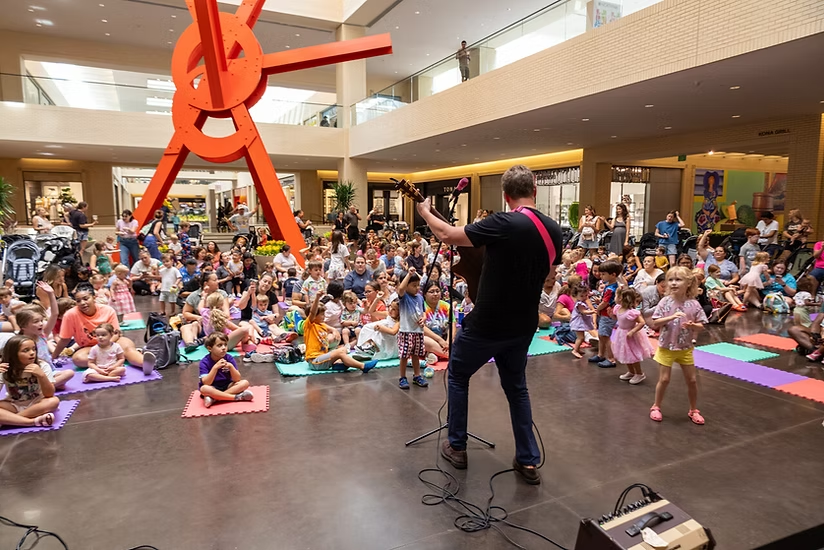 Jina DuVernay, Adult Services Manager at Gwinnett County Public Library in Georgia succinctly claims the importance of increasing joy in everyday life, especially when it comes to the workings of our libraries. She claims; “Joyous library programming can be a game-changer for many patrons. In a world with so much going on–oppositions, debates, challenges and uncertainties—the library can be a reprieve for folks, especially those who take advantage of the library’s programming. We all need a little (or a lot) more joy in our lives. Programming that provides a bit of fun, a chance to learn something new and meet new people helps patrons feel good. People may not feel joyful in the workplace, the world, or even in their homes, but library programs can supplement a sense of joy and lightheartedness in everyday life” (2024). She pointedly illuminates that we can capitalize on this joy by being: inviting, inquisitive, and interested with our users and their varied interests. I wholeheartedly agree that with how fast paced and overwhelming our everyday lives have become, having tiny pockets of whimsy, joy, and solace needs to be encouraged whenever possible. I think it is amazing that libraries are capitalizing on this integral trend. More joy = a more healthful, well rounded, and fulfilling life, period. It is more vital than ever to take care of ourselves and one another, it is nearly impossible to give to others when your own cup is depleted. I hope to inspire those around me with my embodiment of joy, passion, and empathy, this type of energy is infectious to those around you.
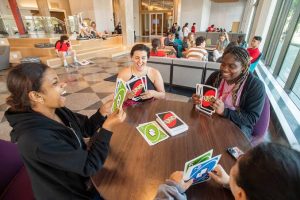 These sentiments were further strengthened in reading Dr. Stephen’s article; Beyond Buzzwords Ten Invitations to Build Library Connection and Community. These were all fantastic insights on building connections between users and our libraries, yet the ones that popped out to me that built upon these themes were: honoring small moments and cultivating a connection of care. Dr. Stephens eloquently and thoughtfully emphasizes in honoring small moments; “Sometimes a single conversation can shift someone’s view of what the library is”, and when cultivating a culture of care; “Infuse every touchpoint with kindness. Celebrate contributions. Make space for reflection and rest. Center the emotional labor that often goes unseen. Kindness scales” (Stephens, 2025). As librarians, we have several superpowers, yet I feel that the power of promoting joy, kindness, wellness, a love of learning, and inclusivity, is needed more than ever in building hope, acceptance, and connection within our modern society. I hope to promote these ideals and more within my own library experiences now and in the future.
References:
DuVernay, J. (2024, June 12). There is joy for all: Tips for joyous library programming | programming librarian. Programminglibrarian.Org. https://programminglibrarian.org/articles/there-joy-all-tips-joyous-library-programming
Greenwood, C. (2022). Healthy library, healthy life. Incite, 43(6). https://doi.org/10.3316/informit.764132483269438
Hasan, T. N. (2022, October 20). ‘Free, non-judgemental, accessible’: How your local library is a sanctuary of health and wellness. SBS Language. https://www.sbs.com.au/language/bangla/en/article/free-nonjudgmental-and-accessible-how-your-local-library-is-a-sanctuary-of-health-and-wellness/t15blzsi9
Stephens, M. (2025). Beyond buzzwords: Ten invitations to build library connection and community. https://www.dropbox.com/scl/fi/f05u6l0d50k8js28vgokz/Beyond-Buzzwords-Ten-Invitations-to-Build-Library-Connection-and-Community.pdf?rlkey=2i1b76g18h9t2qxmq3s1y7q90&st=of4tisuf&e=1&dl=0