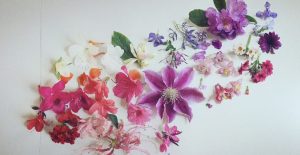


Reflection 1: Hyperlinked Communities: Libraries as Third Spaces Capitalizing on Health and Joy

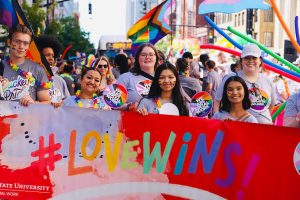
There are numerous facets and key themes that have brought tremendous insights and modes of inspiration thus far within this course. One idea that has permeated throughout this course and within this Hyperlinked Communities module that resonated with me was the importance of libraries being designated safe places, inviting joy, creativity, and connection, whilst simultaneously serving as healing havens to many. Libraries not only promote healing through the power of books but through a variety of ways in allowing people to gather, connect, create, and unite together for innovation, enjoyment, entertainment, and even wellness. It is awe inspiring and invigorating to witness the profound examples on how these spaces push the envelope and are able to ignite pure joy and improve people’s lives in a plethora of ways for health and their overall well being. 

This idea of libraries serving as third spaces relates to some of my recent work experience in the high school library I currently work in. This is my very first library gig, and it has had many challenges to say the least (that is a whole other story, I would love to share sometime), but I absolutely adore the daily work and the diverse students I serve. An anecdote from the other day illuminates the essential duty that libraries and librarians have in providing these safe yet joyful spaces, all the while ideally improving mental health for their range of patrons while present in these sacred refuges. There is some variation of course, but for the most part we have the same groups of kids every morning that come in and hang out in the library before their day of classes begin. One of the students I have become close with, she shared with me she is trans and gay and that this current administration has made her feel incredibly uneasy, even at school, yet she feels safe in the library. I told her how delighted I was in her sharing this with me and wanted to reiterate that everyone here in the library is invited, included, welcome, celebrated, and safe in my book. She finished this encounter with me by literally stating; “Being here at the library with my friends every morning is the best part of my day. It really helps me ground myself before the day ahead.” These sentiments were warming music to my ears and pulled at my deep and massive heartstrings. These are the kinds of values and feelings I hope to embody, encourage, and invite to ALL that come to our library (no matter what library I work in). 

This exchange made me wonder how we can take this a step further? How can we continue to reach out to all of the students and beyond to make them feel even more welcome, to spark joy, acceptance, and curiosity? In addition, it got me thinking about how these comforting feelings hopefully improved this student’s sense of belonging, well-being, and community all in one in knowing she has a safe place she can always come to throughout the school day. How can we reach the populations in the school that may be struggling, that are nonusers, that could utilize these spaces to promote a better sense of belonging and well-being? How can we continue to improve their lives? What are some ways to better capitalize on health, wellness, and overall well-being for all within our school? Students, teachers, and staff? How can we inspire and promote these feelings beyond a diverse and inclusive collection of books (which we luckily and proudly have)? 

I do not have these multifaceted answers yet, but it has certainly been illuminating and encouraged me to be ever more reflective in compiling ideas and concrete strategies to better serve these communities whilst simultaneously improving their lives in the process. In my opinion, these kinds of experiences fully encapsulate the mission and values that ought to be firmly established within any and all information organizations.
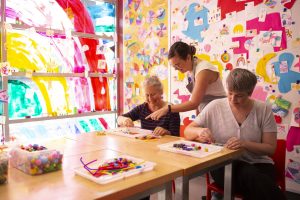
This module had some wonderful examples on how libraries play an instrumental role in improving their patrons lives, especially in regards to benefitting their health and simultaneously harnessing joy. The Senior Project Manager for the Victorian Public Library System stated how their libraries collaborated with various focus groups and health organizations to employ programs and toolkits to become more equipped in addressing health and well-being within their communities. He writes; “Libraries for Health and Wellbeing:  A strategic framework for Victorian public libraries towards 2024 outlines the role and priorities for Victoria’s public libraries in supporting community health and wellbeing. It helps to provide solutions for how libraries can contribute to better health and wellbeing outcomes through programs, services, and partnerships under three impact areas: social connection, mental wellbeing and physical health” (Greenwood, 2022). 

This integral tenet was echoed in the article titled; ‘Free, non-judgemental, accessible’: How your local library is a sanctuary of health and wellness. This article conveys several critical points that I resonated with deeply in my heart as an information professional. The essential points asserting; “A recent survey shows 92% of the people think of libraries as a safe place, libraries are home to more than just books, these safe spaces can help fight loneliness and find new friends, experts say” (Hasan, 2022). This article was beautiful and poignant in showcasing how libraries are places of refuge, have filled voids for many, and benefit the human connection in allowing unexpected friendships to blossom whilst simultaneously combating loneliness and promoting fun. It also further instills this massive concept that continues to recur throughout this course, that libraries are evolving well past mere book repositories. These spaces continue to evolve into learning commons, informational and community hubs. It is promising and exciting to see the proliferation of programming, services, and events in libraries that are increasing, catering to improving health and wellness across the board for patrons. As an avid yogi and mindfulness proponent, I would love to incorporate some wellness inspired events within our own library to serve as healthful options for our users. 
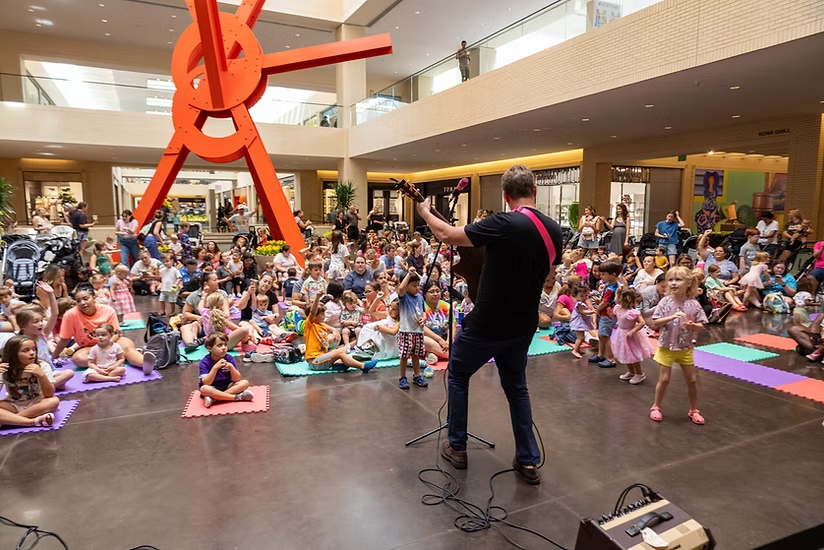
Jina DuVernay, Adult Services Manager at Gwinnett County Public Library in Georgia succinctly claims the importance of increasing joy in everyday life, especially when it comes to the workings of our libraries. She claims; “Joyous library programming can be a game-changer for many patrons. In a world with so much going on–oppositions, debates, challenges and uncertainties—the library can be a reprieve for folks, especially those who take advantage of the library’s programming. We all need a little (or a lot) more joy in our lives. Programming that provides a bit of fun, a chance to learn something new and meet new people helps patrons feel good. People may not feel joyful in the workplace, the world, or even in their homes, but library programs can supplement a sense of joy and lightheartedness in everyday life” (2024). She pointedly illuminates that we can capitalize on this joy by being: inviting, inquisitive, and interested with our users and their varied interests. I wholeheartedly agree that with how fast paced and overwhelming our everyday lives have become, having tiny pockets of whimsy, joy, and solace needs to be encouraged whenever possible. I think it is amazing that libraries are capitalizing on this integral trend. More joy = a more healthful, well rounded, and fulfilling life, period. It is more vital than ever to take care of ourselves and one another, it is nearly impossible to give to others when your own cup is depleted. I hope to inspire those around me with my embodiment of joy, passion, and empathy, this type of energy is infectious to those around you. 
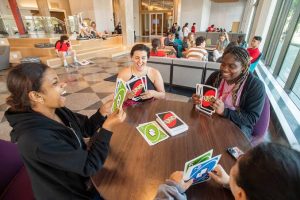
These sentiments were further strengthened in reading Dr. Stephen’s article; Beyond Buzzwords Ten Invitations to Build Library Connection and Community. These were all fantastic insights on building connections between users and our libraries, yet the ones that popped out to me that built upon these themes were: honoring small moments and cultivating a connection of care. Dr. Stephens eloquently and thoughtfully emphasizes in honoring small moments; “Sometimes a single conversation can shift someone’s view of what the library is”, and when cultivating a culture of care; “Infuse every touchpoint with kindness. Celebrate contributions. Make space for reflection and rest. Center the emotional labor that often goes unseen. Kindness scales” (Stephens, 2025). As librarians, we have several superpowers, yet I feel that the power of promoting joy, kindness, wellness, a love of learning, and inclusivity, is needed more than ever in building hope, acceptance, and connection within our modern society. I hope to promote these ideals and more within my own library experiences now and in the future.  

References: 

DuVernay, J. (2024, June 12). There is joy for all: Tips for joyous library programming | programming librarian. Programminglibrarian.Org. https://programminglibrarian.org/articles/there-joy-all-tips-joyous-library-programming

Greenwood, C. (2022). Healthy library, healthy life. Incite, 43(6). https://doi.org/10.3316/informit.764132483269438

Hasan, T. N. (2022, October 20). ‘Free, non-judgemental, accessible’: How your local library is a sanctuary of health and wellness. SBS Language. https://www.sbs.com.au/language/bangla/en/article/free-nonjudgmental-and-accessible-how-your-local-library-is-a-sanctuary-of-health-and-wellness/t15blzsi9

Stephens, M. (2025). Beyond buzzwords: Ten invitations to build library connection and community. https://www.dropbox.com/scl/fi/f05u6l0d50k8js28vgokz/Beyond-Buzzwords-Ten-Invitations-to-Build-Library-Connection-and-Community.pdf?rlkey=2i1b76g18h9t2qxmq3s1y7q90&st=of4tisuf&e=1&dl=0
Assignment X; Participatory Services: How Active and Engaged Communities Shape Our Libraries

Introduction: One area that greatly resonated within the hyperlinked library realm thus far is the concept of libraries employing participatory service to foster connectedness, value, and trust with their users. According to Dr. Stephens (2012) there are three parts to this idea; engaging users to add library services, offering the chance for users to plan with libraries, and offering a mechanism for evaluation. Allowing the users to be more involved with their libraries, gives them a greater sense of ownership within their own communities. In addition, this model further instills the idea that libraries and information professionals are facilitators in promoting lifelong learning for themselves and their patrons. As libraries shift well beyond mere book collections, and are being transformed further into informational community hubs and maker spaces, allowing this kind of culture for participation and creation is vastly intriguing and appealing to the community. At the end of the day, the utmost goal of the library is to best serve and connect with its users, along with meeting their dynamic informational wants and needs. 

What better way for this to occur other than having the users be involved with this integral process throughout? Their feedback is invaluable and has the capacity to better mold ideal everyday practices, programming, and services that the library is able to offer. An excellent remark I appreciated from his presentation; “Anytime we talk about technology, we’re not really talking about technology, we’re talking about how we can connect to our users, how we can connect to our users on a level of the human heart” (Stephens, 2012). How can we take this idea to the next level? What are deeper, more meaningful ways we can connect heart to heart through our libraries?

Dr. Stephens further asserts the importance of engagement from his Heart of Librarianship book in stating; “Building collections and seeking ways to engage the public and promote curiosity challenge us all…The era of participatory culture demands that cultural and information professionals play an active, visible role in our communities” (2016). Esteemed fellow librarian Michael Casey also succinctly suggests that “the importance of this participation cannot be overstated” (2011).  There are a plethora of techniques to engage the public through this model yet I shall share a handful of meaningful highlights below.

*Note feel free to check out Dr. Stephen’s iconic lecture here. Fun fact: this lecture greatly inspired me to take this course. 

 ACCESS ACCESS (be all about it): One major requirement for user engagement is that the library needs to be chock full of a variety of desirable, innovative, interesting, and engaging materials and resources. This ranges from cutting edge useful technologies, to diverse, inclusive digital and physical collections, unique programming, and if possible incorporating maker spaces or learning commons (more on that below) that are appealing and valuable to community members. Innovative solutions capitalizing on this motif showcased in the module are tremendous examples of libraries providing robust experiences and/or access to a collection of assorted useful things. 

For example, some of the neat free things the San Francisco Library can provide includes; seasonal exhibits, free passes to local museums and other amazing places (such as gardens, galleries, and even swimming pools), vehicle passes to CA state parks, access to vinyl, and even family and genealogy research (Ferrell, 2022). The popular trend of libraries providing access to a repertoire of an incredible yet versatile “collection of things” continues to grow. Toy and game libraries are becoming more widely available across the country (Free, 2020) , along with libraries offering access to things that range from “popcorn makers to ukuleles” (Rivenberg, 2022).  I look forward to witnessing further where this trend will continue to evolve and the imaginative ideas and solutions community members and their libraries develop henceforth. Here’s another rad article highlighting 200 random things that aren’t books that users can check out for free from the Beaverton City Library in Oregon (Glum, 2019). 

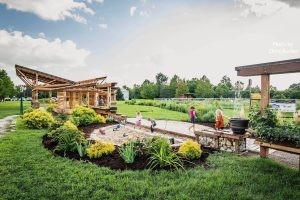
(Community gardens from Muncie Public Library in Indiana)

Innovative Maker Spaces and Learning Commons 

It is remarkable to witness the numerous institutions that are creatively embracing this movement when it comes to converting libraries into maker spaces and learning commons. Observing the creativity, innovation, and participation from the communities and libraries in building these beloved yet multi functional spaces has been awe inspiring to say the very least. It is genuinely amazing to see what some of these organizations have done by listening to their patrons in providing appealing spaces, tools, and events for them to connect, learn, and enjoy. Having this adaptability and capability further allows libraries to possess tremendous value amongst the competitive internet sphere, rampant cafes, and bustling bookspaces within our modern society. These 3rd space community centers are inviting informational hubs that are catalysts for LEARNING for our users. I loved the examples provided within our modules. It was incredible to see San Francisco Public Library create “The Mix” program (Obrien, 2019) and spaces specifically designed for their teen populations along with Dokk1, the main library in Aarhus, Denmark. This massive library is a multifunctional learning commons and cultural hub, featuring maker spaces, inventive workshops and exciting local events, engaging community areas, and much more. They even have a cafe, various spaces for entertainers, and engaging playgrounds for all to enjoy. 

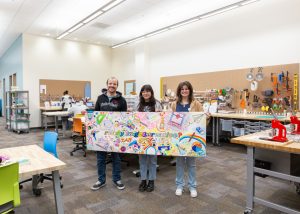
(The Makery, makerspace in Cal State San Marcos Library)

In researching makespaces, I discovered the Maker[Space] Ship which was created by the San Jose Public Library. This was an initiative developed and executed by our very own San Jose State University MLIS grad Erin Berman. Check out the brief video below, it is a splendid  mobile makerspace with a variety of interesting programs, promoting access to patrons beyond library walls. 

Continuous Patron Feedback 

Inviting and involving user feedback in terms of planning, developing, and executing ideas or major decisions required for libraries is absolutely critical as well. As technologies and our society continues to evolve, it is imperative that information organizations continuously embark on gathering feedback from their users. This is an ONGOING, DYNAMIC, and ITERATIVE process. With our society changing, our needs and wants from our users will simultaneously change. We need to actively listen along the way. 

The Los Angeles Public Library did a great job in surveying the public in asking specifically what they wanted from their organization. They inquire to their users; “We’ve been inspired by the Maker Movement so we’re asking ourselves if libraries should have makerspaces, loan out tools or even become a seed bank? Should there be an area to create your own media– like YouTube videos, book trailers, music, and more? And do people want workshops on how to fix bikes, learn Arduino or Scratch, or design video games? We also need to know whether people still want quiet areas, study rooms, meeting rooms, multipurpose rooms and performance spaces. How should the services and information in the library be organized? Would you charge late fines or offer a fine free amnesty period? Do people still want cafes at the library? There are so many exciting possibilities—we are full of ideas—but we need your help honing our focus. We can’t design the library of the future without your help—no city can. Answer our brief two minute survey and tell us your vision” (Mack, 2013). What an explicit yet inspiring example to invite direct feedback from their users, in allowing them to have power to mold the future capabilities of their own libraries. 

Further Reflections 

This major theme stood out to me because I feel the prospective communities that libraries serve are the bread and butter or heart and soul in all that we do. Without our patrons and communities, libraries would cease to exist. Ultimately it is our main purpose, in doing all that we can to empower, support, and aid our communities in any means possible, this is where our creativity, resourcefulness, and innovation truly shines. This pivotal idea permeates through the entire mission and values that libraries embody and execute daily within their localities. Without this mutualistic partnership, patrons feel undervalued and are less inclined to visit their library. It is through these wondrous opportunities that we are able to harness learning, human connection, curiosity, empathy, enjoyment, entertainment, kindness and much more. As librarians we are ideally beacons of both joy and knowledge. We are hopefully inspirational role models in showcasing the importance of lifelong learning. It is through these interactions, however they come to fruition that we are able to learn and inspire one another. I connect deeply with these ideals with my past, present, and future endeavors for education and librarianship. Being well versed in customer service and education has allowed me to work with and cater to a diverse range of learning styles, needs, and walks of life. Stressing this relevant experience assisted me in landing my current position at a high school library. I shall continue to discover from those that I work with and serve, doing my absolute best in inviting their stories, feedback, and participation to ensure we provide the most meaningful library experience possible when interfacing with one another. 

References: 

Casey, M. (2011, October 20). Revisiting participatory service in trying times – a TTW guest post by Michael Casey. Tame the Web. https://tametheweb.com/2011/10/20/revisiting-participatory-service-in-trying-times-a-ttw-guest-post-by-michael-casey/

Free, C. (2020, January 22). This growing trend lets kids check out games and dolls from a toy library. The Washington Post. https://www.washingtonpost.com/lifestyle/2020/01/22/this-growing-trend-lets-kids-check-out-games-dolls-toy-library/

Ferrell, J. (2022, September 15). 13 Awesome free things you can do with an SF public library card. Secret San Francisco. https://secretsanfrancisco.com/sf-public-library-card/

Glum, J. (2019, May 16). 200 Random things libraries will let you check out for free — From instant pots to skulls. Money. https://money.com/library-of-things-check-out-free/

Mack, C. (2013, February 17). Crowdsourced design: Why Los Angeles is asking the public to create the library of the future. Good.Is. https://www.good.is/crowdsourced-design-why-los-angeles-is-asking-the-public-to-create-the-library-of-the-future/

O’Brien, C. (2019, June 24). How San Francisco’s public libraries are embracing their changing role. Shareable. https://www.shareable.net/how-san-francisco-public-libraries-are-embracing-their-changing-role/

Rivenburg, R. (2022, August 3). What can a library card get you? Try a popcorn maker or ukulele. The Christian Science Monitor. https://www.csmonitor.com/Arts-Culture/Books/2022/0803/What-can-a-library-card-get-you-Try-a-popcorn-maker-or-ukulele

San Jose Public Library. (2016, December 20). Maker[space]ship launch! [Video]. YouTube. https://www.youtube.com/watch?v=35eUew7HvVE

Schneider, K. (2006, June 3). The user is not broken: A meme masquerading as a manifesto. Free Range Librarian. https://freerangelibrarian.com/2006/06/03/the-user-is-not-broken-a-meme-masquerading-as-a-manifesto/

SJSU School of Information. (2012, April 17). Michael Stephens: Hyperlinked libraries. [Video]. YouTube. https://www.youtube.com/watch?v=CTmZtKGHcKk&t=661s

Stephens, M. (2016). Heart of librarianship: Attentive, positive, purposeful change. American Library Association.

An Introduction to Sophie

Hi Everyone, 

My name is Sophie. I am originally from Charlottesville, VA, but recently moved from Honolulu, Hawaii to our forever home in Duluth, MN. My husband and I, along with our furry family, lived there for nearly six years. We loved it and it was a truly magical and beautiful chapter in our hearts that we will forever cherish but we are beyond eager and excited for this next adventure to unfurl. I have only lived here for a little over two weeks but already adore this area and the vibes here.

I graduated with a B.S. in Appropriate Technology ages ago from Appalachian State University in Boone, NC. Thereafter I moved back to Charlottesville and accrued nearly a decade of experience in hospitality in working in upscale french restaurants and was a part of the management team there. When we moved to Hawaii I pivoted completely into the elementary educational realm, I am so thankful I took this plunge and fell into this community. I was an academic tutor with a focus on Language Arts through the YMCA at an afterschool program at a local elementary school. I worked with that program for three years. I then ended up substitute teaching at a prestigious private school, Punahou School for a little less than two years. I was able to substitute for the Junior School which included grades K-5. I also worked four summers there as an afternoon enrichment instructor for kindergarten or first grade.

I genuinely loved my time in these roles, especially at Punahou. This was by far my greatest working experience to date. Punahou is truly such a special place chock full with amazing educators, I had the privilege and pleasure of working with a plethora of people from diverse backgrounds. I worked closely with many talented, caring, creative, and thoughtful individuals. I learned immensely from these role models along with the students I taught as well. During this timeframe I received a certificate in Special Education and Inclusion through Leeward Community College in Pearl City, Hawaii. In addition I was able to serve my yoga community in Honolulu by working as a studio support member for nearly 2.5 years.

Librarianship has been on the back of my mind for a while now. I knew I wanted to be in education but in a different capacity than a traditional teacher. I know in my heart librarianship is where I want to venture when it comes to my career and goals. I genuinely enjoy serving my unique communities and empowering and helping them in any way that I can. This will be my third year with the MLIS program at SJSU, but I have taken it incredibly slow thus far. The first two years I only took one class per semester due to my taxing work schedule and wanting to wade cautiously into the program. I am now increasing my workload up to two classes per semester as I feel more grounded and better equipped to do so responsibly.

I am ecstatic to share that I just landed my first library gig officially this past week. I begin tomorrow in my new role as a library assistant at a local high school in the area. This library must be rather large since they have four library assistants. I am anxious in that I do not have immense experience working with high school students (elementary has been more my forte) and I have never professionally worked in a library setting other than subbing in ours a couple of times. I am incredibly excited though, I am going in with the growth mindset mentality. I recognize how great of an opportunity this is and that I will learn tremendously through this endeavor. I know it will be fulfilling and heartwarming to serve my community here, there are many facets I am looking forward to!

In addition, I am looking forward to increasing my workload and exploring my librarian journey further this semester! This semester officially allows me to dive into electives for the first time since starting this scholastic adventure and I am thrilled about that. I appreciated my core classes but am eager to delve deeper into more niche areas of librarianship and information services. I chose this course because I immediately connected to and enjoyed Dr. Stephen’s passionate and informative lectures that comprised a majority of INFO 200. He inspired me greatly witnessing his creativity, thoughtfulness, and wealth of knowledge for this course. In regards to our hyperlinked library course, I am exultant to cover concepts of participatory culture, curiosity, the human touch involved within the hyperlinked library sphere, amongst many other possibilities and prospects.

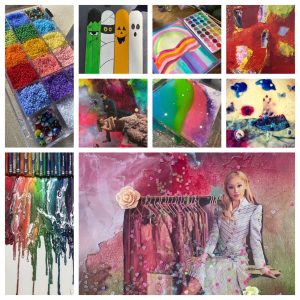
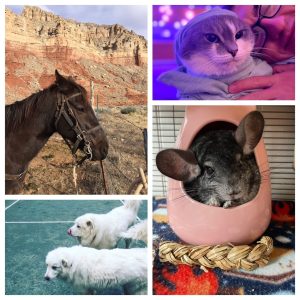
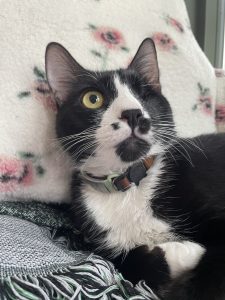
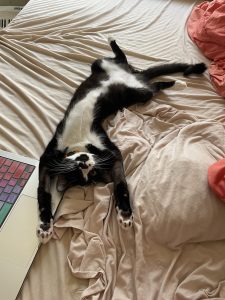
In my spare time I love reading, creating art (especially junk journaling), photography, floral design, being outside (especially gardening and hiking), practicing yoga, baking, and spending time with loved ones, in particular with our five fur babies; three chinchillas and two kitties. One of our newest members is our kitten who is about to turn one, he is a pirate tuxedo cat named Turbo. He is wild and we are so grateful to have rescued him from a beach in Hawaii. I am looking forward to an amazing and learning filled semester with you all! Thanks for reading!

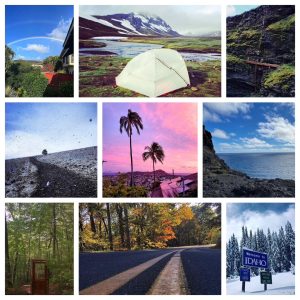
Below I have included some photos. (In order from left to right and top to bottom: collage of some of my various art pieces and mediums I dabble with, collage of some of my fave animals, collage of some of my favorite shots whilst exploring the great outdoors, one of my favorite sunset encounters whilst living in Hawaii, my favorite floral design forage, greetings from our pirate baby Turbo.

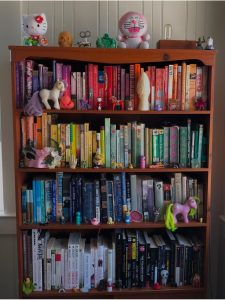
Lastly the photo in the middle of this post is my beloved bookshelf adorned with trinkets and some of my favorite reads.)