Hi Hyperlinked Librarians,
Please take a look at my Inspiration Report!
Thanks, all!
Emily
Text is in more than just books
Hi Hyperlinked Librarians,
Please take a look at my Inspiration Report!
Thanks, all!
Emily
Infinite Learning contained three sub-modules: Learning Everywhere, Library as Classroom, and Professional Learning Experiences (PLEs). For this reflection blog post, I am focusing on librarianship and PLEs.
Because of my time spent volunteering with my local Parent Teacher Association (PTA), as well as my own friendships, I am exposed to a lot of teacher chatter. I have to say, librarians truly embrace lifelong learning for themselves and their users. Teachers…
To maintain my future Librarian certificate in New York State, I will have to complete 60 hours of continuing education every 5 years. As a Librarian Trainee, I am not yet eligible to accrue continuing education units (CEUs), but that hasn’t stopped me from enrolling in courses. I am offered CEUs locally from Nassau Library System (our library consortium), Nassau County Library Association, and virtually from the New York State Library and the American Library Association. Even the San José State University ePortfolio, required for receiving an MLIS degree, asks that students make short- and long-term commitments to lifelong learning for each of the 14 competencies. The education is out there!
Teachers in New York State have to complete 100 hours of continuing education every 5 years. Yes, that is almost double the requirement for librarians, but most of the local teachers I know complain about the commitment…?
There’s even a difference in attitude about sharing knowledge and resources between librarians and teachers. Jbrary was absolutely essential to my self-learning about Storytime, and I’ve found several other blogs with book, fingerplay, or song recommendations by theme since. Facebook groups such as Programming Librarian Interest Group and Library Bulletin Boards and Displays swap ideas and extend credit almost daily. Meanwhile, teachers monetize and hoard their knowledge with sites like Teachers Pay Teachers and Etsy sites.
I don’t understand the difference in attitudes to lifelong learning, but I’m glad I’ve landed on the right side of things with librarianship. [insert Latin motto about learning here LOL]

Note: GIF of Patricia (a bookmobile librarian) from the Apple TV series Widow’s Bay.
References
New York State Library. (n.d.). Professional development. NYSL. https://nysl.nysed.gov/libdev/cert/conted
New York State Union of Teachers. (2026). Ongoing certification and CTLE requirements. NYSUT. https://www.nysut.org/resources/special-resources-sites/certification/classroom-teachers/ongoing-certification-and-ctle-requirements
At work, I’m known to shake an older picture book and say, “Photojournalism!” As in, “Where did it go?”
As a child of the (19)80s, I felt that much of my childhood was spent decoding photobooks such as A Very Young Dancer by Jill Krementz or Is It Red? Is It Yellow? Is It Blue? by the great Tana Hoben.

Note: Cover art from A Very Young Dancer (Krementz, 1976).
INFO287: The Hyperlinked Library’s Module 10 (The Power of Stories) got me thinking about this with the human library, which relies on human curiosity, question-asking, and diversity of experience. So do photobooks! In a Time for Kids interview, photojournalist Alice Aedy states simply, “Photojournalists aren’t just photographers. They’re storytellers.”
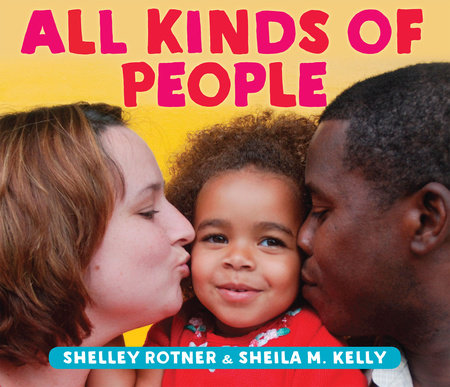
Montessori practice encourages books “rooted in reality” (The Montessori Room, 2026). In a blog post, photographer Chelsea Hann posits, “A photograph might ask: What else is happening here? What do I notice now that I didn’t see before? What stories are still unfolding beyond the frame?” “Reading” photography is an important childhood literacy practice, even more so if the photobooks are wordless. This encourages vocabulary building, allows for more storytelling, and is often culturally responsive (Dell’Angelo, 2015 & Semicolon, 2020). As Shelley Rotner, another great children’s photobooks author, states, “My books explore self-discovery and awareness through observations and diversity. It is my intention and hope that these books act as a catalyst to generate conversation and help children express their thoughts and feelings” (n.d.).
Note: Cover art from All Kinds of People (Rotner, 2018).
Indeed, Dr. Rudine Sims Bishop theorized that children need books to act as mirrors, windows, and sliding glass doors. Mirrors, to see themselves; windows, to look out at the world; and sliding glass doors, in order to enter the world (1990). What better format than photobooks?
Etc.
Around the time I was writing this post, I came across this The New York Times quiz. I asked my kids to do it, and I am proud to say they were able to decode within 5 years of every photograph!
References
Bishop, R.S. (1990). Mirrors, windows, and sliding glass doors. Perspectives,6(3),ix–xi.
Dell’Angelo, T. (2015, August 31). Literacy through photography for English language learners. Edutopia. https://www.edutopia.org/blog/literacy-through-photography-for-ells-tabitha-dellangelo?utm_source=SilverpopMailing&utm_medium=email&utm_campaign=120314%20enews%20ELL%20ngm%20B&utm_content=&utm_term=feature1hed&spMailingID=10070273&spUserID=MjcyNDk4MTE0NDcS1&spJobID=440189111&spReportId=NDQwMTg5MTExS0
Hann, C. (2025, November 11). Seeing otherwise: Photography as pedagogical storytelling practice. Early Childhood Pedagogy Network. https://ecpn.ca/seeing-otherwise-photography-as-pedagogical-storytelling-practice/
Krementz, J. (1976). A very young dancer. Knopf.
The Montessori Room. (2026). The best board books with real photographs. https://themontessoriroom.com/blogs/montessori-tips/15-of-the-best-board-books-with-real-photographs
Phan, K. (2020, November 3). A closer look. Time for Kids. https://www.timeforkids.com/g34/closer-look/?rl=en-680
Rotner, S. (n.d.). Bio. https://www.shelleyrotner.com/bio/
Rotner, S. (2018). All kinds of people. Holiday House.
Semicolon. (2020, June 23). Tana Hoben’s concept books. Semicolon. https://www.semicolonblog.com/tana-hobans-concept-books/
Wentz, E. (2013, April 26). The human library: Sharing the community with itself. Public Libraries Online. https://publiclibrariesonline.org/2013/04/human_librar/
@michael referenced S-Town as responsible for the podcast boom. For me, it was Serial a few years prior, also produced by Serial productions. The intro music! The MailChimp ads! The cell phone towers!
Please enjoy the SNL parody:
Ooooohhh. Module 8 (New Models) really opened my eyes and thinking, especially looking ahead to November’s Inspiration Report assignment. From Colorado’s Anythink Libraries (especially the Nature Library!) to the Camden County Library System‘s Books and Cooks program, library service models feel like an LIS area of exploration, innovation, and experimentation.
I’m going to put the Nature Library on hold for this reflection post, because the model feels bigger than 500 words. But something about “pairing” libraries with life skills like being outdoors and cooking feels really groundbreaking.
I thought I’d start somewhat smaller, with Camden County Library System‘s Books and Cooks program. When the library system was adding branches, it build in the city of Camden, which, it turns out, is a food desert. From there, system director Linda Devlin created a culinary literacy program with a mobile kitchen. Patrons are educated on nutrition, how to read nutrition labels, and even table etiquette. “My philosophy is, we find out what challenges a community faces and ask how can we help them,” Devlin says.
At my local library, I have tried to build food literacy into children’s programming, and this single avenue does not feel like enough (hence the need for an all-new service model). We’re re-starting our “Kids in the Kitchen” program, in which we purchase and provide food items and help patrons in early elementary school assemble them, essentially. (This is safer and more low-maintenance than cooking or baking.) However, to help boost attendance, most of the food items are candy-based.
For Storytime, I have done several food-based themes: “gathering” for Thanksgiving (there really aren’t too many turkey books!) and “fruit” this past summer. I did do a “Cookies” theme last holiday season, but I would never dare do a “candy” theme for that age group (toddlers and preschoolers)!
In 2019, the American Library Association (ALA) added “Sustainability” to its Core Values. As it turns out, food literacy seems to dovetail with sustainability almost as much as the environmentalism of the Nature Library.
Potential future reading for my Inspiration Report includes:
• United Nations Food Systems Coordination Hub
• American Library Association definition of food literacy
References
American Library Association. (2019, May 14). ALA adding sustainability as a core value of librarianship [Press release]. https://www.ala.org/news/2012/01/ala-adding-sustainability-core-value-librarianship
Anythink Libraries. (2025-a). About Anythink. https://www.anythinklibraries.org/about/
Anythink Libraries. (2025-b). Anythink Nature Library. https://www.anythinklibraries.org/about/
Baldwin Public Library. (n.d.). Kids in the kitchen (grades K – 2). https://baldwinpl.assabetinteractive.com/calendar/kids-in-the-kitchen-grades-k-2/
Ewen, L. (2018, September 4). A movable feast. American Libraries. https://americanlibrariesmagazine.org/2018/09/04/movable-feast-library-mobile-kitchenssss
CYOA!!!!!
Here is a link: https://youtu.be/76RFq9Wx6ck
Resources:
As I was reviewing our Module 5 readings, I re-watched the American Library Association (ALA)’s YouTube video about equity at the Multnomah County Library in Portland, Oregon, and was surprised by the “quality” of YouTube’s auto-generated closed captions.
For Assignment X, I retroactively added captions to my YouTube video after reading INFO287’s guidelines for media-based assignments. Always a writer/editor, I reviewed the Canva-generated captions and edited them as necessary. The video was about Scandinavian libraries, so naturally I had to correct proper nouns like “Dokk1” and “Oodi” and Latin phrases such as genius loci.
At 1:13, LeFoster Williams, a Black Cultural Library Advocate and Library Assistant at Multnomah County Library, says “patrons” two times; YouTube’s captions read as “pictures” and “pages” instead. At 3:45, Mrs. Tang, a patron, is speaking with Sean Khoo, a librarian at Multnomah County Library, about their bilingual services. Mrs. Tang, speaking Cantonese, is captioned as saying “they kill the whole dog at home.” The error was distracting and could be culturally damaging if read by an uninformed, English-speaking YouTube user. Meanwhile, the auto-generated captions accurately capture what the white Director of Libraries for the Multnomah County Library System is saying throughout.
Naturally, I did some research on the history of closed captioning and the limits of automatic speech recognition technology. The National Captioning Institute, a nonprofit, was created in 1979 to expand television access to the deaf and hard of hearing, and eventually non-native English speakers. Now, it is a model of inclusivity in media consumption (Burchett, 2019 & National Captioning Institute, 2020-a). Live, or real-time, captioning has an accuracy rate of 98% (National Captioning Institute, 2020-b). According to the International Speech Communication Association (ISCA), with manual keyboard input, human transcribers can achieve a near 100% accuracy rate at a lag rate of 8 seconds maximum (ISCA, 2024).

Both commercial and open-source automatic speech recognition (ASR) is error-laden, with open-source ASR producing more errors (Russell, 2024). It is a known fact that ASR has a negative performance bias against non-native speakers or those with dialects (Russell, 2024). Outrageously, a study conducted by the Stanford Computational Policy Lab showed ASR misunderstands Black male speakers at twice the rate it misunderstands white male speakers (Koenecke, 2020). You can explore infographic study results at this Stanford site.
It is still recommended that humans manually correct an ASR-produced transcript, as I did with my captions made in Canva (Russell, 2024). Thankfully, the ALA upheld its core value of accessibility with accurate captioning in this video.
Up next… voice AI “accent conversion” technology from Krisp (Krisp, 2026).
References
American Library Association. (2019). Multnomah County Library: Creating conditions for equity to flourish [Video]. YouTube. https://www.youtube.com/watch?v=SKGlxh-zc0Y
American Library Association. (2024, January). Core values of librarianship. https://www.ala.org/advocacy/advocacy/intfreedom/corevalues
Burchett, M.H. (2019). Closed captioning developed. EBSCO. https://www.ebsco.com/research-starters/communication-and-mass-media/closed-captioning-developed/
Koenecke, A., Nam, A., Lake, E., Nudell, J., Quartey, M., Mengesha, Z., Toups, C., Rickford, J.R., Jurafsky, D., & Goel, S. (2020, March 23). Racial disparities in automated speech recognition. Proceedings of the National Academy of Sciences of the United States of America, 117(14), 7684–7689. https://doi.org/10.1073/pnas.1915768117
Krisp Technologies, Inc. (2026). AI accent conversion. https://krisp.ai/ai-accent-conversion/
National Captioning Institute. (2020-a). About us. https://www.ncicap.org/about-us
National Captioning Institute. (2020-b). Viewer FAQ. https://www.ncicap.org/viewer-faq
Link is here. Captions included!