At work, I’m known to shake an older picture book and say, “Photojournalism!” As in, “Where did it go?”
As a child of the (19)80s, I felt that much of my childhood was spent decoding photobooks such as A Very Young Dancer by Jill Krementz or Is It Red? Is It Yellow? Is It Blue? by the great Tana Hoben.

Note: Cover art from A Very Young Dancer (Krementz, 1976).
INFO287: The Hyperlinked Library’s Module 10 (The Power of Stories) got me thinking about this with the human library, which relies on human curiosity, question-asking, and diversity of experience. So do photobooks! In a Time for Kids interview, photojournalist Alice Aedy states simply, “Photojournalists aren’t just photographers. They’re storytellers.”
Montessori practice encourages books “rooted in reality” (The Montessori Room, 2026). In a blog post, photographer Chelsea Hann posits, “A photograph might ask: What else is happening here? What do I notice now that I didn’t see before? What stories are still unfolding beyond the frame?” “Reading” photography is an important childhood literacy practice, even more so if the photobooks are wordless. This encourages vocabulary building, allows for more storytelling, and is often culturally responsive (Dell’Angelo, 2015 & Semicolon, 2020). As Shelley Rotner, another great children’s photobooks author, states, “My books explore self-discovery and awareness through observations and diversity. It is my intention and hope that these books act as a catalyst to generate conversation and help children express their thoughts and feelings” (n.d.).
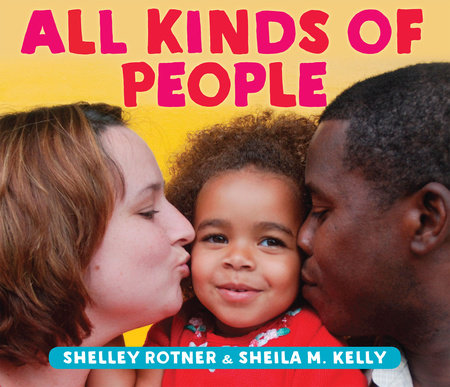
Note: Cover art from All Kinds of People (Rotner, 2018).
Indeed, Dr. Rudine Sims Bishop theorized that children need books to act as mirrors, windows, and sliding glass doors. Mirrors, to see themselves; windows, to look out at the world; and sliding glass doors, in order to enter the world (1990). What better format than photobooks?
Etc.
Around the time I was writing this post, I came across this The New York Times quiz. I asked my kids to do it, and I am proud to say they were able to decode within 5 years of every photograph!
References
Bishop, R.S. (1990). Mirrors, windows, and sliding glass doors. Perspectives,6(3),ix–xi.
Dell’Angelo, T. (2015, August 31). Literacy through photography for English language learners. Edutopia. https://www.edutopia.org/blog/literacy-through-photography-for-ells-tabitha-dellangelo?utm_source=SilverpopMailing&utm_medium=email&utm_campaign=120314%20enews%20ELL%20ngm%20B&utm_content=&utm_term=feature1hed&spMailingID=10070273&spUserID=MjcyNDk4MTE0NDcS1&spJobID=440189111&spReportId=NDQwMTg5MTExS0
Hann, C. (2025, November 11). Seeing otherwise: Photography as pedagogical storytelling practice. Early Childhood Pedagogy Network. https://ecpn.ca/seeing-otherwise-photography-as-pedagogical-storytelling-practice/
Krementz, J. (1976). A very young dancer. Knopf.
The Montessori Room. (2026). The best board books with real photographs. https://themontessoriroom.com/blogs/montessori-tips/15-of-the-best-board-books-with-real-photographs
Phan, K. (2020, November 3). A closer look. Time for Kids. https://www.timeforkids.com/g34/closer-look/?rl=en-680
Rotner, S. (n.d.). Bio. https://www.shelleyrotner.com/bio/
Rotner, S. (2018). All kinds of people. Holiday House.
Semicolon. (2020, June 23). Tana Hoben’s concept books. Semicolon. https://www.semicolonblog.com/tana-hobans-concept-books/
Wentz, E. (2013, April 26). The human library: Sharing the community with itself. Public Libraries Online. https://publiclibrariesonline.org/2013/04/human_librar/
@emilyelizabeth Of course, photographs! The New York Times Quiz does a great job of creating curiousity to interact with pieces of history. I like at the end how they share infographics on the data of how people did in guessing. They used red, yellow, and green throughout the report to give a cohesive glance at how close the guess was to the correct year. You shared a few childhood picks for studying photographs: Is It Red? Is It Yellow? Is It Blue? by Tana Hoban and A Very Young Dancer by Jill Krementz. I put the former on hold at my public library because I am curious to see for myself, but the latter was unavailable. What drew you in about that book, what did you try to decode? Personally, I spent my childhood studying photograph books that focused on search-and-find, such as I Spy, and spot-the-difference type of books. The notion of wordless picture books got introduced to me as an adult during the MLIS program, for example, Tuesday by David Wiesner.
Hi @innerchildlibrarian!
Ooh, in which class did you learn about Tuesday by David Wiesner? I also like I Walk with Vanessa by Kerascoët, Wave by Suzy Lee, and especially Pool by JiHyeon Lee.
I looked through photographs from A Very Young Dancer but none that I could find spoke to me; it must have been the overall reading experience. She lived in NYC, and I remember being struck by how many adults she engaged with, who seemed to respect her (parents, teachers, babysitters, other dancers). Her facial expressions showed joy, excitement, sadness and frustration as she goes through performing and auditions and injury. To me, as a child, she looked like a happy, confident girl.
Unfortunately I came across this obituary in recent years:
https://www.nytimes.com/2022/02/12/arts/dance/stephanie-selby-dead.html?unlocked_article_code=1.R1E.cYwC.kiHqMAzKKDBd&smid=url-share
I suppose I was shocked to find that my impressions, which I believe were intended by the photographer, did not match reality.