Hi Hyperlinked Librarians,
Please take a look at my Inspiration Report!
Thanks, all!
Emily
Text is in more than just books
Hi Hyperlinked Librarians,
Please take a look at my Inspiration Report!
Thanks, all!
Emily
Infinite Learning contained three sub-modules: Learning Everywhere, Library as Classroom, and Professional Learning Experiences (PLEs). For this reflection blog post, I am focusing on librarianship and PLEs.
Because of my time spent volunteering with my local Parent Teacher Association (PTA), as well as my own friendships, I am exposed to a lot of teacher chatter. I have to say, librarians truly embrace lifelong learning for themselves and their users. Teachers…
To maintain my future Librarian certificate in New York State, I will have to complete 60 hours of continuing education every 5 years. As a Librarian Trainee, I am not yet eligible to accrue continuing education units (CEUs), but that hasn’t stopped me from enrolling in courses. I am offered CEUs locally from Nassau Library System (our library consortium), Nassau County Library Association, and virtually from the New York State Library and the American Library Association. Even the San José State University ePortfolio, required for receiving an MLIS degree, asks that students make short- and long-term commitments to lifelong learning for each of the 14 competencies. The education is out there!
Teachers in New York State have to complete 100 hours of continuing education every 5 years. Yes, that is almost double the requirement for librarians, but most of the local teachers I know complain about the commitment…?
There’s even a difference in attitude about sharing knowledge and resources between librarians and teachers. Jbrary was absolutely essential to my self-learning about Storytime, and I’ve found several other blogs with book, fingerplay, or song recommendations by theme since. Facebook groups such as Programming Librarian Interest Group and Library Bulletin Boards and Displays swap ideas and extend credit almost daily. Meanwhile, teachers monetize and hoard their knowledge with sites like Teachers Pay Teachers and Etsy sites.
I don’t understand the difference in attitudes to lifelong learning, but I’m glad I’ve landed on the right side of things with librarianship. [insert Latin motto about learning here LOL]

Note: GIF of Patricia (a bookmobile librarian) from the Apple TV series Widow’s Bay.
References
New York State Library. (n.d.). Professional development. NYSL. https://nysl.nysed.gov/libdev/cert/conted
New York State Union of Teachers. (2026). Ongoing certification and CTLE requirements. NYSUT. https://www.nysut.org/resources/special-resources-sites/certification/classroom-teachers/ongoing-certification-and-ctle-requirements
At work, I’m known to shake an older picture book and say, “Photojournalism!” As in, “Where did it go?”
As a child of the (19)80s, I felt that much of my childhood was spent decoding photobooks such as A Very Young Dancer by Jill Krementz or Is It Red? Is It Yellow? Is It Blue? by the great Tana Hoben.

Note: Cover art from A Very Young Dancer (Krementz, 1976).
INFO287: The Hyperlinked Library’s Module 10 (The Power of Stories) got me thinking about this with the human library, which relies on human curiosity, question-asking, and diversity of experience. So do photobooks! In a Time for Kids interview, photojournalist Alice Aedy states simply, “Photojournalists aren’t just photographers. They’re storytellers.”
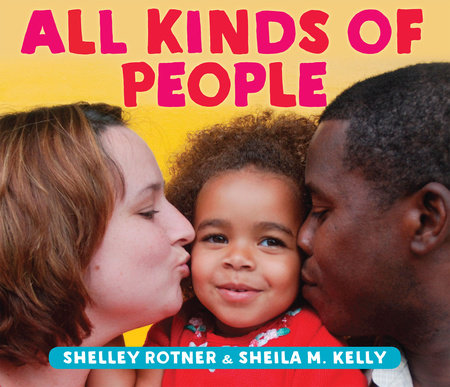
Montessori practice encourages books “rooted in reality” (The Montessori Room, 2026). In a blog post, photographer Chelsea Hann posits, “A photograph might ask: What else is happening here? What do I notice now that I didn’t see before? What stories are still unfolding beyond the frame?” “Reading” photography is an important childhood literacy practice, even more so if the photobooks are wordless. This encourages vocabulary building, allows for more storytelling, and is often culturally responsive (Dell’Angelo, 2015 & Semicolon, 2020). As Shelley Rotner, another great children’s photobooks author, states, “My books explore self-discovery and awareness through observations and diversity. It is my intention and hope that these books act as a catalyst to generate conversation and help children express their thoughts and feelings” (n.d.).
Note: Cover art from All Kinds of People (Rotner, 2018).
Indeed, Dr. Rudine Sims Bishop theorized that children need books to act as mirrors, windows, and sliding glass doors. Mirrors, to see themselves; windows, to look out at the world; and sliding glass doors, in order to enter the world (1990). What better format than photobooks?
Etc.
Around the time I was writing this post, I came across this The New York Times quiz. I asked my kids to do it, and I am proud to say they were able to decode within 5 years of every photograph!
References
Bishop, R.S. (1990). Mirrors, windows, and sliding glass doors. Perspectives,6(3),ix–xi.
Dell’Angelo, T. (2015, August 31). Literacy through photography for English language learners. Edutopia. https://www.edutopia.org/blog/literacy-through-photography-for-ells-tabitha-dellangelo?utm_source=SilverpopMailing&utm_medium=email&utm_campaign=120314%20enews%20ELL%20ngm%20B&utm_content=&utm_term=feature1hed&spMailingID=10070273&spUserID=MjcyNDk4MTE0NDcS1&spJobID=440189111&spReportId=NDQwMTg5MTExS0
Hann, C. (2025, November 11). Seeing otherwise: Photography as pedagogical storytelling practice. Early Childhood Pedagogy Network. https://ecpn.ca/seeing-otherwise-photography-as-pedagogical-storytelling-practice/
Krementz, J. (1976). A very young dancer. Knopf.
The Montessori Room. (2026). The best board books with real photographs. https://themontessoriroom.com/blogs/montessori-tips/15-of-the-best-board-books-with-real-photographs
Phan, K. (2020, November 3). A closer look. Time for Kids. https://www.timeforkids.com/g34/closer-look/?rl=en-680
Rotner, S. (n.d.). Bio. https://www.shelleyrotner.com/bio/
Rotner, S. (2018). All kinds of people. Holiday House.
Semicolon. (2020, June 23). Tana Hoben’s concept books. Semicolon. https://www.semicolonblog.com/tana-hobans-concept-books/
Wentz, E. (2013, April 26). The human library: Sharing the community with itself. Public Libraries Online. https://publiclibrariesonline.org/2013/04/human_librar/