
My innovation strategy is about creating an ongoing zine program and living library at the Lavender Library, Archives, and Community Exchange. I think it would be a wonderful addition to their existing collections and programming, in line with their mission, and a great opportunity to form new partnerships with community members and community organizations.
Category: Assignment
Mobile Access and Accessibility
Immediate Access vs. Building Future Accessibility
Watson’s 2023 article “Libraries on Call: Smartphone lending program bridges technology gaps” is a great example of providing immediate material access which improves people’s lives. However there is another side I don’t want us to lose sight of.
Immediate Access
This approach:
- is often technology-based,
- uses individual devices to bridge access gaps,
- has a cost per device and per person served,
- often puts the onus on the individual or community organizations to bridge the gap,
- is often not scalable,
- circumvents barriers but does not remove them, and
- may create temporary access and dependency on the short-term solution.
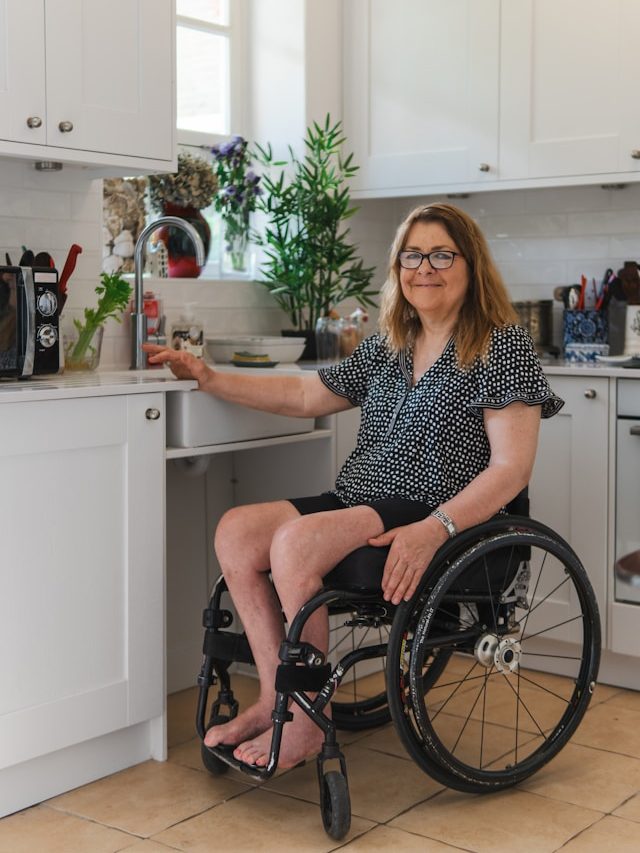
Examples may include: translation devices/apps, recording devices and voice-to-text, and my favorite example of this phenomenon: specialized powered wheelchairs that can climb steps.
Future Accessibility
This approach:
- is often infrastructure based;
- looks at long-term and universal access;
- incurs a large but often one-time cost;
- may face a lot of push-back due to the scale of change needed;
- does not ask individuals and communities that are facing barriers to dissolve or overcome the barriers themselves; and
- results in spaces that are inherently more accessible and therefore require no additional resources to access.
Examples may include: retrofitting buildings, building new structures, redesigning processes, and just creating new systems from the ground up.
Providing immediate access to some while building more universal and permanent access is important and necessary. Building permanent access may even grow out of some of those temporary solutions into long-term solutions. What’s important here is that effort is being made to provide both immediate and permanent access.
Understanding and Transferable Skills for Future Access
Mobile devices and user interfaces in particular (including mobile apps) tend to have a much lower barrier to entry in terms of both cost and computing know-how. They are highly-accessible devices for people from a variety of backgrounds, ages, education levels, and ability. However, the other side of this coin is that they also tend to obscure and make harder to see or understand the basics of computing.
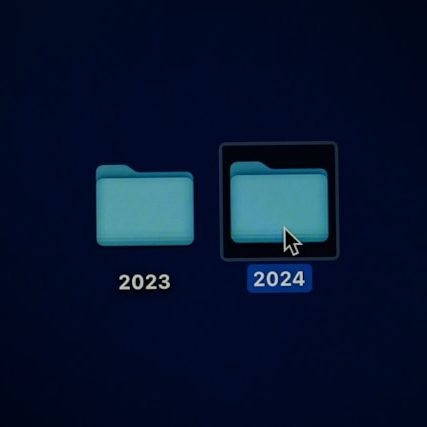
We have seen that younger generations who have grown up using cloud storage and mobile apps do not have basic understanding of file structures and directories. They rely on search. And with generative “AI” now entering the scene, this is getting only worse.
While these mobile devices being accessible is great for the short-term and can help connect people to information and resources quickly, the devices themselves do not help users build skills around computing, accessing information, or other digital skills that could be useful to them in their lives. As long as these devices and the software they carry hide the complexity behind a simple UI, users will have to learn another way. But will they choose to when the easier option is within reach?
Resources
- American Library Association. (2021). Emerging Technologies with Privacy Concerns.
- Burton, K. T., Burton, J., & Archer, A. (2017). Using Proximity Beacons to Connect Physical & Virtual Library Spaces: A Case Study.
- Chin, M. (2021). File not Found.
- Lu, K. (2017) Growth in mobile news use driven by older adults.
- Watson, K. (2023) Libraries on Call. Smartphone lending program bridges technology gaps
Assignment X: Participation and Community Empowerment
The theme within the concept of the Hyperlinked Library that has most captured my attention is that of user participation. I love that the Hyperlinked Library takes this concept beyond participation in programming or even providing feedback to help design library services, instead it asks how libraries can support users actively participate in all areas of their lives and as members of their communities.

Participation in this way is about agency and empowerment. Libraries exist to connect their communities to information and resources (including people!) that enable them to take action, to create, and to make an impact on their own lives and on the world around them. For libraries to do this work, they must break down the barriers that make information and people inaccessible.
Libraries are already doing versions of this: creating zine collections featuring local zine-makers; supporting civic literacy by educating users on their rights and on issues that affect them so they can make informed decisions;“exchanging knowledge without curriculum and administrators” (Stephens,2016); and offering seed libraries for home and community gardens. Even outside the library itself, Little Free Libraries have expanded who can contribute to their communities through literary resources; and when established libraries join in, these little libraries can become a powerful expansion of the library’s mission and reach. (Cottrell, n.d.)
The capitalist framework once promised that competition would drive innovation and push our societies to new heights. Instead, we have witnessed that same competitiveness hold individuals, businesses, and organizations back from real innovation and service. A competitor is a threat that we must either attack or defend against. But when we stop seeing everything as a threat — including Little Free Libraries — we instead have the opportunity to better serve our communities by meeting them where they are, answering their needs, and pivoting to work with them using the tools they’re already holding. (Schneider, 2006) Sometimes the library will act as a leader, educating and aiding users. Other times the library will find itself jumping on a bandwagon that users started. A successful library need not predict their users needs at every turn. A library that truly belongs to its users will accept being helped and led by its community instead.
Libraries must belong to its users and its community in all ways. Not only in the literal but indirect way of taxpayer funding but also emotionally. When we participate in building something with our own hands, when someone relies on us, and when we are allowed to contribute something substantial to a project or cause, we develop a sense of ownership. Libraries cannot be charities, they cannot be top-down resource provision for the “needy,” they must be spaces where people come to provide to the library, to help themselves, and to support each other. This is the kind of ‘buy-in’ that will generate true participation and empowerment. (Casey, 2011) This is how users and communities learn to practice agency and solve problems themselves.
The average person in the Global North is alienated from labor and expertise. We are experts in our own fields or our own roles, but lack understanding about other kinds of work and other kinds of knowledge. Worse, we assume that these things are inaccessible and far away. We are taught that engaging expertise means outsourcing, literally bringing in professionals from outside our circles to solve our problems for us (and usually with the exchange of money). But what if the expertise — the experience — we need is already local? What if we could learn to tap into the wisdom of our neighbors? What if we could learn to build more resilient and self-sufficient communities, not through isolation but through connection? What if our users are themselves the answers they seek? and the answers we seek?
Some of the questions I am most interested in exploring throughout this course include:
-
- What are ways that people working at any level or role in a library can help build participatory culture?
- What might it look like to build this kind of participatory culture in other organizations, especially in smaller and less formal ones?
- How can library users exercise their agency as users and community members, to take ownership of their libraries as spaces for active participation?
References
Casey, M. (2011). Revisiting participatory service in trying times. Tame the Web. https://tametheweb.com/2011/10/20/revisiting-participatory-service-in-trying-times-a-ttw-guest-post-by-michael-casey/
Cottrell, M. (2018). The question of little free libraries: Are they a boon or bane to communities? American Libraries Magazine. https://americanlibrariesmagazine.org/2018/01/02/question-little-free-libraries/
Schneider, K (2006). The user is not broken. Free Range Librarian. http://freerangelibrarian.com/2006/06/03/the-user-is-not-broken-a-meme-masquerading-as-a-manifesto/
Stephens, M. (2016). “The age of participation” in The Heart of Librarianship, p. 79. ALA Editions.