Reflection on Hyperlinked Environments: Harnessing the Power of the Senses in the Hyperlinked Museum


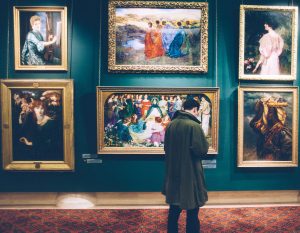
Credit: StockSnap @ https://pixabay.com/photos/man-painting-paint-museum-artist-2590655/

In her TedX talk, titled “Opening Up the Museum,” Nina Simon gives numerous examples of the way museums have invited visitors to be active participants (TEDx Talks, 2012). She also gives staggering statistics on how employing a participatory museum model in the Santa Cruz Museum of Art and History, more than doubled the number of visitors in one year (TEDx Talks, 2012, 8:02). If you are looking to work in museums, I highly recommend watching her TedX talk. I also think some of the ideas could be employed in libraries as well.  

Nina Simon provides examples of how visitors can become active participants through the creation of art (TEDxTalks, 2012). However, the articles in the hyperlinked museums module also demonstrated how active participation is encouraged through the use of multiple senses. We are probably most familiar with using our sense of sight in a museum. We typically are only allowed to look at artifacts and artworks. The sense of touch may be another common sense employed in museums. In my experience, interactive exhibits involving touch are most common in science museums. How are museums incorporating the other three senses into their exhibits? I wanted to explore how sound, taste, and smell are being utilized in museums to create engaging exhibits. 

Sound 
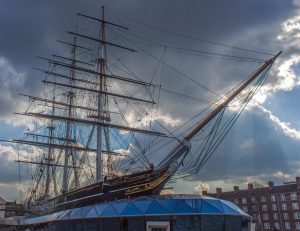
The Cutty Sark. Credit: jeffwallis @ https://pixabay.com/photos/cutty-sark-ship-london-historic-1369026/

This idea of sound in museums appeals to me because I love to listen to ambient playlists, like this one, while I study because it transports me to another world. Similarly, the Royal Museums Greenwich used the power of sound to transport visitors when they boarded the historical ship, the Cutty Sark (Charr, 2024). Visitors can experience “the sounds of the ship’s golden age, including weather conditions, the creaking of wooden decks, and the loading of tea chests” (Charr, 2024, para. 2). Sounds pretty cool to me (no pun intended). 

Taste 

Credit: adege @ https://pixabay.com/photos/mushrooms-forest-nature-moss-10481720/

Would you eat soil? I can’t say I would but if your answer is yes, then the Museum of Edible Earth has got you covered. Eating soil is “an ancient global practice” called geophagy and is defined as “the intentional custom of eating earth, which includes soil and earth-like substances such as clay and chalk” (The Museum of Edible Earth, n.d.-a, para. 3). Before I describe the museum in more depth, I’d like to pass along the museum’s disclaimer that “eating earth is not recommended by food authorities. Proceed at your own risk” (The Museum of Edible Earth, n.d.-a, para. 8). 

The museum describes themselves as “participatory” (The Museum of Edible Earth, n.d.-a, para. 6 and 7) and that is evident by the fact that they allow you to taste the soils. However, they take this a step further by inviting visitors to contribute to the soil database by describing what they think the soil tasted like (The Museum of Edible Earth, n.d.-a). For example, if you navigate to the soil called “Green Clay Chunks,” in the catalogue, you will find a review section with people sharing their thoughts and some even sharing taste testing videos of themselves (The Museum of Edible Earth, n.d.-b). 

Smell

I highly recommend the article Exhale Through the Gift Shop by Becky Ferreira. The article gives examples of museums utilizing scents in their exhibits (both pleasant and unpleasant ones) (Ferreira, 2024). The SS Great Britain Experience is one example given (Ferreira, 2024). The exhibit allows you to experience the “sights, smells and sounds of Victorian life at sea” (Bristol Dockyards, n.d., “Step Aboard the Ship” section). Some of these smells include urine and vomit (gross but accurate) (Ferreira, 2024). 

I realized as I wrote this blog post that I only gave examples of unpleasant tasting experiences (soil) and unpleasant smelling experiences (vomit).  Nonetheless, I hope I was able to illustrate how museums are engaging multiple senses to create a participatory museum environment. 

References 

Bristol Dockyards. (n.d.). SS Great Britain Experience. SS Great Britain Trust. https://www.bristoldockyards.org/ss-great-britain-experience 

Charr, M. (2024, December 16). How Cutty Sark built a location-aware soundscape. MuseumNext. https://www.museumnext.com/article/immersive-soundscapes-on-the-cutty-sark-blending-technology-and-heritage/ 

Ferreira, B. (2024, November 3). Exhale through the gift shop. The New York Times. https://www.nytimes.com/2024/11/02/science/scent-exhibits-museum.html 

The Museum of Edible Earth. (n.d.-a). About [The “About” page for the Museum of Edible Earth]. https://museumofedible.earth/about/ 

The Museum of Edible Earth. (n.d.-b). Green Clay Chunks [Soil in catalogue]. https://museumofedible.earth/product/french-green-clay/ 

TEDx Talks. (2012, November 7). Opening up the museum: Nina Simon @ TEDxSantaCruz [Video]. YouTube. https://www.youtube.com/watch?v=aIcwIH1vZ9w 
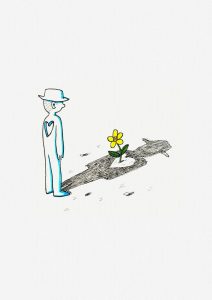
 

Reflection on Hyperlinked Communities: A Lonely Girl’s Guide to the Library

Credit: CDD20 at https://pixabay.com/illustrations/man-emptiness-soul-flowers-4052354/

A topic that resonated with me in the Hyperlinked Communities module was the topic of mental health, particularly loneliness. The article, “Hungry for Connection: Addressing Loneliness Through the Library,” discusses a type of relationship called “weak ties” and how libraries help foster them (Rich, 2024). These are the relationships we form outside of our close circle of friends and family that are more casual in nature (Rich, 2024). Rich (2024) states that, “these social connections [weak ties] help shape a feeling of belonging that one needs to combat feelings of loneliness” (para. 8). 

I wanted to create a guide of steps people can take to meet people through the libraries. The steps are general enough that they can be applied to any local library. I listed them in order of what I consider “easiest” to “hardest” from the perspective of an introvert (me). I used my local library system, Hennepin County Library, as an example. 

1. Do your routine activities at the library, not at home: Do you read, study, watch Netflix, or do a hobby, alone in your home? Why not do it at the library? Although you may not be directly interacting with people, it can be nice to be around others.

Credit: Saydung at https://pixabay.com/illustrations/woman-writing-table-work-books-5835747/

2. Attend an online event: Dip your toes into meeting new people by attending an online event. For some people, Zoom interactions can feel less daunting than face-to-face meetings (for others it may be the opposite). An added benefit is that barriers to access related to transportation are removed. Find an event that interests you and try it out. Hennepin County Library has an “Events” webpage, where under “Location” it allows you to filter by “Online events” (Hennepin County Library, n.d.-a). 

3. Attend an in person event: The next step could be to attend an event in person. Look at your local library’s calendar for upcoming events. If you want to meet people, pick an event that is more social, not just a presentation. A recurring event may be a good idea (ex: book club) since you may see some of the same people each week which will help foster stronger connections. The article, “‘Free, non-judgemental, accessible’: How your local library is a sanctuary of health and wellness” mentions an individual named Kerri who participated in Melbourne City Library’s “Conversation Club” where frequent participation helped her stave off loneliness during the COVID-19 pandemic (Hasan, 2023). 

4. Volunteer: This one is more of a commitment than the other three ideas. However, when you help others in your community, it can help create a sense of purpose. The Hennepin County Library has a “Volunteer” webpage that explains what types of positions are available and how to apply (Hennepin County Library, n.d.-b). 

Credit: GDJ at https://pixabay.com/vectors/books-heart-love-read-passion-5361667/

I hope these tips are useful. Let me know if you have tried or will try any of them out!  

References 

Rich, H. (2024, February 5). Hungry for connection: Addressing loneliness through the library. Library Journal. https://www.libraryjournal.com/story/news/hungry-for-connection-addressing-loneliness-through-the-library 

Hasan, T.N. (2023, June 27). ‘Free, non-judgemental, accessible’: How your local library is a sanctuary of health and wellness. SBS Bangla. https://www.sbs.com.au/language/bangla/en/article/free-nonjudgmental-and-accessible-how-your-local-library-is-a-sanctuary-of-health-and-wellness/t15blzsi9 

Hennepin County Library. (n.d.-a). Events [Webpage]. https://hclib.bibliocommons.com/v2/events?_gl=1*tlohbv*_ga*MTQxNjYwODM2NS4xNzg1Njg1NzEw*_ga_HJ2JEWCJY3*czE3OTE2NTk5NDUkbzkkZzEkdDE3OTE2NjAyNzIkajU5JGwwJGgw 

Hennepin County Library. (n.d.-b). Volunteer [Webpage]. https://www.hclib.org/about/volunteer

Assignment X: Thinking Outside the Books: The Hyperlinked Library Challenges Library Norms

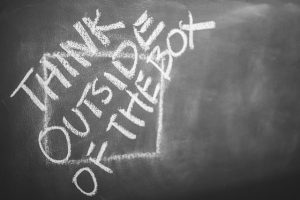
Credit: kaboompics at https://pixabay.com/photos/quote-chalk-chalkboard-words-think-791953/

In his paper, “Think Like a Startup,” Brian Mathews (2012) makes two statements that invite the reader to challenge library norms. He states, “while many of the services we provide are indeed essential to the academic mission, nothing says in stone that they must remain under our domain” (p. 2) and “Don’t limit your innovation to traditional library boundaries” (p. 5). These two statements inspired the idea for this blog. Both statements invite you to challenge the preconceived notions you have about what a library is and should be. It invites you to think outside of the box, or in this case, the books.

My Thoughts and Experiences with Innovative Library Services 

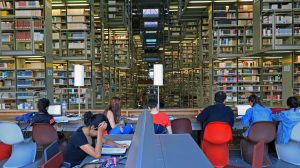
Credit: AldoRafa at https://pixabay.com/photos/mexico-biblioteca-vasconcelos-3215930/

This idea of a library that goes beyond traditional library services stood out because it is a rather new idea to me. I am going to be honest and let everyone know that I rarely go to the library. My excuse is that my field of work is in archives. However, growing up I loved going to the library and my siblings and I would fill tote bags full of books on our visits. 

At the time, my local library offered what I would consider standard library services. You could sit in comfy chairs, use the computers, attend classes and storytimes, and participate in the summer reading challenge (this was very exciting to me as a kid). As an adult, these services no longer appeal to me. I can find these services elsewhere. I have a laptop with internet access. I take classes through SJSU and look for tutorials on YouTube when I want to learn something new. I study at the coffee shop with a matcha latte and when I need a book, I request it online and pick it up from the hold shelf.

As I read through our course readings and the examples of libraries implementing unique services, I kept thinking to myself, “wow, that’s a great idea!” and I felt the urge to visit the library. I suppose this is exactly the goal of what Michael Casey and Laura Savastinuk describe as Library 2.0: a library that is able to draw in the non-users through services that appeal to them. Like Mathews (2012), Casey and Savastinuk (2007) invite you to think outside the books: “Don’t think of your library as being in a “library” box. What are your users doing elsewhere that they could be doing through your library?” (p. 34).

An example in our readings of a library thinking outside the books that appealed to me was “the Unquiet Library” at Creekview High School where students are welcome to participate in activities not typically associated with a quiet library such as eating, conversing, and playing video games (Mathews, 2010). This reminds me more of a coffee shop which is a popular spot for studying and working. I would be drawn to the library if it mimicked the atmosphere of a coffee shop and I think many others would be as well. 

Challenges and Opportunities

While I love the idea of unique library services, it begs the question, how will libraries provide more services with the same or with a lower budget than before? This is a challenge for most libraries. I think of my local library system, Hennepin County Library, who recently announced the potential reduction of hours in 2027 due to budget constraints (Hennepin County Library, 2026). I believe the answer to this question is that librarians have to be extra creative in utilizing the resources they have. I think you could look at this as an opportunity. In my experience, sometimes limited resources produce the most unique and creative ideas.

Libraries Thinking Outside the Books

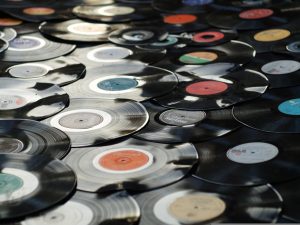
Credit: tiburi at https://pixabay.com/photos/vinyl-retro-music-disc-record-1595847/

To conclude this post, I’d like to include a couple examples of libraries that are thinking outside the books and providing unique library services to their patrons:

  1. The Vinyl Revival Listening Room at Minneapolis Central Library (Minnesota): Patrons can listen to vinyl records in a dedicated space using equipment provided by the library (turntable, vinyl records, and headphones) (Hennepin County Library, n.d.). I learned about the listening room when staff from the Hennepin County Library visited the University I work at and did a presentation. It goes to show that outreach is beneficial in making library services known to people who do not visit the library. 
  2. Wellbeing Pods in Leeds Libraries (UK): Patrons can access healthcare services at several Leeds library locations (Robinson, 2023). I learned about this service while doing research in INFO200 (Information Communities). Unfortunately, it’s not very clear whether these Wellbeing Pods are still operating. I cannot find information on the Leeds Libraries website. 

References 

Casey, M.E, & Savastinuk, L.C. (2007). Library 2.0: A guide to participatory library service. Information Today, Inc. 

Hennepin County Library. (n.d.).  Vinyl revival listening room. https://www.hclib.org/about/locations/vinyl-revival-room  

Hennepin County Library. (2026, August 6). Library hours changing in 2027. https://www.hclib.org/about/news/2026/August/library-hours-changing-in-2027 

Mathews, B. (2010, June 21). Unquiet library has high-schoolers geeked. American Libraries. https://americanlibrariesmagazine.org/2010/06/21/unquiet-library-has-high-schoolers-geeked/ 

Mathews, B. (2012). Think like a startup. https://vtechworks.lib.vt.edu/server/api/core/bitstreams/77d2cb98-ddab-4543-9e47-b011819231b3/content 

Robinson, S. (2023, July 26). Chance to check in as city’s libraries host pioneering wellbeing pods. Leeds City Council. https://news.leeds.gov.uk/news/chance-to-check-in-as-citys-libraries-host-pioneering-wellbeing-pods 


Greetings From the Connected Corner

Hi everyone!

I wanted to take some time to introduce myself and my blog. This is the Connected Corner and is where my work for INFO 287, the Hyperlinked Library, will be posted. I chose to name my blog, the Connected Corner, because I felt like it embodies the theme of this course and this blog will serve as a space for me to connect with my peers.

A little bit about me, my name is Bella and I work in an archival digitization department at a public University. I fell into this field by chance when I started working in the archives as a student employee during my undergrad. At the time, I had no clue that this was a field of work that I could pursue. Flash forward three years, I have continued to work in our digitization department and have developed a passion for transforming old material into digitally accessible formats.

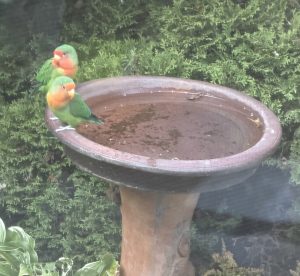
Maybe some others in the the LIS program who are interested in archives can relate to this, but my personal hobbies are all a bit “old school.” I love to thrift and go to antique stores. I enjoy hobbies such as hand embroidering and recently crocheting (I’m almost finished with crocheting my first sweater). Lastly, I’ve been enjoying birdwatching. Just yesterday, while watching the bird bath in my parents backyard, we saw two Lovebirds (apologies for the blurry photo). Keep in mind, I live in Minnesota. Someone’s pet birds must have escaped and they look very out of place in our Minnesota forests. Hopefully they can find their way back home.

I look forward to connecting to everyone this semester and talk to you soon!

-Bella