When I got to 7th grade, I started taking school very seriously. I wanted to do my best but learning never came easy to me. It took me a long time to grasp concepts and to do my assignments. While I got good grades, I found the way I could meet deadlines and study for tests was by memorizing patterns rather than truly understanding concepts. When I started my undergraduate degree, I was a biology major (I later switched to history). I found the time restriction of lab classes completely ruined the learning experience for me. The environment was stressful and you had to finish the lab within the amount of time you were given. If you didn’t understand something or you needed more time, it was too bad for you. My problem was whenever I had a stressful time limit placed on me, I’d go into freeze mode and could not problem solve because my mind would go blank. All that to say, the STEM environment I experienced as a student was not conducive to learning.
In the infinite learning module, the article by Joshua Block titled “Embracing Messy Learning” stood out to me because he discusses the idea of “messy learning” in the classroom (Block, 2014). He discusses how the projects he assigns students are challenging and he sees some of them struggle through the process. Block provides students the time and space to problem solve. He explains that, “if I don’t allow learning to be messy, I eliminate authentic experiences for students as thinkers and creators” (Block, 2014, para. 6).

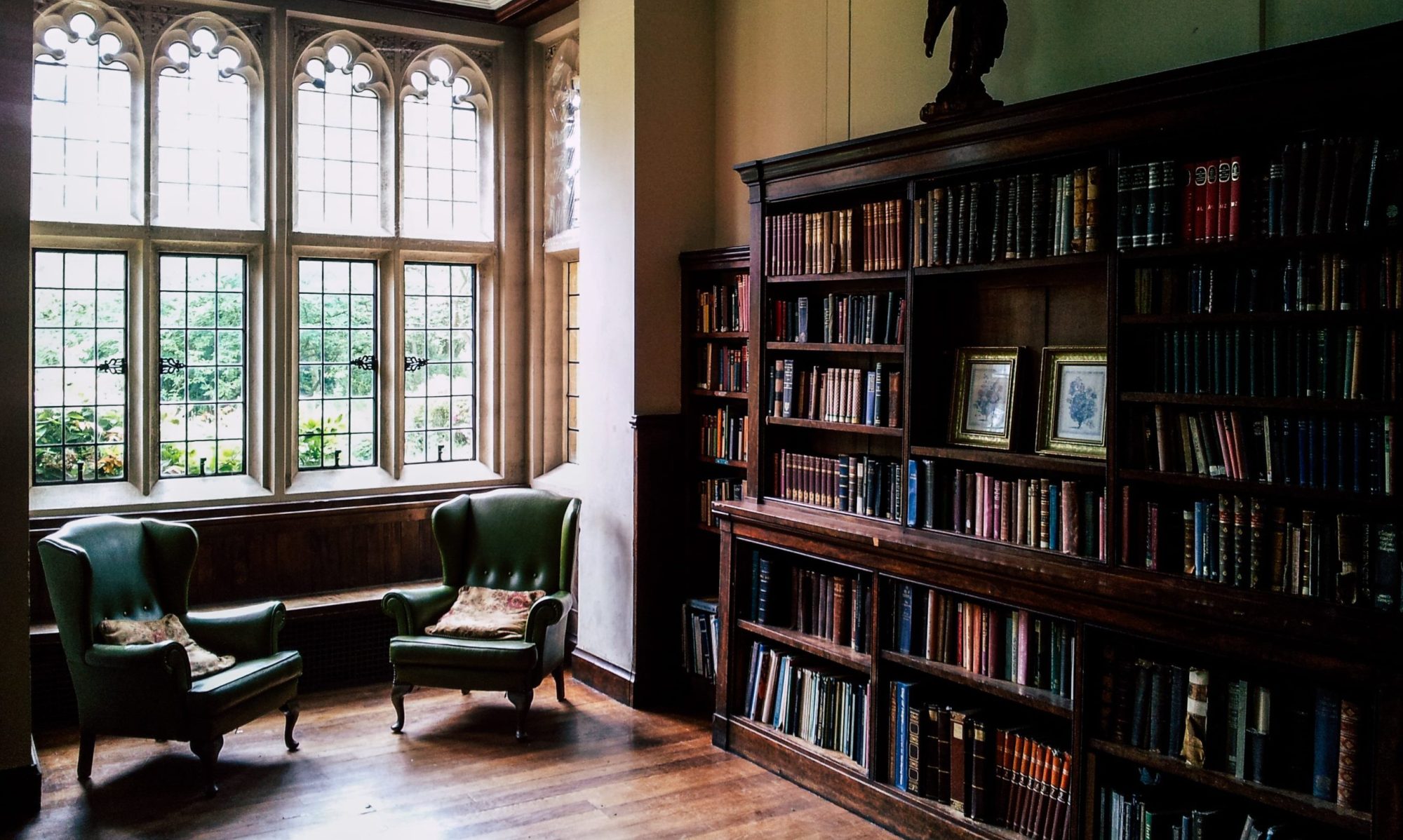
I like this concept and appreciate Block’s efforts but his approach is not the norm. Our school system does not allow for messy learning. Instructors must fit the required curriculum into a certain amount of time and students have to meet deadlines and pass standardized tests. I think this is why libraries are so important for learning because they give time and space for learning without the pressure of tests and grades.

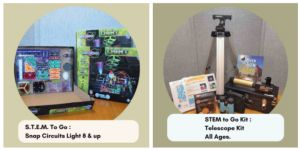
What is great is that libraries are providing spaces for kids to learn STEM without the constraints they may experience in school. The Urban Libraries Council’s (2019) article titled “Public Libraries are Teaming Up to Prepare Middle Schoolers for 21st Century Careers and Increase Access to STEM Learning Opportunities” briefly describes 10 STEM pilot programs at public libraries in the U.S. The goal of the pilot programs were “to test new approaches to engaging low-income middle school youth in science, technology, engineering and mathematics (STEM) education” (para. 1). One program mentioned in the article was the STEM kits at Algona Public Library in Iowa. This caught my eye so I decided to Google it for more information. I found a collection of STEM To Go kits at the State Library of Iowa available for checkout by librarians for STEM programs (State Library of Iowa, n.d.-a). You’ll see in the catalog record, they are titled “S.T.E.M. To Go” followed by the topic and intended audience (State Library of Iowa, n.d.-b). Two kits that sparked my interest were the “Snap Circuits Light Ages 8 & Up” and the “Telescope Kit All Ages” (State Library of Iowa, 2023a, 2023b).
My main takeaway from the infinite learning module is that libraries have the unique ability to offer the time and space for the “messy learning” that Block (2014) discusses in his article, a style of learning that our school system frequently fails to provide.
References
Block, J. (2014). Embracing messy learning. Edutopia. https://www.edutopia.org/blog/embracing-messy-learning-joshua-block
State Library of Iowa. (n.d.-a). STEM to go & storytime kits. https://statelibraryofiowa.gov/resources/toolkits-guides/stem-go-storytime-kits
State Library of Iowa. (n.d.-b). Youth services kits [Library catalog]. https://sliowa.bywatersolutions.com/cgi-bin/koha/opac-shelves.pl?page=1&direction=asc&shelfnumber=74&op=view&sortfield=title
State Library of Iowa. (2023a). S.T.E.M to go: Snap circuits light ages 8 & up [Library catalog record]. https://sliowa.bywatersolutions.com/cgi-bin/koha/opac-detail.pl?biblionumber=77713
State Library of Iowa. (2023b). S.T.E.M to go: Telescope kit all ages [Library catalog record]. https://sliowa.bywatersolutions.com/cgi-bin/koha/opac-detail.pl?biblionumber=77767
Urban Libraries Council. (2019, March 18). Public libraries are teaming up to prepare middle schoolers for 21st century careers and increase access to STEM learning opportunities. Libraries Technology News Service. https://librarytechnology.org/pr/24146/public-libraries-are-teaming-up-to-prepare-middle-schoolers-for-21st-century-careers-and-increase-access-to-stem-learning-opportunities