Social Media and the Internet today are powerful tools that allow humans to interact and connect with one another more readily and easily than ever before. Libraries can use these connections to promote library programming that can bring together individuals who would have never interacted in the first place.
As mentioned by Danah Boyd (2016) “technology is made by people. In a society. And it has a tendency to mirror and magnify the issues that affect everyday life.” Libraries, especially public libraries, have the power to create spaces for communities and foster interconnectivity among members. Additionally, public libraries have a unique role as they are a direct link for a community to access a vast realm of information and other community members. Functioning as a “third place”, a place where individuals can meet beyond their home, school or workplace and foster a sense of community, self and consciousness of the greater world. (Beal, 2024) Libraries can utilize their unique position as a third place to provide and promote resources to their patrons.
Reflecting on this week’s readings focusing on community, I wanted to highlight one of the programs that libraries are currently implementing for families with neurodiverse children. Libraries, especially public libraries can provide tools and resources for neurodiverse children. These resources can include curated book lists, special storytime and playtimes, and take home kits that teach individuals how to navigate the library.
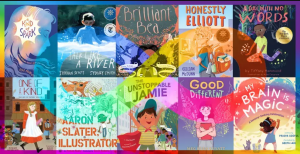
An example from Meredith Sires (2024), a Children’s Librarian for the Los Angeles Public Library, has created an article that highlights books and resources that parents and caregivers can use to discuss and learn about neurodiversity within young children and how to navigate and teach these experiences to others. Sires (2024) also mentions how libraries can also make special accommodations for individuals who request resources based on their special interests to help motivate learning with neurodivergent children. Additionally, seeing characters within these stories can help readers gain more compassion and appreciation for neurodivergent individuals. Sires (2024)
As mentioned by Bjørkeli Svaler (2024) in the article “On making libraries and museums more accessible for autistic people”, libraries are places where individuals can feel safe to explore their interests without judgement. Libraries provide a plethora of resources for individuals to learn more about their topics of interest. Additionally, libraries can provide “quiet spaces for silent study or reading, which may include non-fluorescent lighting or several lighting choices allowing for individual preferences, good signage that shows where these spaces are located, and different types of seating to support different sensory needs.” Bjørkeli Svaler (2024) Not only can libraries provide informational resources, they can also provide accommodating spaces to account for the patrons that visit the library.
As noted in the article, ‘Free, non-judgemental, accessible’: How your local library is a sanctuary of health and wellness, “Public libraries in Australia offer not only books, but provide people with a safe place in which to access vital information and hone their skills.” (Hasan, 2022) Libraries are not only a space that provides a home for books, movies and boardgames, but also acts as a space that allows people to interact with one another in a safe environment. Library programming allows individuals to interact with others while participating in crafts, book clubs, and performance events. Additionally, many individuals can use the library as a separate meeting place besides their home, school or workplace.
Libraries can continue to foster their relationships to their communities by continuing to provide more inclusive materials and expand the amount of resources available for their communities.
References:
Beal, J. (2024) What are Third Places and Why Do They Matter? Albert Shanker Institute. https://www.shankerinstitute.org/blog/what-are-third-places-and-why-do-they-matter
Bjørkeli Svaler, T. (2024). On making libraries and museums more accessible for autistic people. International Federation of Library Associations and Institutions, 50(1), 42–52. doi: 10.1177/03400352231202516
Boyd, D. (2016). What World Are We Building? https://medium.com/datasociety-points/what-world-are-we-building-9978495dd9ad
Hasan, T.N. (2022). ‘Free, non-judgemental, accessible’: How your local library is a sanctuary of health and wellness. https://www.sbs.com.au/language/bangla/en/article/free-nonjudgmental-and-accessible-how-your-local-library-is-a-sanctuary-of-health-and-wellness/t15blzsi9
Sires, M. (2024). A Library Tool Kit for Neurodivergent Kids. https://www.lapl.org/news-stories/articles/library-tool-kit-neurodivergent-kids