Hyperlinked Communities: Providing Resources for Neurodiverse Families

Social Media and the Internet today are powerful tools that allow humans to interact and connect with one another more readily and easily than ever before. Libraries can use these connections to promote library programming that can bring together individuals who would have never interacted in the first place. 

As mentioned by Danah Boyd (2016) “technology is made by people. In a society. And it has a tendency to mirror and magnify the issues that affect everyday life.” Libraries, especially public libraries, have the power to create spaces for communities and foster interconnectivity among members. Additionally, public libraries have a unique role as they are a direct link for a community to access a vast realm of information and other community members. Functioning as a “third place”, a place where individuals can meet beyond their home, school or workplace and foster a sense of community, self and consciousness of the greater world. (Beal, 2024) Libraries can utilize their unique position as a third place to provide and promote resources to their patrons.

Reflecting on this week’s readings focusing on community, I wanted to highlight one of the programs that libraries are currently implementing for families with neurodiverse children. Libraries, especially public libraries can provide tools and resources for neurodiverse children. These resources can include curated book lists, special storytime and playtimes, and take home kits that teach individuals how to navigate the library. 
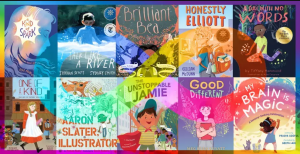
An example from Meredith Sires (2024), a Children’s Librarian for the Los Angeles Public Library, has created an article that highlights books and resources that parents and caregivers can use to discuss and learn about neurodiversity within young children and how to navigate and teach these experiences to others. Sires (2024) also mentions how libraries can also make special accommodations for individuals who request resources based on their special interests to help motivate learning with neurodivergent children. Additionally, seeing characters within these stories can help readers gain more compassion and appreciation for neurodivergent individuals. Sires (2024)

As mentioned by Bjørkeli Svaler (2024) in the article “On making libraries and museums more accessible for autistic people”, libraries are places where individuals can feel safe to explore their interests without judgement. Libraries provide a plethora of resources for individuals to learn more about their topics of interest. Additionally, libraries can provide “quiet spaces for silent study or reading, which may include non-fluorescent lighting or several lighting choices allowing for individual preferences, good signage that shows where these spaces are located, and different types of seating to support different sensory needs.” Bjørkeli Svaler (2024) Not only can libraries provide informational resources, they can also provide accommodating spaces to account for the patrons that visit the library. 

As noted in the article, ‘Free, non-judgemental, accessible’: How your local library is a sanctuary of health and wellness, “Public libraries in Australia offer not only books, but provide people with a safe place in which to access vital information and hone their skills.” (Hasan, 2022) Libraries are not only a space that provides a home for books, movies and boardgames, but also acts as a space that allows people to interact with one another in a safe environment. Library programming allows individuals to interact with others while participating in crafts, book clubs, and performance events. Additionally, many individuals can use the library as a separate meeting place besides their home, school or workplace. 

Libraries can continue to foster their relationships to their communities by continuing to provide more inclusive materials and expand the amount of resources available for their communities. 

References: 

 Beal, J. (2024) What are Third Places and Why Do They Matter? Albert Shanker Institute. https://www.shankerinstitute.org/blog/what-are-third-places-and-why-do-they-matter 

Bjørkeli Svaler, T. (2024). On making libraries and museums more accessible for autistic people. International Federation of Library Associations and Institutions, 50(1), 42–52. doi: 10.1177/03400352231202516 

Boyd, D. (2016). What World Are We Building? https://medium.com/datasociety-points/what-world-are-we-building-9978495dd9ad 

Hasan, T.N. (2022). ‘Free, non-judgemental, accessible’: How your local library is a sanctuary of health and wellness. https://www.sbs.com.au/language/bangla/en/article/free-nonjudgmental-and-accessible-how-your-local-library-is-a-sanctuary-of-health-and-wellness/t15blzsi9 

Sires, M. (2024). A Library Tool Kit for Neurodivergent Kids.  https://www.lapl.org/news-stories/articles/library-tool-kit-neurodivergent-kids 
Building Relationships with the Public: The Importance of Participatory Service in Public Librarianship

Hello all,

As I enter my 5th year of working at a public library, one concept that has resonated with me through this course was in the module participatory service & transparency. Over the years, libraries have transformed from a space that solely focuses on lending books and researching, to lending items, media, and tools; offering programs and resources for patrons who visit the library, and providing a communal hub for residents to feel safe and welcomed. Additionally, libraries, especially public libraries try their best to provide as much accessibility to their patrons as technology and needs change over time by providing more online resources through online catalogs and digital collections. 

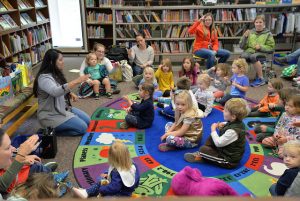
Through my personal experiences working in public libraries, I have seen libraries transition daily from quiet workspaces to boisterous areas for patrons to mingle and engage with one another while working on craft projects or cooking programs. As mentioned in the Shareable article “How San Francisco’s public libraries are embracing their changing role”, Casey O’Brien writes how the San Francisco Public Libraries (SFPL) have transformed into “ a space where people can connect to one another and to services, for free.”(O’Brien,2019) Libraries have increased the amount of services and resources they provide such as including: Makerspaces, a workspace that provides tools such as 3-D printers, sewing machines, and other tools for patrons to be creative; Computer Labs/Computer Stations, public access computers that allow patrons to do word processing, browse the web and other electronic based tasks; and even Lunch at the Library, providing meals for young patrons who visit the libraries during the summer time. During the month of September, libraries celebrate national library card sign-up month and encourage community members to visit the library and invite community members to share memorable moments or feedback they have for the library.

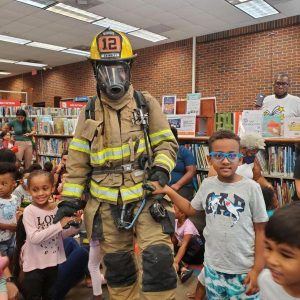
Additionally, most public libraries engage in participatory service by aiming to provide free resources for their communities. Public libraries frequently collaborate with members in their community, ranging from community helpers such as the Fire & Police Departments, Postal Services, and local storeowners. As O’Brien corroborates “branch librarians work with community members, local nonprofits and other partners to develop programs, and are a valuable resource for residents to connect via informal conversations.” (O’Brien,2019) At the public library that I work at, I have seen programs where community partners have been implemented in, such as hosting storytimes featuring community helpers such as the Post Office, Fire Department, and Animal Care, to hosting theme programs featuring community clubs and organizations such as sport clubs and non-profit organizations. Additionally, with the use of the web, libraries have embraced the usage of social media to promote library services and community engagement.

As technology continues to change, libraries are also shifting to adapt with increasing technological needs. Libraries that provide computers and technology assistance are faced with the constant evolution of pre-existing technology and the emergence of new technology. As mentioned in the article Making Libraries Visible on the Web: making libraries visible on the web: to ensure that library content is conveniently accessed, libraries must give search engines what they want, Ted  Fons notes how “libraries now have an opportunity to understand the rules of the web and to integrate their collections and services into these convenient interfaces.” (Fons, 2016) Libraries address online accessibility by having publicly accessible catalogs available online rather than using physical catalogs only accessible in the library. 

As SFPL communication manager, Mindy Linetzky, proclaims in O’Brien’s article “‘we need a space for people to connect that’s free, that’s open. It’s an expensive city to live in,’ she added. The library is ‘a place where you can go and be part of a community.’” (O’Brien,2019) Digital collections such as Libby, Overdrive, and Hoopla provide excellent resources for individuals seeking access to digital versions of popular media. 

As the course progresses, I am curious to see how participatory service is implemented in my workspace and how participatory service builds upon other aspects and topics in upcoming modules.

See Also:

O’Brian, C. (2019). How San Francisco Libraries are Embracing Their Changing Role. https://www.shareable.net/how-san-francisco-public-libraries-are-embracing-their-changing-role/ 

Fons, T. (2016). Making Libraries Visible on the Web.  https://go-gale-com.libaccess.sjlibrary.org/ps/i.do?p=AONE&u=csusj&id=GALE%7CA459804903&v=2.1&it=r&sid=AONE&asid=e0d05f0e 

Images & Media:

Omaha Public Library. Storytimes. https://omahalibrary.org/storytimes/ 

California State Library Multimedia. Lunch at the Library. https://www.youtube.com/watch?v=pMIoRPDSJIk 

Raising Resilience | Firefighter Storytime https://gwinnettpl.libnet.info/event/10476224 

Wionna Public Library. Libby/OverDrive & Hoopla App Classes. https://winona.lib.mn.us/series/app-classes/

About Me

Hello all!

My name is Aldore and I’ve been working as a library assistant at a public library system since 2022. At my current work place, I am primarily focused on providing children’s programing, ranging from craft, to story times, to daily passive activities. Currently, I reside in Southern California and have lived here all my life.

I decided to pursue a degree in Library Science to hopefully become a librarian. Academia is not my strong suit, but I have thoroughly enjoyed many of the classes I have taken at San Jose State University, especially the ones that focus on technology, archives, and digital spaces. This is my second to last semester at SJSU and it’s surreal to me as I started last spring.

I was drawn to taking this class because I am interested in the interconnectivity that libraries can provide for their communities. Additionally, I had see many students express how they really enjoyed taking this class and it was one of their favorites they have taken at SJSU.

While I’m not juggling my full time job and schoolwork, I enjoy playing video games (I love Slay the Spire and Baldur’s Gate III), visiting theme parks (I would love to visit Epic Universe), cross-stitching (this hobby is repetitive but relaxing), and painting (also repetitive but relaxing). One of my guilty pleasures is deep diving into my hyper fixations (right now it’s obscure theme park history about defuncted attractions).

I look forward to working with you all this semester. 🙂

Best,

Aldore