Public libraries now, especially in the 2020s are becoming spaces to provide enrichment for a community. At my public library, we struggle to have designated spaces for teens to use for a variety of reasons such as, staffing, space, and budget requirements. If more cities are willing to invest resources into their local libraries, then I hope that many more libraries can provide the same resources that the Memphis library provides for their patrons, especially their creative teen patrons who frequent the library. I resonated deeply with a quote from the article, “How Memphis Created the Nation’s Most Innovative Public Library”, stated by former Public Library Association President, Ramiro Salazar, as they assert that “[public libraries] exist for the betterment of communities. We support literacy and learning. We want all our resources to be free and everyone to feel welcome.” (Grant, 2021)
Motivation:
There are many high schools situated around community libraries, where students will go after school to wait and be picked up by their guardians. However, there are not many dedicated places, or activities for teens to utilize while they wait or visit the library. The library has tried to utilize the program room to encourage teens to stay and explore emerging technologies, but many teens either do not engage or express interest in activities not capable of being met within a 1-2 hour library program, Additionally, staff rotating in and out of the floating program room provides inconsistencies and strain on staffing needs.
Objective:
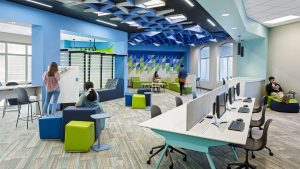
Create a dedicated teen tech center at the local library level to encourage teens (ages 12-18) to create, learn and explore new digital technologies. The creation of a dedicated space solely for teens will help alleviate the congestion on the main library floor and teens will have the ability to work freely within a space made for them, providing more teen engagement in library spaces.
Dedicated Teen Spaces, especially ones that integrate study spaces and technology makerspaces, encourages teens to engage with the library, by either having dedicated quiet zones to study and having places where they can use technology, such as 3-D printers, recording software, or sewing machines, to be creative.
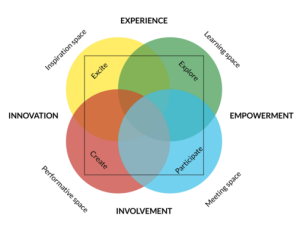
We can follow Skot-Hansen’s (2017) four-space model, where libraries divide their service amongst 4 different areas: the inspiration space, the learning space, the meeting space and the performative space, as a guideline in determining what services to implement into this new teen space.
Mission & Institutional Context:
The Orange County Public Library (OCPL) system, part of a 29 library system across Orange County, aims to “nurture a passion for reading in young learners, while also providing robust programs and resources for teens, seniors, and everyone in between”. Additionally, OCPL strives to “promote lifelong learning, fostering community connections, and ensuring free, open access to knowledge and tools that enrich lives.” (OCPL, n.d.) Additionally, Orange County’s mission statement strives to make “a safe, healthy, and fulfilling place to live, work, and play, today and for generations to come, by providing outstanding, cost-effective regional public services.”
Action Brief: The Orange County Public Library System will:
Convince – Teens ages 12-18, library users and non library users
That By – engaging in a space made for them at the library where they can use technology and dedicated study spaces
They Will – have their own space in the library and have the ability to learn and utilize new technology, and be creative
Which Will – help alleviate spacing congestion between main floor and engage with the library’s teen population
Because – our library’s mission is to promote lifelong learning, foster community connections, and provide open access to knowledge and tools for enrichment.
Inspiration:
Teen Innovation Lab (City of Orange Public Library) – https://www.orangepubliclibrary.org/kids-and-teens/teens/teen-lab
Teen IDEA Lab (San Diego Public Library) – https://www.sandiego.gov/public-library/idea/lo
Cloud901 (Memphis Public Library) – https://www.memphislibrary.org/cloud901
Studio NPL (Nashville Public Library) – https://library.nashville.gov/events/studio-npl
The Bubble (Oshkosh Library) – https://www.oshkoshlibrary.org/library-services/the-bubble
Guidelines & Policies:
During set hours of library operations: (Drop-in: Monday – Thursdays: 1PM – 6PM) (Appointment Only: Fridays: 10AM – 6PM)
*hours are subjected to change to account for holidays and early closures*
Library visitors (ages 12-18) will be able to utilize the teen tech space to study, use equipment provided by the library under library staff supervision, and work on any creative projects without disrupting other library patrons.
Patrons will be encouraged to work on group projects or activities and asked to clean up after themselves .
Technology, such as 3-D printers, cutting machines, sewing machines and other equipment, are open for patrons to use in 30 minute increments to allow other patrons a chance to use the equipment. Sign-ups can be managed in-person or through online reservation by using a form based software.
Any broken or malfunctioning equipment will be assessed and taken out of service until it can be repaired or replaced.
Timeline for Implementation: (16-24 month based on branch renovation time)
Start implementing dedicated teen spaces at libraries slated to undergo long-term renovations.
Month 1: Plan and survey local schools to see what equipment and technology they would be interested in seeing at their teen space. Creating a “living document” to house all ideas to be implemented. (Stephens, 2004)
Small Branches: (16 month renovation time)
Month 2: allocate budget and recruit contractors for branch renovations
Month 3-4: look at the branch’s specific floorplan and map out a space dedicated to teens with contractors.
Month 5-6: research equipment and alternatives to implement into the space
Month 7-8: test and train staff on how to operate equipment
Month 9-12: time allotted for alternations or further staff training to understand equipment.
Month 13-14: plan library programing and marketing to promote the new space
Month 15: Set up the dedicated space and promote the space at local schools and through social media posts
Branch Reopening Month: Host kick off events and programs and schedule school visits to the new teen space
Future Months post launch: collect feedback and engagement for future improvements and branch renovations
Large Branches: (24 month renovation time)
Month 2-3: allocate budget and recruit contractors for branch renovations
Month 4-6: look at the branch’s specific floorplan and map out a space dedicated to teens with contractors.
Month 7-9: research equipment and alternatives to implement into the space
Month 10-13: test and train staff on how to operate equipment
Month 13-18: time allotted for alternations or further staff training to understand equipment.
Month 19-21: plan library programing and marketing to promote the new space
Month 22-23: Set up the dedicated space and promote the space at local schools and through social media posts
Branch Reopening Month: Host kick off events and programs and schedule school visits to the new teen space
Future Months post launch: collect feedback and engagement for future improvements and branch renovations
Marketing & Promotion:
Conduct school outreaches to promote teen tech space and schedule school visits to demonstrate the capabilities of the space during dedicated sessions with
Work with members of the community who are familiar with operating equipment to host programs and workshops to teach teen patrons (and learning staff) how to use the new equipment.
Staff Training & Readiness:
Train staff on how to operate the machinery that will be included within the Teen Makerspaces, such as recording software, 3-D printers, cutting machines, and any other machines to be implemented in the future.
Establish scheduling for teen tech space to ensure that at least one staff member is overseeing activities and knows how to operate equipment. Staff will trade off with others to ensure that everyone can take breaks and be familiar with operating equipment.
Evaluation & Future Expansion:
OCPL is consistently refurbishing and refreshing their libraries because of the California State Library’s Building Forward Library Facilities Improvement Program, to ensure that each branch meets maintenance needs, improved energy efficiency and sustainability, extension of digital access and expansion of physical access to library facilities.
Gather feedback through online surveys and social media engagement to see how individuals are using the space and if there are any additions or improvements that could be made in the future. (Casey & Stephens, 2005)
References:
Casey, M. & Stephens, M. (2005.) Measuring progress. Tame the web. https://tametheweb.com/2008/04/15/measuring-progress/
Grant, R. (2021). How Memphis created the nation’s most innovative public library. Smithsonian Magazine. https://www.smithsonianmag.com/innovation/memphis-created-nations-innovative-public-library-180978844/?fbclid=IwAR1KhgGc_cXHfCduhqGtJ1Wi5Y2jRho1yW1Q62QjCNC5o2Qs9eLeGnzqqIM
Orange County Public Libraries. (n.d.) About OCPL. Orange County. Retrieved October 18, 2026, from https://libraries.oc.gov/about-ocpl
Orange County Public Libraries. (n.d.) La Habra library tenant improvement updates. Orange County. Retrieved October 18, 2026, from https://libraries.oc.gov/LH-updates
California State Library. (n.d.). Building forward. State of California. Retrieved October 18, 2026, from https://www.library.ca.gov/services/to-libraries/building-forward/
Skot-Hansen, D. (2017). Library Development: From collection to collection. University of Copenhagen. https://287.hyperlib.sjsu.edu/wp-content/uploads/2025/02/4-Spaces-Model-from-Univ-Copoenhagen.pdf
Stephens, M. (2004). Technoplans vs. technolust. Tame the web. https://tametheweb.com/2004/11/01/technoplans-vs-technolust/
Photo Sources:
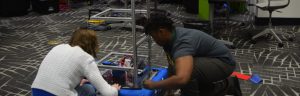
Photo 1: https://www.mcmillanpazdansmith.com/project/conyers-rockdale-library-teen-space/
Video Sources:
Oshkosh Public Library’s reimagined teen space – https://youtu.be/n58xPUmKlmo?si=Y0qwcPFlOOiKJrrU
Studio NPL promo- https://www.youtube.com/watch?v=8e1BXBlJQ_8
Teen Spaces at the Monroe County Public Library – https://www.youtube.com/watch?v=1ipoQbNPUtQ