Innovation Strategy & Roadmap: Spaces for Teens – Dedicated Teen Spaces at the Library

Public libraries now, especially in the 2020s are becoming spaces to provide enrichment for a community. At my public library, we struggle to have designated spaces for teens to use for a variety of reasons such as, staffing, space, and budget requirements. If more cities are willing to invest resources into their local libraries, then I hope that many more libraries can provide the same resources that the Memphis library provides for their patrons, especially their creative teen patrons who frequent the library. I resonated deeply with a quote from the article, “How Memphis Created the Nation’s Most Innovative Public Library”, stated by former Public Library Association President, Ramiro Salazar, as they assert that “[public libraries] exist for the betterment of communities. We support literacy and learning. We want all our resources to be free and everyone to feel welcome.” (Grant, 2021)
Motivation: 

There are many high schools situated around community libraries, where students will go after school to wait and be picked up by their guardians. However, there are not many dedicated places, or activities for teens to utilize while they wait or visit the library. The library has tried to utilize the program room to encourage teens to stay and explore emerging technologies, but many teens either do not engage or express interest in activities not capable of being met within a 1-2 hour library program, Additionally, staff rotating in and out of the floating program room provides inconsistencies and strain on staffing needs. 

Objective: 

Create a dedicated teen tech center at the local library level to encourage teens (ages 12-18) to create, learn and explore new digital technologies. The creation of a dedicated space solely for teens will help alleviate the congestion on the main library floor and teens will have the ability to work freely within a space made for them, providing more teen engagement in library spaces. 

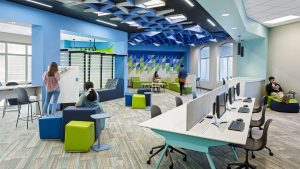
Dedicated Teen Spaces, especially ones that integrate study spaces and technology makerspaces, encourages teens to engage with the library, by either having dedicated quiet zones to study and having places where they can use technology, such as 3-D printers, recording software, or sewing machines, to be creative.  

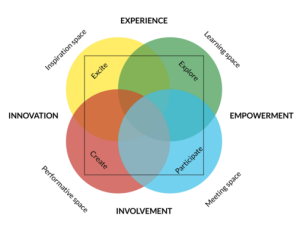
We can follow Skot-Hansen’s (2017) four-space model, where libraries divide their service amongst 4 different areas: the inspiration space, the learning space, the meeting space and the performative space, as a guideline in determining what services to implement into this new teen space.

Mission & Institutional Context:

The Orange County Public Library (OCPL) system, part of a 29 library system across Orange County, aims to “nurture a passion for reading in young learners, while also providing robust programs and resources for teens, seniors, and everyone in between”.  Additionally, OCPL strives to “promote lifelong learning, fostering community connections, and ensuring free, open access to knowledge and tools that enrich lives.” (OCPL, n.d.) Additionally, Orange County’s mission statement strives to make “a safe, healthy, and fulfilling place to live, work, and play, today and for generations to come, by providing outstanding, cost-effective regional public services.” 

Action Brief: The Orange County Public Library System will:

Convince – Teens ages 12-18, library users and non library users

That By – engaging in a space made for them at the library where they can use technology and dedicated study spaces

They Will – have their own space in the library and have the ability to learn and utilize new technology, and be creative

Which Will – help alleviate spacing congestion between main floor and engage with the library’s teen population

Because – our library’s mission is to promote lifelong learning, foster community connections, and provide open access to knowledge and tools for enrichment.

Inspiration:

Teen Innovation Lab (City of Orange Public Library) – https://www.orangepubliclibrary.org/kids-and-teens/teens/teen-lab 

Teen IDEA Lab (San Diego Public Library) – https://www.sandiego.gov/public-library/idea/lo 

Cloud901 (Memphis Public Library) – https://www.memphislibrary.org/cloud901

Studio NPL (Nashville Public Library) – https://library.nashville.gov/events/studio-npl 

The Bubble (Oshkosh Library) – https://www.oshkoshlibrary.org/library-services/the-bubble

Guidelines & Policies:

During set hours of library operations: (Drop-in: Monday – Thursdays: 1PM – 6PM)  (Appointment Only: Fridays: 10AM – 6PM)

*hours are subjected to change to account for holidays and early closures*

Library visitors (ages 12-18) will be able to utilize the teen tech space to study, use equipment provided by the library under library staff supervision, and work on any creative projects without disrupting other library patrons. 

Patrons will be encouraged to work on group projects or activities and asked to clean up after themselves .

Technology, such as 3-D printers, cutting machines, sewing machines and other equipment, are open for patrons to use in 30 minute increments to allow other patrons a chance to use the equipment. Sign-ups can be managed in-person or through online reservation by using a form based software. 

Any broken or malfunctioning equipment will be assessed and taken out of service until it can be repaired or replaced. 

Timeline for Implementation: (16-24 month based on branch renovation time)

Start implementing dedicated teen spaces at libraries slated to undergo long-term renovations. 

Month 1: Plan and survey local schools to see what equipment and technology they would be interested in seeing at their teen space. Creating a “living document” to house all ideas to be implemented. (Stephens, 2004)

Small Branches: (16 month renovation time) 

Month 2: allocate budget and recruit contractors for branch renovations

Month 3-4: look at the branch’s specific floorplan and map out a space dedicated to teens with contractors.

Month 5-6: research equipment and alternatives to implement into the space

Month 7-8: test and train staff on how to operate equipment

Month 9-12: time allotted for alternations or further staff training to understand equipment.

Month 13-14:  plan library programing and marketing to promote the new space

Month 15: Set up the dedicated space and promote the space at local schools and through social media posts

Branch Reopening Month: Host kick off events and programs and schedule school visits to the new teen space

Future Months post launch: collect feedback and engagement for future improvements and branch renovations

Large Branches: (24 month renovation time) 

Month 2-3: allocate budget and recruit contractors for branch renovations

Month 4-6: look at the branch’s specific floorplan and map out a space dedicated to teens with contractors.

Month 7-9: research equipment and alternatives to implement into the space

Month 10-13: test and train staff on how to operate equipment

Month 13-18: time allotted for alternations or further staff training to understand equipment.

Month 19-21: plan library programing and marketing to promote the new space

Month 22-23: Set up the dedicated space and promote the space at local schools and through social media posts

Branch Reopening Month: Host kick off events and programs and schedule school visits to the new teen space

Future Months post launch: collect feedback and engagement for future improvements and branch renovations

Marketing & Promotion:

Conduct school outreaches to promote teen tech space and schedule school visits to demonstrate the capabilities of the space during dedicated sessions with 

Work with members of the community who are familiar with operating equipment to host programs and workshops to teach teen patrons (and learning staff) how to use the new equipment.

Staff Training & Readiness:

Train staff on how to operate the machinery that will be included within the Teen Makerspaces, such as recording software, 3-D printers, cutting machines, and any other machines to be implemented in the future. 

Establish scheduling for teen tech space to ensure that at least one staff member is overseeing activities and knows how to operate equipment. Staff will trade off with others to ensure that everyone can take breaks and be familiar with operating equipment. 

Evaluation & Future Expansion:

OCPL is consistently refurbishing and refreshing their libraries because of the California State Library’s Building Forward Library Facilities Improvement Program, to ensure that each branch meets maintenance needs, improved energy efficiency and sustainability, extension of digital access and expansion of physical access to library facilities. 

Gather feedback through online surveys and social media engagement to see how individuals are using the space and if there are any additions or improvements that could be made in the future. (Casey & Stephens, 2005)

References: 

Casey, M. & Stephens, M. (2005.) Measuring progress. Tame the web. https://tametheweb.com/2008/04/15/measuring-progress/

Grant, R. (2021). How Memphis created the nation’s most innovative public library. Smithsonian Magazine. https://www.smithsonianmag.com/innovation/memphis-created-nations-innovative-public-library-180978844/?fbclid=IwAR1KhgGc_cXHfCduhqGtJ1Wi5Y2jRho1yW1Q62QjCNC5o2Qs9eLeGnzqqIM

Orange County Public Libraries. (n.d.) About OCPL. Orange County. Retrieved October 18, 2026, from  https://libraries.oc.gov/about-ocpl 

Orange County Public Libraries. (n.d.) La Habra library tenant improvement updates. Orange County. Retrieved October 18, 2026, from https://libraries.oc.gov/LH-updates

California State Library. (n.d.). Building forward. State of California. Retrieved October 18, 2026, from https://www.library.ca.gov/services/to-libraries/building-forward/ 

Skot-Hansen, D. (2017). Library Development: From collection to collection. University of Copenhagen. https://287.hyperlib.sjsu.edu/wp-content/uploads/2025/02/4-Spaces-Model-from-Univ-Copoenhagen.pdf

Stephens, M. (2004). Technoplans vs. technolust. Tame the web. https://tametheweb.com/2004/11/01/technoplans-vs-technolust/

Photo Sources:

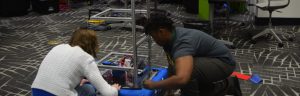
Photo 1: https://www.mcmillanpazdansmith.com/project/conyers-rockdale-library-teen-space/

Video Sources:

Oshkosh Public Library’s reimagined teen space – https://youtu.be/n58xPUmKlmo?si=Y0qwcPFlOOiKJrrU

Studio NPL promo- https://www.youtube.com/watch?v=8e1BXBlJQ_8

Teen Spaces at the Monroe County Public Library – https://www.youtube.com/watch?v=1ipoQbNPUtQ
 

Teens and Tech – Hyperlinked Public Libraries – Hyperlinked Environments 

Reflecting on this week’s module as well as the other modules we looked at so far, libraries have increasingly expanded from spaces that solely provided research tools to spaces that invite community participation, provide community resources, and create inclusive safe spaces. 

In turn, the transformation of public library spaces fulfill Skot-Hansen’s (2017) four-space model, where libraries divide their service amongst 4 different areas: the inspiration space, the learning space, the meeting space and the performative space. In turn, libraries become a unique space that promotes education and literacy through collaboration, socialization, and inspiration. We can see these principles in action throughout multiple public library systems throughout the country. 

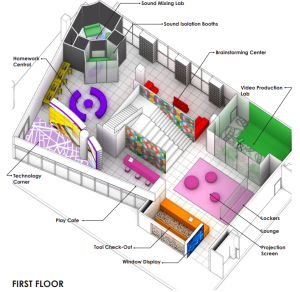
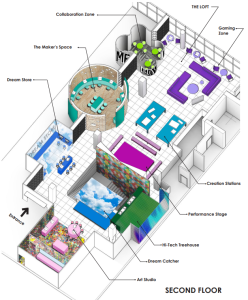
Spring boarding from the article talking about the innovative Memphis Public Library, public libraries in the 21st century have progressively started to invest in and provide working spaces and technology access to their patrons. Public libraries today have transformed beyond providing physical media to providing spaces where individuals can create, collaborate and innovate. While many cities have cut funding for public libraries, Memphis, Tennessee decided to heavily invest in their public library system, and were able to create a bustling community space that sees continual attendance from all community members. (Grant, 2021) One of these investments is Cloud901, a 8,300 square foot technology lab where teens ages 13-18 can develop collaborative, critical thinking and problem solving skills while utilizing new technology. (Memphis Public Libraries, n.d.) The inclusion of Cloud901 shows the library’s plans of investing in their community, especially their youth. Additionally, Cloud901 promotes everything stated by the 4-space model by providing an inspiration and performative space for teens by providing sound mixing labs, video production labs, performance stages and maker spaces, while also providing learning and meeting spaces by including collaboration zones, gaming zones, homework areas and brainstorming centers for teens to utilize. 

From what I’ve gathered, I resonated deeply with a quote from the article, “How Memphis Created the Nation’s Most Innovative Public Library”, stated by former Public Library Association President, Ramiro Salazar, as they assert that “[public libraries] exist for the betterment of communities. We support literacy and learning. We want all our resources to be free and everyone to feel welcome.” (Grant, 2021). Public libraries now, especially in the 2020s are becoming spaces to provide enrichment for a community. At my public library, we struggle to have designated spaces for teens to use for a variety of reasons such as, staffing, space, and budget requirements. If more cities are willing to invest resources into their local libraries, then I hope that many more libraries can provide the same resources that the Memphis library provides for their patrons, especially their creative teen patrons who frequent the library. 

References: 

Grant, R. (2021). How Memphis created the nation’s most innovative public library. Smithsonian Magazine. https://www.smithsonianmag.com/innovation/memphis-created-nations-innovative-public-library-180978844/?fbclid=IwAR1KhgGc_cXHfCduhqGtJ1Wi5Y2jRho1yW1Q62QjCNC5o2Qs9eLeGnzqqIM 

Memphis Public Library. (n.d.) What is CLOUD901?  City of Memphis. Retrieved October 11, 2026, from https://www.memphislibrary.org/cloud901/what-is-cloud901/ 

Skot-Hansen, D. (2017). Library Development: From collection to collection. University of Copenhagen. https://287.hyperlib.sjsu.edu/wp-content/uploads/2025/02/4-Spaces-Model-from-Univ-Copoenhagen.pdf 


Hyperlinked Communities: Providing Resources for Neurodiverse Families

Social Media and the Internet today are powerful tools that allow humans to interact and connect with one another more readily and easily than ever before. Libraries can use these connections to promote library programming that can bring together individuals who would have never interacted in the first place. 

As mentioned by Danah Boyd (2016) “technology is made by people. In a society. And it has a tendency to mirror and magnify the issues that affect everyday life.” Libraries, especially public libraries, have the power to create spaces for communities and foster interconnectivity among members. Additionally, public libraries have a unique role as they are a direct link for a community to access a vast realm of information and other community members. Functioning as a “third place”, a place where individuals can meet beyond their home, school or workplace and foster a sense of community, self and consciousness of the greater world. (Beal, 2024) Libraries can utilize their unique position as a third place to provide and promote resources to their patrons.

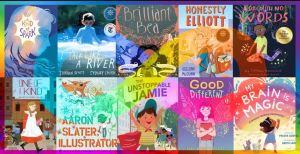
Reflecting on this week’s readings focusing on community, I wanted to highlight one of the programs that libraries are currently implementing for families with neurodiverse children. Libraries, especially public libraries can provide tools and resources for neurodiverse children. These resources can include curated book lists, special storytime and playtimes, and take home kits that teach individuals how to navigate the library. 

An example from Meredith Sires (2024), a Children’s Librarian for the Los Angeles Public Library, has created an article that highlights books and resources that parents and caregivers can use to discuss and learn about neurodiversity within young children and how to navigate and teach these experiences to others. Sires (2024) also mentions how libraries can also make special accommodations for individuals who request resources based on their special interests to help motivate learning with neurodivergent children. Additionally, seeing characters within these stories can help readers gain more compassion and appreciation for neurodivergent individuals. Sires (2024)

As mentioned by Bjørkeli Svaler (2024) in the article “On making libraries and museums more accessible for autistic people”, libraries are places where individuals can feel safe to explore their interests without judgement. Libraries provide a plethora of resources for individuals to learn more about their topics of interest. Additionally, libraries can provide “quiet spaces for silent study or reading, which may include non-fluorescent lighting or several lighting choices allowing for individual preferences, good signage that shows where these spaces are located, and different types of seating to support different sensory needs.” Bjørkeli Svaler (2024) Not only can libraries provide informational resources, they can also provide accommodating spaces to account for the patrons that visit the library. 

As noted in the article, ‘Free, non-judgemental, accessible’: How your local library is a sanctuary of health and wellness, “Public libraries in Australia offer not only books, but provide people with a safe place in which to access vital information and hone their skills.” (Hasan, 2022) Libraries are not only a space that provides a home for books, movies and boardgames, but also acts as a space that allows people to interact with one another in a safe environment. Library programming allows individuals to interact with others while participating in crafts, book clubs, and performance events. Additionally, many individuals can use the library as a separate meeting place besides their home, school or workplace. 

Libraries can continue to foster their relationships to their communities by continuing to provide more inclusive materials and expand the amount of resources available for their communities. 

References: 

 Beal, J. (2024) What are Third Places and Why Do They Matter? Albert Shanker Institute. https://www.shankerinstitute.org/blog/what-are-third-places-and-why-do-they-matter 

Bjørkeli Svaler, T. (2024). On making libraries and museums more accessible for autistic people. International Federation of Library Associations and Institutions, 50(1), 42–52. doi: 10.1177/03400352231202516 

Boyd, D. (2016). What World Are We Building? https://medium.com/datasociety-points/what-world-are-we-building-9978495dd9ad 

Hasan, T.N. (2022). ‘Free, non-judgemental, accessible’: How your local library is a sanctuary of health and wellness. https://www.sbs.com.au/language/bangla/en/article/free-nonjudgmental-and-accessible-how-your-local-library-is-a-sanctuary-of-health-and-wellness/t15blzsi9 

Sires, M. (2024). A Library Tool Kit for Neurodivergent Kids.  https://www.lapl.org/news-stories/articles/library-tool-kit-neurodivergent-kids 

Building Relationships with the Public: The Importance of Participatory Service in Public Librarianship

Hello all,

As I enter my 5th year of working at a public library, one concept that has resonated with me through this course was in the module participatory service & transparency. Over the years, libraries have transformed from a space that solely focuses on lending books and researching, to lending items, media, and tools; offering programs and resources for patrons who visit the library, and providing a communal hub for residents to feel safe and welcomed. Additionally, libraries, especially public libraries try their best to provide as much accessibility to their patrons as technology and needs change over time by providing more online resources through online catalogs and digital collections. 

Through my personal experiences working in public libraries, I have seen libraries transition daily from quiet workspaces to boisterous areas for patrons to mingle and engage with one another while working on craft projects or cooking programs. As mentioned in the Shareable article “How San Francisco’s public libraries are embracing their changing role”, Casey O’Brien writes how the San Francisco Public Libraries (SFPL) have transformed into “ a space where people can connect to one another and to services, for free.”(O’Brien,2019) Libraries have increased the amount of services and resources they provide such as including: Makerspaces, a workspace that provides tools such as 3-D printers, sewing machines, and other tools for patrons to be creative; Computer Labs/Computer Stations, public access computers that allow patrons to do word processing, browse the web and other electronic based tasks; and even Lunch at the Library, providing meals for young patrons who visit the libraries during the summer time. During the month of September, libraries celebrate national library card sign-up month and encourage community members to visit the library and invite community members to share memorable moments or feedback they have for the library.

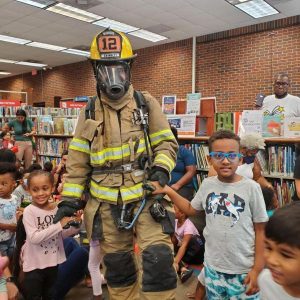
Additionally, most public libraries engage in participatory service by aiming to provide free resources for their communities. Public libraries frequently collaborate with members in their community, ranging from community helpers such as the Fire & Police Departments, Postal Services, and local storeowners. As O’Brien corroborates “branch librarians work with community members, local nonprofits and other partners to develop programs, and are a valuable resource for residents to connect via informal conversations.” (O’Brien,2019) At the public library that I work at, I have seen programs where community partners have been implemented in, such as hosting storytimes featuring community helpers such as the Post Office, Fire Department, and Animal Care, to hosting theme programs featuring community clubs and organizations such as sport clubs and non-profit organizations. Additionally, with the use of the web, libraries have embraced the usage of social media to promote library services and community engagement.

As technology continues to change, libraries are also shifting to adapt with increasing technological needs. Libraries that provide computers and technology assistance are faced with the constant evolution of pre-existing technology and the emergence of new technology. As mentioned in the article Making Libraries Visible on the Web: making libraries visible on the web: to ensure that library content is conveniently accessed, libraries must give search engines what they want, Ted  Fons notes how “libraries now have an opportunity to understand the rules of the web and to integrate their collections and services into these convenient interfaces.” (Fons, 2016) Libraries address online accessibility by having publicly accessible catalogs available online rather than using physical catalogs only accessible in the library. 

As SFPL communication manager, Mindy Linetzky, proclaims in O’Brien’s article “‘we need a space for people to connect that’s free, that’s open. It’s an expensive city to live in,’ she added. The library is ‘a place where you can go and be part of a community.’” (O’Brien,2019) Digital collections such as Libby, Overdrive, and Hoopla provide excellent resources for individuals seeking access to digital versions of popular media. 

As the course progresses, I am curious to see how participatory service is implemented in my workspace and how participatory service builds upon other aspects and topics in upcoming modules.

See Also:

O’Brian, C. (2019). How San Francisco Libraries are Embracing Their Changing Role. https://www.shareable.net/how-san-francisco-public-libraries-are-embracing-their-changing-role/ 

Fons, T. (2016). Making Libraries Visible on the Web.  https://go-gale-com.libaccess.sjlibrary.org/ps/i.do?p=AONE&u=csusj&id=GALE%7CA459804903&v=2.1&it=r&sid=AONE&asid=e0d05f0e 

Images & Media:

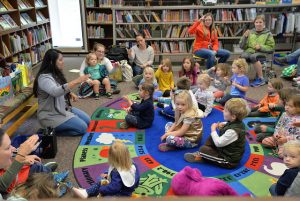
Omaha Public Library. Storytimes. https://omahalibrary.org/storytimes/ 

California State Library Multimedia. Lunch at the Library. https://www.youtube.com/watch?v=pMIoRPDSJIk 

Raising Resilience | Firefighter Storytime https://gwinnettpl.libnet.info/event/10476224 

Wionna Public Library. Libby/OverDrive & Hoopla App Classes. https://winona.lib.mn.us/series/app-classes/

About Me

Hello all!

My name is Aldore and I’ve been working as a library assistant at a public library system since 2022. At my current work place, I am primarily focused on providing children’s programing, ranging from craft, to story times, to daily passive activities. Currently, I reside in Southern California and have lived here all my life.

I decided to pursue a degree in Library Science to hopefully become a librarian. Academia is not my strong suit, but I have thoroughly enjoyed many of the classes I have taken at San Jose State University, especially the ones that focus on technology, archives, and digital spaces. This is my second to last semester at SJSU and it’s surreal to me as I started last spring.

I was drawn to taking this class because I am interested in the interconnectivity that libraries can provide for their communities. Additionally, I had see many students express how they really enjoyed taking this class and it was one of their favorites they have taken at SJSU.

While I’m not juggling my full time job and schoolwork, I enjoy playing video games (I love Slay the Spire and Baldur’s Gate III), visiting theme parks (I would love to visit Epic Universe), cross-stitching (this hobby is repetitive but relaxing), and painting (also repetitive but relaxing). One of my guilty pleasures is deep diving into my hyper fixations (right now it’s obscure theme park history about defuncted attractions).

I look forward to working with you all this semester. 🙂

Best,

Aldore