Inclusion has been a hot topic in education over the last decade, and, honestly, throughout the rest of the world as well. Lauersen’s presentation on inclusion discussed how inclusion for the sake of saying you’ve done inclusion is not effective unless you look at the community being represented and learn what they need. (Lauersen, 2018). In “The Heart of Librarianship,” Stephens (2016) explains that reaching all users begins by asking who is currently benefiting from the library, being transparent throughout the process, and finding a balance between services and projects to ensure a program meets all users’ needs. That is how the process of inclusion should begin, with asking the hard questions and finding accountability.
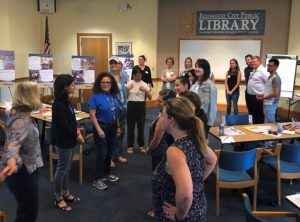
CK Group, n.d. [Photograph of inclusive library programming and community engagement]
Atlanta-Fulton Public Library Foundation. (n.d.). Inclusion at your library.
It has been reiterated time after time that the library is for everyone. It’s for the young and the old, the majority populations, and, perhaps even more importantly, the minority populations within a community. This also includes providing technology support because, to all because as Stephens (2019) reminds us in Wholehearted Librarianship, technology is no longer just an add-on to library services. Technology is a skill that helps people learn and live. That is a big part of inclusion.
Overall, I have found that the Hyperlinked Library is all about creating meaningful and innovative ways to support the whole community. Not just offering the new hip thing or doing things the way they have always been done, but instead it is about listening to the community and building connections so that all are truly welcome.
References
Greenwood, C. (2022). Healthy library, healthy life. Public Libraries Online. https://publiclibrariesonline.org/2022/02/healthy-library-healthy-life/
Hasan, T. N. (2022, November 30). ‘Free, non-judgemental, accessible’: How your local library is a sanctuary of health and wellness. SBS News. https://www.sbs.com.au/news/article/free-non-judgemental-accessible-how-your-local-library-is-a-sanctuary-of-health-and-wellness/3v3p3frh0
Lauersen, C. (2018). Do you want to dance? Inclusion and belonging in libraries and beyond. https://christianlauersen.net/2018/06/07/do-you-want-to-dance-inclusion-and-belonging-in-libraries-and-beyond/
Ralph, S. (2021, October). The magic of libraries [Video]. TED Conferences. https://www.ted.com/talks/stephanie_ralph_the_magic_of_libraries
Stephens, M. (2016). The heart of librarianship. ALA Editions.
Stephens, M. (2019). Wholehearted librarianship. ALA Editions.
Williams, A. (2021, March 17). Libraries are bridging the digital divide. Internet Society. https://www.internetsociety.org/blog/2021/03/libraries-are-bridging-the-digital-divide/
Jana – I think you shared a very strong definition of what the hyperlinked library is in your last paragraph. It is not about the hip thing or the newest technology and all of those things, but it is about the community and how to make their lives better.
While reading your reflection about hyperlinked communities and inclusion, I recalled learning about how libraries served their communities’ specific needs during COVID-19. Rural libraries in Australia called their older library patrons to check in, knowing they would be lonely and miss the regular social interactions at the library. Some libraries extended WiFi to their parking lots so unhoused folks could have a reliable source of Internet even while library buildings were closed. And many libraries offered curbside pickup to make sure patrons still had access to books and materials during various shutdowns. These responses demonstrate the heart of Hyperlinked Library connection, supporting the community in innovative and meaningful ways!