Blogging: New Models, New Experiences

People who are “surprised” that libraries are still around, obviously haven’t made their way into a library lately.  Maybe past experiences shaped in their head of what a library is – book depository with stern librarians ready to shush them at any point- but happily these notions are wrong. A successful library should be doing so much more than serving books to the community.  Yes, we have wi-fi and computers, no, not everybody has access to the internet or a computer at home.  Yes, we offer a safe place free of the environmental elements that surround you.  Yes, we have restrooms. But we offer so much more.

The “New Models” modules offered a lot of examples of library service that you can find throughout the world.  In Canada, you can find kits aimed for the use by dementia community members. At the Berkeley Public Library, you can have an easy access library card which doesn’t require you to have a home address.  At Salt Lake City’s library you can join a tai chi class.  These are examples of some of the innovative and imaginative ways librarians are facilitating connections within their communities.

Image courtesy of Anythink Library

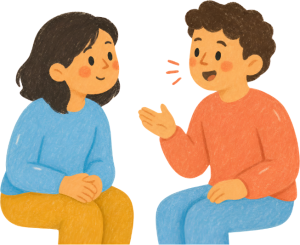
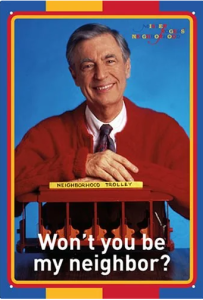
Not only do libraries offer you things and services, but they offer the opportunity of connection in a safe place where it may not happen otherwise.  One simple but impactful program I watched during this module was Anythink Library’s “Get to Know Your Neighbor.”  This takes a simple idea and connects community members by having “neighbors” ask questions which in turn causes a natural conversation and connection between two people who may not have otherwise connected.  Questions are created and placed in a fishbowl then a question is randomly selected and a conversation ensues.  This is a very simple idea but the connections formed are incredible.  Different people of different ages and backgrounds get to start a conversation with a single question.  Sharing their answers leads to a human exchange of ideas, stories, and a feeling of connection.  I don’t know about you, but having human to human interactions are becoming less frequent.  Want to have groceries delivered to you? Use InstantCart.  Want to buy brand new curtains? Use Amazon.  Want to have your favorite dish at your favorite restaurant without leaving your house? Use DoorDash.  Technology like Waymo is even transporting people in self-driving vehicles.  You can go a day without conversing with a human easily today.  That starts stripping away those social skills we learned as children and young adults.  Pretty soon, you find out that it just feels uncomfortable to socialize.  But “Get to Know Your Neighbor” takes that pressure off.  You sit on a couch with another person and you select a question.  You are given the opportunity to talk and to listen.  You cannot put a price on that kind of opportunity.

Photo courtesy of Entertainment Earth

As a society we are moving towards technology and convenience and there is nothing wrong with that but as humans we seek and crave connections.  Maybe you’re a little rusty?  Come to the library and you are sure to find a program that will give you the opportunity to connect with your neighbors.

Innovation Roadmap: Our Voice, Our Community, Our Library

What is the Idea?

Participatory service allows our communities to give us input about what they need.  Transparency allows the library to show the community how we use that input.  Both lead to new and exciting possibilities. Unfortunately, participatory service and transparency is sorely lacking in our system.  Community members and the library are not in communication with each other.        
The library plans something whether that’s a program or event and then rolls it out.  There is no dialog with community members, no surveys, nothing. How can we reach our mission statement and vision by not considering the needs of our community?  The answer is we can’t. Let’s go ahead and tear down those walls.  The idea is to make our relationship with our community participatory and transparent through a combination of a brand new program, improved outreaches, and creating a blog on our website. 


  • New Program – “Coffee with the Librarian” – once a month the community is invited to have coffee, donuts, and bagels with the County librarian and other community librarians. The program will start like a panel with librarians introducing themselves and sharing why they are there.  Any pressing news/programs will be shared and then the floor is open for community members to ask questions, make comments, etc.  Surveys will be available for customers to fill out.  In addition, a link with the survey will be made available on our website for customers to fill out as wanted.  The survey will allow community members to voice their opinions on the library.  The program will be held at rotating library locations to make sure all community members have the  opportunity to be heard.

 

  • Image courtesy of San Jose Public Library

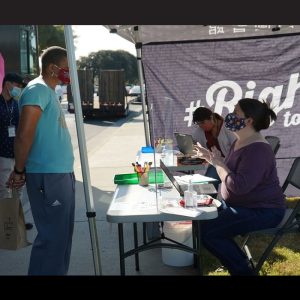
    Improved Outreach – At least once a quarter the library will move outside the building and go to a community hang out (local coffee shop, grocery store, etc.) or community event (health fair, back to school night, trunk or treat, etc.).  These outreaches will be designed to put a face to the library for our community who do not already use the library. Outreach will allow for community members to talk to trained library staff about why or why they aren’t visiting the library with the use of surveys and conversation.  Surveys will be available just like the monthly program and can be filled out there or returned at a later time. 


  • Blog – Currently we do not have a blog and social media is used to promote events and programs.  What we need is a place where community members and the library can have a dialog at any time.  The blog will be used to inform the community about upcoming facility improvements, updates about any unique happenings at the library and community, and quarterly results from the “Coffee with the Librarian” programs, outreach events. This allows for a transparent exchange between the library and the community.  Comments will be turned on in this blog with monitoring for language and any inflammatory speech.  Criticism is ok and should not be suppressed. This will be a forum allowing our community to speak about what we are doing well, what we can be doing better, and how we can serve them the best.


Mission & Institutional Context:

The San Bernardino County Library system encompasses 32 branches in the United States’ largest sized County.  It’s a large system that has branches stretching from Chino Hills to Twenty Nine Palms to Needles to Trona to Hesperia and all the cities in between.  In our Vision Statement we state, “By utilizing the resources of SBCL’s meeting spaces, technology, materials, programs, services, and staff we envision adding to the quality of life and strengthening the community identity everywhere a branch library operates.” (San Bernardino County, 2026).  Due to the size of our system, strengthening community identity can be very difficult to accomplish especially since current thought is that programs need to be consistent throughout the County.  Unfortunately, this one program fits all is not a viable solution for strengthening community identity.  It places the system as an authority figure that tells our communities what is good for them.  Currently there is no transparent and accountable way that feedback from community members is taken into account for planning in any of our programs, events, and large scale renovation projects – “fresh voices and ideas from beyond library staff input might lead to some intriguing and popular initiatives,” (Stephens, p. 101) . The County library system is very large and though equality is a very important tenant, each branch community has different needs and because of this it’s important to make sure that those needs are being addressed in a transparent and participatory manner. It’s time to ask what our communities need.


Action Brief Statement:
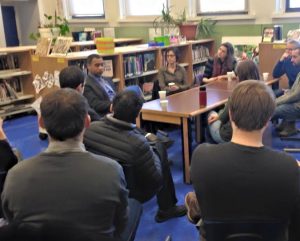
Image courtesy of Programming Librarian.

  • Convince our community that by listening to their voices they will discover all the wonderful tools and resources that we offer so they will be invested in sharing their opinions to help our library change current methods of thinking which will create a transparent and participatory relationship which will give community members a feeling of ownership which will allow for deep connection between the community and the library.
  • Convince library administrators that by using participatory programs, events, and blogging they will make deep connections within their unique communities across the County which will result in a hyperlinked library model because putting yourself out there and being part of the community is why the library is here and ensures that we reach all who call this County home.


Inspiration:
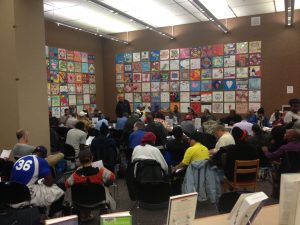
Image courtesy of Programming Librarian.

San Jose Public Library: Community Engagement: Your Voice Matters | San Jose Public Library 

Coffee and Conversation at Cambridgeport School: Coffee and Conversation at Cambridgeport School | Programming Librarian 

Coffee and Conversation: Coffee & Conversation | Programming Librarian 


Guidelines & Policies:

Surveys – Surveys need to be anonymous; no identifying information should be included with the surveys. Questions will need to be a combination of open and closed questions. Multiple choice questions and scales would be great to gauge answers. However the survey will need to have some questions that are open ended so community members can express their answers fully. The online survey should be set-up in a way so that only residents within the community are able to participate and should include a question about which branch is closest to them.  Survey questions should be reviewed by administrators once a year to ensure that questions are still relevant.

Blog – Comments should be opened however a moderator will need to review blog comments consistently to ensure that no inflammatory language is being used.  There will need to be a code of conduct available to people who make comments so they ensure that what they post is appropriate.  Comments with criticism should remain on the blog and should be answered by the moderator.

Outreach – Events should be planned in advance by finding major community events that already draw community interest such as health fairs, car shows, farmer’s markets, etc. If a major event is not available, outreach should be conducted at local coffee shops, grocery shops, etc.  This allows the library to meet the community where they are at.  These outreach events are not passive but rather a way to have conversations with our community members.  The goal is to meet community members, find out if they use the library, find out why they do or don’t, and get some feedback so we can build a better library for the community by reaching their needs. Training sessions will need to be conducted to model the kind of conversations that need to happen for a successful outreach. Membership to the library is not needed to fill out surveys at events.  After each outreach, there should be a debrief between staff to share what they learned and any feedback they received.

Program – Those representing the library at the “Coffee with the Librarian” should be outgoing, friendly, and approachable.  They will need to be comfortable with having conversations with community members and should attend training with those that are conducting outreach.  There will probably be crossover between both.  After each program, there should be a debrief between staff to share what they learned and any feedback they received.


Timeline for Implementation

The system already uses 6-month out planning for current offerings so this programming should be implemented within 6 months.

Phase 1: Start building policies for the blog, start blog, and begin to create surveys (1-3 months)

Phase 2: Plan “Coffee with the Librarian” programs – where they will take place, when, who will represent the library, and ordering of coffee and food ( 2-4 months)

Phase 3: Plan new and improved outreach programs including reaching out to organizers for permission to be at events and fill out any paperwork necessary. Also, begin partnerships with local businesses to see if outreach is possible at their locations (3-5 months).

Phase 4: Begin “Coffee with the Librarian” programs and quarterly outreaches (6 months)

Phase 5: Blog about results from surveys every quarter.


Marketing & Promotion
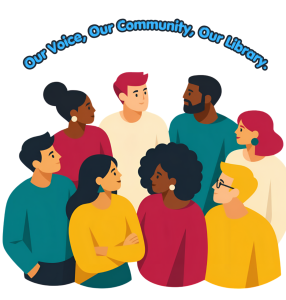
Proposed logo for initiative

Within the organization, the new model of participatory service will be revealed at the annual Staff Development Day with the reveal of its name “Our Voice, Our Community, Our Library.”  This is where the whys will be explained to staff as well as what we hope to build with this kind of service.   We will go over the blog, the new program, and outreach improvements.  At the same time, we’ll gauge staff excitement.  It’s important that dynamic staff that are excited about this are involved with this program.  For the community (both users and non-users) marketing on social media about our initiative will roll out, fliers will be posted in our branches and at partnership businesses, and of course a marketing of our new blog.  Email blasts will be sent out to users as well to market the upcoming programming and services.  “Our Voice, Our Community, Our Library” will be the tag line attached to this initiative and can be used for all marketing purposes.


Staff Training & Readiness

Staff will need to be trained in how conversations with community members should be conducted.  These are not formal conversations, this is meant to be a casual way to introduce the library to the community by giving the library a face and personality.  Staff at outreaches should be personable,  outgoing, friendly, and approachable.  Training sessions should be mandatory for staff that will be helping with outreaches and at “Coffee with the Librarian” programs.  The training sessions will go over what kind of information we are looking for as well as modeling good ways to handle conversations with the public.  Meetings with staff will be conducted monthly in order to go over best practices and go over what is working and what is not working.

Staff moderating and designing the blog will meet monthly as well to go over what is working and what is not working.  The county librarian will be at these meetings in order to review comments that were made in the past month.

Training in how to evaluate the survey answers will need to be held as well.  In addition, there should be a running “tally” of answers so we are prepared to share our findings on our blog as well as our staff members.


Evaluation & Future Expansion
If this new participatory experience is a success, we should see an increase in activity on our blog as well as an increase of usage of our tools (digital tools, programs, physical materials, etc.), and an increase in our door counts as we become visible in our communities.  Success will really be measured by how we are able to take feedback and use that to inspire our offerings so we are consistently having a dialog with our communities.  Over time, our growing blog presence, stronger ties to our community organizations, and the ability to reach more people will ensure that the library remains a relevant institution. The meaning of this new participatory service model is to make connections with members of our communities and ultimately to make sure we are staying relevant by serving their unique needs.  Through connections we may be able to build a larger footprint by making ourselves known.  In addition, the community will have made more connections. More conversation type programs can be implemented into our libraries which can reach even more people of diverse backgrounds.  


Works Cited

San Bernardino County Library (2026). Library information: About Us. https://library.sbcounty.gov/information/tion – Library 

Stephens, M. (2016).  The heart of librarianship: Attentive, positive, and purposeful change. ALA Editions. 

Reflection Blog: Hyperlinked Environments

In order to support the hyperlinked library, designing a hyperlinked environment is necessary.  Traditional library set-ups do not entirely support a hyperlinked library.  To be sure the stacks and rows of computers will still be a component of the library for now but there are important tools that a hyperlinked environment can offer to ensure that the library remains a vital community resource.  There are plenty of examples of hyperlinked libraries developing new areas in their libraries for different kinds of makerspaces such as stem labs, recording studios, and even growing into different buildings that don’t resemble a traditional library at all.  As a public librarian, I’m most interested in learning about public libraries and finding out how they are answering the call of the hyperlinked library.  What is most fascinating is that no matter the budget you have, there are steps you can take to start developing a hyperlinked environment right now.

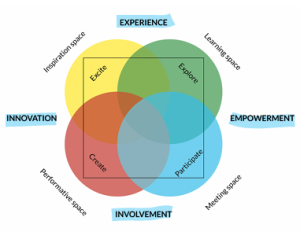
You can think of a hyperlinked environment as a transition from an environment focused on collections to one that is focused on connections. One way of looking at your library environment is through examining the “four space model.” These four spaces are defined as “excite” which is a space that offers inspiration to patrons; “explore” instills learning; “participate” offers a space that encourages meeting and socializing; and “create,” a space that allows performance (Skot-Hansen, 2017).  These spaces don’t live in a vacuum, instead they interact with each other allowing for experience, empowerment, involvement, and innovation (Skot-Hansen, 2017). 

Think of your library, does it offer spaces like that described in the four space model?  Can you think of how you can create and support these kinds of spaces in your library?  It can be overwhelming to think of what others have done and how you can’t possibly do that; but, what can you do?

Dokk1 is a great example of how having this kind of environment can foster a hyperlinked library.  You may not be able to design your own building to make this environment but what you can take away from Dokk1 is inspiration on  how you can connect to your community.  Maybe you can weed out outdated reference materials and move a bay of shelves to offer an area that can be used for meetings or a small maker space.  Maybe you can begin to draw inspiration from programs and events that hyperlinked libraries offer in order to build a  community that realizes their potential to reach their goals together through fostering connections that would otherwise not be possible.  There is a lot of inspiration out there.  Go out there and make those connections to your community and find out what they are looking for, then see how you can transform your environment into a place that can help meet those needs. Maybe it’s time to start using the “four space model” to guide you on your journey as you start creating a hyperlinked environment to support your hyperlinked library.  I know I will.  


Works Cited


Skot-Hansen, D. (2017, August). Library development: From collection to connection. University of Copenhagen Faculty of Humanities. https://287.hyperlib.sjsu.edu/wp-content/uploads/2025/02/4-Spaces-Model-from-Univ-Copoenhagen.pdf


Reflection Blog: Hyperlinked Communities

Libraries are much more than the books on the shelves, the displays on the tables, the technology available, and the digital resources they offer.  Libraries have the unique ability to serve their communities in ways that other kinds of organizations simply can’t.  A library is only as successful as its community and this relationship needs to be continually fostered and explored.  This dialog between the library and the community is mutually beneficial and necessary to keep libraries as a cornerstone institution.

In my professional librarian career, I’ve only worked within one public library system.  The system is a county entity and sometimes the ways that county business is conducted doesn’t really fit with the ways libraries should work.  Hyperlinked libraries should inspire connections between themselves and their community members.  To do this the hyperlinked library needs to foster communication with their community which can include surveys, focus groups, community analysis, etc. (Stephens, 2016, p. 43).  Unfortunately, I’m not seeing that kind of communication in my system but I think that can change.  It’s ok to realize our limitations due to processes and rules that we are beholden to.  You may be running into the same wall that I am with your own organization.  It’s difficult to sometimes look beyond the constraints, but there are ways we can make positive movements to start that kind of communication with our communities.  

San Jose Public Library has a wonderful community engagement effort that places the library out in the community where they are and engages in dialog with their community.  According to their website, the community engagement program meets community members where they are and asks them about their aspirations, what kind of community they want to live in, what concerns do they have, and what kind of services would be great to have at the library (San Jose Public Library, 2026).  Based on the information gathered during these outreaches, the library provides a quarterly blog that reports on their findings. This dialog allows the library to make an impact and gives them an opportunity to reach out to not only their current patrons but to people who don’t go to the library. In addition to going out to community events, San Jose Public Library also provides a survey link on their website for people to complete when it’s convenient for them.

Perhaps bringing up San Jose Public Library’s community engagement program to my supervisors can help our library grow for our community.  San Jose is doing a great job of reaching out and listening to their community.  They are transparent with the results of this outreach and with this transparency they show that they respect and hear what their community needs.  I think this kind of engagement is something my system could easily begin doing without having to go through county red tape which tends to slow things down.  We already do outreach events but to be honest these outreaches seem static in that people approach our table and grab a calendar and/or an incentive and off they go.  They also tend to take place at the same places repeatedly which isn’t necessarily a bad thing but just imagine who we could reach at a busy coffee house for example. Maybe changing outreach into having conversations with people could be a wonderful step forward.  Maybe changing venues for outreach could connect us to other community members we may not be reaching. Maybe these kinds of suggestions would help your organization too.

The goal of changing the way we do outreaches would give us information that we wouldn’t otherwise have. This wonderful insight could then help the library to meet those needs that the community has and help the library system I work for to turn a corner. How about we make more out of the time we have in the community by asking for some input from community members that use our libraries and those who don’t?  How about we use our website to post about our findings and allow comments which will allow a larger dialog?  What if just a slight change could make the biggest difference?  I think it’s time to try, how about you?


Works Cited

San Jose Public Library. (2026). Community engagement: Your voice matters. https://www.sjpl.org/community-engagement/

Stephens, M. (2016).  The heart of librarianship: Attentive, positive, and purposeful change.  ALA Editions.
 

Assignment X: The Hyperlinked Library – Much More Than Books

Meme courtesy of: https://blogs.ubc.ca/socialmediaandlibrarianship/2016/02/09/use-of-memes-in-libraries/

The library is more than a place that stores books which makes our future as library professionals bright.  If the library was only storage for books, we’d be in big trouble as the internet has changed how people find and consume information.  The Hyperlinked Library Model outlines practices for libraries to use which will best support the needs of their communities. Through ongoing conversations, transparency, participatory service, and the ability to easily change as needed, the Hyperlinked Library is for the people and by the people. The Hyperlinked Library Model demands that institutions reach out to their communities consistently.  By engaging in conversations with their communities, libraries can transform into institutions that provide services that truly meet their needs (Stephens, 2016, p.10). 

Recently, the city of Long Beach, here in California, proposed slashing hours and laying off staff at their library branches due to major budgetary issues.  During a City Council meeting, one patron, Emily Quest, pleaded with city officials to keep those libraries open.  You can watch Emily’s plea here but bring tissues with you because tears will be shed.  In the clip, she speaks through tears about how the library has been a place where she is safe, she has the opportunity to socialize with others, and can attend her beloved crafting programs.  This emotional public plea is a reminder of how important our libraries can be.  There aren’t many ‘third places’ out there that are free for people to gather safely together. A ‘third place’ is a place that is not work or home but allows for social interactions with others creating a community (Leferink, 2018).  The library provides that place free of cost to their community members.

We are intrinsically a caring institution – we are much more than a book storage facility.  We are a safe place where community members can go to access information, be entertained, learn, socialize, and frankly, feel good about themselves.  I went to a program at my local library because I wanted to learn how to use a sewing machine.  It was a great program, and I was able to talk to other people during the program.  I will always remember how excited one gentleman was to make a potholder using the sewing machine.  I’m proudly staring at the one I made!  After a failed attempt at trying to use a sewing machine on my own, I never thought I’d touch one again but here I was at the library with a wonderful staff member showing me that I could sew.  How cool is it that we are able to offer opportunities like that?  When examining the Hyperlinked Library Model, I am really drawn to making these human connections.  In particular, transparency and the conversations that librarians need to be having both within the library and outside the library with their communities.  In my work experience, planning and ideas have come from within the organization with only a few members of upper management having any input related to future plans.  Community members are not even consulted for remodels, which is head scratching.  There are a lot of personal projects headed by upper management and the community has not been afforded the opportunity to speak on what they need and what they want. I’m not sure the reason why that kind of outreach has not happened. This surely isn’t the only library system that handles things like this, but who would know what is needed better than the community?  The Hyperlinked Library Model outright requires an ongoing and never-ending conversation between the library and the community. Michael Stephens (2016) puts it perfectly, “fresh voices and ideas from beyond library staff input might lead to some intriguing and popular initiatives,” (p. 101). How often is that happening in our libraries?  How do we get out of the culture of secrecy and upper management pet projects?  How can we start those conversations and really understand the needs of our communities?

Emily Quest’s public comment shows how impactful the library can be. In response to this City Council meeting, I’m happy to report that the Mayor of Long Beach has decided to back off of the proposed cuts.  Emily’s experience and willingness to be vulnerable to stand-up for her library may have just saved both staff and hours of her favorite space.  That devotion can only come from a heart that has been touched deeply by that library.  The Hyperlinked Library model provides a wonderful roadmap to ensure the library remains a viable institution in our communities.  How are libraries rising to this challenge?  How are we touching the hearts of our communities?

References

Donegan, J. (2026, August 9). Long Beach libraries: Budget proposal to slash jobs. LAist. https://laist.com/brief/news/long-beach-plans-to-cut-library-hours-staff-even-as-workers-say-demand-is-soaringh libraries 

Donegan, J. (2026, September 1). ‘The message was clear’: Mayor abandons plan to cut library hours following public outcry. Long Beach Post. https://lbpost.com/news/library-cuts-long-beach-hours-mayor-reverse-course/

Leferink, S. (2018, January 24). To keep people happy…keep some books. OCLC. https://blog.oclc.org/next/to-keep-people-happy-keep-some-books/

Stephens, M. (2016).  The heart of librarianship: Attentive, positive, and purposeful change. ALA Editions.
Hello, How Are You?

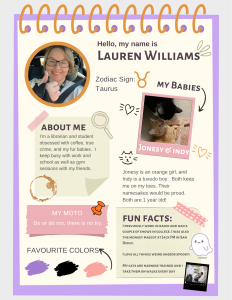
I’m Lauren Williams and I’m a librarian at a public library system in Southern California.  I’ve been in the library profession for almost 10 years now and I’m about halfway through my master’s degree program at SJSU.  The major reasons why I wanted to go back to school was to keep learning so I can better serve my patrons and also to feed my general curiosity.  My journey so far at SJSU has done just that.  Sometimes I’m tired at the end of the day before I start my schoolwork, but the learning and connection to others who are passionate about librarianship is a motivation to keep at it!

I’ve been interested in this specific class since the beginning of my journey because this class explores the unlimited possibilities and potentials we have as information professionals.  Sometimes the daily minutia of my tasks at work can burn me out but having a broader perspective of our field really inspires me to keep going.  The tasks I do is just a small part of the big picture and those small parts are important to keep the system going.  Currently, I’m the collection development lead at my library system.  And I’m doing my best to let those above me know that just a physical collection is not enough for where we are going as a world.  Sometimes it can be frustrating to try to convince others that libraries are beyond being a book depository. I think, at least in my system, co-workers are just starting to see that, but we have a way to go.  I definitely love collection development, and I’ve been doing it for about 5 years now.  Within those 5 years, I’ve seen a lot of changes. I’m excited to learn about the theories of the hyperlinked library and learn how institutions are making it happen.  I think I’m most excited to find inspiration.

Here’s a bit more about me.  I look forward to learning with you all!