All posts by Krystal T

Infinite Learning Everywhere – PLAY

What is “play”? Merriam-Webster has many definitions for the word. None of which captures the essence of what it is to “play”. One of the best depictions of “play” I have seen in recent memory is encapsulated in the 2026 movie Toy Story 5. I know, I know, was the fifth one really necessary? Probably not. BUT it spoke to a time reminiscent of the early 2010s; in my opinion, it came years too late, showing the impact of technology like the LeapFrog. Kids have moved on to tablets and nearly limitless access to the internet and social media apps designed for adults, but that’s not the point of the movie. The movie stresses the difference between “play” and “games,” which is a distinction I had never really harped on until it was starkly contrasted in the film.  

The difference between the two is something I have noted in passing, subconsciously, often when conversing with my family about my niece who is just shy of 9-years-old. She is a bright, quick, young girl, but my goodness does she seem to be growing up so quickly and always drawn to a device even when we are out and about engaging with the world. She is an only child, so she does not have built-in playmates that are siblings. I had a 9- and 13-year age gap between my siblings, so I also missed out on those built-in playmate relations when I was younger. However, I remember being able to play for hours by myself, creating fantastical stories for myself or my dolls. All with our own plotlines containing twists and turns day-in-and-day-out. This is something Andy and Bonnie do throughout the Toy Story franchise; they use their imagination to create stories and worlds in their own space. This creativity really takes center stage in Toy Story 5, especially with the change in animation style when Bonnie is in the act of “playing”. The animators capture a child’s sense of imagination during playtime in a way that took me back to exactly how I remember getting immersed in the worlds I would create.  

It is a beautiful time of innocence and freedom in one’s own mind that I so cherish looking back on now. The film goes on to stress that “games,” commonly what we do with devices like iPads or Nintendo’s, are not “play.” I would argue games like Minecraft or Boulder’s Gate are exceptions, as they allow the user to create something of their own in their world and allow for many different journeys to be chosen. The ones displayed in the movie fall along the lines of games where time played or high scores are motivating factors. There is also a social aspect allowing children to chat with their classmates through the devices. 

They are not the games where you stretch your imagination or get up and move; you sit and stare at your device for hours on end. That is not “play,” and it is something I see so prevalently even in myself. I see a longing not just for children to return to “play” but for adults to as well. To find joy and freedom in expressing ourselves and pushing our optimism and imagination. We see that in the activities that are being curated by businesses and libraries. Adult craft events and social events are popping up everywhere. Spaces are being cultivated to provide space for creativity and interactions apart from our devices, from our digital worlds.  

 

Funparx, an indoor American-Ninja style park challenges both adults and children. 

Dowdy’s 2022 article highlights the development of intentional playgrounds. Noting the creation of adventure playgrounds and valley parks. These prompt interactive play, allowing space for imagination and creation to take place. Cultivating parks and playgrounds helps keep imagination alive and flowing. It is not just an abstract idea, but an experience that is facilitated (Lego Foundation, 2016).

Adventure Park in Irvine, California. 

Libraries can assist in facilitating these experiences through the activities they host for adults and children. The fairy hunt hosted by the Sacramento Public Library showcased a beautiful display of creativity, imagination, and interaction with their physical surroundings (Bookey, 2015).   The conscientious choice of bringing “play” back into the lives of children and adults can have healing, joyful effects. The act of “playing” together is also a wonderful way to build connection and community.

“Better a broken bone than a broken spirit” – Lady Marjory Allen 

Bookey, J. L. (2015). 8 Awesome Ways Libraries Are Making Learning Fun. Huffpost. https://www.huffpost.com/entry/8-awesome-ways-libraries_b_7157462  

Dowdy, C. (2022, February 7). What the Nordics can teach us about having fun. BBC. https://www.bbc.com/culture/article/20220207-what-the-nordics-can-teach-us-about-having-fun 

The Lego Foundation. (2016, July 5). What do we Mean by Learning Through Play? [Video]. Vimeo. https://vimeo.com/173458519 

Hanley-Dafoe, R. (2024, August 3). Creating Space for Play as Grown-Ups and Why It Matters. Psychology Today. https://www.psychologytoday.com/us/blog/everyday-resilience/202408/creating-space-for-play-as-grown-ups-and-why-it-matters 

Perreault, L. (2019). Obesity in adults: Role of physical activity and exercise. UpToDate. Retrieved January 12, 2020, from https://www.uptodate.com/contents/obesity-in-adults-role-of-physical-activity-and-exercise 

Supporting Children’s Learning Through Play. Childcare.gov. Retrieved July 25, 2026, from https://childcare.gov/consumer-education/support-my-childs-health-development/supporting-childrens-learning-through-play 
Wildcard: Is the New Horizon? Or is it just Virtual Reality?

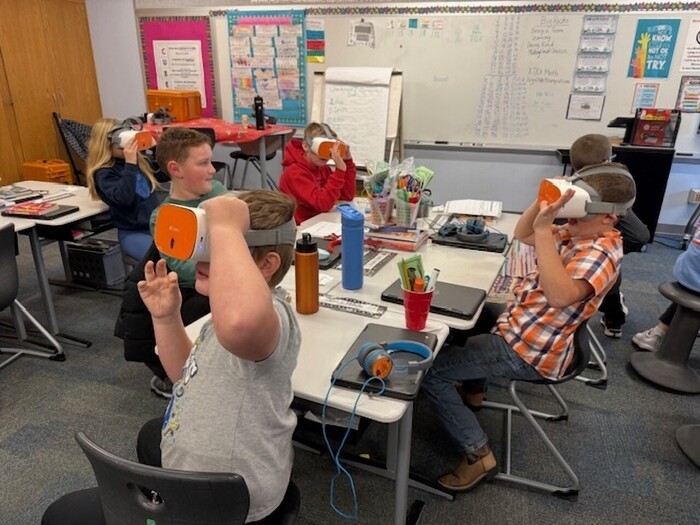
The rise of virtual reality (VR) opens the door to entirely new worlds. As manufacturing costs fall, it becomes increasingly accessible to everyday users, including educators and students. Whether hindered by geographic location, budgetary constraints, or time, VR can bring a location or experience to the user. This can provide incredible learning and enrichment opportunities, such as viewing priceless artworks, historical landscapes, or time-period recreations. Companies are expanding to provide such experiences; notably, Google has launched Google Expeditions, which has expanded beyond the classroom, to allow individuals to download the app and explore through their own devices anywhere. ClassVR is another service provider that focuses on the immersive experience provided by VR technology exclusively with educators and students in mind. 

Students using VR headsets

These tools are new, innovative, and exciting ways to engage individuals. However, they need to be implemented with a plan. They cannot be purchased and doled out haphazardly. Teachers need to be trained on the tools and understand how to integrate them into their classroom effectively. A tenet when implementing such technology is to foster and stimulate engagement, thus increasing retention and understanding of the content (Behen, 2026). Playing with and viewing the technology is exciting, but if there is no basis for it, no applicability to the real world, the technology is not being used to its full capacity. A strategy needs to be put into effect that allows the technology to be incorporated into the classroom in a manner that supports and enhances one’s learning experience. 

Widening access to such technology is incredible for the insights and opportunities it can bring to others. However, how much should virtual reality be a replacement for the real thing? Should it even be considered a replacement? I do not believe so. VR should be used as a complement to learning, not as the entire curriculum of a course. It also should not be used in place of real-world learning opportunities. Virtually visiting a museum in London is miraculous. Stepping into your local museum and seeing art or historical artifacts in person is an unmissable experience. Even the anticipation leading up to a field trip is something of a core childhood memory. I implore you to conjure up memories of your favorite childhood field trip.

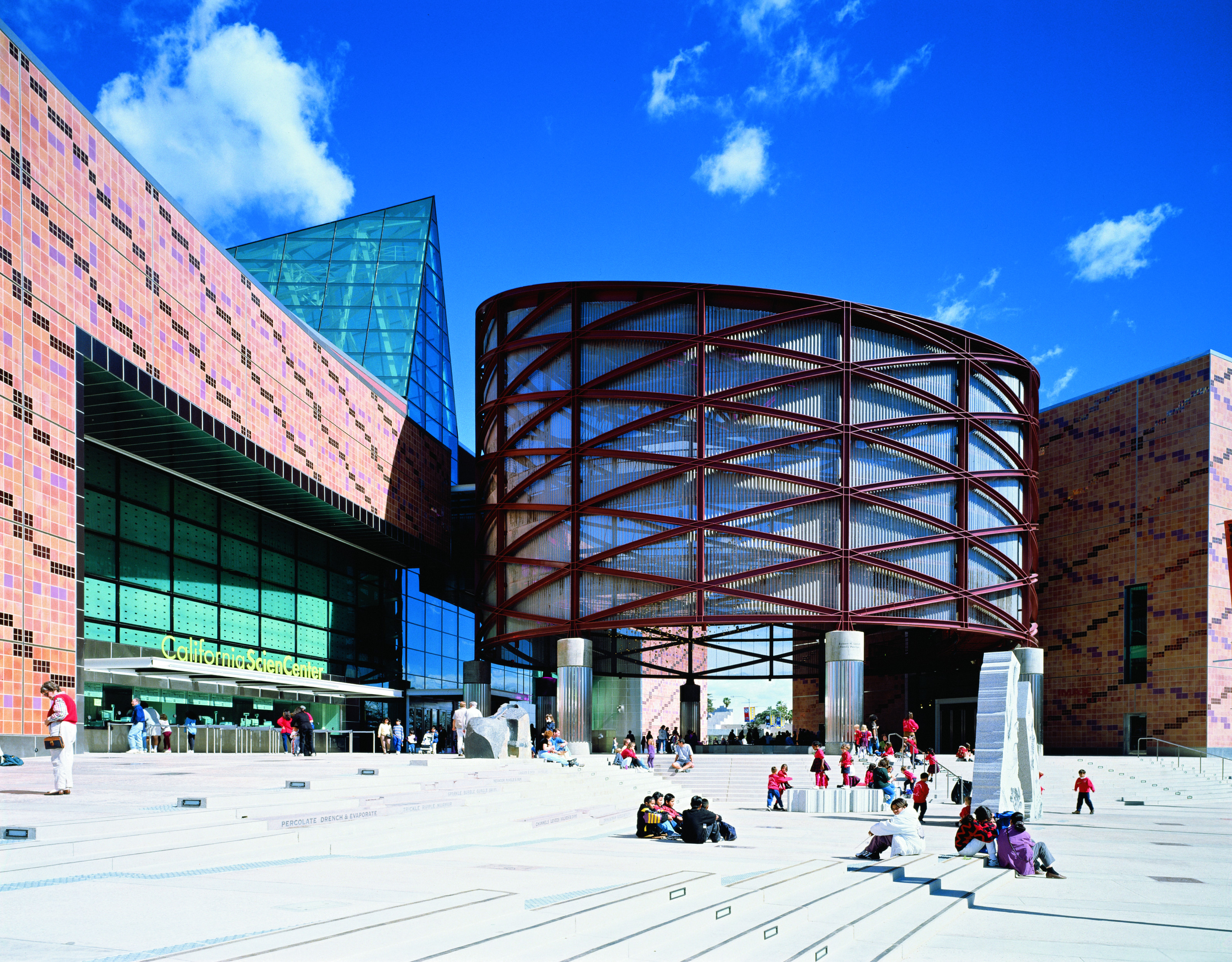
At 28-years-old, I remember mine like it was yesterday. It was a visit to the California Science Center, where they had the coolest exhibit on the human body; pieces of the body were enlarged to the point that they seemed larger than life. However, the learning portion is not my fondest memory of that trip. It is climbing the rock wall they had at the entrance of the center. I was one of the only children to make it all the way to the top, and it was one of my proudest moments from childhood. That experience, that feeling of pride, cannot be replicated through VR.  

Our Story | The California Science Center

Though VR is an incredible gateway to new worlds, opening up access to many more, the real world should not be cast aside. Initiatives like Explorable Places are working to make planning and executing a field trip more manageable for educators and field locations. In-person interactions should still be sought out even with the rise of VR technology. For the many portions of the US that do not have access to their choice of field trips, VR does provide a great avenue for creating and cultivating new types of experiences for learning.  

Behan, D. (2026, March 25). How K–12 Schools Can Successfully Implement AR and VR in the Classroom. EdTechhttps://edtechmagazine.com/k12/article/2026/03/how-k-12-schools-can-successfully-implement-ar-and-vr-classroom 

Engage Admin. (2025, January 6). How Virtual Reality Classrooms Are Redefining Education. Engage. https://engagevr.io/how-virtual-reality-classrooms-are-redefining-education/ 

McShane, M. (2018, June 13). Is Virtual Reality The Future Of Field Trips? Forbes. https://www.forbes.com/sites/mikemcshane/2018/06/13/is-virtual-reality-the-future-of-field-trips/#626ae5d91809 

A New Horizon of AI: A Tool Blurring the Lines of Companionship

Artificial intelligence (AI) has already been integrated into our society in a variety of areas. Voice control platforms penetrate more than 50 million homes across the US (Kelly, 2018). Children are now growing up with these devices as everyday tools. The devices have been developed to be more intuitive and engaging across all ages. Kelly describes her son recognizing the role and usefulness of their at-home Alexa device as early as age two. As children grow and develop with these devices, they attempt to put the devices into a conceptual framework they can understand, often placing them in a space as “…technology, but they also see these gadgets in psychological terms — as having emotions, as being capable of thought and friendship, and deserving of moral treatment (2018)” stated, University of Montana child psychologist, Rachel Severson. She goes on to say that as AI becomes increasingly sophisticated and “real,” individuals may form deeper attachments to AI devices, blurring the roles they play in our lives.

https://character.ai/about

As AI chatbots increase in popularity and sophistication, from ChatGPT, Gemini, and Meta AI, their use of answering simple questions or assisting with research morphs into deeper forms of companionship. As of 2025, around 33% of teens are using chatbots for some sort of companionship (Robb). Forcing the possibility that minors have their first forms of mature relationships with chatbots rather than their peers. AI tools introduced at young ages, while children’s brains are developing and easily influenced, bring additional danger to the interactions children have with chatbots. There are also privacy concerns as parties involved in “conversations” with chatbots have their data saved to the companies’ servers. These can be intimate thoughts, feelings, and possible images while interacting with a “trusted” chatbot. Though such scenarios may sound extreme, reports of teens committing suicide after receiving it as a logical solution from chatbots have come to fruition (Chatterjee, 2025).

This begs the question of how we can prevent such harsh effects? As librarians, one of our core tenets is to allow access to knowledge. I do believe it is our responsibility to provide resources to the public about how this technology is impactful and how we can safely interact with it. Some options include: hosting open discussions, lectures, q-and-a’s, choosing an AI-centered book for a book club, and creating a well-rounded book display with additional resources. Hosting information sessions for parents on how to safely implement and monitor technology use, or how to talk to their teens about the dangers of such tech, are additional options.

On a grander scale, it is a social responsibility of the tech companies creating and distributing such technology to put in safety measures that prioritize the wellness of their users over the profit of their investors. Such as advice that offers professional help or seeking trusted adults if thoughts of self-harm occur, or alerting authorities if a minor is thought to be in danger.

Governments are considering legislation to combat the precarious scenarios chatbots may put children in. Michigan’s Senate recently proposed Bills 757-760 to address how AI chatbots interact with minors. Additional legislation has been floated to set a minimum age for social media, potentially following Australia’s lead earlier in 2026, which raised its minimum age to 16 for social media sites (Livingstone, 2026). However, since their implementation, they have had difficulties enforcing the ban, and it is being contested in the Australian Supreme Court.

The mental health effects of such technology are incredibly new, and we are learning every day how to adapt to its effects. It is a huge learning curve. As we see harmful effects across ages, geographical, and socioeconomic backgrounds, it is important to act in the interest of safety and care over monetary profit, which is a concept many companies appear to have trouble grasping. As educators and facilitators of knowledge, we should provide safe havens and various avenues of resources for the public that may not know how to tackle such new and daunting horizons.

Briney, J. (Host). (2026, May 31). CD339: Raising Screen Zombies (Episode 339) [Audio podcast episode]. In Congressional Dish. https://congressionaldish.com/cd339-raising-screen-zombies/ 

Chatterjee, R. (2025, September 19). Their teenage sons died by suicide. Now, they are sounding an alarm about AI chatbots. NPRhttps://www.npr.org/sections/shots-health-news/2025/09/19/nx-s1-5545749/ai-chatbots-safety-openai-meta-characterai-teens-suicide 

Kelly, S. (2018, October 16). Growing up with Alexa: A child’s relationship with Amazon’s voice assistant. CNNhttps://www.cnn.com/2018/10/16/tech/alexa-child-development/index.html 

Livingstone, H. (2026, January 22). Australia has banned social media for kids under 16. How does it work? BBC. https://www.bbc.com/news/articles/cwyp9d3ddqyo 

Pappini, A. (2023, January 27). ChatGPT: A Library Perspective. Bryant University. https://library.bryant.edu/chatgpt-library-perspective 

Robb, M.B., & Mann, S. (2025). Talk, trust, and trade-offs: How and why teens use AI companions. Common Sense Media. https://www.commonsensemedia.org/sites/default/files/research/report/talk-trust-and-trade-offs_2025_web.pdf 

Hyperlinked Environments: Become Immersed

As technology continues to take up space in users’ lives, it is a continuous battle for organizations to hold their attention. Museums have struggled with this fact and are incorporating innovative technology, frequently incorporating the user into the museum exhibits. Over the past few years, immersive exhibits have increased dramatically in popularity. Some project images on walls surrounding visitors, others invite visitors to contribute to the work itself; some take a less direct interactive approach while still immersing the visitor, such as the use of virtual or audio tours, high-quality online images, or an adaptable website.

“We live in an experience world,” says Sreenivasan. “People want experiences.”

Museums and libraries alike understand how reliant their users are on their mobile devices. When browsing collections, mobile maps are frequently referred to over paper maps, whether it is for ease of use or to “save paper.” Having an easy-to-navigate, mobile-friendly site is essential for any modern business. The MET has been a forerunner in creating a syncretic mobile site that complements users’ in-person visits (Titlow, 2016). For guests who cannot make it into the museum for a visit but still want to see the iconic works housed at the MET, they have worked on capturing high-quality images of their collections, which can be viewed on their site for free. This provides an enormous benefit to those who cannot visit in person by still providing users with access to impactful work. They’ve implemented technology

Another interactive use of technology that is a personal favorite of mine are audio tours. Many museums use QR codes that allow users to deep-dive into specific artworks, linking to additional information about each piece.   The Los Angeles Museum of Art (LACMA) is one that stands out in particular. For many of their ongoing exhibits, they offer self-guided audio tours. Unlike many other audio tours that frequently incorporate QR codes per piece on the tour, where the individual must scan a code for each piece to receive additional information, tours at LACMA only require phone use upon the start of the tour. From there, the audio guides through the exhibit, informing the patron when to turn, how many steps to take, and which piece to focus on. This allows for an almost entirely phone-free tour, versus having to scan a QR code per piece.

As much as I love self-guided tours, which allow me to go through a museum at my own pace. The inclusivity and mindfulness occurring at the PENN Museum is a program I would love to see incorporated into my local museum and many more (Ulaby, 2022). I find I enjoy museum, artist, or author talks when the topics are spoken on by people who have a vested interest in the medium. Leaning on refugees to speak about pieces from their homeland is a beautiful way to honor the person and the pieces, while simultaneously acknowledging where the items come from and welcoming refugees in the community.

Titlow, J. (2016, February 29). How A 145-Year-Old Art Museum Stays Relevant In The Smartphone Age. Fast Company. https://www.fastcompany.com/3057236/how-a-145-year-old-art-museum-stays-relevant-in-the-smartphone-age

Ulaby, N. (Host). (2020, February 17). Refugee Docents Help Bring A Museum’s Global Collection To Life. [Audio podcast episode]. In All Things Considered. https://www.npr.org/2020/02/17/795920834/refugee-docents-help-bring-a-museums-global-collection-to-life?utm_medium=social&utm_source=twitter.com&utm_term=nprnews&utm_campaign=npr

Hyperlinked Communities: This is MY library

An overarching theme amongst several of the readings was how to foster an attachment for community members to form with their libraries. Thus, adding a layer of personalization that makes patrons not only see the library as an institution that is a safe space, but as their safe space, creating a personal stake for community members. I loved seeing the images patrons generated with the #HuntLibrary campaign to deepen an attachment to the new library building. Utilizing a hashtag is an easy, user-friendly way to generate community involvement through social media while accumulating great visual components. Another great way to reinforce that attachment could have been to print those photos and display them in the library, or if they have a digital screen somewhere in the library, they could have created a rotating slideshow within the building to reinforce community members’ involvement and attachment to the new library. Seeing their own photos of the library on display for other community members reinforces a sense of pride and belonging to the space.  

A local museum in my area did a similar art exhibit, where they offered free watercolor postcards to paint on site. We then had the option to take them home or allow them to be displayed in the exhibit, and then mailed to us once the exhibit closed. It was wonderful to sit with fellow art lovers and create a piece of my own, see it hang in a museum, and then receive it in my mailbox months later. The location was already one I love and support, but that interactive activity was something that endeared it to me even more, and I recounted the experience to many friends and passing strangers in conversation, even pitching a similar idea for one of my library programs.  


The Root for Columbus tree idea, as shown through the Convening Community Conversations feature, adds another personalized layer of community interaction. It also fulfilled the role of outreach to those who may not have entered the library in the first place by being placed strategically around the town. Thus, allowing library staff to hear the “wishes” of patrons they may not typically hear from, further allowing them to improve upon programming for a wider spectrum of patrons. Similar programs this reminded me of are writing a wish for Lunar New Year celebrations or writing the names of past loved ones in honor of Day of the Dead, both of which my libraries have facilitated. These are great ways for community members to see their cultures reflected in their home branches and build that sense of belonging and pride in their library.

Dixon, J. A. (2017). Convening Community Coversations. Library Journal. Retrieved June 20, 2026 from https://287.hyperlib.sjsu.edu/wp-content/uploads/2023/02/CONVENING_COMMUNITY_CONVERSATI.pdf

NC State University Libraries. (2026, April 24). My #HuntLibrary. https://www.lib.ncsu.edu/projects/my-huntlibrary

Assignment X – Digital Media – Here to Stay? At What Cost?

“What if Netflix, Pandora, iTunes, Hulu, and all the other media suppliers slowly morph into a larger, subscription-based conglomerate delivered to your digital content service? What then? ” – Dr. Michael Stephans, 2019

The ease of digital media has fascinated me and countless others. It is unmatched in its accessibility as long as you can afford it. Since Stephans pondered the impact of shifting from physical to digital media in libraries years ago, we are now living the effects. The rapid and monumental growth of conglomerates like Netflix, Hulu, and now Paramount and Warner Bros., with their impending merger, is having drastic impacts on everyday consumers and on libraries’ collection management. We see a shift in consumers’ spending and borrowing habits. For many institutions, circulation of physical media has decreased, while use of digital media, such as e-books and audiobooks, has increased (Roose, 2025). This pushed libraries to adjust their budgetary allocations, pouring funds into acquiring and maintaining digital resources, while deciding where to pull money from: physical collection, staffing, or programming, as their annual budget likely remains on par with previous years’ budgets.

Such digital content is often licensed, not owned, for a period of time. This is something we see as a frustration, not only for libraries, but for the average consumer of streaming platforms. Shows and movies are ever-changing in which platform they are available on due to contracts and negotiation deals, forcing the consumer to switch platforms or maintain multiple subscriptions. For instance, this past week Netflix announced the removal of the beloved show Gilmore Girls from its platform on June 20th. Within hours, its competitor Hulu announced the show is already available to stream on its platform.

Such switches irritate viewers. Even more disheartening is when such platforms remove content they created specifically for their platforms, making it exceedingly difficult to access anywhere. For example, She-Ra: The Princess of Power has been removed from Netflix, Willow from Disney+, and Grease: Rise of the Pink Ladies from Paramount+, and are now unavailable for viewing anywhere online (legally) and unavailable for purchase via physical media. Though these shows may not have been blockbusters, they had their audiences and individuals who poured their hearts into creating them. Those creators no longer have an avenue of distribution for their body of work. How is this a sustainable framework for creators and consumers? As Matthews stated in Think Like a Startup, “Don’t get stuck following plan A; instead get to a plan that works” (2012).

“One request students made? Surprisingly (perhaps), they wanted books around them. Not just because of the information that physical books provide, but because of the atmosphere and comfort they provide.” – Saskia Leferink, 2018

It is this disappearance and inaccessibility to content that, I believe, pulls at individuals’ desire for physical media, whether it be in access to it through libraries or purchasing their own copies. Individuals are seeing the value in accessing a copy that lasts; that won’t be taken away at the drop of a hat. There is comfort physical media provides in a space, as described by Leferink when writing about renovating a library space. In creating a Library 2.0, there is much talk about how the library is more than books, which is true; however, I do not believe that means we should lose sight of the fact that many individuals rely on the library to provide access to books when access is not easy to come by.

“Collections don’t have to come at the expense of programs, meeting rooms, or vibrant community hubs, but it is important to recognize that it is only a strong print collection that attracts readers to libraries, where they can take advantage of everything else on offer (Coffman, 2025).”

A marriage of tailored collection management and all that is Library 2.0 needs to be struck to meet the expansive needs of library users.


Clare McGrane. (Host). (August 29, 2024). E-books are expensive for libraries. Some states are trying to change that [Audio podcast episode]. In NPR’s Book of the Day. NPR. https://www.npr.org/2024/08/29/nx-s1-5091277/e-books-are-expensive-for-libraries-some-states-are-trying-to-change-that  

Coffman, S. (2025). Untangling the Real Cost of Ebooks to Libraries. Computers in Libraries, 45(4), 32–36.  

Leferink, S. (2018, January 24). To keep people happy … keep some books. Next. https://blog.oclc.org/next/to-keep-people-happy-keep-some-books/ 

Matthews, B. (2012). Think Like a Startup: A white paper to inspire library entrepreneurialism. Retrieved June 17, 2026, from  https://vtechworks.lib.vt.edu/server/api/core/bitstreams/77d2cb98-ddab-4543-9e47-b011819231b3/content  

Roose, R. (2025, January 14). The True Cost of eBooks and Audiobooks for Libraries. Spokane Public Libraryhttps://www.spokanelibrary.org/the-true-cost-of-ebooks-and-audiobooks-for-libraries/ 

Stephens, M. (2019). Past is Prologue: Crystal Visions. Wholehearted Librarianship: Finding Hope, Inspiration, and Balance (pp.16-19). American Library Association.