The rise of virtual reality (VR) opens the door to entirely new worlds. As manufacturing costs fall, it becomes increasingly accessible to everyday users, including educators and students. Whether hindered by geographic location, budgetary constraints, or time, VR can bring a location or experience to the user. This can provide incredible learning and enrichment opportunities, such as viewing priceless artworks, historical landscapes, or time-period recreations. Companies are expanding to provide such experiences; notably, Google has launched Google Expeditions, which has expanded beyond the classroom, to allow individuals to download the app and explore through their own devices anywhere. ClassVR is another service provider that focuses on the immersive experience provided by VR technology exclusively with educators and students in mind.
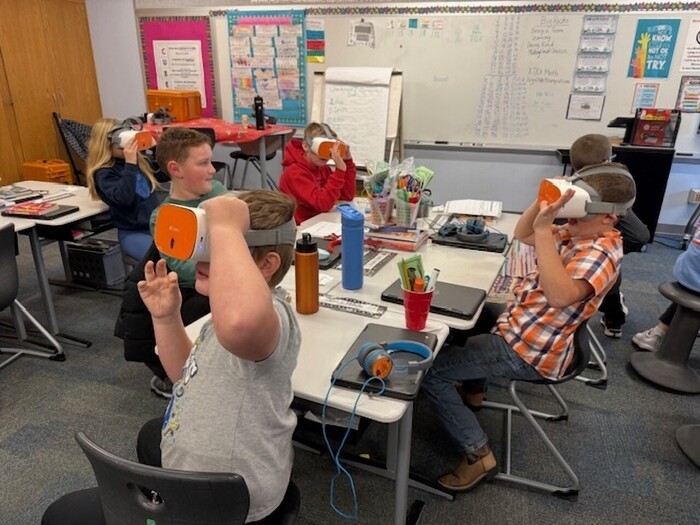
These tools are new, innovative, and exciting ways to engage individuals. However, they need to be implemented with a plan. They cannot be purchased and doled out haphazardly. Teachers need to be trained on the tools and understand how to integrate them into their classroom effectively. A tenet when implementing such technology is to foster and stimulate engagement, thus increasing retention and understanding of the content (Behen, 2026). Playing with and viewing the technology is exciting, but if there is no basis for it, no applicability to the real world, the technology is not being used to its full capacity. A strategy needs to be put into effect that allows the technology to be incorporated into the classroom in a manner that supports and enhances one’s learning experience.
Widening access to such technology is incredible for the insights and opportunities it can bring to others. However, how much should virtual reality be a replacement for the real thing? Should it even be considered a replacement? I do not believe so. VR should be used as a complement to learning, not as the entire curriculum of a course. It also should not be used in place of real-world learning opportunities. Virtually visiting a museum in London is miraculous. Stepping into your local museum and seeing art or historical artifacts in person is an unmissable experience. Even the anticipation leading up to a field trip is something of a core childhood memory. I implore you to conjure up memories of your favorite childhood field trip.
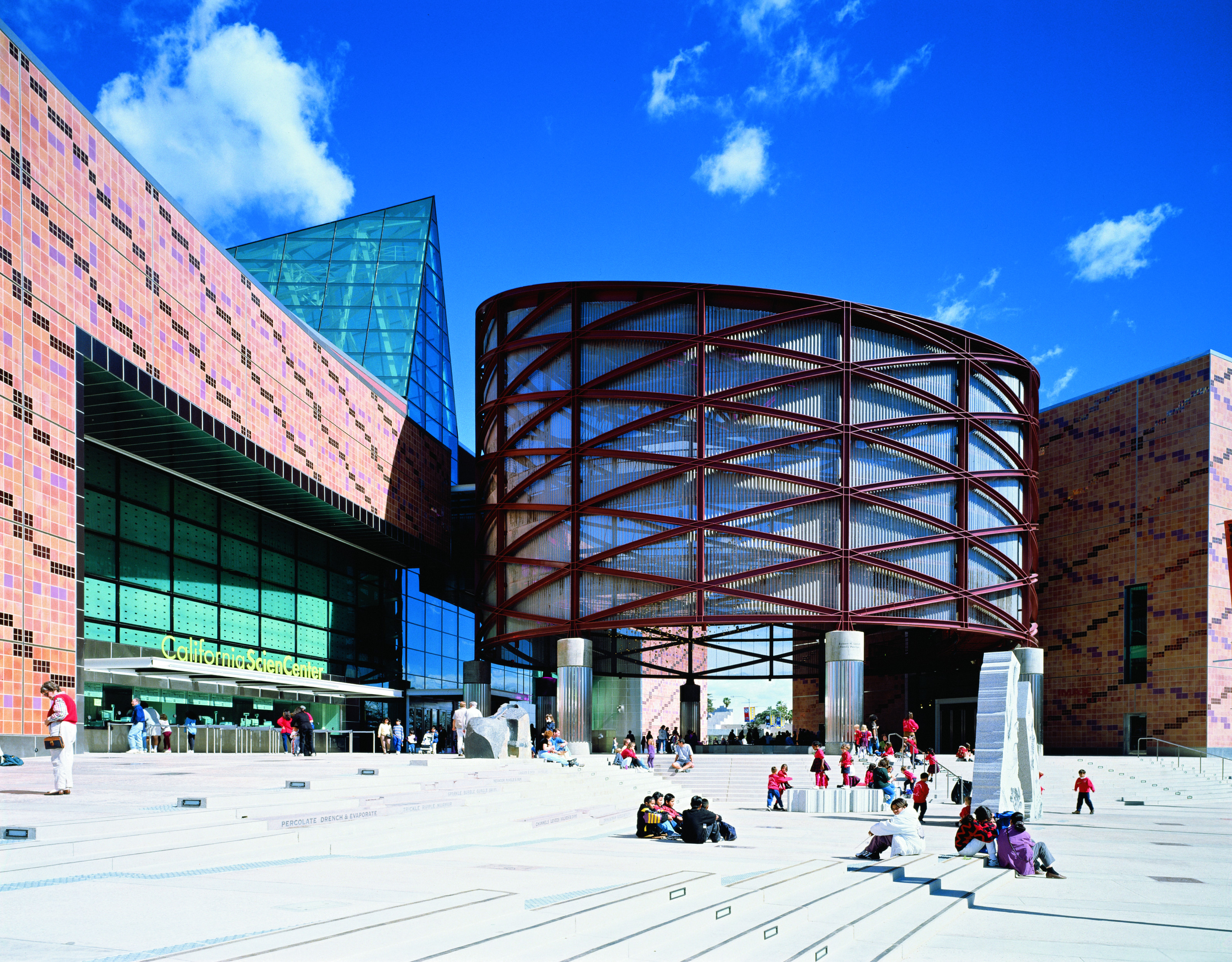
At 28-years-old, I remember mine like it was yesterday. It was a visit to the California Science Center, where they had the coolest exhibit on the human body; pieces of the body were enlarged to the point that they seemed larger than life. However, the learning portion is not my fondest memory of that trip. It is climbing the rock wall they had at the entrance of the center. I was one of the only children to make it all the way to the top, and it was one of my proudest moments from childhood. That experience, that feeling of pride, cannot be replicated through VR.
Though VR is an incredible gateway to new worlds, opening up access to many more, the real world should not be cast aside. Initiatives like Explorable Places are working to make planning and executing a field trip more manageable for educators and field locations. In-person interactions should still be sought out even with the rise of VR technology. For the many portions of the US that do not have access to their choice of field trips, VR does provide a great avenue for creating and cultivating new types of experiences for learning.
Behan, D. (2026, March 25). How K–12 Schools Can Successfully Implement AR and VR in the Classroom. EdTech. https://edtechmagazine.com/k12/article/2026/03/how-k-12-schools-can-successfully-implement-ar-and-vr-classroom
Engage Admin. (2025, January 6). How Virtual Reality Classrooms Are Redefining Education. Engage. https://engagevr.io/how-virtual-reality-classrooms-are-redefining-education/
McShane, M. (2018, June 13). Is Virtual Reality The Future Of Field Trips? Forbes. https://www.forbes.com/sites/mikemcshane/2018/06/13/is-virtual-reality-the-future-of-field-trips/#626ae5d91809