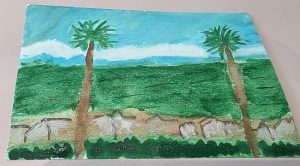
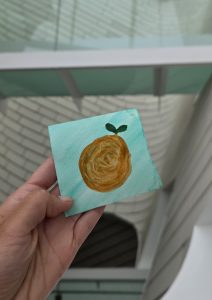
What is “play”? Merriam-Webster has many definitions for the word. None of which captures the essence of what it is to “play”. One of the best depictions of “play” I have seen in recent memory is encapsulated in the 2026 movie Toy Story 5. I know, I know, was the fifth one really necessary? Probably not. BUT it spoke to a time reminiscent of the early 2010s; in my opinion, it came years too late, showing the impact of technology like the LeapFrog. Kids have moved on to tablets and nearly limitless access to the internet and social media apps designed for adults, but that’s not the point of the movie. The movie stresses the difference between “play” and “games,” which is a distinction I had never really harped on until it was starkly contrasted in the film.
The difference between the two is something I have noted in passing, subconsciously, often when conversing with my family about my niece who is just shy of 9-years-old. She is a bright, quick, young girl, but my goodness does she seem to be growing up so quickly and always drawn to a device even when we are out and about engaging with the world. She is an only child, so she does not have built-in playmates that are siblings. I had a 9- and 13-year age gap between my siblings, so I also missed out on those built-in playmate relations when I was younger. However, I remember being able to play for hours by myself, creating fantastical stories for myself or my dolls. All with our own plotlines containing twists and turns day-in-and-day-out. This is something Andy and Bonnie do throughout the Toy Story franchise; they use their imagination to create stories and worlds in their own space. This creativity really takes center stage in Toy Story 5, especially with the change in animation style when Bonnie is in the act of “playing”. The animators capture a child’s sense of imagination during playtime in a way that took me back to exactly how I remember getting immersed in the worlds I would create.
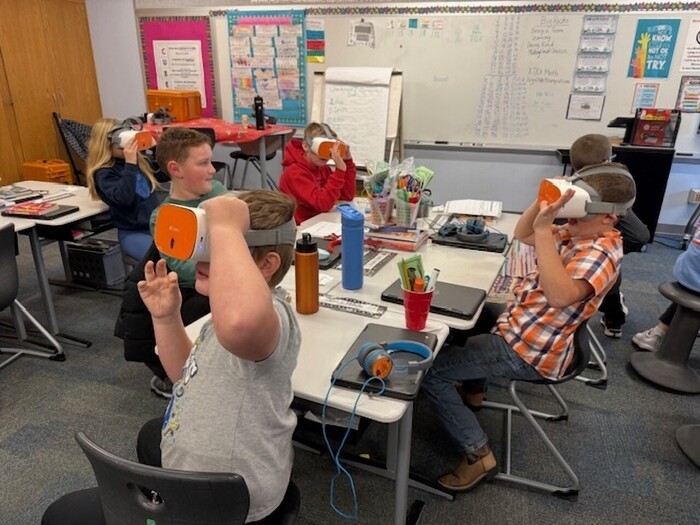
It is a beautiful time of innocence and freedom in one’s own mind that I so cherish looking back on now. The film goes on to stress that “games,” commonly what we do with devices like iPads or Nintendo’s, are not “play.” I would argue games like Minecraft or Boulder’s Gate are exceptions, as they allow the user to create something of their own in their world and allow for many different journeys to be chosen. The ones displayed in the movie fall along the lines of games where time played or high scores are motivating factors. There is also a social aspect allowing children to chat with their classmates through the devices.
They are not the games where you stretch your imagination or get up and move; you sit and stare at your device for hours on end. That is not “play,” and it is something I see so prevalently even in myself. I see a longing not just for children to return to “play” but for adults to as well. To find joy and freedom in expressing ourselves and pushing our optimism and imagination. We see that in the activities that are being curated by businesses and libraries. Adult craft events and social events are popping up everywhere. Spaces are being cultivated to provide space for creativity and interactions apart from our devices, from our digital worlds.
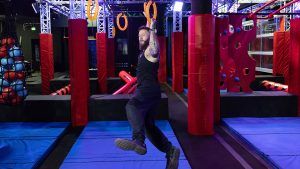
Funparx, an indoor American-Ninja style park challenges both adults and children.
Dowdy’s 2022 article highlights the development of intentional playgrounds. Noting the creation of adventure playgrounds and valley parks. These prompt interactive play, allowing space for imagination and creation to take place. Cultivating parks and playgrounds helps keep imagination alive and flowing. It is not just an abstract idea, but an experience that is facilitated (Lego Foundation, 2016).
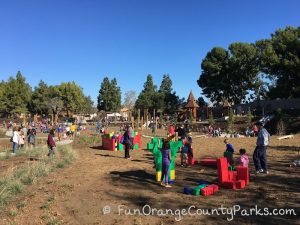
Adventure Park in Irvine, California.
Libraries can assist in facilitating these experiences through the activities they host for adults and children. The fairy hunt hosted by the Sacramento Public Library showcased a beautiful display of creativity, imagination, and interaction with their physical surroundings (Bookey, 2015). The conscientious choice of bringing “play” back into the lives of children and adults can have healing, joyful effects. The act of “playing” together is also a wonderful way to build connection and community.

“Better a broken bone than a broken spirit” – Lady Marjory Allen
Bookey, J. L. (2015). 8 Awesome Ways Libraries Are Making Learning Fun. Huffpost. https://www.huffpost.com/entry/8-awesome-ways-libraries_b_7157462
Dowdy, C. (2022, February 7). What the Nordics can teach us about having fun. BBC. https://www.bbc.com/culture/article/20220207-what-the-nordics-can-teach-us-about-having-fun
The Lego Foundation. (2016, July 5). What do we Mean by Learning Through Play? [Video]. Vimeo. https://vimeo.com/173458519
Hanley-Dafoe, R. (2024, August 3). Creating Space for Play as Grown-Ups and Why It Matters. Psychology Today. https://www.psychologytoday.com/us/blog/everyday-resilience/202408/creating-space-for-play-as-grown-ups-and-why-it-matters
Perreault, L. (2019). Obesity in adults: Role of physical activity and exercise. UpToDate. Retrieved January 12, 2020, from https://www.uptodate.com/contents/obesity-in-adults-role-of-physical-activity-and-exercise
Supporting Children’s Learning Through Play. Childcare.gov. Retrieved July 25, 2026, from https://childcare.gov/consumer-education/support-my-childs-health-development/supporting-childrens-learning-through-play