Hyperlinked Environments: Become Immersed

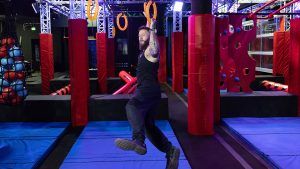
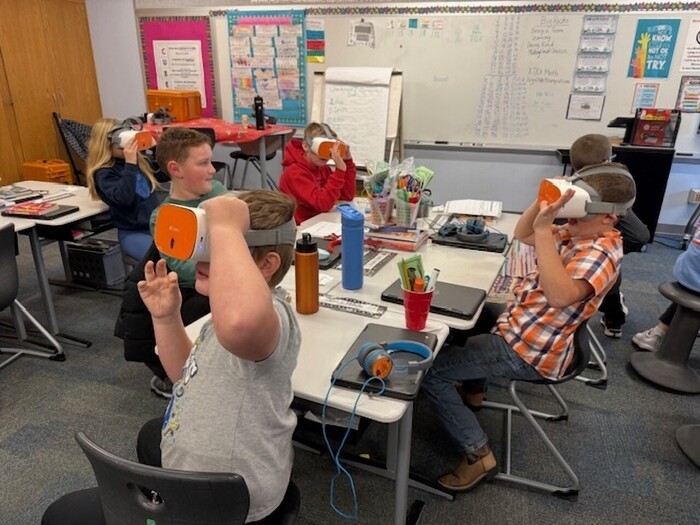
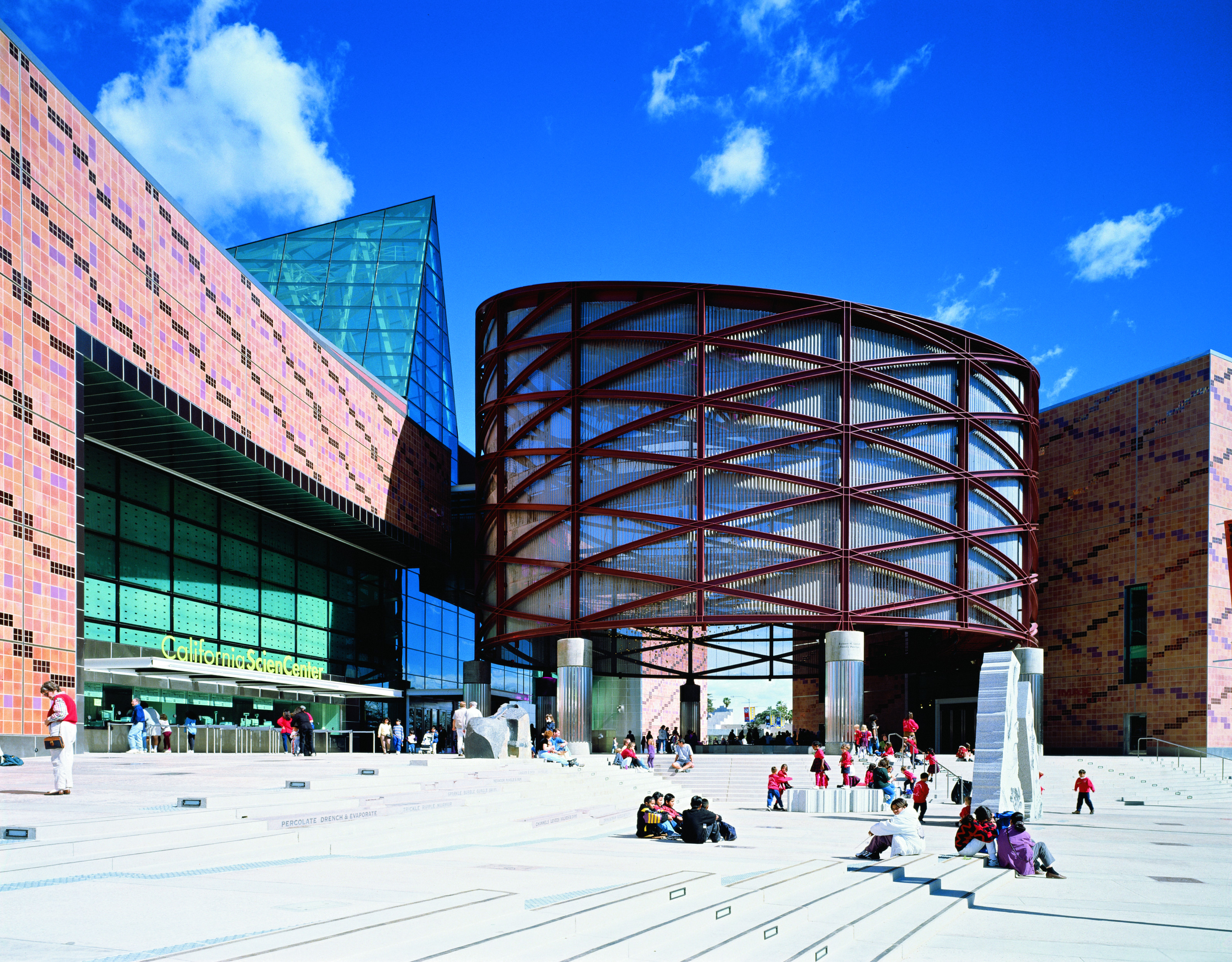
As technology continues to take up space in users’ lives, it is a continuous battle for organizations to hold their attention. Museums have struggled with this fact and are incorporating innovative technology, frequently incorporating the user into the museum exhibits. Over the past few years, immersive exhibits have increased dramatically in popularity. Some project images on walls surrounding visitors, others invite visitors to contribute to the work itself; some take a less direct interactive approach while still immersing the visitor, such as the use of virtual or audio tours, high-quality online images, or an adaptable website.

“We live in an experience world,” says Sreenivasan. “People want experiences.”

Museums and libraries alike understand how reliant their users are on their mobile devices. When browsing collections, mobile maps are frequently referred to over paper maps, whether it is for ease of use or to “save paper.” Having an easy-to-navigate, mobile-friendly site is essential for any modern business. The MET has been a forerunner in creating a syncretic mobile site that complements users’ in-person visits (Titlow, 2016). For guests who cannot make it into the museum for a visit but still want to see the iconic works housed at the MET, they have worked on capturing high-quality images of their collections, which can be viewed on their site for free. This provides an enormous benefit to those who cannot visit in person by still providing users with access to impactful work. They’ve implemented technology

Another interactive use of technology that is a personal favorite of mine are audio tours. Many museums use QR codes that allow users to deep-dive into specific artworks, linking to additional information about each piece.   The Los Angeles Museum of Art (LACMA) is one that stands out in particular. For many of their ongoing exhibits, they offer self-guided audio tours. Unlike many other audio tours that frequently incorporate QR codes per piece on the tour, where the individual must scan a code for each piece to receive additional information, tours at LACMA only require phone use upon the start of the tour. From there, the audio guides through the exhibit, informing the patron when to turn, how many steps to take, and which piece to focus on. This allows for an almost entirely phone-free tour, versus having to scan a QR code per piece.

As much as I love self-guided tours, which allow me to go through a museum at my own pace. The inclusivity and mindfulness occurring at the PENN Museum is a program I would love to see incorporated into my local museum and many more (Ulaby, 2022). I find I enjoy museum, artist, or author talks when the topics are spoken on by people who have a vested interest in the medium. Leaning on refugees to speak about pieces from their homeland is a beautiful way to honor the person and the pieces, while simultaneously acknowledging where the items come from and welcoming refugees in the community.

Titlow, J. (2016, February 29). How A 145-Year-Old Art Museum Stays Relevant In The Smartphone Age. Fast Company. https://www.fastcompany.com/3057236/how-a-145-year-old-art-museum-stays-relevant-in-the-smartphone-age

Ulaby, N. (Host). (2020, February 17). Refugee Docents Help Bring A Museum’s Global Collection To Life. [Audio podcast episode]. In All Things Considered. https://www.npr.org/2020/02/17/795920834/refugee-docents-help-bring-a-museums-global-collection-to-life?utm_medium=social&utm_source=twitter.com&utm_term=nprnews&utm_campaign=npr

Hyperlinked Communities: This is MY library

An overarching theme amongst several of the readings was how to foster an attachment for community members to form with their libraries. Thus, adding a layer of personalization that makes patrons not only see the library as an institution that is a safe space, but as their safe space, creating a personal stake for community members. I loved seeing the images patrons generated with the #HuntLibrary campaign to deepen an attachment to the new library building. Utilizing a hashtag is an easy, user-friendly way to generate community involvement through social media while accumulating great visual components. Another great way to reinforce that attachment could have been to print those photos and display them in the library, or if they have a digital screen somewhere in the library, they could have created a rotating slideshow within the building to reinforce community members’ involvement and attachment to the new library. Seeing their own photos of the library on display for other community members reinforces a sense of pride and belonging to the space.  

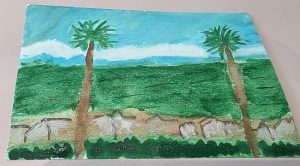
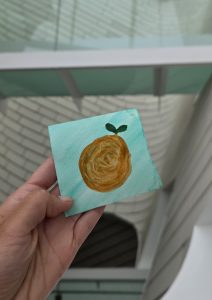
A local museum in my area did a similar art exhibit, where they offered free watercolor postcards to paint on site. We then had the option to take them home or allow them to be displayed in the exhibit, and then mailed to us once the exhibit closed. It was wonderful to sit with fellow art lovers and create a piece of my own, see it hang in a museum, and then receive it in my mailbox months later. The location was already one I love and support, but that interactive activity was something that endeared it to me even more, and I recounted the experience to many friends and passing strangers in conversation, even pitching a similar idea for one of my library programs.  


The Root for Columbus tree idea, as shown through the Convening Community Conversations feature, adds another personalized layer of community interaction. It also fulfilled the role of outreach to those who may not have entered the library in the first place by being placed strategically around the town. Thus, allowing library staff to hear the “wishes” of patrons they may not typically hear from, further allowing them to improve upon programming for a wider spectrum of patrons. Similar programs this reminded me of are writing a wish for Lunar New Year celebrations or writing the names of past loved ones in honor of Day of the Dead, both of which my libraries have facilitated. These are great ways for community members to see their cultures reflected in their home branches and build that sense of belonging and pride in their library.

Dixon, J. A. (2017). Convening Community Coversations. Library Journal. Retrieved June 20, 2026 from https://287.hyperlib.sjsu.edu/wp-content/uploads/2023/02/CONVENING_COMMUNITY_CONVERSATI.pdf

NC State University Libraries. (2026, April 24). My #HuntLibrary. https://www.lib.ncsu.edu/projects/my-huntlibrary

Assignment X – Digital Media – Here to Stay? At What Cost?

“What if Netflix, Pandora, iTunes, Hulu, and all the other media suppliers slowly morph into a larger, subscription-based conglomerate delivered to your digital content service? What then? ” – Dr. Michael Stephans, 2019

The ease of digital media has fascinated me and countless others. It is unmatched in its accessibility as long as you can afford it. Since Stephans pondered the impact of shifting from physical to digital media in libraries years ago, we are now living the effects. The rapid and monumental growth of conglomerates like Netflix, Hulu, and now Paramount and Warner Bros., with their impending merger, is having drastic impacts on everyday consumers and on libraries’ collection management. We see a shift in consumers’ spending and borrowing habits. For many institutions, circulation of physical media has decreased, while use of digital media, such as e-books and audiobooks, has increased (Roose, 2025). This pushed libraries to adjust their budgetary allocations, pouring funds into acquiring and maintaining digital resources, while deciding where to pull money from: physical collection, staffing, or programming, as their annual budget likely remains on par with previous years’ budgets.

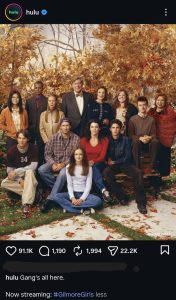
Such digital content is often licensed, not owned, for a period of time. This is something we see as a frustration, not only for libraries, but for the average consumer of streaming platforms. Shows and movies are ever-changing in which platform they are available on due to contracts and negotiation deals, forcing the consumer to switch platforms or maintain multiple subscriptions. For instance, this past week Netflix announced the removal of the beloved show Gilmore Girls from its platform on June 20th. Within hours, its competitor Hulu announced the show is already available to stream on its platform.

Such switches irritate viewers. Even more disheartening is when such platforms remove content they created specifically for their platforms, making it exceedingly difficult to access anywhere. For example, She-Ra: The Princess of Power has been removed from Netflix, Willow from Disney+, and Grease: Rise of the Pink Ladies from Paramount+, and are now unavailable for viewing anywhere online (legally) and unavailable for purchase via physical media. Though these shows may not have been blockbusters, they had their audiences and individuals who poured their hearts into creating them. Those creators no longer have an avenue of distribution for their body of work. How is this a sustainable framework for creators and consumers? As Matthews stated in Think Like a Startup, “Don’t get stuck following plan A; instead get to a plan that works” (2012).

“One request students made? Surprisingly (perhaps), they wanted books around them. Not just because of the information that physical books provide, but because of the atmosphere and comfort they provide.” – Saskia Leferink, 2018

It is this disappearance and inaccessibility to content that, I believe, pulls at individuals’ desire for physical media, whether it be in access to it through libraries or purchasing their own copies. Individuals are seeing the value in accessing a copy that lasts; that won’t be taken away at the drop of a hat. There is comfort physical media provides in a space, as described by Leferink when writing about renovating a library space. In creating a Library 2.0, there is much talk about how the library is more than books, which is true; however, I do not believe that means we should lose sight of the fact that many individuals rely on the library to provide access to books when access is not easy to come by.

“Collections don’t have to come at the expense of programs, meeting rooms, or vibrant community hubs, but it is important to recognize that it is only a strong print collection that attracts readers to libraries, where they can take advantage of everything else on offer (Coffman, 2025).”

A marriage of tailored collection management and all that is Library 2.0 needs to be struck to meet the expansive needs of library users.


Clare McGrane. (Host). (August 29, 2024). E-books are expensive for libraries. Some states are trying to change that [Audio podcast episode]. In NPR’s Book of the Day. NPR. https://www.npr.org/2024/08/29/nx-s1-5091277/e-books-are-expensive-for-libraries-some-states-are-trying-to-change-that  

Coffman, S. (2025). Untangling the Real Cost of Ebooks to Libraries. Computers in Libraries, 45(4), 32–36.  

Leferink, S. (2018, January 24). To keep people happy … keep some books. Next. https://blog.oclc.org/next/to-keep-people-happy-keep-some-books/ 

Matthews, B. (2012). Think Like a Startup: A white paper to inspire library entrepreneurialism. Retrieved June 17, 2026, from  https://vtechworks.lib.vt.edu/server/api/core/bitstreams/77d2cb98-ddab-4543-9e47-b011819231b3/content  

Roose, R. (2025, January 14). The True Cost of eBooks and Audiobooks for Libraries. Spokane Public Libraryhttps://www.spokanelibrary.org/the-true-cost-of-ebooks-and-audiobooks-for-libraries/ 

Stephens, M. (2019). Past is Prologue: Crystal Visions. Wholehearted Librarianship: Finding Hope, Inspiration, and Balance (pp.16-19). American Library Association.