My main takeaways from Pam Sandlian Smith’s TEDTalk, “What to expect from libraries in the 21st century” were that 1. It’s valuable to say yes to new ideas, and 2. It’s valuable and crucial to be patron-focused as a library.
So far in my assignments for this course I have mainly focused on the middle and upper school library at my school, but for this blog I am reflecting on ways that the primary and lower school library staff continue to meet our students’ needs and interests as well.
In the library, the primary and lower school books (picture books and chapter books) are separated. Primary students (TK-second grade) are not allowed to access the lower school books until they enter lower school in third grade, and lower school students have access to the entire space. Sometimes Often, we have eager second graders, or even confident kindergarteners asking to browse books in the coveted lower school section. No librarian wants to tell a patron, “no, you can’t read that,” so a few years back the lower school librarian created the “Chapter Books for Everyone” section, bridging the two halves of the library (literally, the “Everybody” shelves are located between the primary and lower school sections). The section is open to both primary and lower school students, and features shorter, easier chapter books such as Junie B. Jones, Geronimo Stilton, Rainbow Magic fairy books and Puppy Place books (you know them, you love them), Magic Treehouse, and Dog Man, along with a small but growing non-fiction section.
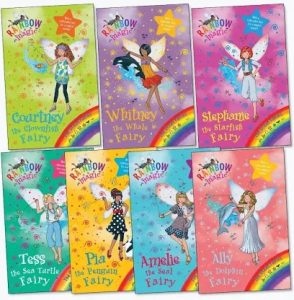
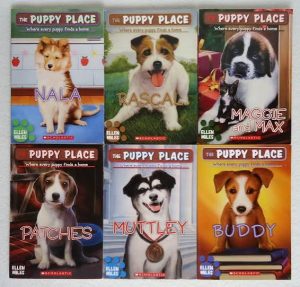
The Everybody section is especially popular with first through third graders, as well as kindergarten and fourth grade to a smaller degree. It provides more advanced browsing for primary students, and easier browsing for lower school students who are not quite ready for more advanced novels and chapter books yet.
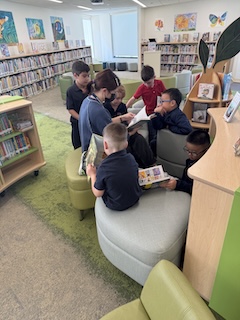
Eventually, our lower school librarian wants to merge all of the collections and give students the freedom to browse wherever they want.
In other innovative news, our primary school librarian has a masters degree and other certifications in yoga and meditation, and she regularly incorporates lessons into her primary school library classes. The kids look forward to using the hoberman sphere, “chime time,” and I always enjoy partaking in deep breathing along with the students. The hoberman sphere also doubles as a sort of “talking stick,” as the kids pass it around and take turns sharing their favorite breakfast, favorite holiday, or whatever group question has been posed to the group. The younger students all like having their moment in the spotlight and are then more ready to listen to the story or library lesson. In the future, another idea we may try is to bring in fort-building materials because we noticed the students enjoy pushing the furniture around to make reading nooks.
Lastly, our lower school librarian collaborated with our innovation teacher this year to launch a brand new architecture project for both primary and lower school. She has a masters in architecture, and is able to bring extensive knowledge and creativity to the table! Each month the classes will read books and learn about a different architect in the library, and make relevant projects in the innovation lab. Each class will also receive a kit with mini projects to complete in the style of that architect. For example, when the students studied Charles and Ray Eames they were able to make their own house of cards, with cards custom-recreated by the innovation teacher.
I am inspired by how my colleagues have been able to incorporate their passions and specialized knowledge into the library. It resonates with the students, and we love what we do- it’s a win-win!
Camille, seeing the Rainbow Magic and Puppy Place books shoots me right back to my childhood in the library! From the photo you shared, your library space looks beautiful, colorful, and fun. I think fort-building materials would be a massive hit! We have a little hidden gazebo in the kids area of the library where I work, and it’s almost always occupied. —Caitlin
@camillewedin
The “Chapter Books for Everyone” section is such a great idea! It gives younger students more independence and the opportunity to explore books they might otherwise have to wait to access. I also love the idea of incorporating yoga and meditation into library time. It’s a great example of libraries incorporating elements beyond books and reading, that they can be spaces where students learn and connect and explore different ways of engaging with the world. It’s a win-win situation when librarians bring their own interests and specialized knowledge into their work. It opens up all kinds of programming possibilities and connects library staff in a more personal way to our patrons. It’s also fun to find out the outside-of-work interests of our co-workers! Thank you for the cool post!
@camillewedin I ❤️ this so much. I’m so glad you focused on the lower grades and I am glad to learn about what is being done to serve that user population and also give them access to the books they may be curious about. I vividly remember when the librarian told me I could go look at the shelves for older kids. It was a big deal
Thank you for this post! It reminded me of the forward that Stephen King wrote in a commemorative publication of Lord of the Flies. He was only 12 years old and bored of reading novels at his grade level. He wanted to know what real kids are like. A librarian for a mobile library handed him a copy of this book from the general fiction section and said “You didn’t get this from me.” He credits that book (and the librarian) with his first understanding of real human nature and its potential horrors, and the rest is history.