Reflection Blogging: CYOA (Infinite Learning)

I think to be a library worker, especially in combination with being a library school student, one must be a sponge constantly soaking up information and inspiration from other libraries. Luckily this should come pretty easy to us because there is an element of genuine passion for this field! 

I am thankful to have colleagues invested in my learning, one of whom I look up to as a mentor. In my time as a library worker so far I have attended webinars, joined a networking group called The League of Awesome Librarians, hosted librarians at my campus during our department review, and this past month I got to attend my first library conference! 

By far my favorite opportunity to learn is when I get to engage with other librarians. I was not surprised that folks in Dr. Stephens’ study said they wanted to meet face to face, although it was noteworthy that it was the opinion even pre-pandemic. It was exciting to show two other librarians around our libraries and our campus during our department review last year. I was proud to share my contributions as an assistant, and it was also cool when they pointed out things they liked about our space and our policies that I hadn’t previously thought of as standouts. It goes to show the value of getting a fresh set of eyes on your space!

The League of Awesome Librarians group is such a valuable resource. I joined as a participant of their new Library Summer Camp group, meant specifically for new library students. We had monthly meetings to discuss whatever we wanted, and last summer (my second year in camp), they hosted a panel of librarians from several different types of libraries because, as library students, we are still learning about all the different types of libraries and librarianship. It was insightful to see they overlaps between an archivist, an academic librarians, a hospital librarian, and a school librarian- such as the amount of furniture they move around their space on a daily basis.

I particularly enjoy engaging with the discussion space of the group, which can include topics like favorite holiday display ideas, hard questions to ask, or asking for advice about collection development for your presidential biographies section for lower school students. The consensus was to offer encyclopedias, and if a student wanted to do further independent research then they could. Last year through the League I attended a webinar called “Library School Didn’t Prepare Me For: Getting People to Talk to Me.” It was led by an academic STEM librarian, and she shared how she gets students and faculty to engage with her through tactics like linking “library services menu” pdfs in her email signature, and working out of an empty office right by the professors once a week because “if users won’t come to us, we’ll go to them” (Where Reference Fits in the Modern Library). 

The conference I attended last month was called SoCaLis, which stands for “Southern California Librarians of Independent Schools.” I have come to realize that independent school librarianship brings its own perks and problems, so I was very excited to be able to join my colleagues at this conference. I got to speak on a panel of current and recently graduated MLIS students, and we spoke on things like how our classes were preparing us or not for the workplace, what we had learned about AI and how we were engaging with it, and at the end the moderator asked us what we would do in our libraries if we suddenly got to be the Head Librarian tomorrow.
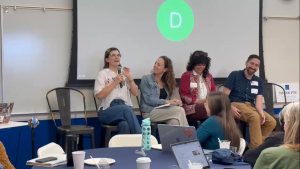
It was an honor to represent my school and my library team on the panel. I spoke about Hyperlinked Libraries and how I was able to create my Innovation and Strategy Roadmap about a library student ambassador program and share it with my colleagues. The conference included a speaker named Ashley Hawkins, aka “The Manga Librarian” and she shared resources and insight on how to add the age-appropriate manga to our collections that our students increasingly crave. I also connected with another lovely library assistant who was considering enrolling in library school soon. We attended a discussion group about Sora (school library ebook and audiobook database) collection development together.

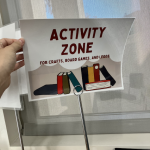
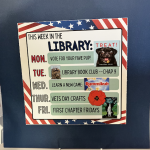
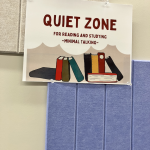
At the end of the conference, which was hosted at Brentwood School in west Los Angeles, we got to take a tour of the middle school library space. I took pictures of some of their signage for their “zones”, which we also implemented this year, and their calendar which detailed what events were happening in the library that week.  
 

Overall I continue to love how collaborative libraries are. No one gatekeeps their tools for success or feels competitive. Especially these days, library workers want to lift each other up and see each other’s libraries thrive. It is ingrained into the profession, and I am looking forward to continuing to develop my skills. 
Reflection Blogging: Module 10 (The Power of Stories)

I knew that I wanted to write about the remarkable Listening Lab at St. Petersburg College as soon as I started reading the article! For starters, co-founder Chad Mairn was inspired to bring it to his library because he observed a need for it. He noted the difficulty with which patrons interacted with his library’s CD collection and was eager to make it more user-friendly. Best of all, he incorporated his own love of music and even donated from his personal collection to round it out.  

Mairn’s Listening Lab offers multiple formats of music including digital, CDs, and even vinyl records. I could not believe that patrons have access to a record player. I would be terrified of the equipment getting damaged. Which, is exactly what happens, and Maird appears to take it in stride. He describes the damage and starts working on how to fix the equipment and prevent it from happening again. I admire the trust that his library puts in its users to handle such precious equipment. I am sure no one goes in with the intention of breaking anything, and it creates an opportunity for them to learn how to operate it correctly in the future. 

I enjoyed the song map and the accompanying spotify list, which I quickly scoured for California songs. I also want to purchase some of the 33 1/3 series for myself and some friends. What fun resources to complement the library’s music offerings! 

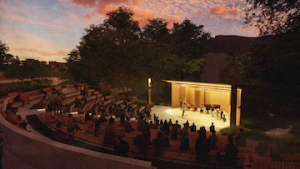
Viewpoint School amphitheater mockup (Courtesy of viewpoint.org)

I was impressed by Mairn’s ideas for future patron engagement, and it made me reflect on how I could possibly incorporate them into my library. For example, the “Tiny Desk”-style concerts would appeal to my campus because we have a ton of musically talented students. While it would take some brainstorming to host something in the library without inconveniencing students who will still want a quiet place to study, I could see us collaborating with music teachers or hosting somewhere else on campus. It just so happens that construction is underway for a new amphitheater right across from the library! It could be as casual or as blown-out as we want, and all of the K-12 campus could enjoy.  

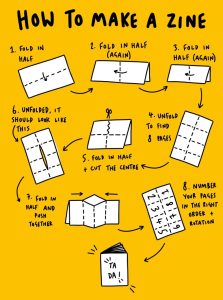
Look how easy it is! Courtesy of 42ndstreet.org.uk

I think zine-making would be fun as well, and had actually been considering that as a future programming idea for my own library. They could be displayed in the library and available for other students to browse. We could also ask students about their current music tastes and offer a listening party for an album of their choice, or curate a spotify playlist to play during our programming when applicable (maybe during zine-making!). Currently our program is very book-and reading-centric, but we are starting to branch out and I think music would be an awesome avenue to explore. 

Music is such a communal thing, whether you are participating in a jam session, a listening party, or just discussing your favorites. I could see my library creating a bulletin display based patrons submissions of their favorite song and any stories behind their choices. It would create an opportunity to learn about new music and share memories and impactful moments with each other, and as Mairn says, “libraries are all about discovery!”  

Reflection Blogging: Module 5 (Hyperlinked Communities)

For this reflection blog post, I was inspired by Beyond Buzzwords: Ten Invitations to Build Library Connection and Community by @michael. Specifically, number six: 

“Big plans matter. But so do quick gestures: a personalized reading suggestion, a kind reply on social media, a creative response to feedback. Sometimes a single conversation can shift someone’s view of what the library is. Sometimes a dog-eared note on a whiteboard invites a flood of community stories. Ask: What small moment will you make possible today?” 

I LIVE for small moments. At a time when “big moments” (particularly joyful ones) feel scarce, boy do I appreciate the small ones. I’m talkin’ my favorite song plays on the radio, my colleague surprises me with Starbucks, or a kindergartener asks me to read one of my favorite books to them (basically any Elephant & Piggie book by Mo Willems. Or Dog Vs. Strawberry by Nelly Buchet, because to properly read it aloud, one must use their best sports announcer voice. Add it to your read-aloud rotation asap). Creating that feeling for my patrons? That’s one of my favorite parts of the job! 

Added bonus of giving a read-aloud your all- the students will pick up on your joy and enthusiasm for reading! Effortless library fun.

Something I learned in a past course was that, in order for your patrons and your community to be invested in your library, they must be invested in you and your library staff. To me this means getting to know them and building a rapport, which is why I enjoy the hospitality aspect of library work. My boss is really good at this, and one reason is because she is gifted at small talk. It never stays small for long. She asks deeper, intentional questions early on and makes the conversation fun and meaningful, rather than surface-level. 

I admire her skill and I have tried my hand at it too, especially when I spot a lone, new student seeking refuge in the safe haven of the library. No one wants to be the person standing in a corner during orientation, snacking on a bagel by themselves. Yes, I did witness that scenario in my library and I was very happy to introduce myself and talk to the student! 

I love being able to greet students by name when they enter the library, and follow up on how they are doing. How did the test go that they studied for all last block? Are they ready for the next book in the series they are currently obsessed with? Maybe they recommend a new book we should add to our collection! I aim to congratulate as many students as I can on their great performance in the school musical over the weekend. The librarians love supporting the theatre program! All of these are examples of ways I can make students feel seen and valued at my library, and, as Stephens notes, “build connection and community.”