Reflection Blogging: Module 8 (New Models)

My main takeaways from Pam Sandlian Smith’s TEDTalk, “What to expect from libraries in the 21st century” were that 1. It’s valuable to say yes to new ideas, and 2. It’s valuable and crucial to be patron-focused as a library.  

So far in my assignments for this course I have mainly focused on the middle and upper school library at my school, but for this blog I am reflecting on ways that the primary and lower school library staff continue to meet our students’ needs and interests as well. 

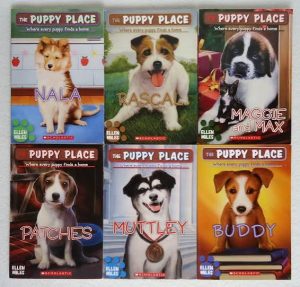
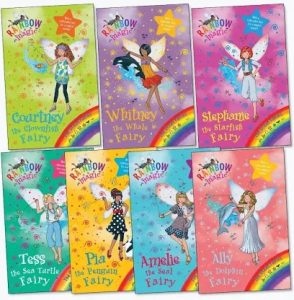
In the library, the primary and lower school books (picture books and chapter books) are separated. Primary students (TK-second grade) are not allowed to access the lower school books until they enter lower school in third grade, and lower school students have access to the entire space. Sometimes Often, we have eager second graders, or even confident kindergarteners asking to browse books in the coveted lower school section. No librarian wants to tell a patron, “no, you can’t read that,” so a few years back the lower school librarian created the “Chapter Books for Everyone” section, bridging the two halves of the library (literally, the “Everybody” shelves are located between the primary and lower school sections). The section is open to both primary and lower school students, and features shorter, easier chapter books such as Junie B. Jones, Geronimo Stilton, Rainbow Magic fairy books and Puppy Place books (you know them, you love them), Magic Treehouse, and Dog Man, along with a small but growing non-fiction section. 
 

The Everybody section is especially popular with first through third graders, as well as kindergarten and fourth grade to a smaller degree. It provides more advanced browsing for primary students, and easier browsing for lower school students who are not quite ready for more advanced novels and chapter books yet.  
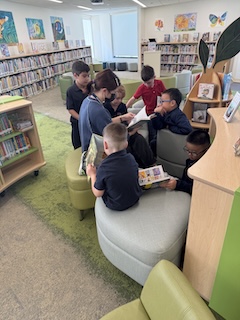
Reading Dog Man in the Everybody Section with a captive audience of kindergarteners

Eventually, our lower school librarian wants to merge all of the collections and give students the freedom to browse wherever they want. 

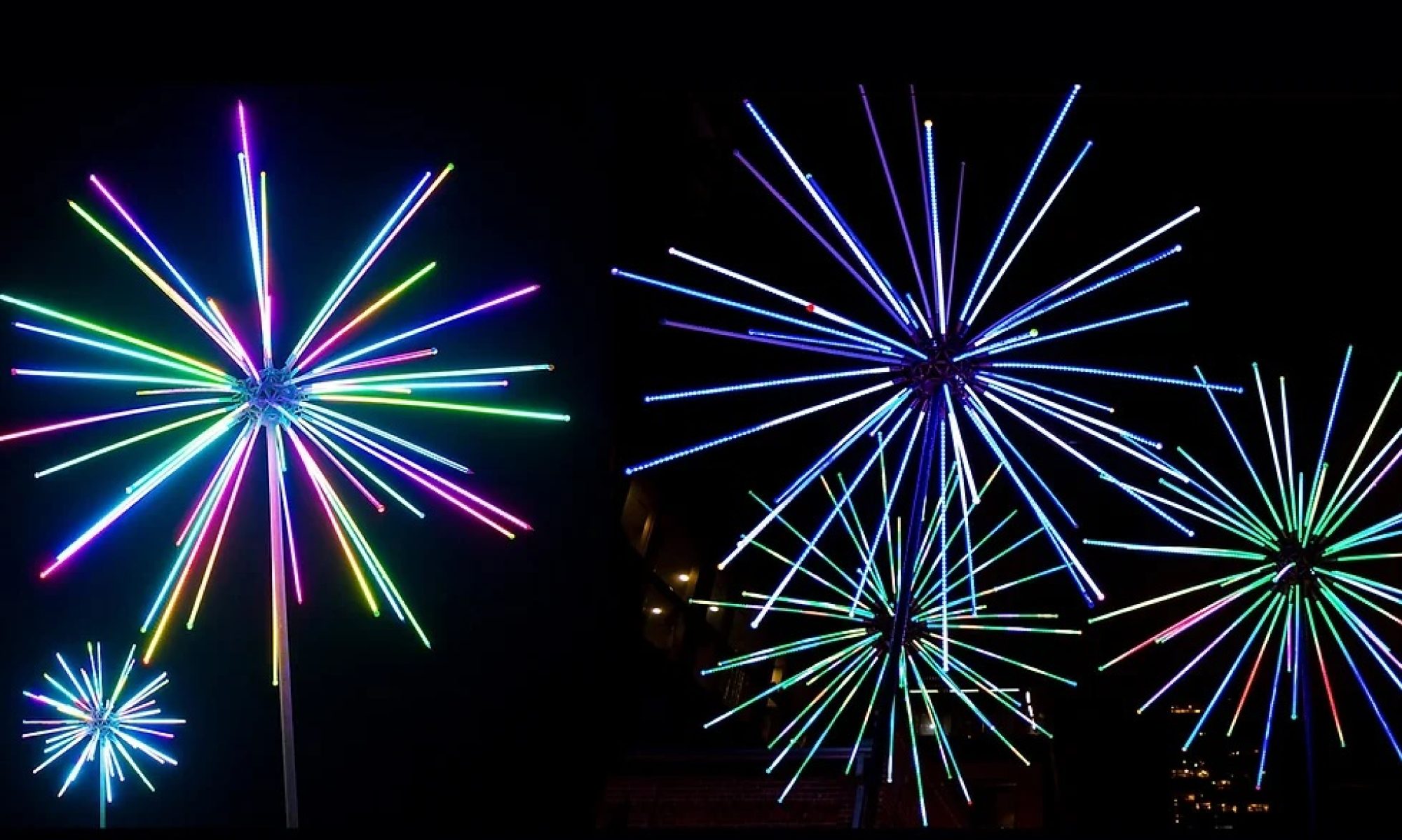
In other innovative news, our primary school librarian has a masters degree and other certifications in yoga and meditation, and she regularly incorporates lessons into her primary school library classes. The kids look forward to using the hoberman sphere, “chime time,” and I always enjoy partaking in deep breathing along with the students. The hoberman sphere also doubles as a sort of “talking stick,” as the kids pass it around and take turns sharing their favorite breakfast, favorite holiday, or whatever group question has been posed to the group. The younger students all like having their moment in the spotlight and are then more ready to listen to the story or library lesson. In the future, another idea we may try is to bring in fort-building materials because we noticed the students enjoy pushing the furniture around to make reading nooks. 

Lastly, our lower school librarian collaborated with our innovation teacher this year to launch a brand new architecture project for both primary and lower school. She has a masters in architecture, and is able to bring extensive knowledge and creativity to the table! Each month the classes will read books and learn about a different architect in the library, and make relevant projects in the innovation lab. Each class will also receive a kit with mini projects to complete in the style of that architect. For example, when the students studied Charles and Ray Eames they were able to make their own house of cards, with cards custom-recreated by the innovation teacher. 

I am inspired by how my colleagues have been able to incorporate their passions and specialized knowledge into the library. It resonates with the students, and we love what we do- it’s a win-win! 

Reflection Blogging: CYOA (Hyperlinked Environments)

It took me a minute to figure out how I wanted to go about this reflection blog. I was most inspired by the articles on technology and digital skills in the school library category of CYOA, particularly this quote from Park’s 2016 article 8 digital skills we must teach our children: 

“Children are using digital technologies and media at increasingly younger ages and for longer periods of time. They spend an average of seven hours a day in front of screens — from televisions and computers, to mobile phones and various digital devices.”  

This made me reflect on the digital habits of the kids who visit my library, as my library continues to see screen time go up and book circulation go down. 

Every year my colleagues and I discuss how to increase book circulation with our middle school and upper school students. We invite the English teachers to bring their classes to the library and promote popular and new books, we keep up with the latest releases and we try to cater to requests and get extra copies of books that suddenly soar in popularity due to BookTok and word of mouth.  

We usually see an uptick in book circulation at the beginning of the year from all the new sixth graders who are exploring our library for the first time, and then after homework picks up, circulation decreases again. Which, I totally get. I do not remember having a lot of time to read for fun in middle and high school. 

For context, my K-12 school has two libraries- one for TK-5th, and one for 6th-12th. My assistant position allows me to work in both libraries, so I had the unique experience of getting to know a lot of the fifth grade students last year and then welcoming them to their new library as sixth graders this year. I was really excited to welcome this particularly awesome group of readers into our space, and for the most part a lot of them visit the library and still check out books!  

While I love seeing the students come in, I can’t help but notice there are a couple of boys who have not set foot in the library despite being daily visitors in fifth grade. I’m bummed, I was really looking forward to showing them our collection of sports non-fiction, historical fiction, and whatever new genres and stories they wanted to explore.  

However, sixth grade is when students are required to start having laptops for class. Both of the boys I mentioned have older sisters who are also awesome readers, and one of the girls told my colleagues and me that her brother now spends all his time on his computer. My hope is that he has not stop reading altogether. He likely has books at home to read, maybe even a Kindle or other reading device? Maybe he uses the public library? Still, it is sad to lose a regular library visitor, even an anticipated one. 

I know there are ways to embrace technology in the library and to encourage a love of libraries in ways besides books, and I believe my library is doing what we can. We offer e-books and audiobooks, fun programming (some that is reading and book-centric, some that is not), crafts and games, and allow academic computer gaming. The computer games are approved by teachers and administrators- the librarians are not really in a position to promote or allow videogames in the library or on campus in general. 

I know patrons come and go, I just hope those boys are still reading even if they aren’t visiting the library, and I still hope to see them visit occasionally, whether it’s a class visit or on their own. 

Camille’s Spiel

By spiel, I mean introduction. I have a couple of elective courses under my belt now and was thrilled to snag a spot in this class. Anyone who keeps up with the SJSU Class Recs Facebook group knows taking Hyperlinked Libraries  with Dr. Stephens is a must during our MLIS journeys. I’m excited to learn what makes an effective, user-focused library in 2026 and beyond, and apply our findings to my job as a library assistant at my K-12 school.

I do have a special interest in school libraries, but I am still very open to learning about all types of libraries and all the different paths to librarianship.

P.S. If you appreciate my blog name reference, let me know what book you’re on in the Dungeon Crawler Carl series!