When thinking about hyperlinked communities and libraries today, I keep thinking about how libraries tell stories about how they bring value to the community and serve as an exploratory third-space for library users. There is value in promoting shared spaces intended for connection and learning and this can begin in small ways. Information professionals have moved beyond sharing collection circulation numbers as a measure of success, to telling stories about library user experiences at the library. This is especially true for children and families that are seeking connections and play without screens.
Developing an early love of reading is so important in this fast-moving world. Not only are libraries providing access to a wide range of books for children, they are also building social connections between families. Starting with baby lap-sit sessions and storytimes, libraries shape the perfect opportunity for parents and caregivers to learn about early literacy together and form new friendships. Families learn from each other at the library and the space fosters parent-child interactions (Celano et. al, 2018). Anyone can attend these programs and learn about fostering early literacy to get children ready for school. This shared learning space continues in the form of school-age programs as children grow older and develop their own interests.
In a TED talk at Exeter, Ciara Eastell reminds us that librarians are super connectors, “forging new connections between different groups and individuals that just wouldn’t happen otherwise” (TED, 2019, 6:42). Libraries are places for homeschooling families and families from surrounding towns. Caregivers and children continually make new connections and friendships that they may not have formed if it was not for the library. Something I find particularly exciting are the free clubs that libraries offer for children. Clubs at the library allow children to explore special interests with their peers and typically build something with their hands which provides a good opportunity for children to practice taking turns, sharing, and engaging in cooperative play. Play at the library is a foundation for building community for children and their caregivers.
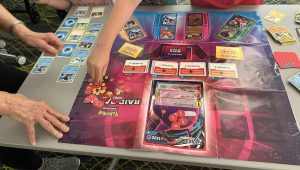
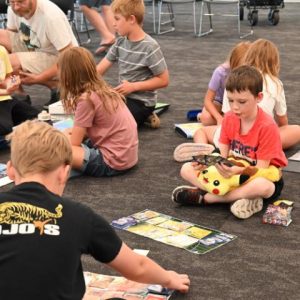
Pokémon clubs in particular have recently been taking libraries by storm. New players, casual players and skilled players are all welcomed into the club. The clubs can offer fun gameplay and educational experiences. There is math involved in raid battles, literary references in some of the Pokémon characters, and the opportunity to build strategy and social-emotional skills (Landgraf, 2026). It is so exciting to realize that a trading card game can offer not only skill building and social connection opportunities, but also encourage children to read books related to Pokémon as well. Friends in the club might even recommend books they are reading too. Children’s clubs are relatively simple in concept, but they are a great example of how a shared space for a club at the library can benefit children and families of all backgrounds for free.
A librarian at the Memphis Public Library shares how different types of knowledge are used while playing Pokémon.
I sometimes get overwhelmed thinking about the multitude of ways that we could design library programs to help library users “upgrade their [technology] skills” (Stephens, 2019, p.80). However, some skills can be grown without screens too. Recently, parents have been looking for ways for their children to build skills screen-free. Reading about the positive feedback from patrons about the benefits they see in their child from attending Pokémon clubs and how children and their families found a sense of belonging and friendship through a weekly club meetup reminded me that simple programs and a dedicated space for a weekly meet up are important too. Intentional programming that fosters connection, encourages newcomers and supports patron interests are all part of the process of growing lifelong learners.
References
Celano, D.C., Knapczyk, J. J., & Neuman, S.B. (2018, July). Public libraries harness the power of play. NAEYC. https://www.naeyc.org/resources/pubs/yc/jul2018/public-libraries-harness-play
Landgraf, G. (2026, June 27). Catch ’em all: Library Pokémon clubs provide a fun and easy way for kids to choose learning. https://americanlibrariesmagazine.org/blogs/the-scoop/catch-em-all/
Stephens, M. (2019). Wholehearted librarianship: Finding hope, inspiration, and balance. ALA Editions.
TED. (2019, June 13). How libraries change lives | Ciara Eastell [Video]. YouTube. https://www.youtube.com/watch?v=Tvt-lHZBUwU
What a fun concept! I really appreciate that this is aimed at elementary school students once they’ve aged out of typical storytime programs. It still allows them to be connected to their library and make new connections with kids with similar interests!
Thank you Trisha! I think a really important part of this particular club program is that it is for grades 1-8. This is a really large age range for a weekly library club. There are many kids that return year after year and they enjoy giving tips to new and younger learners as they join. They build a community by learning from and teaching each other. It’s a great way to build communication skills.