Category Archives: Reflection Blogs

Reflection on New Models: Comfort, Culture and Food Literacy

An idea that resonated with me in the New Models module was the invitation to rethink the entire library experience and how community members are invited to participate. In particular, while reading about the partnership between Kitchener Public Library and the restaurant, Underground Flavour Group, this collaboration struck me as an innovative way to celebrate cultural learning and promote food literacy. Each month, a local chef introduces a recipe and discusses the cultural traditions associated with the food and its preparation (CBC News, 2021). 

Everyone has to eat! How can libraries support healthy eating habits, meal planning and knowledge about nutrition while also sharing stories? Through food of course! Food is a universal context and it frames programs as an easy and accessible entry point to learning (Taylor, 2018). Above all, food is a fun vehicle for learning.
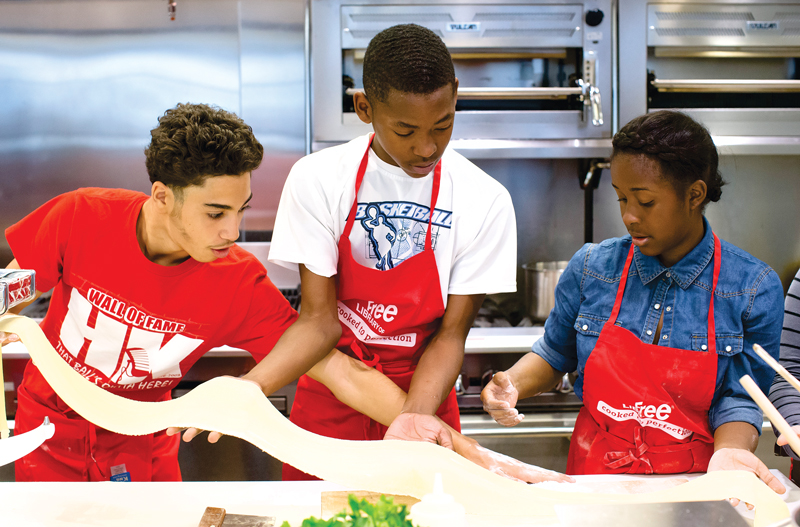
Making pasta at the Free Library of Philadelphia’s Culinary Literacy Center. Image Credit: School Library Journal

The American Libraries article about the Camden County Library System that developed a mobile kitchen to teach food programs out in the community really inspired me. In a city where there is only one grocery store and many small stores, the library developed a culinary literacy program to teach food literacy, meal planning, and to increase access to wholesome food and snacks for adults and children (Ewan, 2018). Not only did the library see a need in the community to create food programs as a way to increase access to food, it is a fun way to learn about other cultures and connect with community members. Adults, teens and children all learned how to read nutrition labels, build cooking skills and have fun at the same time. By delivering food programming, the library embraced a new model by going out into the neighborhood and invited patrons to learn and enjoy food as a group. I know my perspective of a library would change if I saw the effort staff made to go out into the community with a mobile kitchen, sharing knowledge of food and cooking with everyone. It is this type of nontraditional learning space and local partnership that clearly demonstrations a warm invitation for community participation.
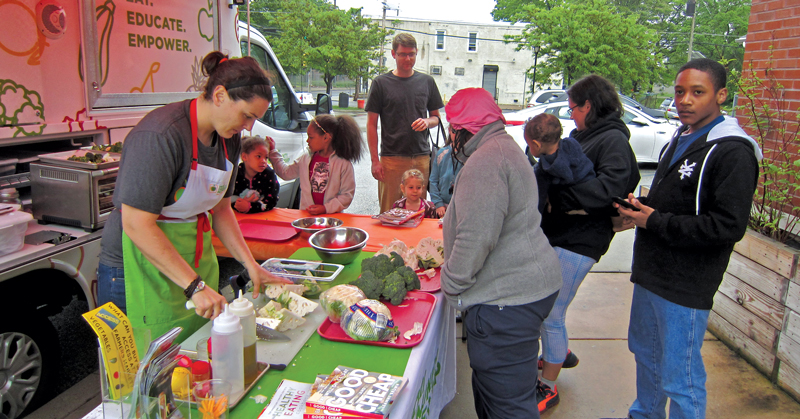
Books and Cooks in Camden takes its educating on the road. Image Credit: School Library Journal

Food literacy programming can have a wide variety of possibilities to connect people, teach English and other languages through cooking and learning, and help people learn how to make their own wholesome food at home. Community health is connected to being food literate. If the library is a community hub for learning, why not make the library a place to learn about food too? Other types of literacy learning can be woven into food programming too. Learning in the kitchen extends beyond school by bringing math, chemistry and reading together. If children can read a book, they can read recipes too! There are so many fun picture books for children that celebrate cultural traditions, food preparation and the joy that comes with sharing food (Taylor, 2018). There are endless possibilities for food programming.
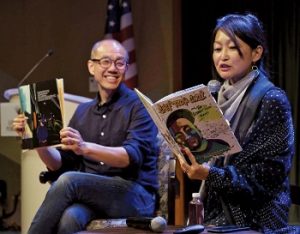
Philip Lee and June Jo Lee of Readers to Eaters. Image credit: School Library Journal

The best part about food literacy programming is the number of local partnerships that could be developed. Libraries would not need to invest in a large, equipped kitchen. Simple is better. Electric griddles, hotplates, cutting boards and knives do not take up too much space and they are all that is needed (Taylor, 2018).

Stephens (2019) describes examples of the Scandinavian concept of hygge within the library environment as a space for learning, group collaboration, contemplation and quiet contentment. I can imagine hygge moments as people taste a new dish for the first time or take a bite of a meal that reminds them of home. Cooking programs bring comfort and cozy feelings through a shared sensory experience. Food has stories and a shared language. The library is an ideal place to support food literacy and culture. 


References

CBC News. (2021, December 28). How a restaurant-library partnership made food and culture accessible. https://www.cbc.ca/news/canada/kitchener-waterloo/underground-flavour-group-and-kpl-1.6294810?fbclid=IwAR1E-wMqgXKv6R9LMcP1O8LTTzAZTNNUgH5GEI8DiNAgrRdpCUlTBeTJ4Es 

Ewan, L. (2018, September 4). A movable feast. American Libraries. https://americanlibrariesmagazine.org/2018/09/04/movable-feast-library-mobile-kitchens/ 

Stephens, M. (2019). Wholehearted librarianship: Finding hope, inspiration, and balance. ALA Editions.

Taylor, K. R. (2018, September 28). Food literacy programs teach more than cooking and nutrition. School Library Journal. https://www.slj.com/story/food-Literacy-food-for-thought
Reflection on Hyperlinked Environments: Intergenerational Social Connections

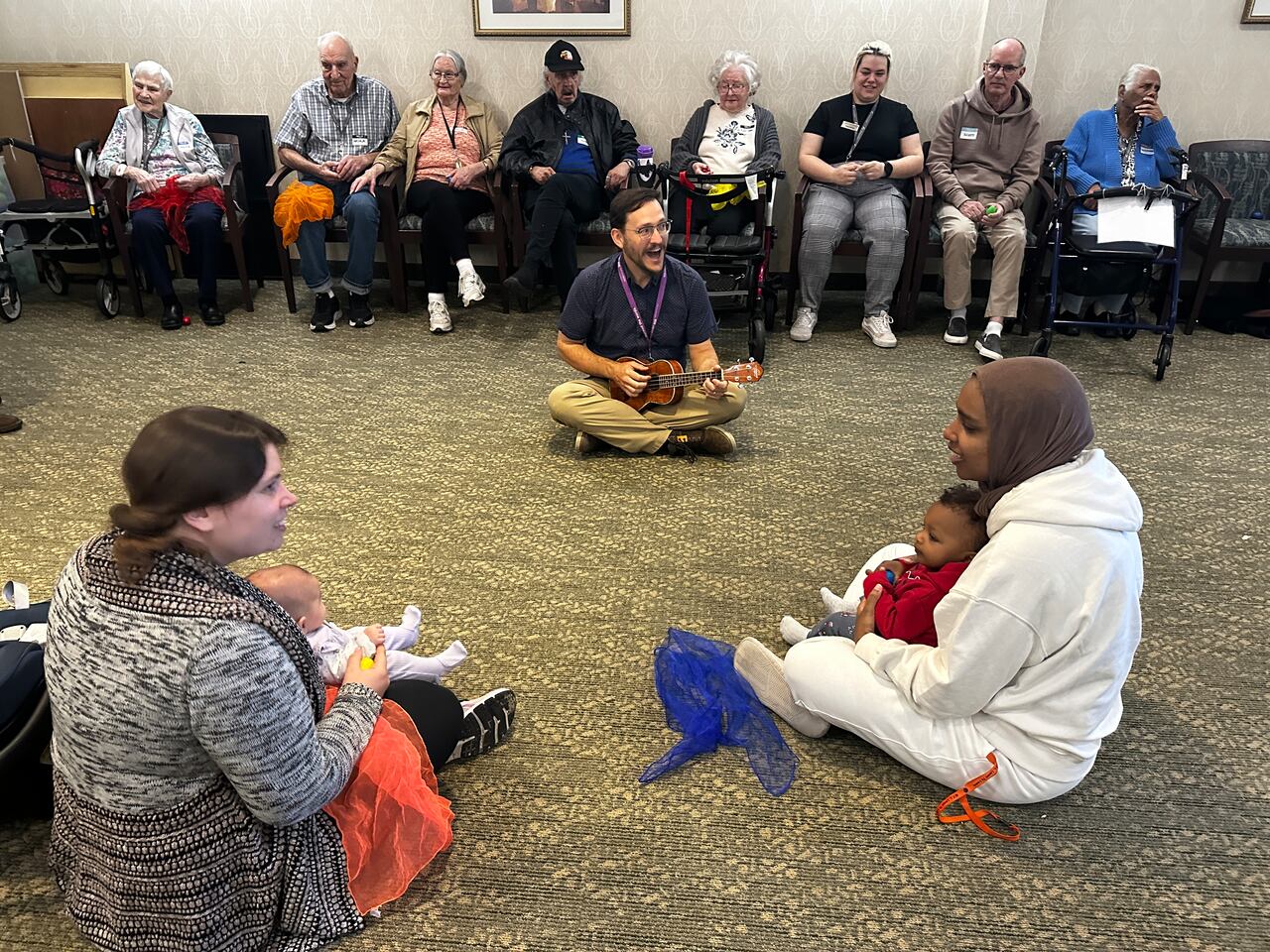
Seniors are seated in the background, a librarian seated on the ground sings with a ukelele and caregivers with children singalong.
Seniors at the Rutherford Heights Retirement Residence listen and sing along with caregivers and a librarian in the Together We Grow program. Image credit: https://www.cbc.ca/news/canada/edmonton/epl-together-we-grow-provincial-award-1.7356205

After reading about the four-space model in the Library Development: From Collection to Connection article, I started thinking about how libraries create connections between people inside and outside of the library. The article discussed how Danish libraries had to prove their continued legitimacy by developing a model for libraries as an active meeting place where connections, experiences, learning and inspiration come together. The researchers shared that they used the word “placemaker” when thinking about how to develop libraries with this model in urban spaces with the goal to create a magnetic community space (Skot-Hansen, 2017). As I currently plan more outreach programs in my position, I reflected upon how libraries can bring programming into spaces where creativity, engagement and learning intersect. I have always been interested in intergenerational programs and so I decided to explore how a hyperlinked library today might develop intergenerational connections in the community. In today’s busy world, our communities can be highly connected digitally, and still have gaps in supporting social connection. Libraries can be a model meeting space for both intentional and “low-intensive meeting places” (Jochumsen et al., 2012, p. 592), but what about community members that are not able to access the library frequently? 

While exploring the IFLA Library Map of the World, I was immediately inspired by the intergenerational outreach program by the Edmonton Public Library in Canada. This program was highlighted by IFLA for sustainable development goals three and four: Good Health and Well-Being and Quality Education. The Edmonton Public Library launched a program in 2023 called “Together We Grow.” The program aimed to support two main goals: to meet the high demand for early literacy programming and meaningfully connect the growing senior population with the community. The librarians brought early literacy programming to the retirement residences and invited the children and caregivers to share a generational experience. The pilot was successful in building community ties across generations and expanded access to early literacy. The librarians running the program also shared they had good reviews from participants because the program brought the experience directly to participants’ neighborhoods and they got to share memories and connections with people in the community they might not meet otherwise (Library Map of the World, 2025).

This heartwarming video highlights the strengths of the program. I had a big smile on my face when I saw the caregivers, children and seniors singing and shaking their shakers to the “We Shake and We Stop” shaker song that I know well as a children’s librarian. The senior residents get to participate in the song with shakers as well! It is such a good idea to have everyone in the room sing, listen to music and a story and participate in songs with shakers. Even though I do not have a good singing voice, I often leave storytime feeling a sense of community and in a good mood after being in a room of people of all ages singing children’s songs. I completely understand the feeling of connection and enthusiasm that can be built rhyme by rhyme in a thirty minute storytime. The rhymes and songs in early literacy storytimes are intentionally chosen to be repetitive and easy to follow along to build phonemic awareness – the ability to recognize and manipulate parts of words. I was not surprised to read that retirement facility staff shared that days after the program, adults with memory care issues would recall songs or events from the program. This is the power of song and group engagement! 

https://www.cbc.ca/player/play/video/9.6540985

In addition to being recognized by IFLA, the Edmonton Public Library also received an excellence and innovation award from the Alberta Minister, Ric McIver in 2024. The success of the program can be credited to the careful planning that went into the program. The library consulted with community members and was inspired by intergenerational projects in Australia. By identifying the community needs, approaching an idea with a wide reach, and referencing successful intergenerational projects in another country, the Edmonton Public Library was able to expand their program to seven additional locations. 

To me, this intergenerational program is a great example of a hyperlinked library that is responsive to the community needs and meets the community members where they are. The Edmonton Public Library not only improved access to social connection and learning, it looked beyond the library as a “third place” as described in Morehart’s ALA article, and adapted to best serve community members in their own neighborhood. 


References

Cummings, M. (2024, October 20). Award-winning program brings infants, librarians into Edmonton seniors’ residences. CBC News. https://www.cbc.ca/news/canada/edmonton/epl-together-we-grow-provincial-award-1.7356205 

Jochumsen, H., Hvenegaard Rasmussen, C., & Skot-Hansen, D. (2012). The four spaces – a new model for the public library. New Library World, 113(11/12), 586–597. https://doi.org/10.1108/03074801211282948 

Library Map of the World. (2025, January 29). Library’s intergenerational outreach programme promotes early childhood development and well-being of seniors. https://librarymap.ifla.org/stories/librarys-intergenerational-outreach-programme-promotes-early-childhood-development-and-well-being-of-seniors 

Morehart, P. (2016, August 17). Moving beyond the “third place.” American Libraries Magazine. https://americanlibrariesmagazine.org/blogs/the-scoop/library-design-moving-beyond-third-place/ 

Skot-Hansen, D. (2017). Library development: From collection to connection. University of Copenhagen.

Reflection on Hyperlinked Communities: Inspiring Literacy with Pokémon at the Library

Image credit: https://www.ala.org/alsc

When thinking about hyperlinked communities and libraries today, I keep thinking about how libraries tell stories about how they bring value to the community and serve as an exploratory third-space for library users. There is value in promoting shared spaces intended for connection and learning and this can begin in small ways. Information professionals have moved beyond sharing collection circulation numbers as a measure of success, to telling stories about library user experiences at the library. This is especially true for children and families that are seeking connections and play without screens. 

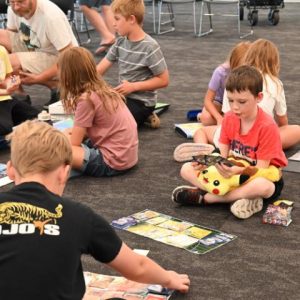
Pokémon Club at Ankeny Kirkendall Public Library. Image credit: https://ankeny.librarycalendar.com/event/k-5-pokemon-club-drop-64582

Developing an early love of reading is so important in this fast-moving world. Not only are libraries providing access to a wide range of books for children, they are also building social connections between families. Starting with baby lap-sit sessions and storytimes, libraries shape the perfect opportunity for parents and caregivers to learn about early literacy together and form new friendships. Families learn from each other at the library and the space fosters parent-child interactions (Celano et. al, 2018). Anyone can attend these programs and learn about fostering early literacy to get children ready for school. This shared learning space continues in the form of school-age programs as children grow older and develop their own interests.  

In a TED talk at Exeter, Ciara Eastell reminds us that librarians are super connectors, “forging new connections between different groups and individuals that just wouldn’t happen otherwise” (TED, 2019, 6:42). Libraries are places for homeschooling families and families from surrounding towns. Caregivers and children continually make new connections and friendships that they may not have formed if it was not for the library. Something I find particularly exciting are the free clubs that libraries offer for children. Clubs at the library allow children to explore special interests with their peers and typically build something with their hands which provides a good opportunity for children to practice taking turns, sharing, and engaging in cooperative play. Play at the library is a foundation for building community for children and their caregivers. 

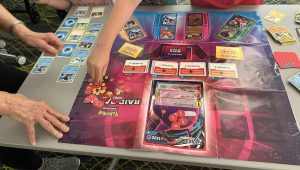
A raid battle is underway at the library. Image credit: https://ilovelibraries.org/article/libraries-embrace-pokemon-clubs/

Pokémon clubs in particular have recently been taking libraries by storm. New players, casual players and skilled players are all welcomed into the club. The clubs can offer fun gameplay and educational experiences. There is math involved in raid battles, literary references in some of the Pokémon characters, and the opportunity to build strategy and social-emotional skills (Landgraf, 2026). It is so exciting to realize that a trading card game can offer not only skill building and social connection opportunities, but also encourage children to read books related to Pokémon as well. Friends in the club might even recommend books they are reading too. Children’s clubs are relatively simple in concept, but they are a great example of how a shared space for a club at the library can benefit children and families of all backgrounds for free. 

A librarian at the Memphis Public Library shares how different types of knowledge are used while playing Pokémon.

I sometimes get overwhelmed thinking about the multitude of ways that we could design library programs to help library users “upgrade their [technology] skills” (Stephens, 2019, p.80). However, some skills can be grown without screens too. Recently, parents have been looking for ways for their children to build skills screen-free. Reading about the positive feedback from patrons about the benefits they see in their child from attending Pokémon clubs and how children and their families found a sense of belonging and friendship through a weekly club meetup reminded me that simple programs and a dedicated space for a weekly meet up are important too. Intentional programming that fosters connection, encourages newcomers and supports patron interests are all part of the process of growing lifelong learners.


References

Celano, D.C., Knapczyk, J. J., & Neuman, S.B. (2018, July). Public libraries harness the power of play. NAEYC. https://www.naeyc.org/resources/pubs/yc/jul2018/public-libraries-harness-play 

Landgraf, G. (2026, June 27). Catch ’em all: Library Pokémon clubs provide a fun and easy way for kids to choose learning. https://americanlibrariesmagazine.org/blogs/the-scoop/catch-em-all/ 

Stephens, M. (2019). Wholehearted librarianship: Finding hope, inspiration, and balance. ALA Editions.

TED. (2019, June 13). How libraries change lives | Ciara Eastell [Video]. YouTube. https://www.youtube.com/watch?v=Tvt-lHZBUwU