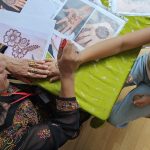
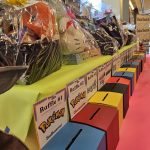
An idea that resonated with me in the New Models module was the invitation to rethink the entire library experience and how community members are invited to participate. In particular, while reading about the partnership between Kitchener Public Library and the restaurant, Underground Flavour Group, this collaboration struck me as an innovative way to celebrate cultural learning and promote food literacy. Each month, a local chef introduces a recipe and discusses the cultural traditions associated with the food and its preparation (CBC News, 2021).
Everyone has to eat! How can libraries support healthy eating habits, meal planning and knowledge about nutrition while also sharing stories? Through food of course! Food is a universal context and it frames programs as an easy and accessible entry point to learning (Taylor, 2018). Above all, food is a fun vehicle for learning.
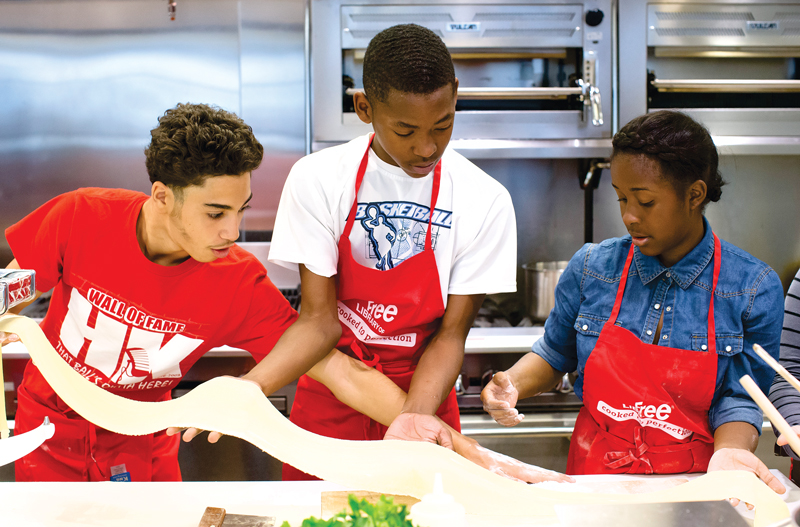
The American Libraries article about the Camden County Library System that developed a mobile kitchen to teach food programs out in the community really inspired me. In a city where there is only one grocery store and many small stores, the library developed a culinary literacy program to teach food literacy, meal planning, and to increase access to wholesome food and snacks for adults and children (Ewan, 2018). Not only did the library see a need in the community to create food programs as a way to increase access to food, it is a fun way to learn about other cultures and connect with community members. Adults, teens and children all learned how to read nutrition labels, build cooking skills and have fun at the same time. By delivering food programming, the library embraced a new model by going out into the neighborhood and invited patrons to learn and enjoy food as a group. I know my perspective of a library would change if I saw the effort staff made to go out into the community with a mobile kitchen, sharing knowledge of food and cooking with everyone. It is this type of nontraditional learning space and local partnership that clearly demonstrations a warm invitation for community participation.
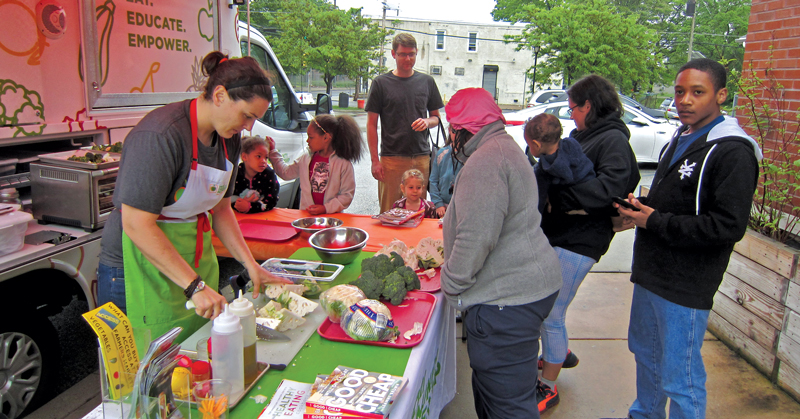
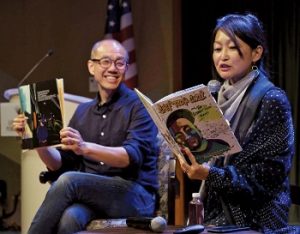
Food literacy programming can have a wide variety of possibilities to connect people, teach English and other languages through cooking and learning, and help people learn how to make their own wholesome food at home. Community health is connected to being food literate. If the library is a community hub for learning, why not make the library a place to learn about food too? Other types of literacy learning can be woven into food programming too. Learning in the kitchen extends beyond school by bringing math, chemistry and reading together. If children can read a book, they can read recipes too! There are so many fun picture books for children that celebrate cultural traditions, food preparation and the joy that comes with sharing food (Taylor, 2018). There are endless possibilities for food programming.
The best part about food literacy programming is the number of local partnerships that could be developed. Libraries would not need to invest in a large, equipped kitchen. Simple is better. Electric griddles, hotplates, cutting boards and knives do not take up too much space and they are all that is needed (Taylor, 2018).
Stephens (2019) describes examples of the Scandinavian concept of hygge within the library environment as a space for learning, group collaboration, contemplation and quiet contentment. I can imagine hygge moments as people taste a new dish for the first time or take a bite of a meal that reminds them of home. Cooking programs bring comfort and cozy feelings through a shared sensory experience. Food has stories and a shared language. The library is an ideal place to support food literacy and culture.
References
CBC News. (2021, December 28). How a restaurant-library partnership made food and culture accessible. https://www.cbc.ca/news/canada/kitchener-waterloo/underground-flavour-group-and-kpl-1.6294810?fbclid=IwAR1E-wMqgXKv6R9LMcP1O8LTTzAZTNNUgH5GEI8DiNAgrRdpCUlTBeTJ4Es
Ewan, L. (2018, September 4). A movable feast. American Libraries. https://americanlibrariesmagazine.org/2018/09/04/movable-feast-library-mobile-kitchens/
Stephens, M. (2019). Wholehearted librarianship: Finding hope, inspiration, and balance. ALA Editions.
Taylor, K. R. (2018, September 28). Food literacy programs teach more than cooking and nutrition. School Library Journal. https://www.slj.com/story/food-Literacy-food-for-thought