After reading about the four-space model in the Library Development: From Collection to Connection article, I started thinking about how libraries create connections between people inside and outside of the library. The article discussed how Danish libraries had to prove their continued legitimacy by developing a model for libraries as an active meeting place where connections, experiences, learning and inspiration come together. The researchers shared that they used the word “placemaker” when thinking about how to develop libraries with this model in urban spaces with the goal to create a magnetic community space (Skot-Hansen, 2017). As I currently plan more outreach programs in my position, I reflected upon how libraries can bring programming into spaces where creativity, engagement and learning intersect. I have always been interested in intergenerational programs and so I decided to explore how a hyperlinked library today might develop intergenerational connections in the community. In today’s busy world, our communities can be highly connected digitally, and still have gaps in supporting social connection. Libraries can be a model meeting space for both intentional and “low-intensive meeting places” (Jochumsen et al., 2012, p. 592), but what about community members that are not able to access the library frequently?
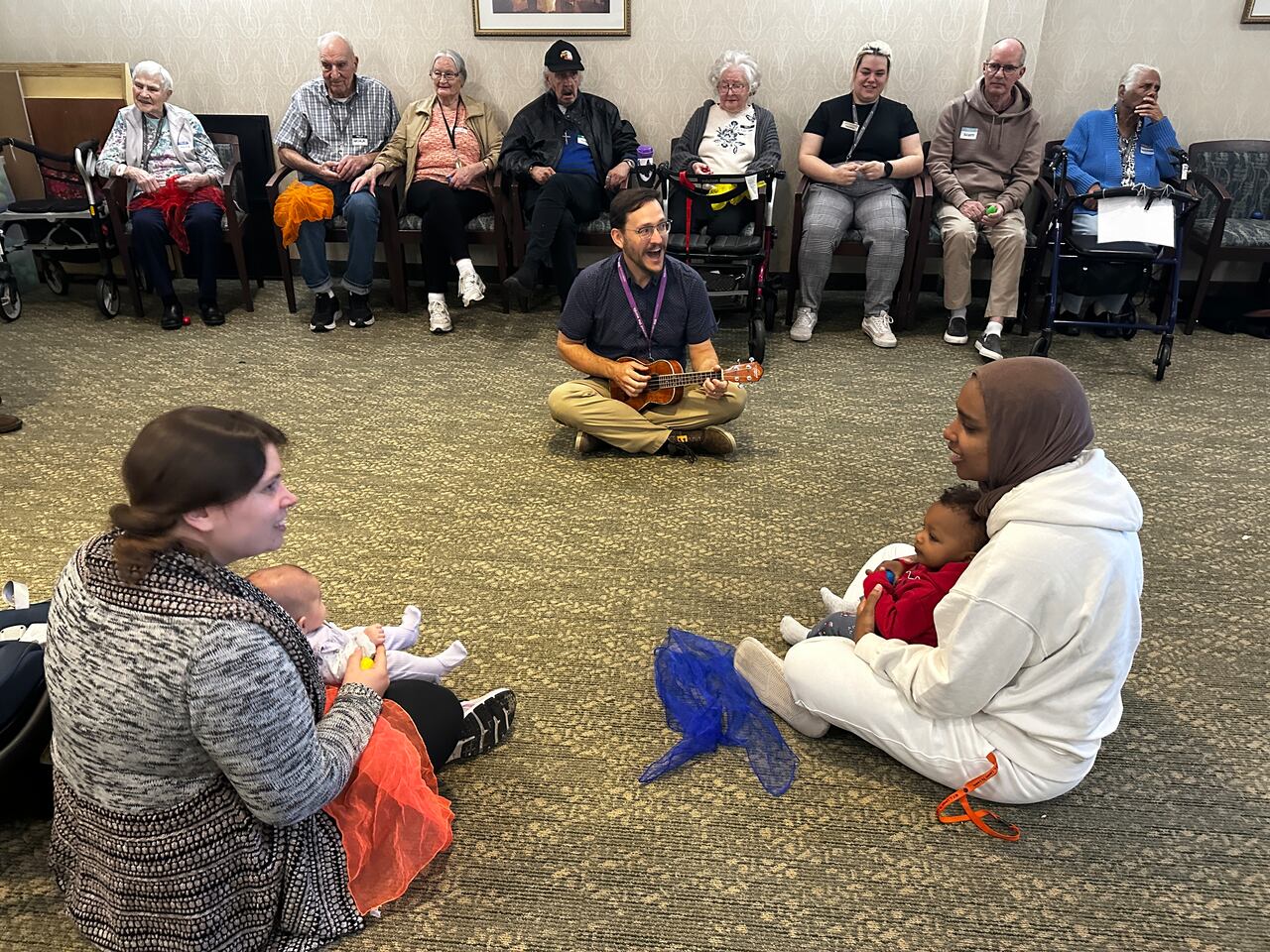
While exploring the IFLA Library Map of the World, I was immediately inspired by the intergenerational outreach program by the Edmonton Public Library in Canada. This program was highlighted by IFLA for sustainable development goals three and four: Good Health and Well-Being and Quality Education. The Edmonton Public Library launched a program in 2023 called “Together We Grow.” The program aimed to support two main goals: to meet the high demand for early literacy programming and meaningfully connect the growing senior population with the community. The librarians brought early literacy programming to the retirement residences and invited the children and caregivers to share a generational experience. The pilot was successful in building community ties across generations and expanded access to early literacy. The librarians running the program also shared they had good reviews from participants because the program brought the experience directly to participants’ neighborhoods and they got to share memories and connections with people in the community they might not meet otherwise (Library Map of the World, 2025).
This heartwarming video highlights the strengths of the program. I had a big smile on my face when I saw the caregivers, children and seniors singing and shaking their shakers to the “We Shake and We Stop” shaker song that I know well as a children’s librarian. The senior residents get to participate in the song with shakers as well! It is such a good idea to have everyone in the room sing, listen to music and a story and participate in songs with shakers. Even though I do not have a good singing voice, I often leave storytime feeling a sense of community and in a good mood after being in a room of people of all ages singing children’s songs. I completely understand the feeling of connection and enthusiasm that can be built rhyme by rhyme in a thirty minute storytime. The rhymes and songs in early literacy storytimes are intentionally chosen to be repetitive and easy to follow along to build phonemic awareness – the ability to recognize and manipulate parts of words. I was not surprised to read that retirement facility staff shared that days after the program, adults with memory care issues would recall songs or events from the program. This is the power of song and group engagement!
https://www.cbc.ca/player/play/video/9.6540985
In addition to being recognized by IFLA, the Edmonton Public Library also received an excellence and innovation award from the Alberta Minister, Ric McIver in 2024. The success of the program can be credited to the careful planning that went into the program. The library consulted with community members and was inspired by intergenerational projects in Australia. By identifying the community needs, approaching an idea with a wide reach, and referencing successful intergenerational projects in another country, the Edmonton Public Library was able to expand their program to seven additional locations.
To me, this intergenerational program is a great example of a hyperlinked library that is responsive to the community needs and meets the community members where they are. The Edmonton Public Library not only improved access to social connection and learning, it looked beyond the library as a “third place” as described in Morehart’s ALA article, and adapted to best serve community members in their own neighborhood.
References
Cummings, M. (2024, October 20). Award-winning program brings infants, librarians into Edmonton seniors’ residences. CBC News. https://www.cbc.ca/news/canada/edmonton/epl-together-we-grow-provincial-award-1.7356205
Jochumsen, H., Hvenegaard Rasmussen, C., & Skot-Hansen, D. (2012). The four spaces – a new model for the public library. New Library World, 113(11/12), 586–597. https://doi.org/10.1108/03074801211282948
Library Map of the World. (2025, January 29). Library’s intergenerational outreach programme promotes early childhood development and well-being of seniors. https://librarymap.ifla.org/stories/librarys-intergenerational-outreach-programme-promotes-early-childhood-development-and-well-being-of-seniors
Morehart, P. (2016, August 17). Moving beyond the “third place.” American Libraries Magazine. https://americanlibrariesmagazine.org/blogs/the-scoop/library-design-moving-beyond-third-place/
Skot-Hansen, D. (2017). Library development: From collection to connection. University of Copenhagen.