Read with Me? connects adolescents and trusted adults through middle-grade and young adult literature.
Introduction
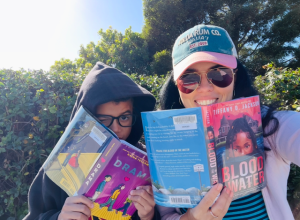
My 11-year-old son is in middle school, and he still asks me, “Mom, will you come read with me?” He also recommends books he thinks I will enjoy, especially graphic novels with social justice themes. We can sit and connect, even if we are reading different books.
Read with Me? is a participatory middle grade / YA reading service connecting middle school students with trusted adults in their lives through book recommendations. In partnership with local middle schools, students would recommend middle grade and YA novels through written reviews, audio recordings, or short videos created in a school library or language arts class. The original recordings would initially be shared with classmates, teachers, school librarians, parents and participating public library staff during a school hosted event or town hall.
In tandem, the library would curate an adult-facing YA display featuring student recommendations, including direct quotes, and QR codes linking to the library catalog. Extra copies of recommended books would be available for circulation at select locations. Students could volunteer to help design these installations, in partnership with the library staff. The goal is to create opportunities for intergenerational connection, understanding, and conversation.
Mission & Institutional Context
San Francisco Public Library’s mission is to “connect our diverse communities to learning, opportunities and each other.” Its strategic priorities include serving as a Literacy Champion, Cultural Amplifier, Community Catalyzer, Thoughtful Navigator, and Resource Provider (San Francisco Public Library). Read with Me? supports these priorities by connecting literacy, youth voice, family engagement, and participatory library service.
SFPL already recognizes the importance of teen-centered spaces and services. The Mix at SFPL is a space for youth ages 12–18 that supports creativity, digital media production, music, gaming, and social connection. That space could support the media-creation portion of the project while keeping the recordings within a supervised, youth-centered environment.
The innovation responds to two needs. First, middle school students often have strong opinions about books but limited opportunities to influence library services. Second, adults may enjoy YA literature but feel uncertain about entering teen spaces or knowing where to begin. A partnership with local middle schools would allow students, school librarians, teachers, public librarians, and families to shape the program together.
Action Brief Statement (Students/Adults)
Convince middle school students and the trusted adults in their lives that by sharing and exchanging middle grade / YA book recommendations through Read with Me?, they will discover new ways to understand and connect with one another, which will strengthen reading for pleasure and intergenerational relationships, because the library connects diverse communities to learning and to one another.
Action Brief Statement (School and Public Librarians)
Convince public and school library staff that by collaborating with middle-school students to design and pilot Read with Me?, they will gain a more meaningful understanding of young people’s reading lives and create a safer, more responsive intergenerational service, because sustainable library innovation depends on shared ownership, staff readiness, and amplifying community knowledge.
Where did you find inspiration?
- Dave Eggers Opens a Library for Youth, by Youth in San Francisco: Every Sunday afternoon, Dave Eggers has partnered with Middle School Librarian, Gina Cargas, to host the Golden Gate Reading Club at the International Library for Youth for kids and their adults.
- SFPL One City One Book: “One City One Book is a citywide literary event that encourages members of the San Francisco community to read the same book at the same time and then discuss it in book groups and at events throughout the City. By building bridges between communities and generations through the reading and, most importantly, the discussion of one book, we hope to help to make reading a lifelong pursuit and to build a more literate society.”
- Stephens, Taming Technolust: Ten Steps for Planning in a 2.0 World: “Let go of control!”
- Barbakoff & Lenstra, Working Hand in Hand: “Community-led planning values the process and the relationships it builds as much as it values the product. It treats human relationships as a valid way of knowing and doing.”
- The Mix at SFPL: At SFPL’s main branch, teens can reserve two media studios to produce videos and podcasts, in addition to playing and recording music.
Guidelines & Policies
- Establish Read with Me? as a partnership between SFPL, participating middle schools, school librarians, teachers, students, and guardians.
- Create a small planning group that includes public library staff, school librarians, teachers, students, and, where appropriate, caregivers.
- Seek student participation and obtain caregiver permission when required by school and/or library policy.
- Allow students to participate in the book recommendation collection process through written reviews, audio, animation, etc.
- Use only consented, carefully edited excerpts or voice clips in public library promotion to preserve student privacy.
- School administrators, district personnel, public library administrators, and legal or privacy staff to review the consent, media, and data-retention procedures prior to publication outside of the school setting.
Timeline for Implementation
- Dates must be fluid and at the discretion of student and teacher schedules, including state testing schedules; however, it is possible that some coordination and work could occur outside of school sessions, during summer, winter or spring breaks, based on student availability.
- Spring (before end of school): Connect with middle school librarian to gain interest and alignment, recruit and form the planning group, based on input from school librarian and public library branch staff. Finalize plan and proposed timeline for upcoming school year.
- September – December: Begin to engage in proactive partnership with and solicit content from students, in coordination with school administrators (including over winter break). Begin to staff and plan for public library installation and other activities, including school viewings.
- January – March: Schedule viewings at school for students, parents, and library partners. Launch the public library display/installation. Gather feedback and develop a plan for production of any public-facing social media accompaniments. Establish a process and timeline for evaluating feedback and measuring success metrics.
Marketing & Promotion
- Displays near the adult and teen collections with catchy signage (can also be student-designed)
- School newsletters and family communications
- SFPL branch newsletters and website announcements
- QR codes with reading lists and recommendations at adult fiction displays
- Viewings of finished product during school assemblies and or class/library time
- Social media production based on approved, finished content
- Read with Me? sticker on books, bookmarks
Staff Training & Readiness
- Facilitating youth participation
- Consent and privacy procedures
- Sensitivity and mandated reporter training
- Collecting feedback without gathering unnecessary personal information
- Leverage intact training utilized for teen collaboration spaces and media rooms
Evaluation & Future Expansion
- Feedback from participating students and their caregivers/guardians, in person and also via survey
- Volume of selected books checked out or put on hold at local branches or online (before and after launch), QR code scans
- Teacher/administrator, school librarian, and public librarian and staff feedback, including incremental workload and perceived impact
- Success metrics and indicators for expansion:
- Students feel they have a meaningful voice in a public institution
- Perception of strengthened relationship between students, adults, school librarian, public library spaces (in any configuration!); for example, a student shares that an adult they know read their recommended title, or a meaningful conversation occurred based on program participation
- Reinforcement of public library as a community hub where all are welcome
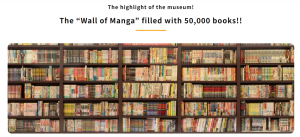
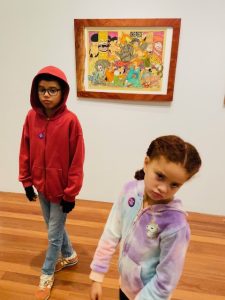 I became interested in manga for a pretty practical reason: my son was reading a lot of One Piece, and I wanted to understand what he was so absorbed in. I also took a graphic novels class this past summer. I personally did not read manga for the class (it feels like manga could be its own course!), but I learned a lot about graphic novels as a medium, especially how images, text, pacing, and visual sequencing work together. I also learned about the deep history and tradition that encompass manga. That made me even more curious about manga as its own form of storytelling.