Reflection Blog: The Power of Stories

This module – The Power of Stories – was a bit of a difficult topic for me to wrap my head around; even if we don’t have a “story” to tell (in the conventional sense), the things that matter the most to us, our hopes and fears and inspirations, are all part of the individual narratives that we carry with us. This subject also forces me to consider a trend that I’ve been noticing around me, and is in fact occurring: people are not truly talking to each other, making eye contact, and taking the time to listen. A survey from Quantum Connections – Global Dialogue Initiative shows that 85% of Americans avoided bringing up a topic in the past 30 days because it might turn into an argument. 51% of this group say the country is becoming more curious. However, when asked about actual behaviors normally associated with curiosity (engaging with different views, seeking challenging information, changing their minds), the numbers drop significantly (Thorp, 2026). 

It seems as though civilized conversation and sharing our stories is no longer occurring as frequently on a community level as well as on individual, interpersonal levels. I reflect on my extended family and their profound avoidance of painful memories, emotional rifts, things better left unsaid for fear of angry outbursts and the inevitable silent treatment and estrangement. Once uttered, it becomes like a bell that cannot be unrung. If my family is a microcosm of wider society as a whole, I fear that important stories will be lost to time and neglect.

I think of my aunt, who unexpectedly passed away earlier this year. Stories that made us cry and laugh were told at her funeral. But there wasn’t enough time before she passed during which any of us were able to speak with her about her story, in her own words and in her indelible voice; I will always regret this. I was thinking of my aunt when I came across StoryCorps’s animated shorts a couple of nights ago. I was watching PBS, and it was one of those things that popped up in between shows. Of course, I read about StoryCorps while covering the materials in the module, but unexpectedly seeing it in the course of real life hits a little bit differently. StoryCorps’s mission is astonishingly simple but powerful: “to help us believe in each other by illuminating the humanity and possibility in us all – one story at a time” (StoryCorps, n.d.). I’ve included the animated shorts here, but the beauty of its setup is how engaging the story is in its simplicity, how the animation draws you in, but most importantly, hearing a person’s voice narrating their own story. I appreciate StoryCorps because this is not just a random home video or a collection of photographs from a family album; there is intent and meaning to find the common humanity that we all seem to forget time and again. 

Common Ground incorporates narrative inquiry within the succinct timeframe. These are simple but honest and true questions (how would you want to be remembered; when you think about the future, what are you most scared of; what are you most hopeful for) that we can all ask each other not just in terms of healthy dialogue, but also library improvements, services and programs (Stephens, 2020). StoryCorps has partnered with public libraries in the past as well as the Library of Congress to immortalize people’s stories and truth; it would be a labor of love and hard work for libraries to continue the conversation through One Small Step, a program powered by StoryCorps that fosters meaningful interactions in library spaces. Being our most authentic selves and revealing our vulnerabilities while also acknowledging our differences reveals nuances in personal dialogue that we would not otherwise find via texting or emails. I may be getting ahead of myself, but saying things out loud – especially the painful bits – can help people move forward with grace while also helping others who are listening and watching do the same for themselves. 

References

Stephens, M. (2020, April 9). Office hours: Narrative inquiry. Tame the Web. Retrieved from https://tametheweb.com/2020/04/09/office-hours-narrative-inquiry/

StoryCorps (n.d.). About StoryCorps. Retrieved July 26, 2026 from https://storycorps.org/about/

StoryCorps. (2018, September 25). Common ground. [Video]. YouTube. https://www.youtube.com/watch?v=2DcTm0MpnoA

StoryCorps. (2021, September 16). A life of honor: A gay veteran recalls serving in silence. [Video]. YouTube. https://www.youtube.com/watch?v=98vvuE38oBs

Thorp, J. (2026, May 11). Why Americans are walking away from the difficult conversations that matter most. Quantum Connections – Global Dialogue Initiative. Retrieved from https://quantumconnections.com/why-americans-avoid-difficult-conversations/
Reflection Blog: New Horizons and AI Chatbots

Creative mind, istockphoto.com [Screenshot].
The reading from the New Horizons module that resonated the most with me is the opinion piece, Getting a Grip on ChatGPT, or ChatGPT is Reshaping Information Infrastructures. The authors recall the panic over Wikipedia in its early days and compare it to the situation regarding ChatGPT and AI chatbots. Like Wikipedia, people focus on the wrong worst-case scenarios, such as academic cheating and plagiarism, and human obsolescence in the job market and arts and humanities. Yet, a more catastrophic and unanticipated outcome of “crowdsourced knowledge” as a remnant of the Wikipedia era is the profound effect it would have on social media and individuals acting in bad faith to effectively spread lies to promote a hateful agenda or political view (Fister & Head, 2023). By now we have seen that AI has its lapses in its near-perfect performance and mimicry of human language and information retrieval. While we do know that the tech is here to stay and will only improve over time, people still must question it with apprehension but also be a bit more even-handed in our approach to its possibilities. We already know how AI can be used for malicious purposes; without being too jaded or cynical, can we look at the opposite end of the spectrum and visualize how it can be used to help individuals and communities? 

Stephens notes that “libraries are uniquely positioned to explore and integrate tech innovations with intention and heart” (n.d.). As previously mentioned, tech is moving rapidly and improving every day. I cannot say that I know the intricacies of AI, but if it can be customized to align with customer satisfaction, can it eventually be formulated into a tool for the library to reflect its overall mission and values? Currently, ChatGPT is not very transparent about how it “finds” its answers or from where it pulls its information sources. Transparency is key here, so this is where it becomes more of an obstacle than an asset. Libraries need to assess AI as technology with possibilities never considered before while also recognizing its limitations and the appropriate way to use it. I feel as if companies and businesses are quite giddy with using AI bots in every situation, especially online customer service. People are smart enough to recognize when there is no human touch involved and are already dismissive of an AI product as subpar.  

The authors are correct in arguing that instead of simply accepting that AI is here to stay, we bear a responsibility in having a say in where it belongs in our lives and to what extent. We also have an obligation to ourselves and one another to question information from unknown sources and authority figures and demand accountability. This is how libraries stay relevant; libraries and librarians are still highly trusted as reliable sources of information; however, competing with AI is not the answer. Using AI as a “low level task” or learning tool is an accurate assessment of its best uses as well as the need to educate people about its limitations and being able to spot its irregularities (Jackson, 2023). This may seem overly optimistic, but reaching students early and teaching them of their potential to produce work in their unique voice in comparison to a soulless product can be empowering.   

AI cannot replace humans unless we remain passive and complacent and let it. Critical thinking, learning, curiosity, and engaging in questions that might not have the most definitive or resolute answers elevates our humanity, forming creativity and resourcefulness where we might least expect it. 

References

Fister, B. & Head, A.J. (2023, May 04). ChatGPT is reshaping information infrastructures. Inside Higher Ed. Retrieved from https://www.insidehighered.com/opinion/views/2023/05/04/chatgpt-reshaping-information-infrastructures-opinion

Jackson, J. H. (2023, February 14). Chatting with ChatGPT: Deep dive in five with Tom Moriarity. SJSU Newscenter. Retrieved from https://blogs.sjsu.edu/newsroom/2023/chatting-with-chat-gpt-deep-dive-in-five-with-tom-moriarty/

Stephens, M. (n.d.) Module 9: New horizons [Lecture]. The Hyperlinked Library. Retrieved from https://287.hyperlib.sjsu.edu/module-9-new-horizons/


Reflection Blog #2: Hyperlinked Environments – International Libraries

For the Hyperlinked Environments module, I decided to check out international libraries. I was intrigued by the themes involving architecture, specifically what was originally envisioned during the planning process, and how the surrounding community embraces the library, transforming it into something that is reflective of the people itself and its social fabric. Just as important is the personal significance that libraries hold for individuals and communities across the world.

I first came across Biblioteca Vasconcelos in another LIS course. It was one of those brief features on a beautifully ambitious library, but I never followed up on it until I read Carr’s piece in Architectural Review. The fact that this library is thriving at all is a testament to the community that sees its value as a gathering place. Although the architect, Alberto Kalach, had an agenda to create a space that makes “literacy and knowledge…physically immersive,” the effect is more like a grand academic-like library, akin to a sacred nave within a church (ArchEyes, 2025). This is perhaps where they unintentionally went in the wrong direction. Stephens states that “library planning begins with the people who will be using it” (2019, p. 63). Even if the community wasn’t asked for their input on the library or if it was simply disregarded, ultimately, they made the space into what they valued and wanted. The library director admits that the current atmosphere isn’t conducive for studying or quiet reading; however, I don’t see this quirk as a failure (Carr, 2019). 

Much of this correlates to a matter of debate in what makes a library successful, and how we measure value and impact. Lauersen acknowledges that libraries must often use hard data on its usage to convey how well it serves a community (2021). Yet the impact and value libraries have on individuals can be invisible due to the unquantifiable nature of these attributes. How would one indicate “value” on a line graph? Some of the reasons why people come to the library veer into emotional and sentimental territory, and those reasons are also perfectly valid and should count for something in data collection. The guide to the Impact Compass is a step to better understanding user experiences and insights via the compass framework and the parameters set. It distinctly places value on people and their perspectives rather than the effects of their actions; by asking “why” instead of “how” brings more humanity to the data collection on libraries and why we need them. 

Lauersen is definitely on to something when he states that libraries can be a “solution to some of the problems and challenges that societies face” (2021). Unerringly, he points to the loneliness epidemic and the crippling era of misinformation we live in. Libraries are and have always been beacons of hope and stability in the midst of social, political, and economic upheaval in any global setting, and it’s reassuring to find that library professionals everywhere still look to the best of humanity and lifelong learning to lead the way.


References

ArchEyes (2025, May 2). Biblioteca Vasconcelos by Alberto Kalach. Retrieved from https://archeyes.com/vasconcelos-library-by-alberto-kalach/

Carr, L. (2019, January 7). Revisit: Biblioteca Vasconcelos. The Architectural Review. Retrieved from https://www.architectural-review.com/buildings/revisit-biblioteca-vasconcelos

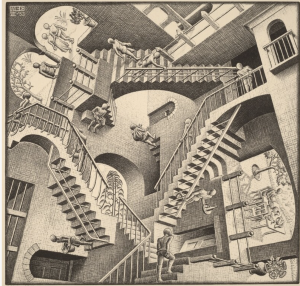
Escher, M.C. (1953) Relativity. [Screenshot]. Retrieved from https://www.nga.gov/artworks/54256-relativity

Lauersen, C. (2021, April 19). A haven in our community: The impact and value of public libraries. The Library Lab. Retrieved from https://christianlauersen.net/2021/04/19/a-haven-in-our-community-the-impact-and-value-of-public-libraries/

Stephens, M. (2019). “Dream. Explore. Experiment.” Wholehearted Librarianship: Finding Hope, Inspiration, and Balance. (p. 63). ALA Editions.


Reflection Post #1: Hyperlinked Communities

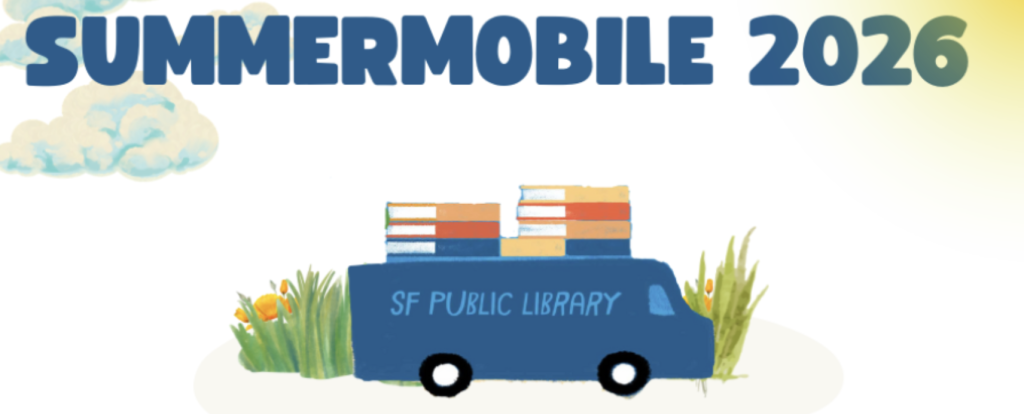
Figure 1. SummerMobile 2026 [Screenshot]. San Francisco Public Library, 2026. https://sfpl.org/locations/bookmobiles-mobile-outreach/summermobile-2026
A part of the hyperlinked communities module that resonated with me was Professor Stephens’ ideal of “reaching people in an holistic way to meet some of their base needs as well as their information needs and the needs that help them understand the world” (2022). There’s so much to unpack here; we’re not just considering what users want, but what they need even if they’re not explicitly requesting it. 

Lauersen’s blog post, The Necessary Nearness, An Ode to Bookmobiles, is a genuine plea asking people to read more for society’s sake. His concerns are valid: there has been a gradual but steady trend that indicates fewer Americans are reading for pleasure in spite of its benefits (Iyengar, 2024). Lauersen cites similar statistics in his native Denmark. A saving grace of the public library is the bookmobile, bringing accessibility to the community as well as a gathering place where there was just a vacant spot (Lauersen, 2025). I don’t know what it is, but people truly get excited when they spot a library bookmobile in the wild, and it’s not just kids. The Summer Stride reading program is in full swing at SFPL right now, and it’s always super popular and engaging (track twenty hours of reading and get an SFPL tote bag! And yes, I love this even though I have more tote bags than I can keep track of). I saw the bookmobile in the park while I was walking; it was a foggy and damp day, and yet there were so many people cheerfully hanging out with the library staff. And this brings me to Lauersen’s other point: it’s not just the bookmobile getting more people to read, but rather our connections to other people who are passionate about reading and discovering great books. Sure, the bookmobile might be there, and they might be handing out free books, too, but actually engaging with librarians and other community members makes a difference. 

Lauersen’s assertion that a strong reading culture is a societal investment ties into West’s article on the digital divide and those individuals who intentionally opt out of online usage, including email. Although this piece was written over ten years ago, it’s still relevant in regards to a large aging population. As scary as it is to face change and uncertainty, shunning the basics of modern technology can be isolating and can make one’s world smaller. We live in a highly digital society, and I cannot envision a future during which we would go backwards. West posits an interesting perspective I had not previously considered: online literacy is a civic responsibility and an “interactive tool” even though many of us use it for passive entertainment (2014). Given how much of our immediate world exists online, being socially active (in any capacity) can be an empowering thing. To be fair, no one is suggesting giving up in-person interactions. There can be a balance; community can have many facets just as reading can open up new worlds, and curiosity and learning can still foster human connections. How one gets there might be via social media or other online forums, but collective experiences can be transformative when discovering people have more in common than they realized.

References

Iyengar, S. (2024, October 03). Federal data on reading for pleasure: All signs show a slump. National Endowment for the Arts Blog. Retrieved from https://www.arts.gov/stories/blog/2024/federal-data-reading-pleasure-all-signs-show-slump

Lauersen, C. (2025, February 05). The necessary nearness – An ode to bookmobiles. The Library Lab. Retrieved from https://christianlauersen.net/2025/02/05/the-necessary-nearness-and-ode-to-bookmobiles/

San Francisco Public Library. (2026) SummerMobile 2026 [Screenshot]. Retrieved from https://sfpl.org/locations/bookmobiles-mobile-outreach/summermobile-2026

Stephens, M. (2022, August 16). The Hyperlinked Library – Hyperlinked Communities. [Lecture]. Retrieved from https://sjsu-ischool.hosted.panopto.com/Panopto/Pages/Viewer.aspx?id=3eacdb23-84fd-49e5-9975-aef3014b3ed2

West, J. (2014). 21st century digital divide. Retrieved from https://www.librarian.net/talks/rlc14/


The Physical Spaces of Libraries and Burning Down the House

        For Project X, an aspect of the hyperlinked model that stood out to me is that libraries can be “transformational for those who use them” (Stephens, n.d.). Although this isn’t specifically part of the structure of the hyperlinked library (it was an observation from the OCLC’s 2018 funding report), it is an outstanding feature that can combat the challenges that libraries face on a consistent basis. Stephens notes the importance of the library as a safe and comfortable space and what it brings to social movements. This also invites us to consider the significance of sociologist Ray Oldenburg’s concept of the “Third Place.” It is essential to have a place away from work and home where one can connect to self-identity and the community (Leferink, 2018). Of course, there are other places that serve the same purpose, such as coffee shops, restaurants, and parks. In her impassioned defense of public libraries, the author Zadie Smith succinctly gets to the heart of the library’s appeal: “well-run libraries are filled with people because what a good library offers cannot be easily found elsewhere: an indoor public space in which you do not have to buy anything in order to stay” (2012).  However, all libraries have opportunities to be more than just that: they can be beautiful community spaces while still meeting users’ needs and defying the traditional views of what a library “should be.”

        Advocates for the library often find themselves defending the right to exist as physical spaces within a highly digital world. In an era during which most of our interactions and transactions occur online, it doesn’t seem too farfetched to question if people really need and want libraries anymore (Denning, 2015). And yet, it is not the technology that stands as a barrier to using the library more, but how people use technology to improve their lives and engage with one another and if those same features can work in the same world as library services. People still want the library, but they want to access it in a way that is convenient and modern. We live in a world in which information  is everywhere and competing for our attention and time. The library is no different, but its engagement with users and non-users alike keep it connected with the community it serves. Some of the best social media posts I’ve seen on Instagram actively encourage people to come out to various library branches and check it out for themselves. 

        There is a library branch that I step in very infrequently, as it is not near my home and I have to cross a treacherous intersection to reach it, but when I do, I never regret it. During the past two springs, my daughter’s weekly softball practices took place at a field just a block away, and to kill time, I would often stop by the Merced Branch on the west side of San Francisco. What an utter joy it is to be in this library; the atmosphere is amazing, and I have no other way to describe it. There are no hushed voices as the librarians and staff engage in spirited conversation at regular pitched volume. Teenagers sit at fold-out tables near the entrance for study groups. I can hear children playing in their area while older patrons sit at the other end of the library, reading magazines and newspapers. The environment imbues a sense of community just by the diversity of the people actively using the space. Keep in mind that this is a compact library, so there is not a lot of room to work with. But small details make a difference. Trees and foliage line the perimeter of the building, and windows fully fold out on the rare warm days, so even gazing out the window while inside makes one’s experience contemplative and peaceful. A small courtyard also abuts the side of the building for studying or reading outside. While I cannot profess to know all the ins and outs of running a library branch, seeing and experiencing a vastly different atmosphere in contrast to a handful of other sites within the same side of the city has me convinced that the branch librarian most likely sets the tone and creates the culture for this community space.

        Stephens heartily extols the rare “loud spaces in libraries that might be full of collaboration and conversation” (p. 6, 2019). Radical trust in humanity, making mistakes, and the simple act of trying something new can be the keys to changing the format of traditional libraries. Libraries hold special significance to every patron, but for a myriad of different reasons. How can the library be everything to everyone at the same time? More importantly, how can every user “feel included in a community, backed by a support network that addresses their unique needs” without alienating others? (Mathews et al.). Keeping in constant contact with communities matter; people and their needs matter. Kenney notes, “it’s difficult to genuinely meet people where they are,” and although libraries generally try to anticipate patrons’ needs in advance, listening to and conversing with patrons will pave the way for a better library in the future (2014).

I’ve included an Instagram link below for a user’s quick tour of SFPL’s Merced Branch Library. This person decided to visit each of the city’s neighborhood branches. Enjoy!

https://www.instagram.com/reel/DSNnJr6D2qZ/?utm_source=ig_web_copy_link&igsh=MzRlODBiNWFlZA==

References

Denning, S. (2015, April 28). Do we need libraries? Forbes. https://www.forbes.com/sites/stevedenning/2015/04/28/do-we-need-libraries/?utm_campaign=ForbesTech&utm_source=TWITTER&utm_medium=social&utm_channel=Technology&linkId=13831539

Kenney, B. (2014, January 27). The user is (still) not broken. Publishers Weekly. https://www.publishersweekly.com/pw/by-topic/industry-news/libraries/article/60780-the-user-is-still-not-broken.html

Leferink, S. (2018, January 24). To keep people happy…keep some books. Next. https://blog.oclc.org/next/to-keep-people-happy-keep-some-books/

Mathews, B. et al. (2018, May 7). Empowerment, experimentation, engagement: Embracing partnership models in libraries. Educause Review. https://er.educause.edu/articles/2018/5/empowerment-experimentation-engagement-embracing-partnership-models-in-libraries

Smith, Z. (2012, June 2). The North West London blues. The New York Review of Books. https://www.nybooks.com/online/2012/06/02/north-west-london-blues/

Stephens, M. (n.d.). “Historic” Hyperlinked Library Model. [Lecture]. https://sjsu-ischool.hosted.panopto.com/Panopto/Pages/Viewer.aspx?id=a0569381-4d66-4e0a-a7fa-aab3010a8f3e

Stephens, M. (2019). Chapter 1: Past is prologue. Wholehearted Librarianship: Finding Hope, Inspiration, and Balance. ALA Editions.

Tayler [@taylesofthecity]. (2025, December 13). Visiting every SFPL branch – Merced. [Video] Instagram. https://www.instagram.com/reel/DSNnJr6D2qZ/?utm_source=ig_web_copy_link&igsh=MzRlODBiNWFlZA==


Hi there!

Hello everyone!

My name is Yolanda, but I prefer to go by Yoli. This is my fifth semester in the MLIS program, and while my journey started as a tentative step into the unknown, I’m so glad to be where I am now.

The decision to pursue an MLIS degree was probably one of the easiest to make, given my love for reading and libraries. As an undergrad, I was an English major, so I tend to gravitate towards good books/fiction, writing, and the arts & humanities. When I decided to return to school to pursue an advanced degree, I also made the conscious choice that I would like to be in a field and a career where I can (hopefully) make a difference and a positive impact. Ultimately, I’d love to work in an environment that will always encourage curiosity and learning. My career pathway isn’t very clear yet, but I’m leaning towards public or academic librarianship.

I’m taking 287 because this course was highly recommended by some of my classmates, and I’m always looking for a class that encourages reflection and creative thinking regarding the future of libraries and information access. I love how a library’s significance can mean something different to every type of patron; maintaining this special relevance takes ingenuity and empathy.

I live in San Francisco with my husband and daughter. In my spare time I enjoy listening to music, going for long walks, watching horror movies, crocheting, watching baseball, reading too many books, baking, and enjoying anything Muppets-related. 

I’m looking forward to the summer semester and being a part of this community.