I often get asked if I’ve faced any book bans or censorship during my time as a school librarian. When I consider the numerous books featuring LGBTQ, people of color, and difficult topics that have faced challenges across our nation, my most grateful answer is no. But if censorship is an outside force restricting individuals from accessing or enjoying a work of literature, then there are countless acts of “soft censorship” that I have witnessed in our library. In October 2026, I was asked to present on a panel at our local state university for Banned Books Week. My presentation, Lifelong Readers: Student Choice in the Elementary School Library, examined how when educators in communities already facing marginalization then further limit their students’ access to books, they compound barriers to learning, diminish their students’ freedom to read, and remove opportunities to connect with their caregivers in their home language. Adapted here to remove identifying information about my school and community, my slideshow is annotated with my reflections as they relate to our module on hyperlinked environments.
Book Deserts and a High-Need Community (Slides 2-5)
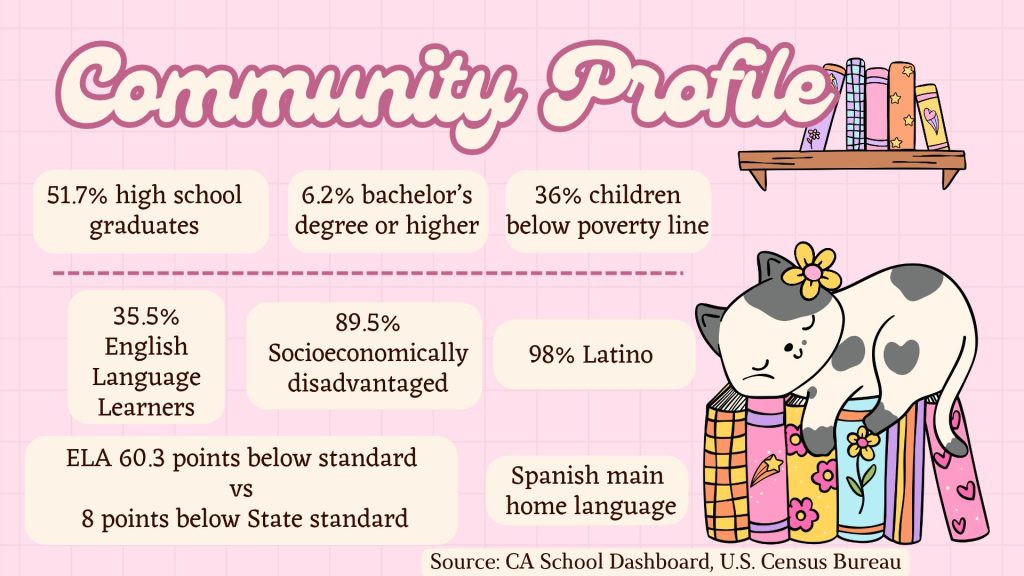
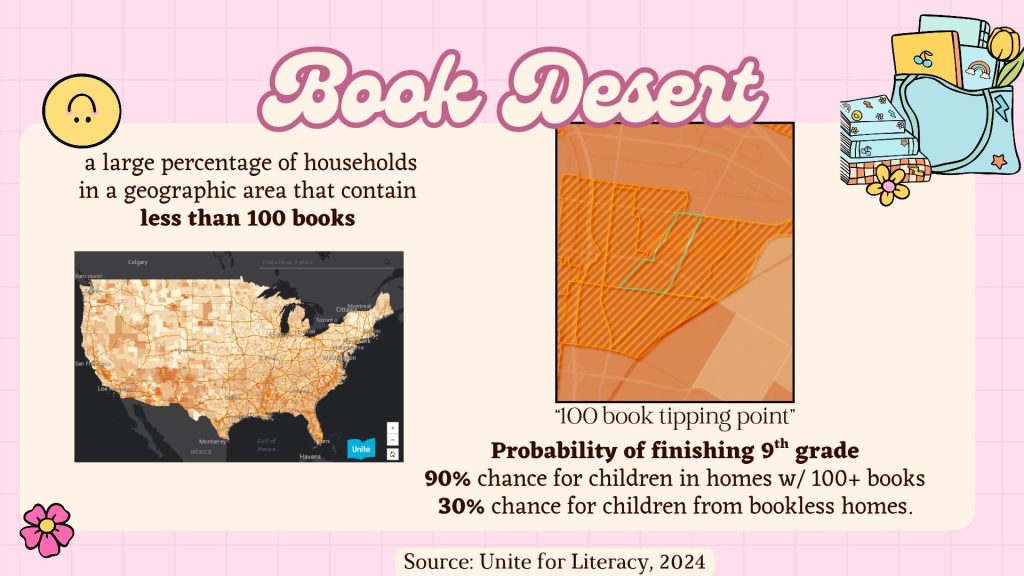
I work at a Title 1 school, meaning that because our students face extreme socio-economic barriers, our site receives supplemental funding that supports academic and socio-emotional learning. Despite this, our students continue to struggle and long-term social mobility in the community is slow (slide 2). Unite for Literacy’s Book Desert map places all census tracts of our town in the lowest ranking of likelihood of having 100 books per household, a number which research has identified as crucial to increasing the probability of a child graduating from 9th grade (2024) (slide 3).
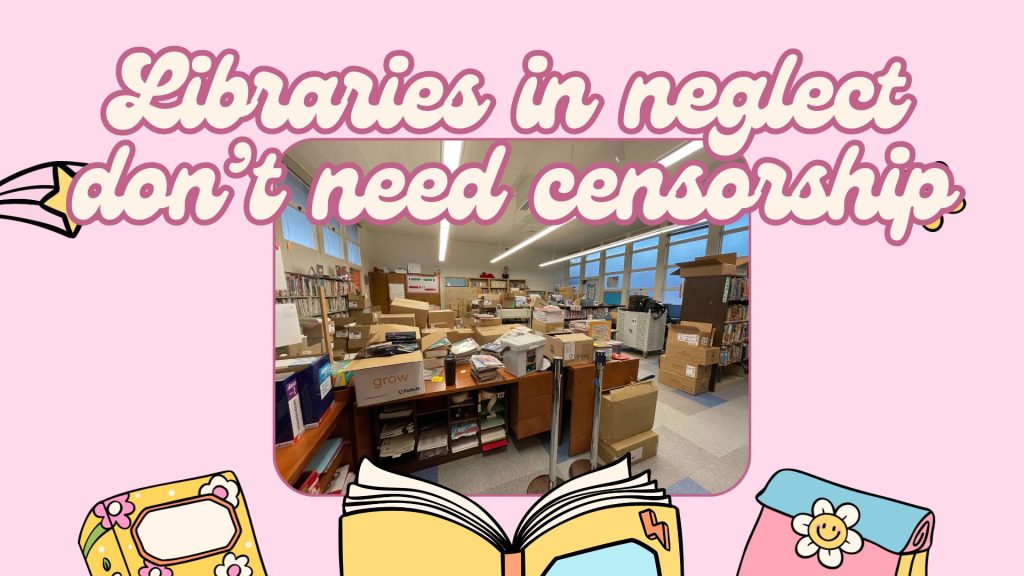
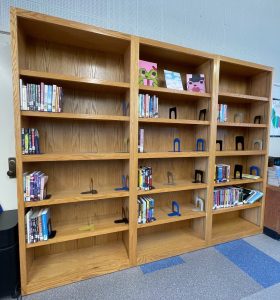
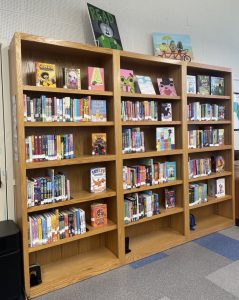
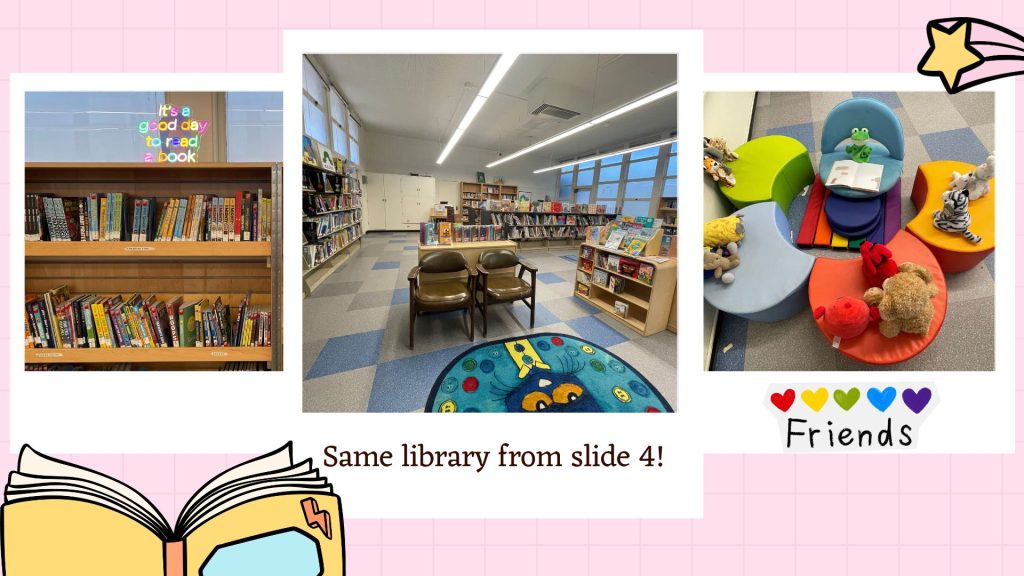
When I began my position as library media assistant in December 2023, the library had been used as storage, the mean publication year for books was 1993, and the shelves were stuffed with tens of thousands of outdated, unappealing and culturally inadequate books (slides 4-5). Students still had access to the library and reported feeling unsafe, uninterested, and unwelcome.
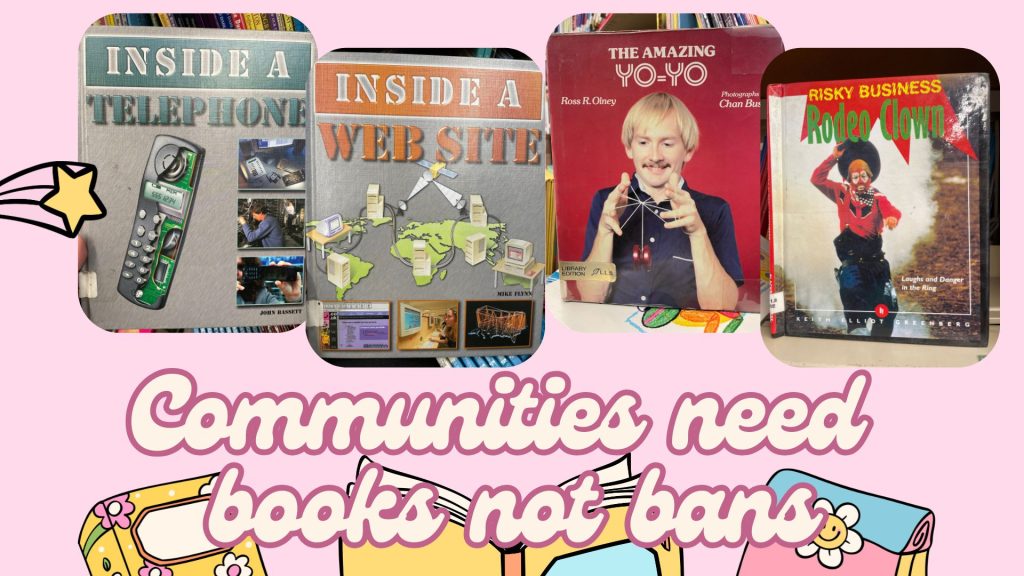
Through relentless weeding, grant writing, and implementation of Title 1 funds, the collection now has an average age of 2014 and a more manageable ratio of books per student that support their interests, cultural needs, and book joy.
Soft Censorship: Graphic Novels, Libros en Español, and Accelerated Reader Programs (Slides 6-10)
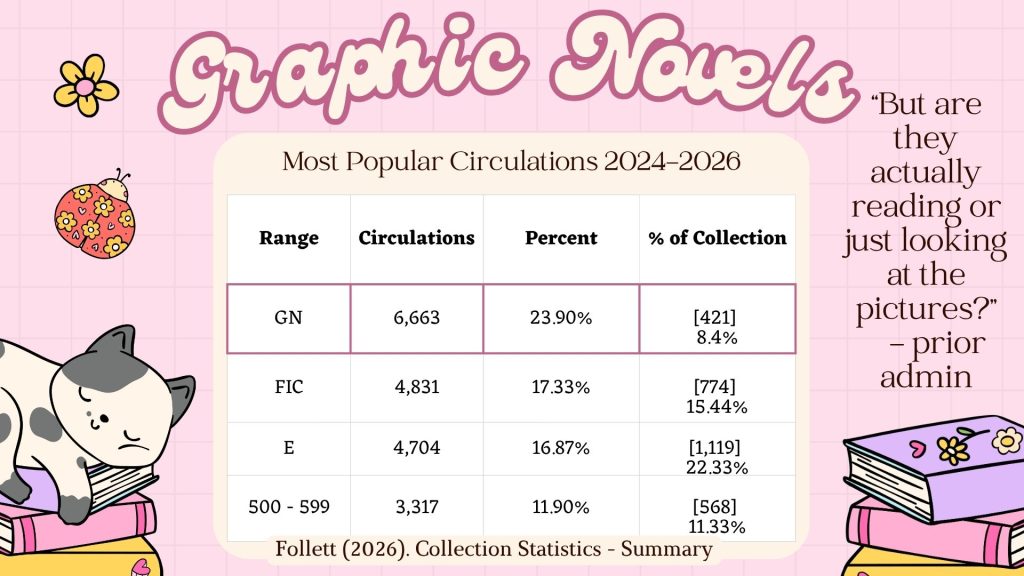
As the collection became updated, students gravitated toward accessible reads such as graphic novels, media-tie-ins, picture books, and the sciences (Slide 7).
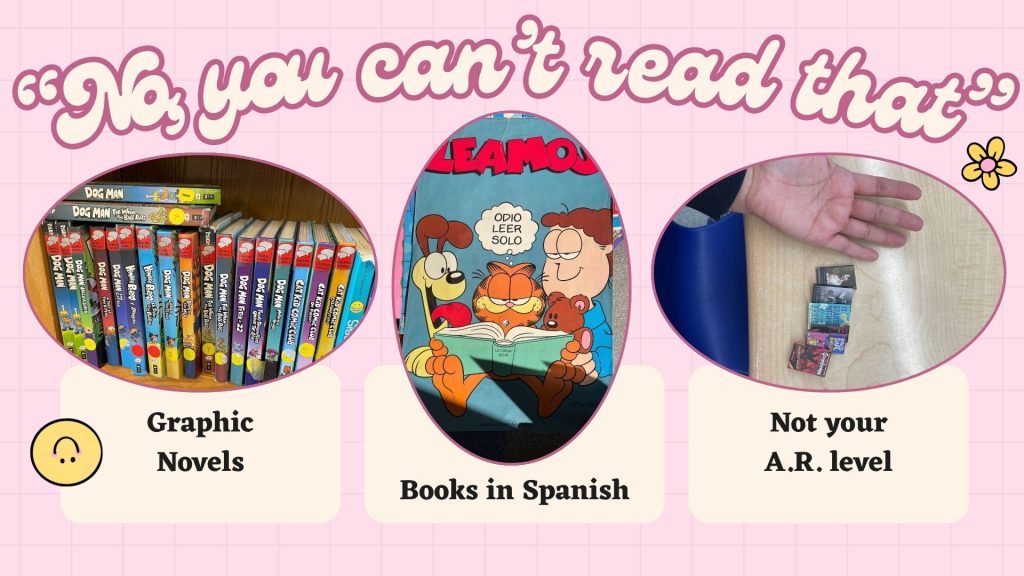
But as desirable options expanded, teachers began to limit student choice. One book of high contention is Dog Man, a graphic novel series with a crime-fighting half-dog/cop and his buddies. Rife with “potty humor,” intentional spelling and grammatical errors, and child-like illustrations, these books are met with skepticism and aversion by admin and teachers.
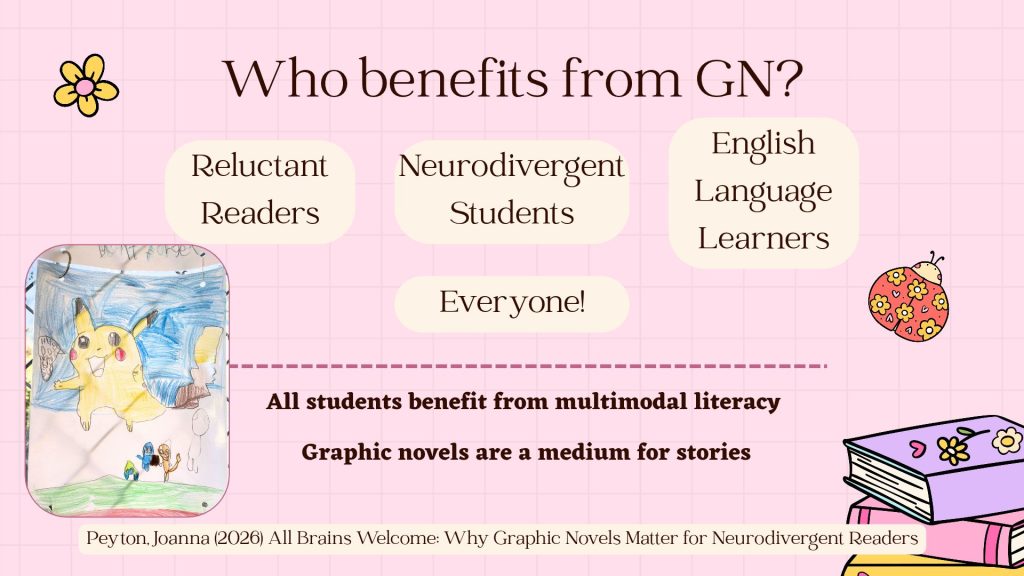
When the student who hated reading began to check out nothing but Dog Man, his teacher told him to stop (slide 8). When the ELL student finally picked up her first English-only book and it was Dog Man, her teacher told her to put it back. Sometimes students who checked these books out were forced by their teachers to check them back in immediately. Defeated, they would exchange it for a random book then return it a week later unread. Limiting student choice diminishes reading for pleasure and causes students to associate the library with restriction and shame.
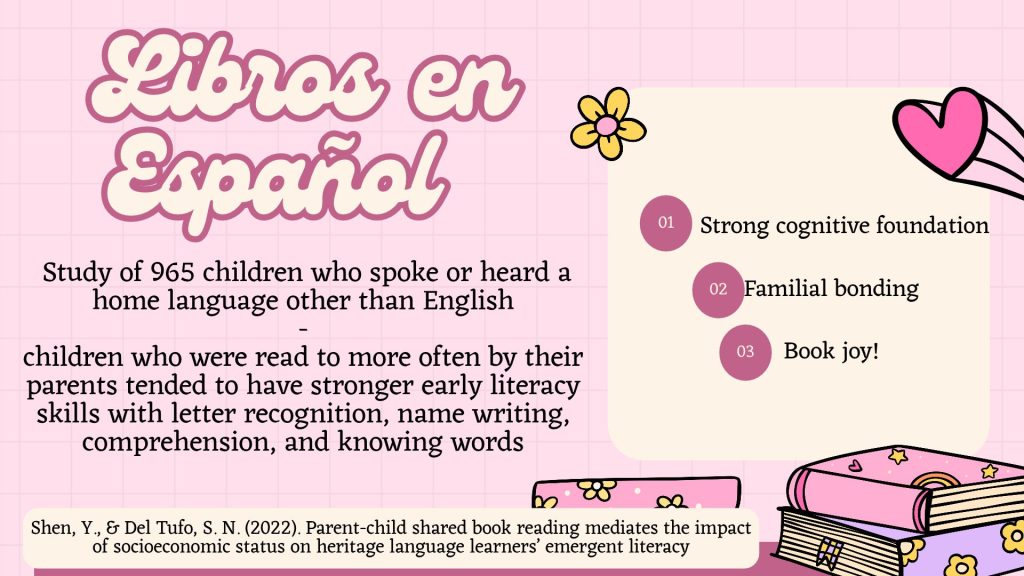
With a 98% Latino and 36% English Language Learner student population, books in Spanish are a natural choice for our patrons, but these have also been restricted by some teachers who assert, “We read in English, not in Spanish.” When I ask students who they read with at home, often they will share that they read with their Spanish-speaking only grandma, or that their mom doesn’t know how to read or write, but she would like to learn so they practice in Spanish together. Students will return these books excited about how the culturally relevant story inspired their family to talk about their own history or helped them bond over certain elements and themes (slide 9). But teachers do not have time to hear these stories; they have i-Ready reading scores to worry about.
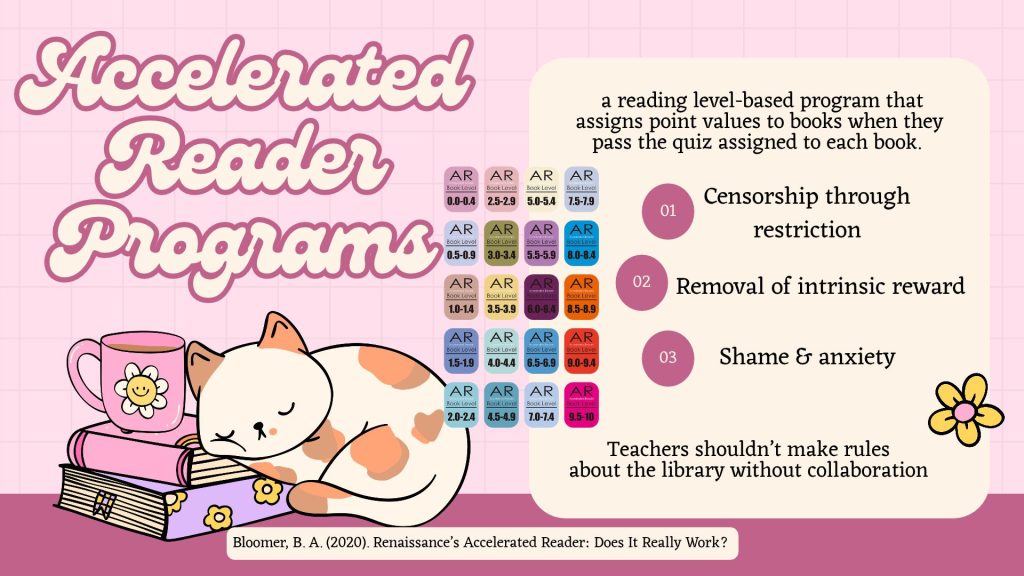
Most crushing to student choice has been the implementation of the Accelerated Reader program by some teachers at my site (slide 10). Students who previously would check out books based on their interests versus reading level experienced the same level of restriction. The student who explored the vast world through our history and geography section was forced to check out beginner reader books with three words per page instead. Students began to brag about their high A.R. levels. On one occasion, a teacher ranked her students out loud by their levels, and shamed those with the lowest in front of the whole library.
Building Transparency and Trust with Educators (slides 11-13)
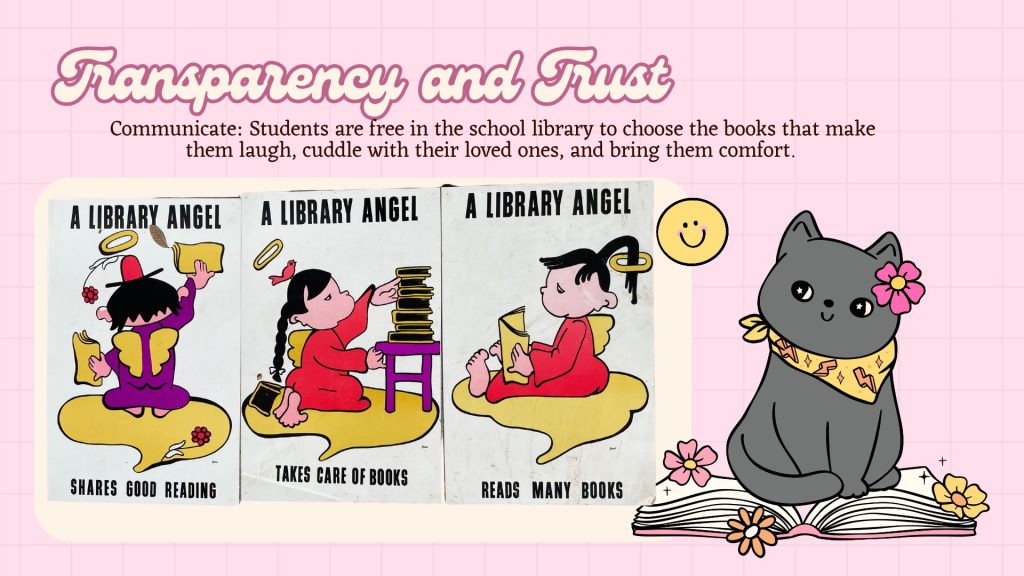
Admittedly, I stayed silent through these teacher-student interactions. But the aforementioned public shaming was my last straw. Teachers do not have the same ALA-ethics training that librarians do, nor do they have the authority to make rules about the library without collaboration. As I moved further along in my MLIS program, I began to trust my own skills as a library leader. In “Check Your Ego at the Door,” Casey and Stephens (2008), warn that timidity is the flipside of ego: “We see this when librarians must argue for libraries-we’ve become so good at dealing with limited resources, setbacks, and a lack of public recognition that we sometimes stifle our ability to stand up and shout about everything that makes us great.” Finally, I opened the lines of communication with staff: students are free in the school library to choose the books that make them laugh, cuddle with their loved ones, and bring them comfort.
The conversations have been difficult and met with some pushback, but ultimately, libraries raise lifelong readers. If we restrict students’ freedom of choice in the library, then we run the risk of severing that connection —and any librarian knows that restriction is a slippery slope, with book bans and censorship waiting on the other side.
References:
ALA. (2026). Banned & Challenged Books. ALA. https://www.ala.org/advocacy/bbooks
Casey, M., & Stephens, M. (2008). Check your ego at the door. Tame the Web. https://tametheweb.com/2008/07/01/check-your-ego-at-the-door/
Unite for Literacy. (2024a). 100 tips the scale. Unite Books. https://www.unitebooks.com/book-deserts/100-tips-the-scale
Unite for Literacy. (2024b). Are you living in a book desert? Unite Books. https://www.unitebooks.com/book-deserts/are-you-living-in-a-book-desert