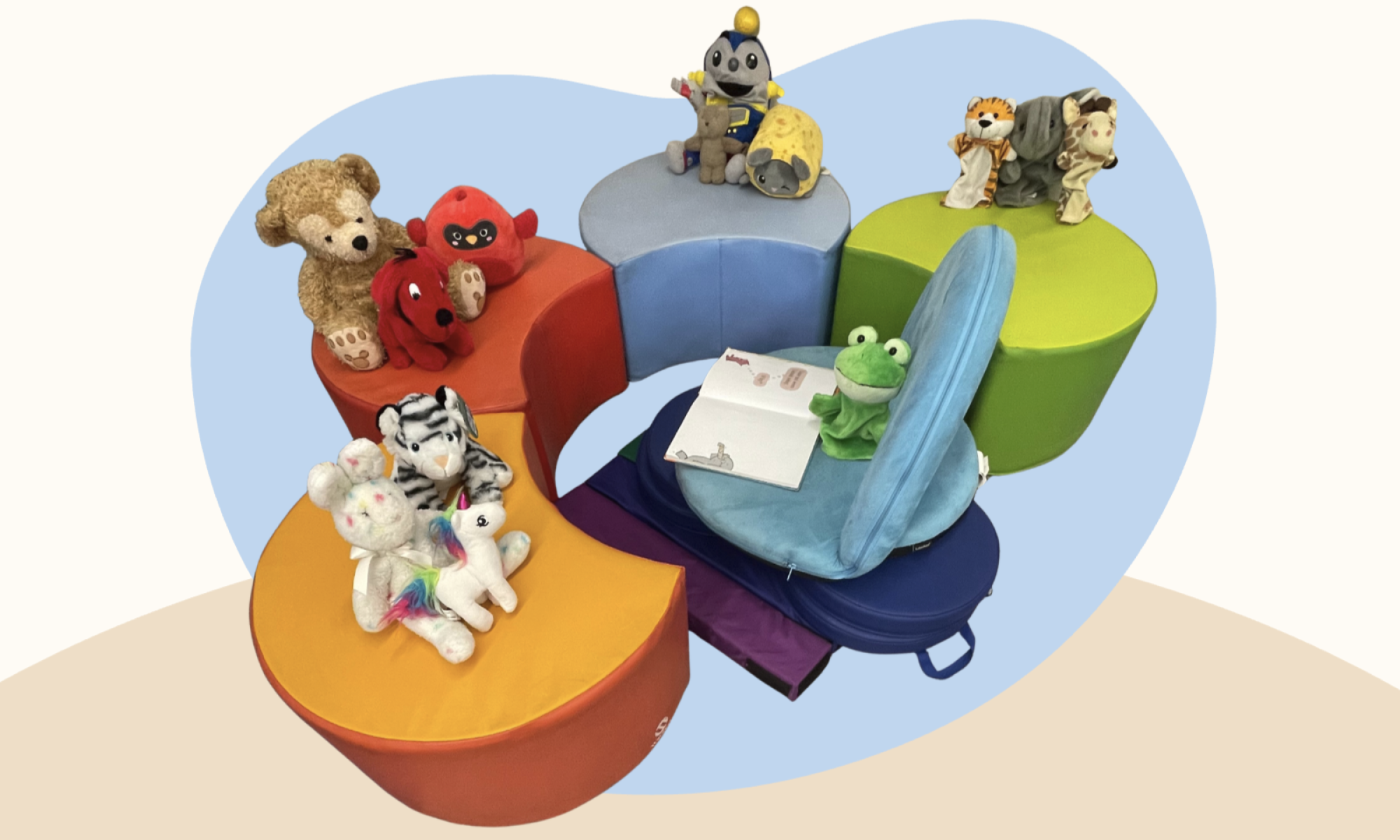
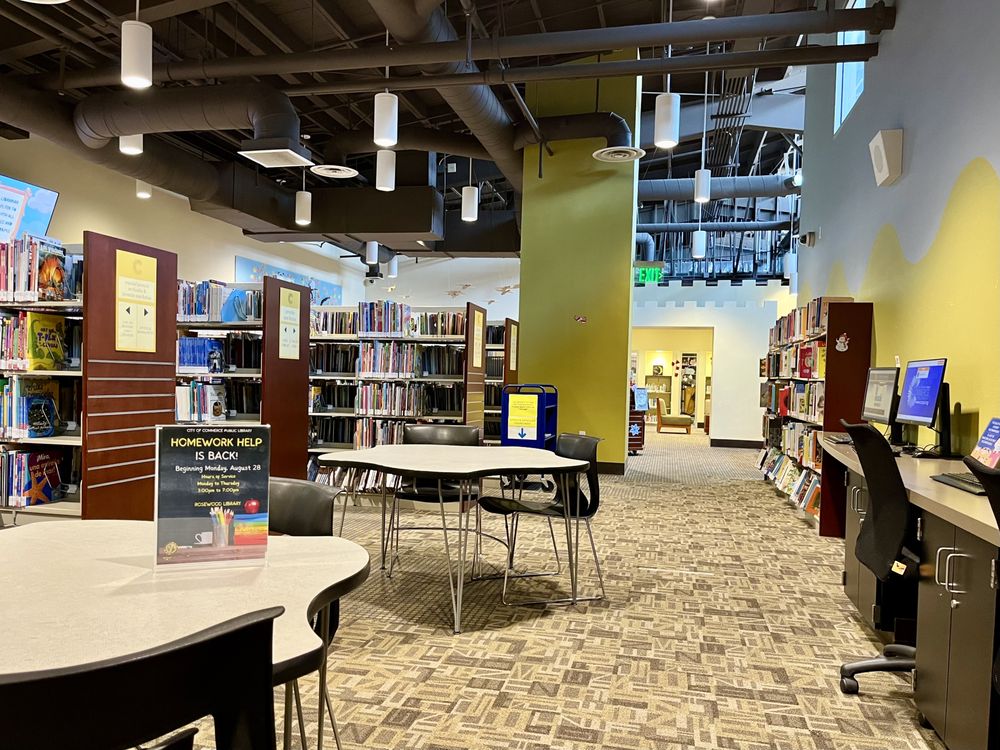
Rosewood Neighborhood Library, City of Commerce, CA. Image Credit: City of Commerce, 2023
Teens in East L.A. used to say when something smelled bad, “ugh, it smells like the City of Commerce.” Hardly an exaggeration, in the late ’90s, the industrial 6.5 square mile city just south of us emitted toxic levels of pollution from its manufacturing smokestacks, railyards, and proximity to major freeways. It hardly inspired anything close to the Danish concept of “hygge,” a word which roughly encapsulates a concept of cozy comfort and sanctuary, often shared in community (Stephens, 2019, p. 63). The closest thing we got to hygge was sneaking into the Pacific Commerce theater and hiding between the soda-soaked seats from security. And yet, here I am decades later singing the praises of the city’s success in gathering community through its welcoming library services and intimate programming like “Unplug and Play: Family Game Day,” “Calm Oasis: Relax, Recharge @ Your Library,” or “Teen Kindness Collective.” Boasting not just one, but four public libraries for a town population of just 12,000, the City of Commerce has utilized revenue from industrial and retail tax to provide refuge for its residents amongst the noise and smog.
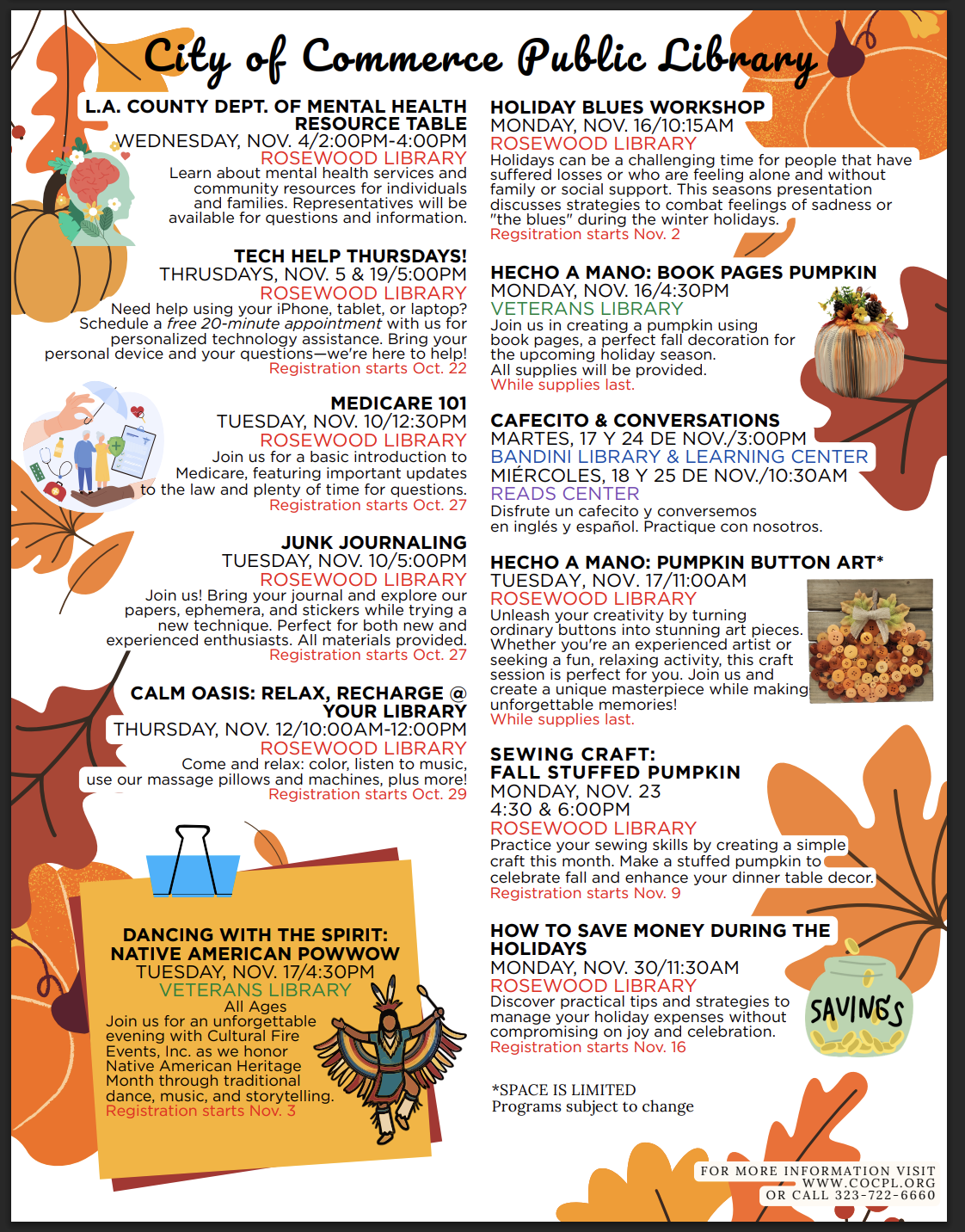
November 2026 Patron Calendar, pg. 2. Image Credit: City of Commerce, 2026
Klinenberg (2018) defines places of social infrastructure such as public libraries as “a crucial part of the safety net, the educational system, and the local democracy as well;” in these spaces, people can gather and repair the “precarious” social order they may face (Gaetani, 2018). What Commerce’s programming offers is not just sanctuary, but a chance for its community to thrive. Many of the staff and administration are members of REFORMA, the National Association to Promote Library & Information Services to Latinos and the Spanish-Speaking, a pivotal benefit to providing targeted, culturally inclusive programming to a city that is 97% Latino. There are bilingual and Spanish-only programs like book and conversation clubs, computer classes, storytimes, and family resources and support. Social services are a mainstay of programming with topics like mental health, insurance, holiday blues, and money management. Outside of the major city or county library systems, Commerce sees cultivating the well-being of its community as a fundamental, specialized, and honored act.
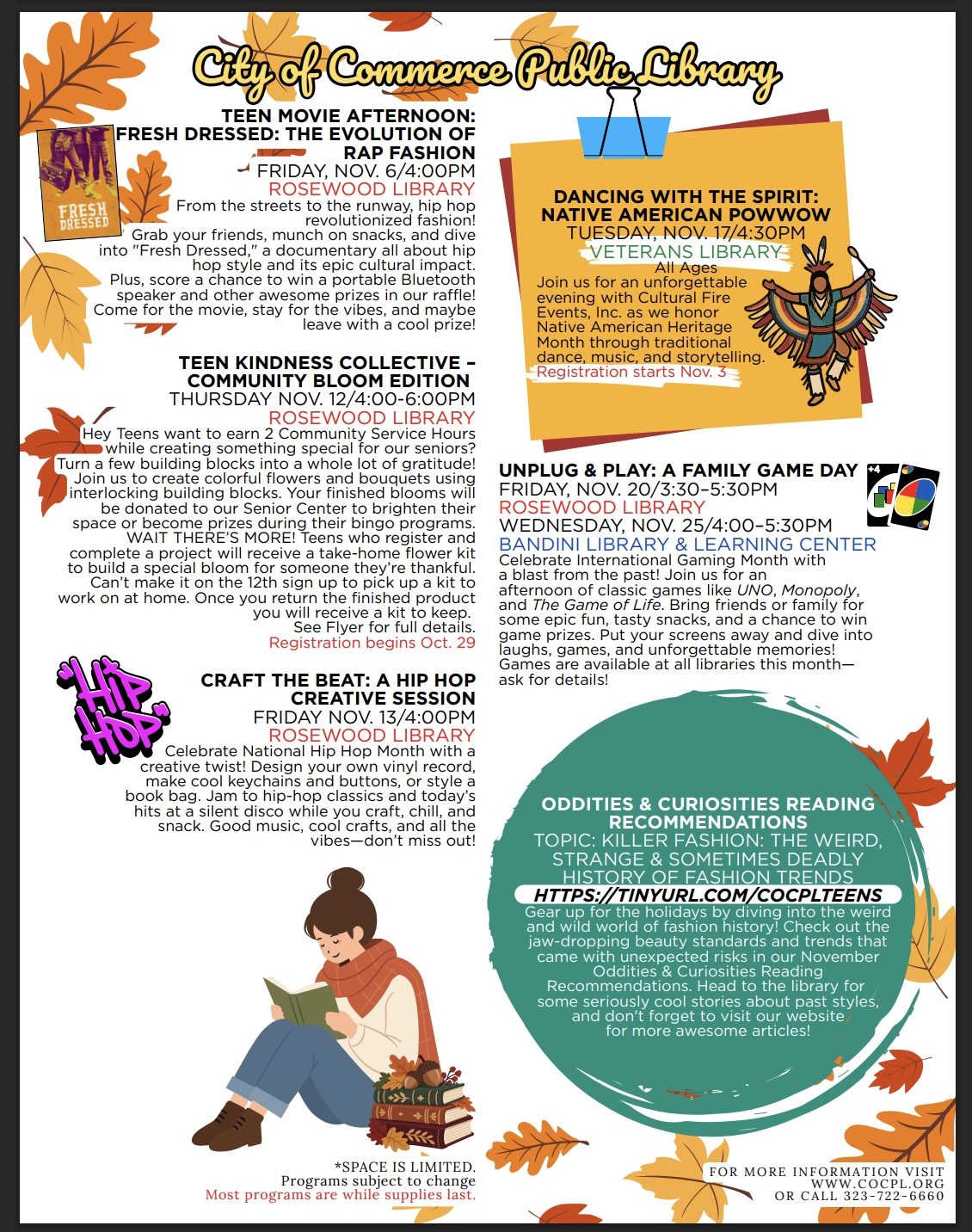
November 2026 Patron Calendar, pg. 4. Image Credit: City of Commerce, 2026
I don’t know if East L.A. teens are still sneaking into movie theaters, but with all the free social events, films, and dedicated teen-friendly safe spaces the City of Commerce libraries offer, I at least know that they now have free options where they can bond, practice kindness, and learn new skills.
References:
City of Commerce. (2026, Nov). November 2026 patron calendar. City of Commerce Public Library. https://www.cityofcommercepubliclibrary.org/home/showpublisheddocument/5748/639289570704900000
Gaetani, M. (2018, Nov 11). Q&A with Eric Klinenberg. Center for Advanced Study in the Behavioral Sciences, Stanford University. https://casbs.stanford.edu/news/qa-eric-klinenberg
Stephens, M. (2019). Whole-Hearted Librarianship. ALA Editions
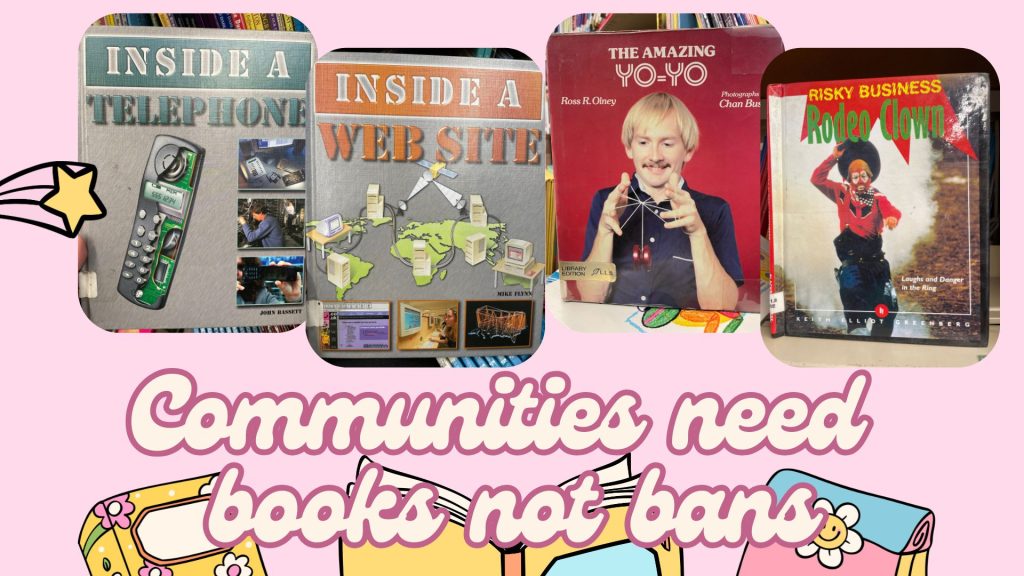
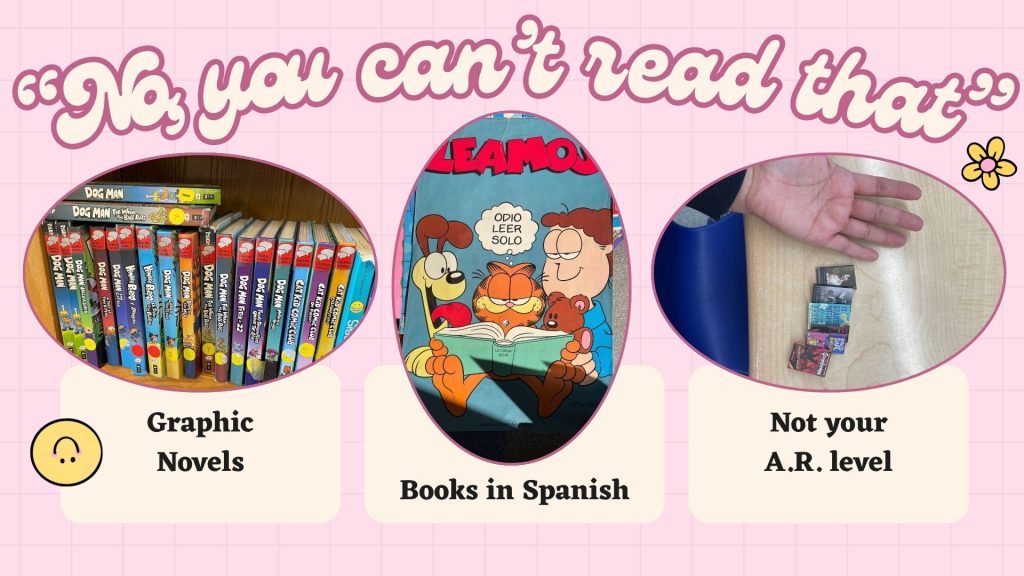
I often get asked if I’ve faced any book bans or censorship during my time as a school librarian. When I consider the numerous books featuring LGBTQ, people of color, and difficult topics that have faced challenges across our nation, my most grateful answer is no. But if censorship is an outside force restricting individuals from accessing or enjoying a work of literature, then there are countless acts of “soft censorship” that I have witnessed in our library. In October 2026, I was asked to present on a panel at our local state university for Banned Books Week. My presentation, Lifelong Readers: Student Choice in the Elementary School Library, examined how when educators in communities already facing marginalization then further limit their students’ access to books, they compound barriers to learning, diminish their students’ freedom to read, and remove opportunities to connect with their caregivers in their home language. Adapted here to remove identifying information about my school and community, my slideshow is annotated with my reflections as they relate to our module on hyperlinked environments.
Book Deserts and a High-Need Community (Slides 2-5)
Slide 2Slide 3
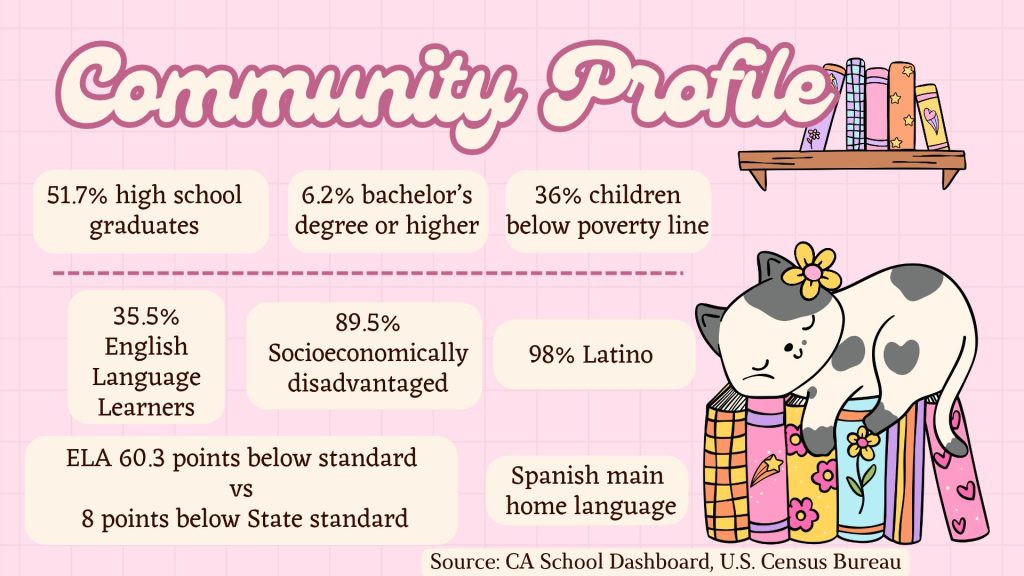
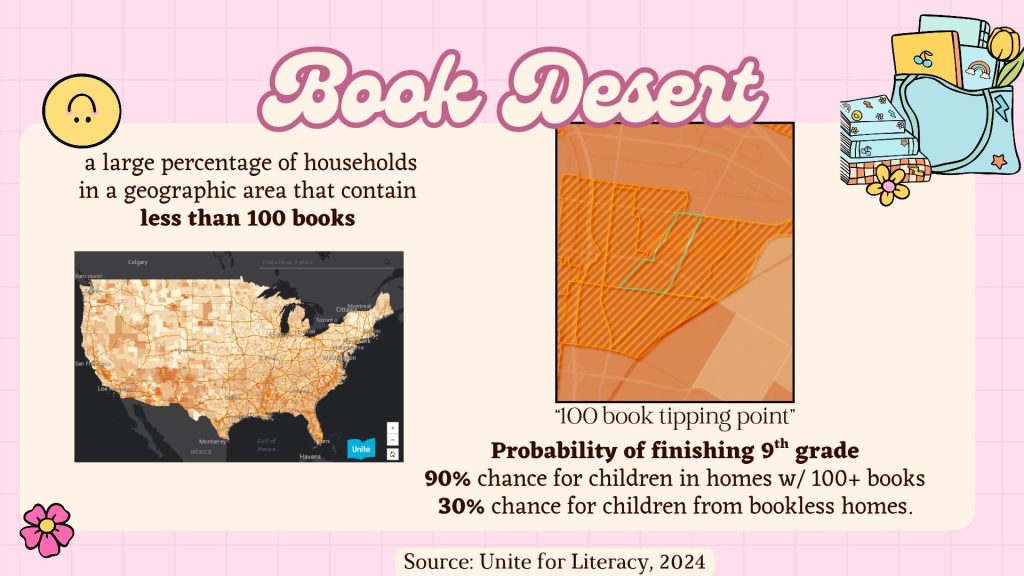
I work at a Title 1 school, meaning that because our students face extreme socio-economic barriers, our site receives supplemental funding that supports academic and socio-emotional learning. Despite this, our students continue to struggle and long-term social mobility in the community is slow (slide 2). Unite for Literacy’s Book Desert map places all census tracts of our town in the lowest ranking of likelihood of having 100 books per household, a number which research has identified as crucial to increasing the probability of a child graduating from 9th grade (2024) (slide 3).
Slide 4
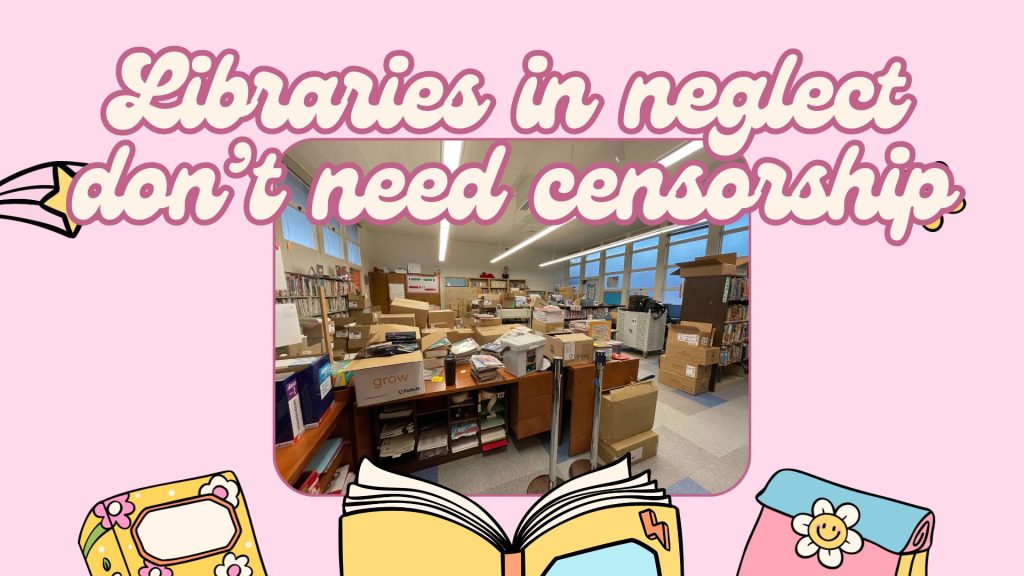
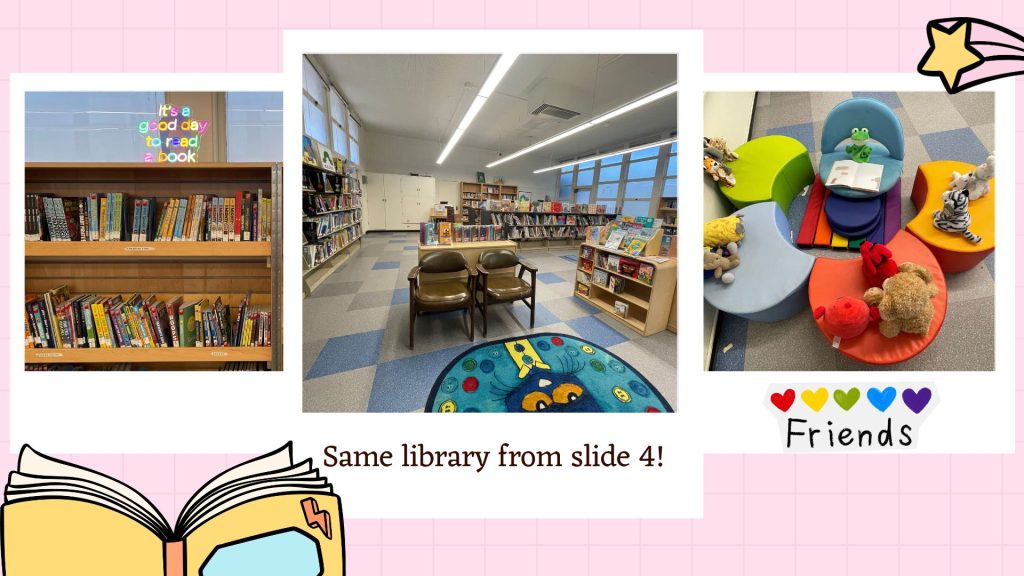
When I began my position as library media assistant in December 2023, the library had been used as storage, the mean publication year for books was 1993, and the shelves were stuffed with tens of thousands of outdated, unappealing and culturally inadequate books (slides 4-5). Students still had access to the library and reported feeling unsafe, uninterested, and unwelcome.
Slide 5
Through relentless weeding, grant writing, and implementation of Title 1 funds, the collection now has an average age of 2014 and a more manageable ratio of books per student that support their interests, cultural needs, and book joy.
Soft Censorship: Graphic Novels, Libros en Español, and Accelerated Reader Programs (Slides 6-10)
Slide 6
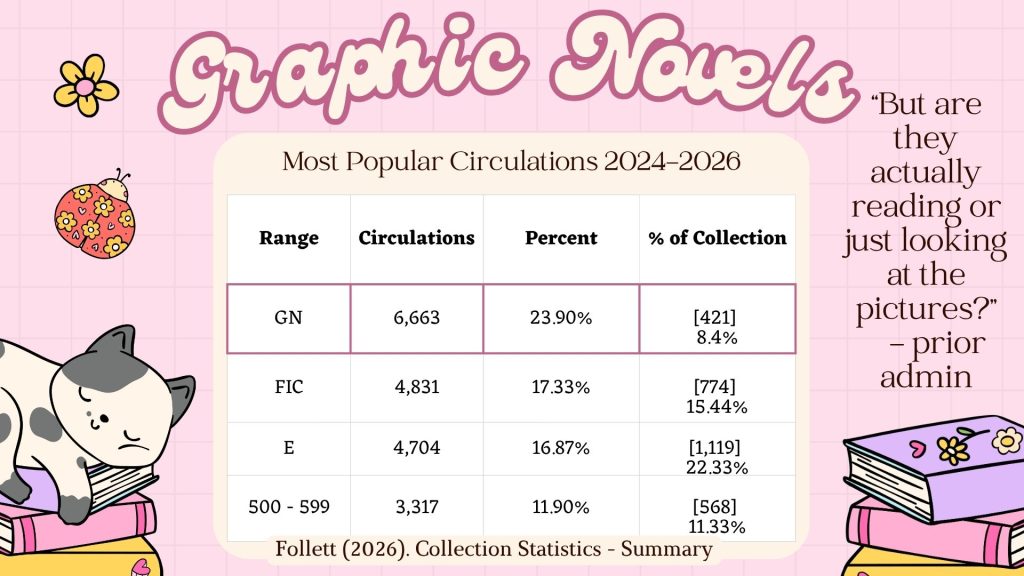
As the collection became updated, students gravitated toward accessible reads such as graphic novels, media-tie-ins, picture books, and the sciences (Slide 7).
Slide 7
But as desirable options expanded, teachers began to limit student choice. One book of high contention is Dog Man, a graphic novel series with a crime-fighting half-dog/cop and his buddies. Rife with “potty humor,” intentional spelling and grammatical errors, and child-like illustrations, these books are met with skepticism and aversion by admin and teachers.
Slide 8
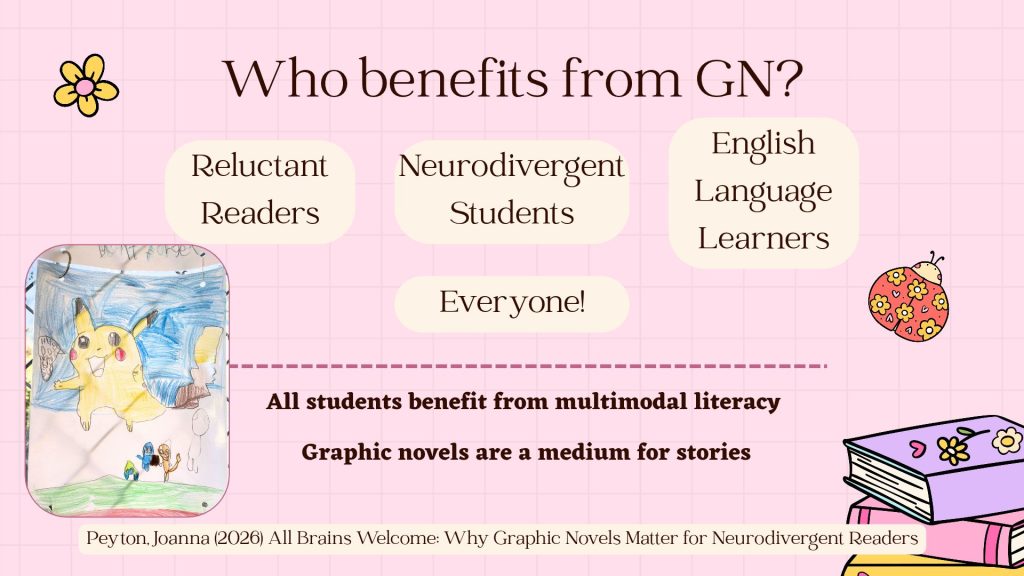
When the student who hated reading began to check out nothing but Dog Man, his teacher told him to stop (slide 8). When the ELL student finally picked up her first English-only book and it was Dog Man, her teacher told her to put it back. Sometimes students who checked these books out were forced by their teachers to check them back in immediately. Defeated, they would exchange it for a random book then return it a week later unread. Limiting student choice diminishes reading for pleasure and causes students to associate the library with restriction and shame.
Slide 9
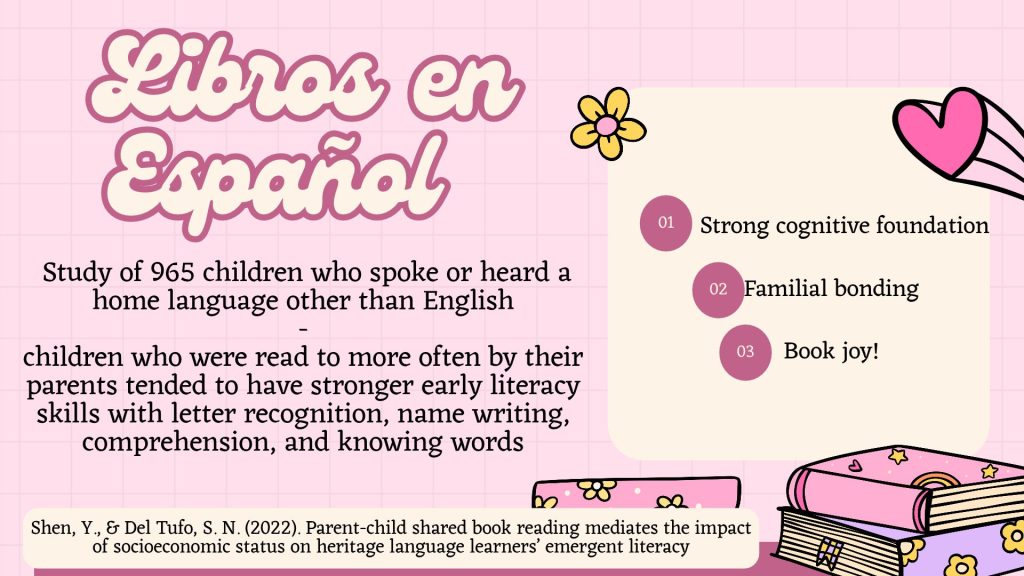
With a 98% Latino and 36% English Language Learner student population, books in Spanish are a natural choice for our patrons, but these have also been restricted by some teachers who assert, “We read in English, not in Spanish.” When I ask students who they read with at home, often they will share that they read with their Spanish-speaking only grandma, or that their mom doesn’t know how to read or write, but she would like to learn so they practice in Spanish together. Students will return these books excited about how the culturally relevant story inspired their family to talk about their own history or helped them bond over certain elements and themes (slide 9). But teachers do not have time to hear these stories; they have i-Ready reading scores to worry about.
Slide 10
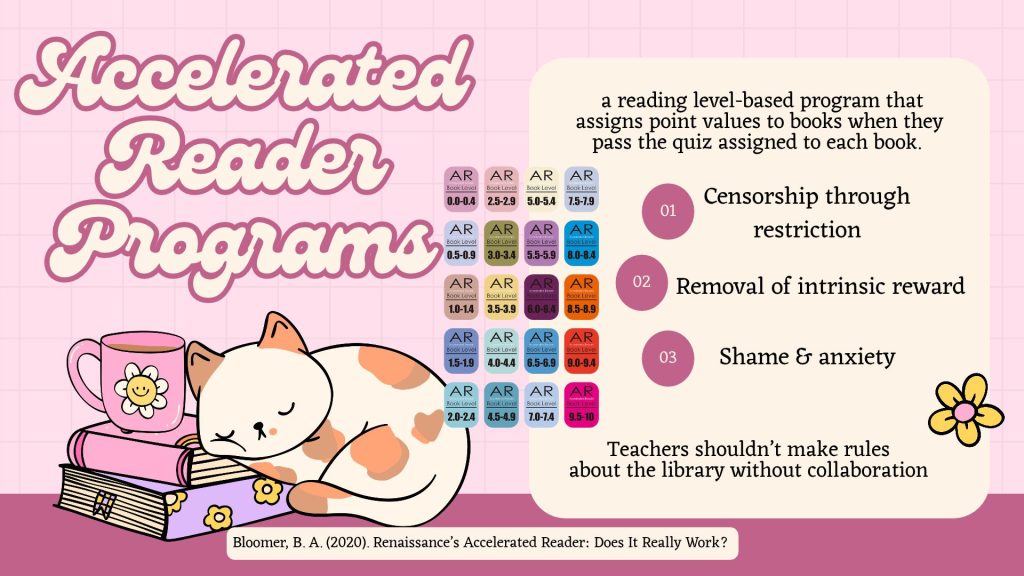
Most crushing to student choice has been the implementation of the Accelerated Reader program by some teachers at my site (slide 10). Students who previously would check out books based on their interests versus reading level experienced the same level of restriction. The student who explored the vast world through our history and geography section was forced to check out beginner reader books with three words per page instead. Students began to brag about their high A.R. levels. On one occasion, a teacher ranked her students out loud by their levels, and shamed those with the lowest in front of the whole library.
Building Transparency and Trust with Educators (slides 11-13)
Slide 11
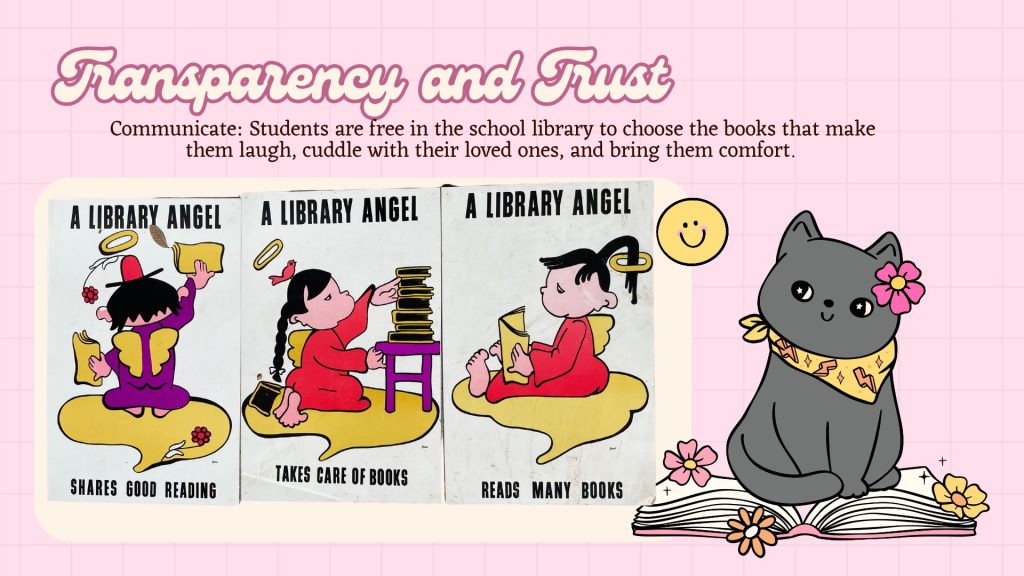
Admittedly, I stayed silent through these teacher-student interactions. But the aforementioned public shaming was my last straw. Teachers do not have the same ALA-ethics training that librarians do, nor do they have the authority to make rules about the library without collaboration. As I moved further along in my MLIS program, I began to trust my own skills as a library leader. In “Check Your Ego at the Door,” Casey and Stephens (2008), warn that timidity is the flipside of ego: “We see this when librarians must argue for libraries-we’ve become so good at dealing with limited resources, setbacks, and a lack of public recognition that we sometimes stifle our ability to stand up and shout about everything that makes us great.” Finally, I opened the lines of communication with staff: students are free in the school library to choose the books that make them laugh, cuddle with their loved ones, and bring them comfort.
Slide 12
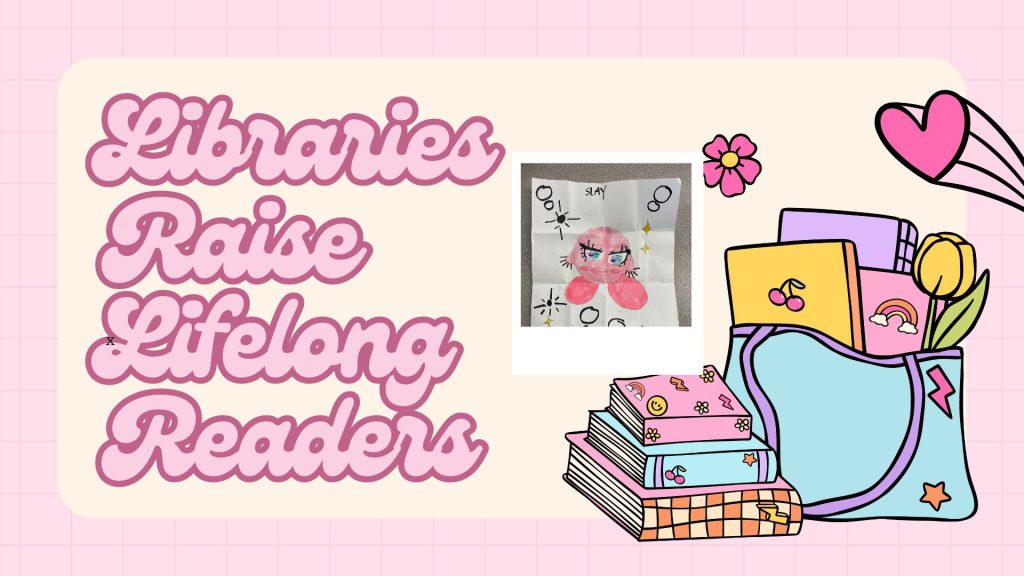
The conversations have been difficult and met with some pushback, but ultimately, libraries raise lifelong readers. If we restrict students’ freedom of choice in the library, then we run the risk of severing that connection —and any librarian knows that restriction is a slippery slope, with book bans and censorship waiting on the other side.
Slide 13
References:
ALA. (2026). Banned & Challenged Books. ALA. https://www.ala.org/advocacy/bbooks
Casey, M., & Stephens, M. (2008). Check your ego at the door. Tame the Web. https://tametheweb.com/2008/07/01/check-your-ego-at-the-door/
Unite for Literacy. (2024a). 100 tips the scale. Unite Books. https://www.unitebooks.com/book-deserts/100-tips-the-scale
Unite for Literacy. (2024b). Are you living in a book desert? Unite Books. https://www.unitebooks.com/book-deserts/are-you-living-in-a-book-desert
As a child I’d race across Beverly Boulevard to get to the Montebello Library with my older siblings, check out several VHS and books from the reference staff guy with the unforgettable combover, then play at Henry Acuna Park across the street for hours. Nikki Giovanni’s poem, “My First Memory (of Librarians)” captures the awe that anyone who has ever gone to the library as a kid felt: “All those books—another world—just waiting / At my fingertips.” Of course I grew up being a reader, but the library was always more than books to me; it was a safe and free space where I connected memories of literacy and learning with joy, fun, and kindness.
Like most millennials, I grew apart from libraries in my adolescence and young adulthood. But ten years ago, I became a mother in a town 400 miles away from home, without my siblings, without my community, and without any money. When the newborn days became long and lonely, I went to the first safe and free space I could think of. Carrying my daughter in a sling, we would make our own trek to the Berkeley Public Library West Branch. Nestled next to a 99cent store parking lot and abandoned storefronts, the library became a place of hope for me once again – solace far from my home of Southern California, where I could, for hours every day, connect with other moms and let my daughter roam freely within the children’s section.
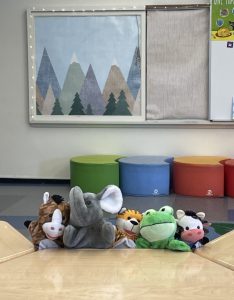
Children during their lunch break put a puppet show on in our library
Today as an elementary school librarian, I welcome the lonely kids into my library all the time. There’s the kid obsessed with planes and natural disasters, whose military mom is away for months at a time. He gifts me his leftover food from the cafeteria and makes everything from turtle puppets to stealth bombers out of whatever crafting supplies I lay out for him. And then there’s the girl who came to return a lost book during lunch one day and has been visiting me ever since. She helps me mark books for discard, shelve the BabySitters Club graphic novels, and drop off book holds. She updates me on how her mom is doing on dialysis. She says she just likes to be able to talk and help, and I reply, same.
In “Beyond Buzzwords: Ten Invitations to Build Library Connection and Community,” Stephens (2025) asks us, “What small moment will you make possible today?” I think about all these small moments that the library creates — for mothers, for siblings, for children, for the lonely. All these moments build up to a culture of care that always has the door open, a culture that values every patron and their needs. It’s no wonder that surveys show that a majority of patrons feel better after going to the library, noting the importance of the library on their health and wellbeing (Hasan, 2022).
As that new mother a decade ago, I learned so much from library story times, baby and me playgroups, crafting programming—skills that I still carry with me today in my work as a children’s librarian. I learned how to connect and create a community where I had none. And as the littlest sister all those years ago following her siblings wherever they went, I learned that the library would always be there for us. So instead of locking the door during my lunch break or going to the staff lounge, I keep it open and look forward to inviting the small moments.
References:
Giovanni, N. (2007). My first memory (of librarians). Academy of American Poets. https://poets.org/poem/my-first-memory-librarians
Hasan, T. N. (2022, Oct 19). ‘Free, non-judgemental, accessible’: How your local library is a sanctuary of health and wellness. SBS. https://www.sbs.com.au/language/bangla/en/article/free-nonjudgmental-and-accessible-how-your-local-library-is-a-sanctuary-of-health-and-wellness/t15blzsi9
Stephens, M. (2025). Beyond buzzwords: Ten invitations to build library connection and community. The Hyperlinked Library Insights GPT. https://www.dropbox.com/scl/fi/f05u6l0d50k8js28vgokz/Beyond-Buzzwords-Ten-Invitations-to-Build-Library-Connection-and-Community.pdf?rlkey=2i1b76g18h9t2qxmq3s1y7q90&st=of4tisuf&e=1&dl=0