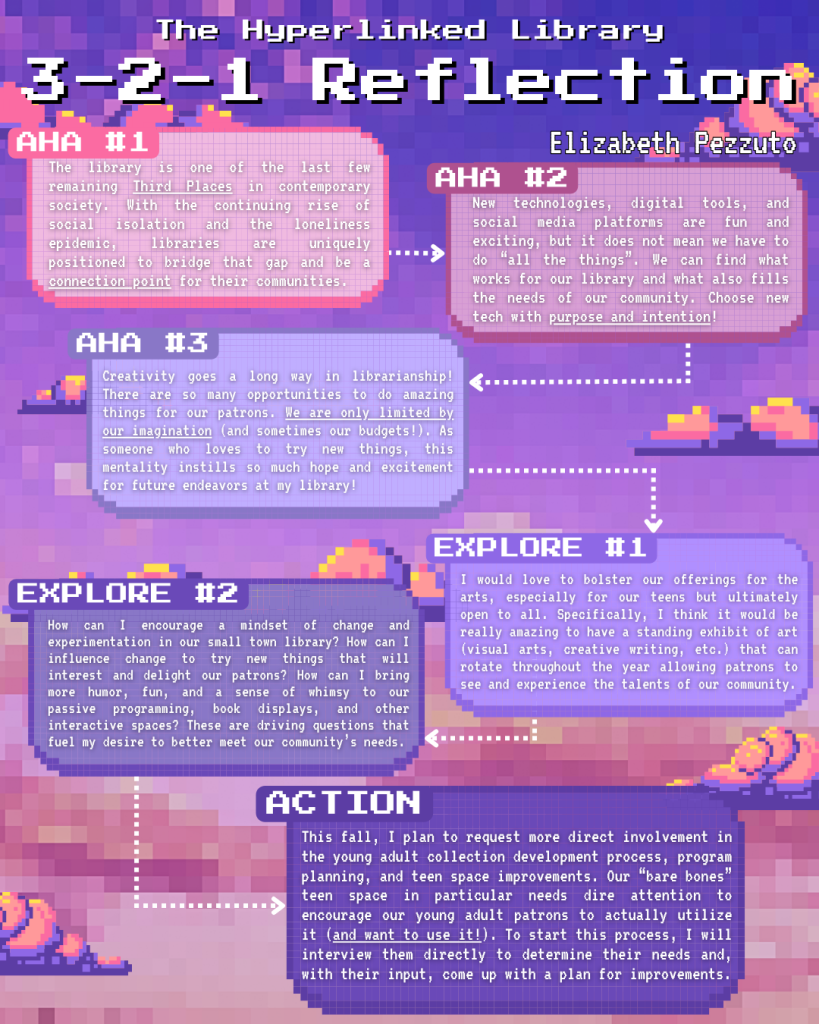
3-2-1 Reflection of The Hyperlinked Library – Elizabeth Pezzuto
My inspiration report focuses on a blend of power of stories and infinite learning through a participatory program that encourages and promotes the arts and creative expression of adolescents. In addition to learning and honing an artistic skill or talent, engaging in the arts has a psychological benefit, as well. Further, teens are empowered to have their voices heard by sharing their creative endeavors with their peers and the community at large.
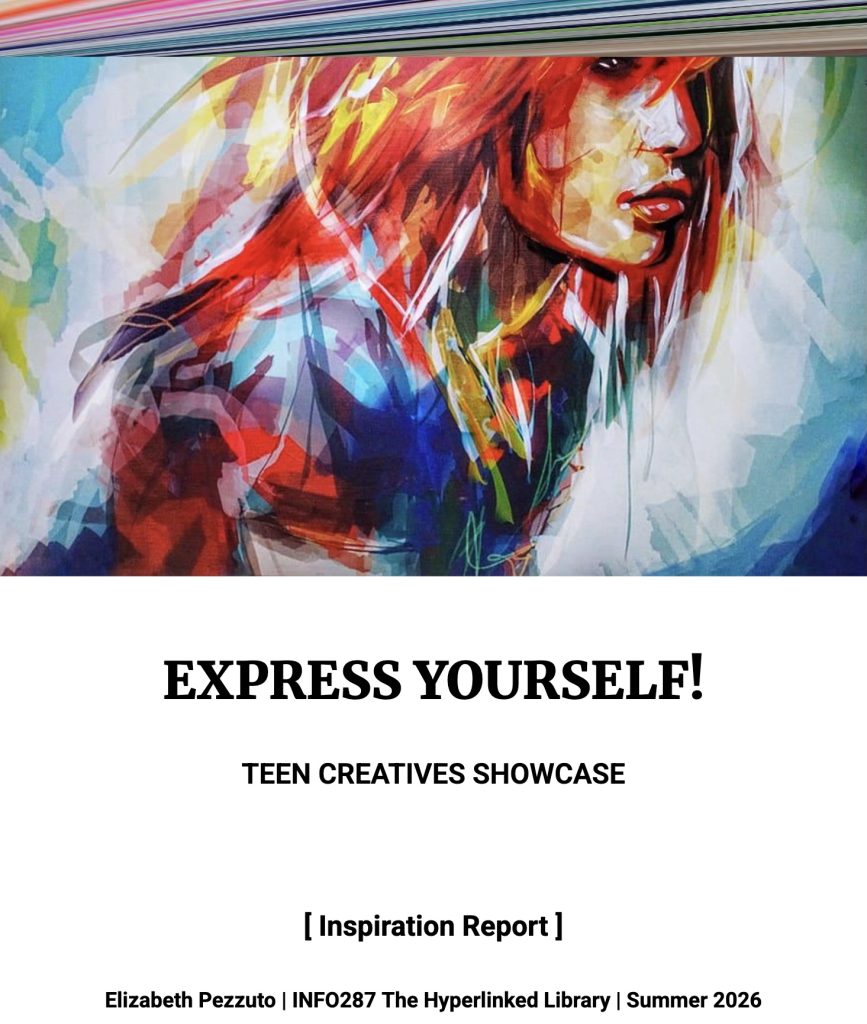
INSPIRATION REPORT: EXPRESS YOURSELF! TEEN CREATIVES SHOWCASE (PDF)
Libraries have evolved over the years to serve their communities’ needs in the context of changing times. Further, they have a unique position in which to explore, experiment, and attempt new things in order to meet those needs (see Greenwalt, 2013). And while it is necessary to understand our community, our patrons, and the specific needs of our locales (and to approach new initiatives with care and planning), I believe there is more than enough room to also embrace the fun in all that we do!
Patrons are already noticing shifts in how libraries operate and feel. Recently, the IMLS (2025) reported that library visits, circulation, and programming have all increased—particularly rebounding in the wake of the pandemic—demonstrating that libraries continue to fulfill a societal need. Gen-Z and Millennials are visiting libraries at higher rates than older generations, and 23% of Gen-Z and Millennials who visited a library at least once within a one-year period did not even identify as readers (Berens & Noorda, 2023; see also Sakey, 2026). That alone indicates that libraries are offering services and resources beyond “just books” that are desired, needed, and utilized; for the younger, digitally-inclined generations, this speaks volumes (see Berens & Noorda, 2023). Further, libraries offer a simple but critical service of being a safe place to hang out, socialize, and build community in a time of growing social isolation (see Sakey, 2026).
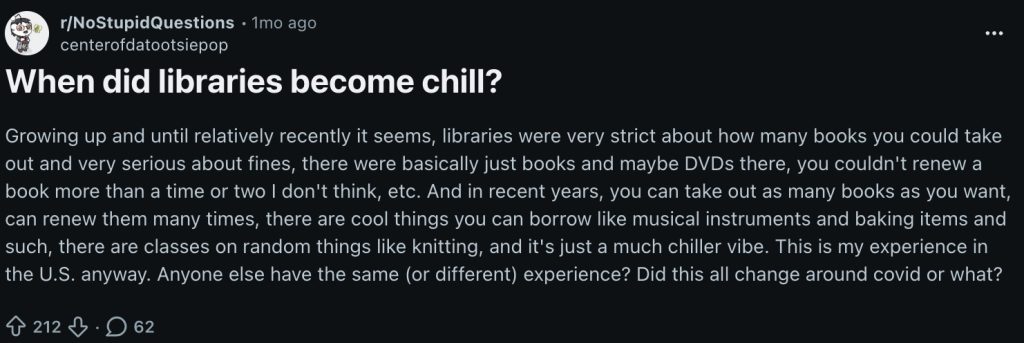
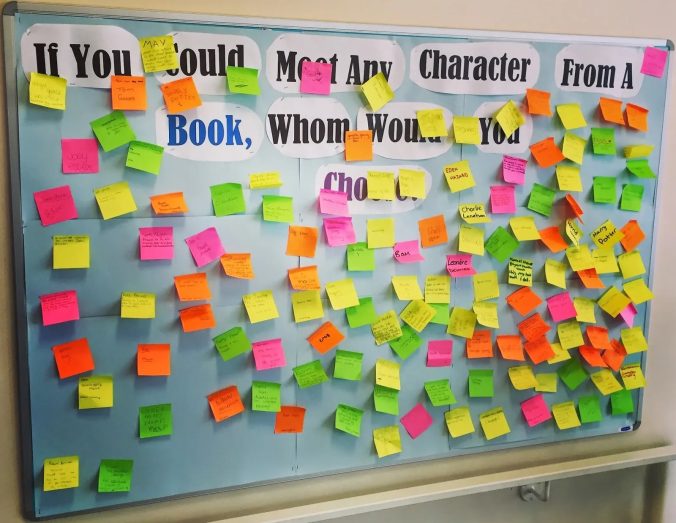
Image source: Reddit (centerofdatootsiepop, 2026)
Since 2013, the Oak Park Public Library in Chicago has provided a designated area within the library’s entrance called the Idea Box. This space provides a participatory experience for patrons entering the building; for example, a large wall of magnetic poetry. But the intention here was not a dedicated space of one single activity, but rather to experiment with new ideas, themes, and approaches for patrons to quickly see and engage in should they choose to do so. These ideas could potentially spark bigger initiatives depending on the response and engagement. But most of all, the Idea Box provided a space that invoked fun, curiosity, creativity, and social connection (Greenwalt, 2013).
Experimenting with participatory experiences and programming can also provide insight into our communities’ needs and interests. The concept of “Fun Palaces” originated in the U.K., coming to fruition in libraries in 2014, in which an institution would open its doors for a day or two and offer a wide variety of experiences for patrons to try: for example, musical instruments, ballet, Dungeons and Dragons, paper crafts, painting, exercise, and more. The most popular activities are a good hint as to what patrons are interested in. It can also be a great way to involve community experts knowledge in various skills to volunteer and lead the different experiences, offering further chances for social connection and community bonding. Not only do we as library professionals gain valuable insight, but patrons benefit by having a fun day at the library and perhaps discovering a new skill or hobby to pursue (Lenstra, 2018).
There are endless possibilities limited only by our imagination. As librarians, we are “always in beta” as we try new things and continue to evolve (see Stephens, 2014). Escape rooms, murder mystery nights, story walks, clubs and workshops, performances, and even virtual reality are just a few examples of fun and engaging experiences that can happen at the library. Other passive experiences may include bulletin boards, walls, or other designated areas that prompt visitors with a question or activity that they can interact with and, in some cases, leave behind a piece of themselves for others to see, such as a written note, a drawing, or a contribution to an on-going puzzle. Big or small, these experiences encourage patrons to not only engage with their library, but to engage with others within their community—directly or indirectly. When we bring people together, we learn more about ourselves and each other.
"Look for ways to encourage the creativity of your users. Have some space to repurpose? Unleash ideas. Open minds. We are so much more than a book warehouse or Wi-Fi access point or a place that rents movies."
— Stephens, 2016
I hope to have the chance to implement some of my own ideas in my library. I tend to come up with a lot of ideas and would love a chance to experiment and see what works. I think that mindset is so important when working with our communities. Not only to try our own ideas, but to bring to life those of our patrons as well. And if something doesn’t work, that is okay! After all, we as librarians are always learning through everything that we do.
Below are a series of interesting and engaging ideas that encourage learning, socializing, creativity, and above all, fun!
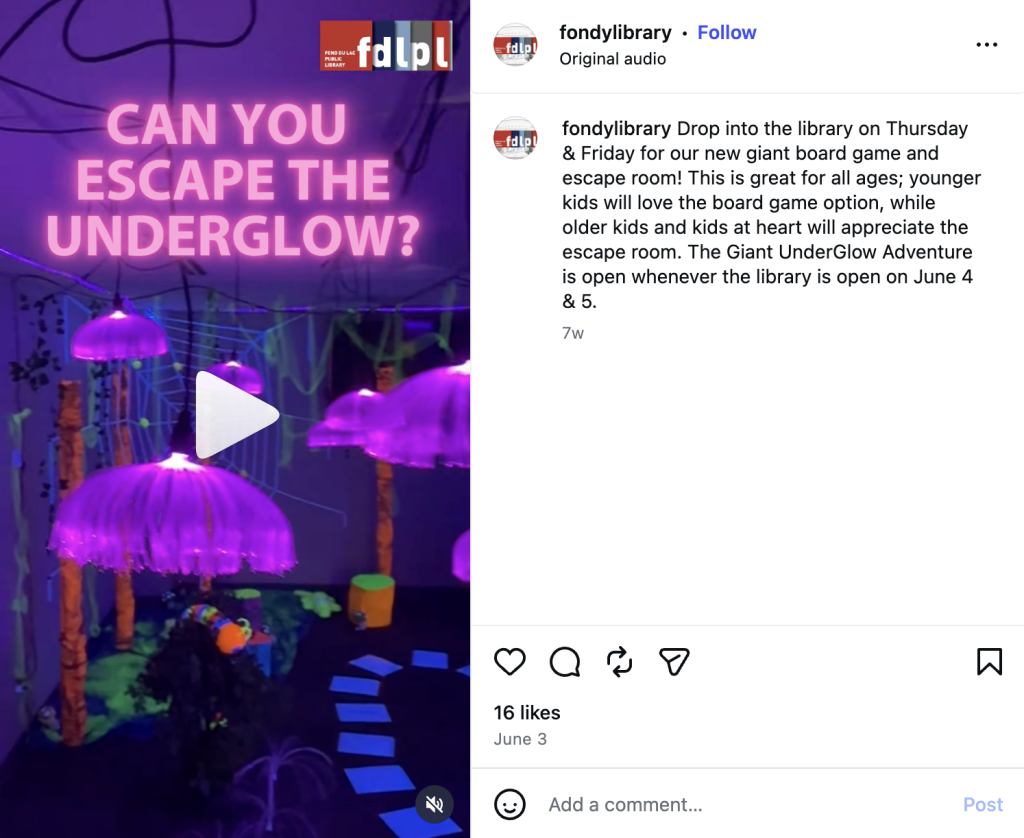
Talk about an immersive experience! This fun-for-all-ages escape room at the Fond du Lac Public Library challenges patrons critical thinking skills within a creative—and glowing!—environment. Click the picture to view the video.
I absolutely loved the I Spy books as a child, so what a fun way to bring the books to life by creating an I Spy Tank. School librarian @favorite.librarian shares one of her most popular passive experiences for children visiting the library. The I Spy books and similar activities such as scavenger hunts build critical thinking and problem solving skills as well as strengthen working memory while also encouraging exploration and discovery (see LaChance, 2016; Paul, 2025; Rodriguez, 2019).
@favorite.librarian Elementary library I spy passive programming. #ispy #librarytiktok #schoollibrarianlife #passiveprogramming
In the TikTok below, a photographer shares her experience utilizing the studio space and editing software at the LAPL that she would otherwise not be able to afford or acquire at this stage in her career. These resources allow creatives to not only produce but learn more about the tools, equipment, software, and technology made available to them—ultimately improving their craft, experience, and knowledge.
@lapubliclibrary The Octavia Lab is a do-it-yourself makerspace located inside of Central Library. Octavia Lab provides library cardholders free and unlimited access to state-of-the-art design, fabrication, preservation, and story-telling technologies. Whether you need a photo studio and editing tools, podcast equipment, sewing machines and more, Octavia Lab has something for everyone. #lapubliclibrary #librarytiktok #librarytok
The Ipswich Library has a ton of fun experiences for children that promote exploration and curiosity. I don’t think I have ever seen anything like that scarf in the tube contraption before (especially in a library!), but I can imagine that has to be a lot of fun for children watching it flow through the tubes and trying to catch it at the other end. The library also has reading nooks for children to curl up in to read when they need a break from the action. According to the video, the library regularly changes the various interactive activities, suggesting that the staff here is invested in trying new things for their young patrons while keeping a sense of fun at the forefront.
@thingstodoinipswich 📚✨ Looking for free fun for your little ones? Discover a world of adventure at the Ipswich Children’s Library! Located in the vibrant Nicholas Street Precinct, this unique library is designed specifically for children aged 0-12 years. With over 35,000 books tailored for young readers and exciting multi-reality interactive experiences, children can explore, learn, and play in an environment made just for them! The library offers a variety of free activities that are perfect for stimulating young minds. From Story Time sessions that enhance language through songs and stories to interactive and educational games, there is something to captivate every child for hours. Highlights include life-sized dinosaur models and an immersive butterfly screen that bring narratives and learning to life! 🌟 Dive into a haven of books or participate in the engaging craft activities available. Visit the Ipswich Children’s Library to see why it’s a beloved destination for families in Ipswich! For more information on activities and opening hours, check out the library’s website or drop by to experience the magic firsthand! 🌈📖 #discoveripswich #thingstodoinipswich #ipswichchildrenslibrary #nicholasstprecinct #freethingstodoinipswich @Discover Ipswich @Nicholasstreet
♬ vlog, chill out, calm daily life(1370843) – SUNNY HOOD STUDIO
Berens, K. I., & Noorda, R. (2023). Gen Z and Millennials: How they use public libraries and identify through media use [Report]. American Library Association. https://www.ala.org/sites/default/files/advocacy/content/tools/Gen-Z-and-Millennials-Report%20%281%29.pdf
centerofdatootsiepop [Username]. (2026, June 15). When did libraries become chill? [Online forum post]. Reddit. https://www.reddit.com/r/NoStupidQuestions/comments/1u72a93/when_did_libraries_become_chill/
Greenwalt, R. T. (2013, February 21). Embracing the long game. Public Libraries Online. https://publiclibrariesonline.org/2013/02/embracing/
IMLS. (2025, September 2). Increased public library usage shown by IMLS survey data. https://content.govdelivery.com/accounts/USIMLS/bulletins/3f09e4a
LaChance, N. (2016, May 24). Benefits of scavenger hunts. Institute for Educational Advancement. https://educationaladvancement.org/blog-benefits-scavenger-hunts/
Lenstra, N. (2018, September 4).“I didn’t expect to see that at the library”: Fun Palace engages community. Public Libraries Online. https://publiclibrariesonline.org/2018/09/i-didnt-expect-to-see-that-at-the-library-fun-palace-engages-community/
Maxwell, L. (2026, June 6). Bulleting board with sticky notes [Image]. Book Riot. https://bookriot.com/passive-programming-in-school-libraries/
Paul, D. (2025, March 26). Scavenger hunts: A perfect learning exercise. Teaching Times. https://www.teachingtimes.com/scavenger-hunts-a-perfect-learning-exercise/
Rodriguez, J. (2019, May 20). Here’s exactly how I Spy boosts memory & visual learning. Scholastic. https://www.scholastic.com/parents/books-and-reading/raise-a-reader-blog/i-spy-books-benefits.html
Sakey, P. (2026, July 13). America needs libraries more than ever: Gen Z is showing us the way. Boston Public Library Fund. https://bplfund.org/america-needs-libraries-more-than-ever-gen-z-is-showing-us-why/
Stephens, M. (2014, November 26). YLibrary? Making the case for the library as space for infinite learning. State Library of Queensland YLibrary Project. https://www.dropbox.com/scl/fi/4zt1yliwb2ffzr8euix2p/YLibraryInfiniteLearning.pdf?rlkey=m0v6lkd43ufilkp5aktawhlpr&e=2&dl=0
Stephens, M. (2016). The heart of librarianship: Attentive, positive, and purposeful change. ALA Editions.
Featured image attribution: Lucas Maxwell (Maxwell, 2026)
The message behind the “Power of Stories” is simple: everyone has a story. As library and information professionals, we are poised to gather and hear the stories of our patrons to strengthen connections and better serve the greater community. But we also have our own stories to share, particularly during this trying time where libraries have been a target of challenges, book bans, and other destructive actions. Though there are groups that seek to undermine the core foundations of libraries, we have the power—through our stories and experience—to counter those institutional assaults and add our voices to library advocacy efforts.
"Your story matters. Not just because you curate collections or answer reference questions, but because you build bridges between people and knowledge. You have witnessed quiet triumphs: a child learning to read, a student discovering their passion, a senior reconnecting with history. These moments are part of our collective story, and they deserve to be shared." — Helmick, 2026
The past 5-10 years have been especially tough for American libraries due to the rise in social and political conservatism. With the intention to shutter the IMLS, funding across the entire country for libraries and museums was cut in March of 2025 (ultimately restored) only to be slated to be cut again in 2027 (American Library Association, 2026b). Book challenges shot up again with 4,235 unique titles reported in 2025 (vs. 2,452 in 2024 and 4,240 in 2023); compare this to the average number of challenges between 2001 and 2020: only 273 (American Library Association, n.d., 2026a). A total of 91% of 2025’s challenged book titles were initiated by pressure groups and government organizations. In May 2025, President Trump fired Dr. Carla Hayden, our fourteenth Librarian of Congress—originally nominated by President Obama—and moved to end the Digital Equity Act, which was blocked but continues to be tied up in legal battles (American Library Association, 2026a). More generalized challenges include mistrust in the government, lack of faith in objective information, the vanishing middle class, declining literacy rates, general erosion of civility, and ongoing systemic issues such as lack of diversity (see Smith, 2019).
However, through all of these struggles, libraries have prevailed through continued support from individuals and organizations who believe in their mission and core values. The American Library Association (2026a) noted that Congress and the courts have demonstrated that library funding and the continuation of libraries with the U.S. is desired and a priority.
While this gives us hope, it is the power of advocacy that keeps the fight alive.
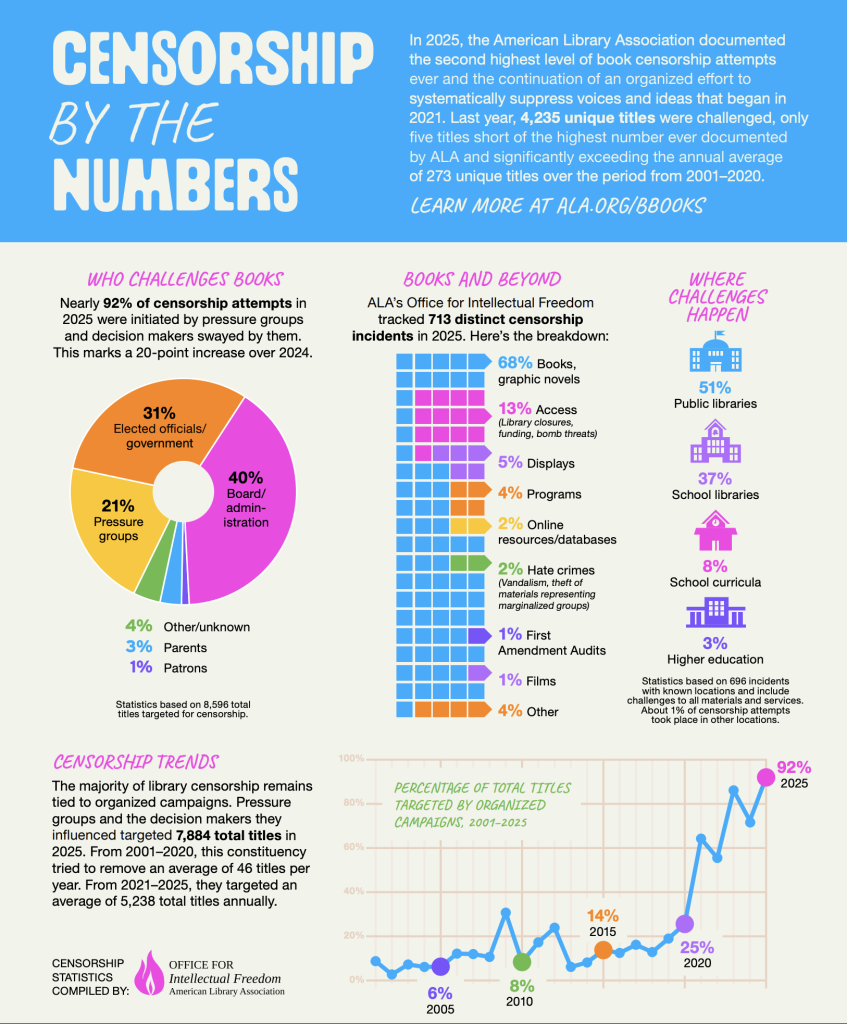
Censorship by the Numbers: American Library Association, 2026a
Data storytelling combines a narrative structure (story or experience) with actual and meaningful data. An example might be sharing with the community how their donations made an impact: not only how finances were allocated, but identifying how they met community needs. Through a series of surveys and focus groups of librarians, data storytelling expert Kate McDowell discovered library staff wanted to tell three kinds of stories: 1) achievements; 2) sharing benchmarking data; and 3) justifications for funding, donations, and other investments (UI News Bureau, 2024; see also McDowell, 2023, 2026a). I find this approach to be incredibly impactful: data on its own can be helpful but also uninspiring without context. Incorporating “workplace” stories and experiences along with the data gives the community a better insight into the organization’s impact, which further aids in building connections. However, we must also understand who our audience is in order to effectively communicate our stories and reach our community (see UI News Bureau, 2024). The audience’s role is also critical in data storytelling via the ways they react to the information (e.g. comments, feedback, questions) and through retelling to keep the story alive (McDowell, 2023).
"Storytelling involves trust between the teller and the audience. Data storytelling is a way of mobilizing factual evidence to build trust as truthful storytellers in and for our communities."
— McDowell, 2026b
Sharing our experiences with our community, our Board of Trustees, our friends and family, and beyond are all ways to deepen connections to libraries. Combining the authenticity of data with the subjectivity of emotion through data storytelling, we have the unique stance and knowledge to demonstrate how important, relevant, and impactful libraries truly are. Through transparency and integrity, we can make our voices heard while advocating not for libraries alone but ultimately for the very people they serve.
Here are some resources to help us use the power of our stories to make a difference.
American Library Association. (n.d.). Censorship by the numbers: Banned book data. https://www.ala.org/bbooks/book-ban-data
American Library Association. (2026a). The state of America’s libraries: A snapshot of 2025 [Report]. https://www.ala.org/sites/default/files/2026-04/state-of-americas-libraries-report-2026-WEB-acc-4.pdf
American Library Association. (2026b, April 3). White House FY27 budget proposal repeats threats to eliminate IMLS. https://www.ala.org/news/2026/04/white-house-fy27-budget-proposal-repeats-threats-eliminate-imls
Helmick, S. (2026, January 2). Your library story. American Libraries. https://americanlibrariesmagazine.org/2026/01/02/your-library-story/
McDowell, K. (2023, June 29). Data storytelling for libraries: Peer to peer review. Library Journal. https://www.libraryjournal.com/story/data-storytelling-for-libraries-peer-to-peer-review
McDowell, K. (2026a, February 4). The need for storytelling in librarianship: Data storytelling as a means for advocacy, social justice, and inclusion in libraries. Choice (ALA). https://www.choice360.org/libtech-insight/the-need-for-storytelling-in-librarianship/
McDowell, K. (2026b, July 20). Critical data storytelling. Library Journal. https://www.libraryjournal.com/story/critical-data-storytelling
Smith, M. (2019, April 26). Top ten challenges facing public libraries. Public Library Quarterly, 38(3), 241-247. https://doi.org/10.1080/01616846.2019.1608617
UI News Bureau. (2024, July 11). Project helps librarians use data storytelling to advocate for public libraries. University of Illinois Urbana-Champaign. https://ischool.illinois.edu/news-events/news/2024/07/project-helps-librarians-use-data-storytelling-advocate-public-libraries
Featured image attribution: Guardian Nurses
Everyone has a story, a talent, a special skill, a passion that brings them joy, satisfaction, or a sense of achievement. Our communities are filled with subject matter experts in a variety of endeavors. One of the interesting parts of working with the public is getting to know our patrons and, in time, becoming privy to their creative knowledge and pursuits. According to a Danish study on the impact of public libraries on individuals and the community, libraries are a source of inspiration that motivate people to create, explore, or learn a new skill. Further, through both visiting and using the library as well as attending programs and events, public libraries foster, encourage, and deepen bonds within a community (Lauersen, 2021a; Seismonaut and Roskilde Central Library, 2021).
In the spirit of connecting with our communities and encouraging community-led initiatives, what better way to strengthen those ties by letting creative pursuits shine?
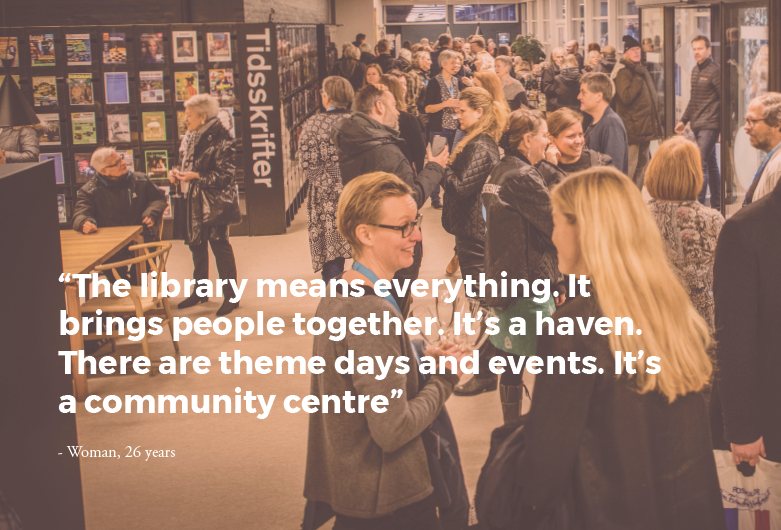
Image attribution: Lauersen, 2021
The community-led programming model puts the power (and empowerment) in the hands of the community to propose, develop, and organize a program. While library staff is still involved for guidance and support, the responsibility is ultimately in the hands of the individual or organization running the event. This approach follows a similar model to library-led programming design, development, and evaluation: 1) perform community assessment e.g. ABCD; 2) determine community’s needs; 3) design and organize service, event, or program; 4) execute the service, event, or program; 5) evaluate results and feedback. One notable difference is in how the evaluation stage unfolds. For example, libraries typically rely on attendance counts or circulation data to determine effectiveness. With community-led programming, effectiveness may be determined by examining how the program met identified community needs, or there may be other measures of success that are relevant to the community (Lenstra & Barbakoff, 2024).
Useful evaluation questions may include the following:
The chart below provides a good overview and better understanding of the engagement process with the community for community-led programming. My favorite step is EMPOWER and specifically the impact behind it, both on the individual or organization running the program and the community using the knowledge, skills, or information received from the program. What a fantastic way to build trust between the community and the library as well as among the community as a whole!
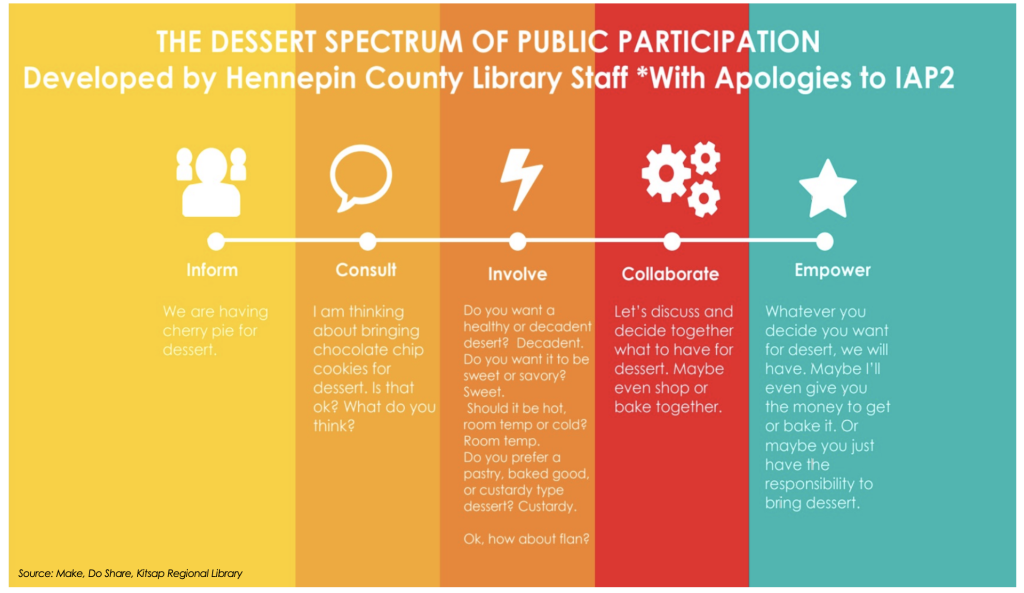
Image attribution: Barbakoff (2023)
In my neck of the woods, handicrafts seem to be very popular: knitting, crochet, and quilt-making specifically. Of course, this is anecdotal data as we have not formally assessed this need or interest. However, demographically, our population tends to skew older: there is a high population of senior citizens, for example. We recently had a member of the community start a “learn to crochet and knit” group at our library, which quickly gained interest. Sadly, the organizer did not continue running it despite high interest (many patrons inquired about the program during its short time running and after it fell off). This was an example discovering there was actually a need and interest in the community, but the organizer could not sustain it on her own. Further, it did not run long enough to forge a connection with attendees, of which there could have been a stronger collaboration for organization and facilitating the group. I share this as an example of a creative venture that sparked community interest and excitement—identifying a need! Despite the group not continuing, I still see this as a success in observing how the community responded to the program and its goal. There is still potential if we engage our community regarding this need.
Let’s dive deeper into some libraries that are directly engaging their communities not only to empower individuals to share their passions and knowledge, but to examine and inform future programming by determining the community’s actual needs and interests.
Since 2018, the Madison Public Library (MPL) has opened their programming doors to the community via their “Library Takeover” initiative. Individuals or organizations may apply to hold a program at the library; those accepted receive an event budget to organize and run the event. Recent programs that were accepted feature an array of topics: “Mindful Day the Indian Way”, “Full Circle Food Usage”, “Latino Women and Trauma”, and “Pop-Up Portrait Studio” (Madison Public Library, n.d.; Urban Libraries Council, 2018).
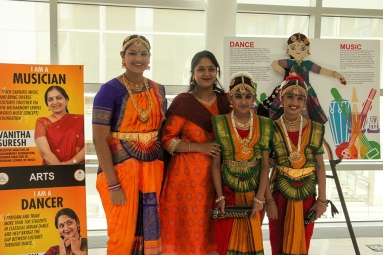
Image attribution: Urban Libraries Council, 2018
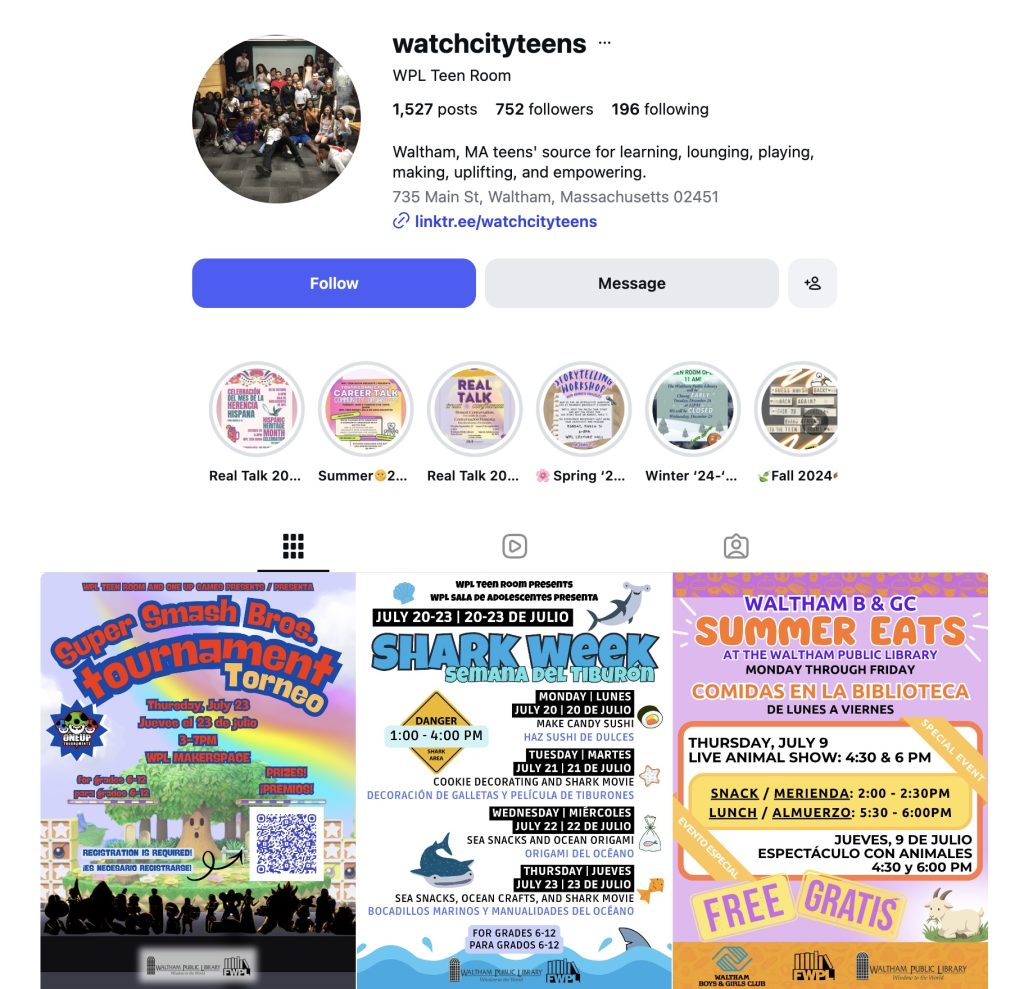
The Waltham Public Library was highlighted in American Libraries back in 2020 for its “teen-driven” services. Their focus was to allow teens to be directly involved in the decision-making of programming and making their ideas a reality. What further sets them apart (“teen-driven” vs. “teen-centered”) is the empowerment granted on the library’s teen community to take risks (make and learn from mistakes), grow meaningful relationships with library staff (the teens’ source of support and guidance), and having the teens determine what success is (vs. traditional library statistics) (Braun, 2020). Their approach definitely has the hallmarks of community-led planning. They even run their own Instagram to connect with other young adults and communicate programs and events.
This organization has rolled out a program to now over 18 public libraries in New York, Boston, Dallas, and Miami to support lifelong learning, creativity, and social connection for individuals over 55 years old. These programs bring in experts in a variety of artistic disciplines to provide a wealth of options for older adults to continue learning, staying engaged with their interests, or otherwise learning new skills. The overwhelmingly positive response from the community has propelled the program’s expansion, demonstrating that an identified need has been successfully met and embraced by the community. Further, the program utilizes creatives from within and around these communities to share their skills and knowledge (Fisher Center for Alzheimers Research Foundation, n.d.).
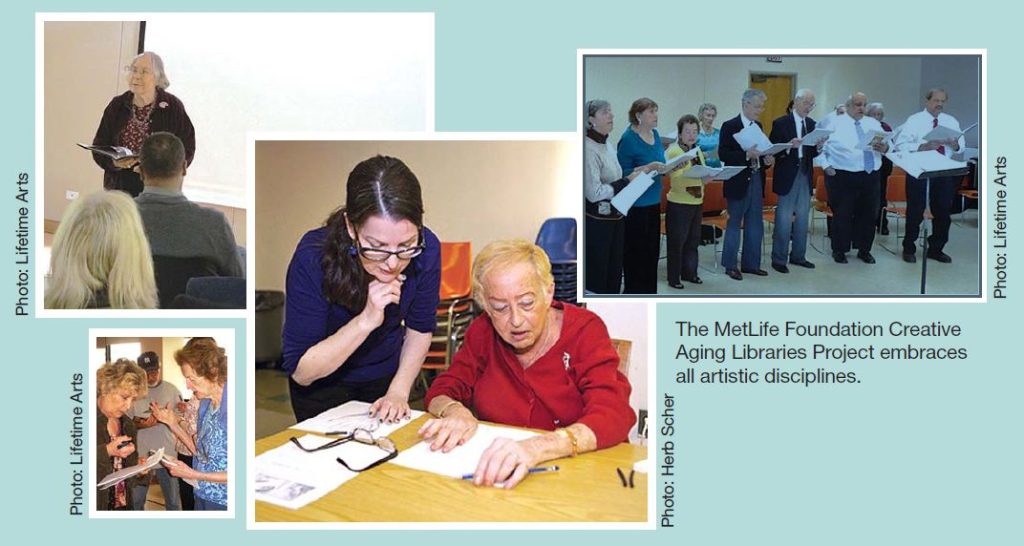
Image attribution: Fisher Center for Alzheimers Research Foundation, n.d.
This ongoing program at the San Diego Public Library promotes the work of local artists in order to broaden and deepen connections to the city’s rich artistic and cultural community. These exhibitions give San Diego artists a chance to not only showcase but talk about their work during designated panels. I love that community members not only can view these works, but also interact with their creators (City of San Diego, n.d.)! Here are some current and upcoming examples of local art exhibitions at the SDPL:
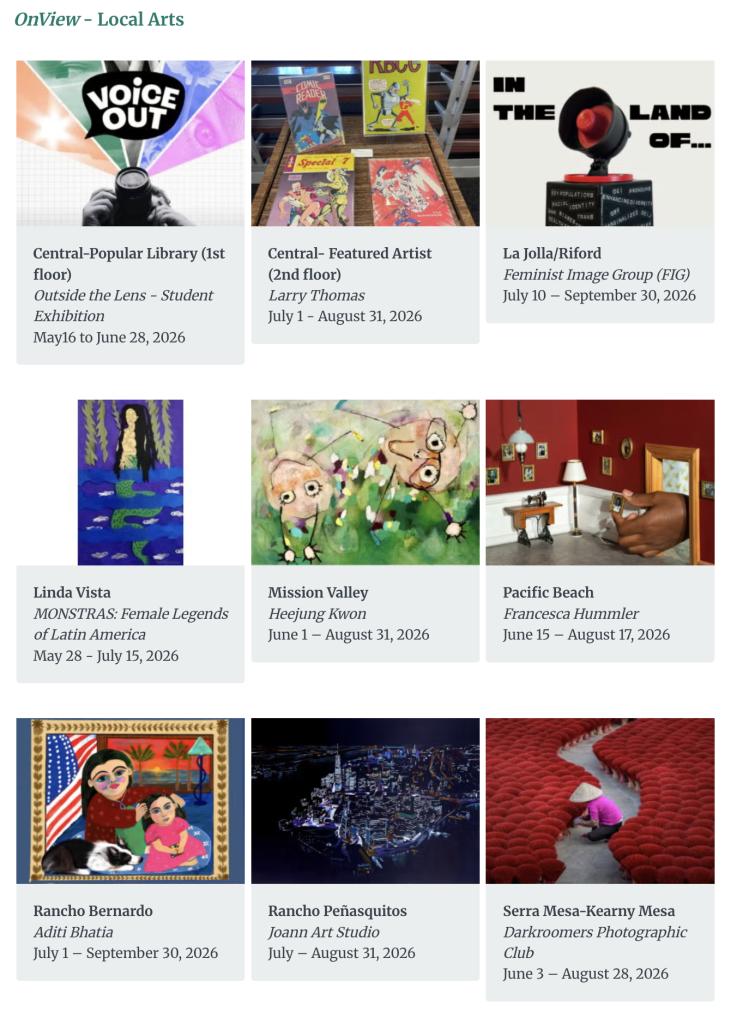
Image attribution: City of San Diego, n.d.
Barbakoff, A. (2023, February). The dessert spectrum of public participation [Image]. Co/Lab Capacity for Connecticut State Library. https://libguides.ctstatelibrary.org/ld.php?content_id=70615597
Braun, L. (2020, March 1). Give teens the lead: How to move from teen-centered to teen-driven services. American Libraries. https://americanlibrariesmagazine.org/2020/05/01/give-teens-the-lead-teen-driven-services/
City of San Diego. (n.d.). Public library: Art and culture exhibitions. https://www.sandiego.gov/public-library/visualarts
Fisher Center for Alzheimers Research Foundation. (n.d.) Creative aging library project expands. https://www.alzinfo.org/pym/long-term-planning/creative-aging-libraries-project-expands/
Lauersen, C. (2021a, April 19). A haven in our community: The impact and value of public libraries. The Library Lab. https://christianlauersen.net/2021/04/19/a-haven-in-our-community-the-impact-and-value-of-public-libraries/
Lauersen, C. (2021b, April 19). Photo and quote [Image]. The Library Lab. https://christianlauersen.net/2021/04/19/a-haven-in-our-community-the-impact-and-value-of-public-libraries/
Lenstra, N., & Barbakoff, A. (2024, March 1). Working hand in hand: How to conduct community-led planning. American Libraries. https://americanlibrariesmagazine.org/2024/03/01/working-hand-in-hand/
Madison Public Library. (n.d.). Library takeover. https://www.madisonpubliclibrary.org/engagement/library-takeover
Seismonaut and Roskilde Central Library. (2021). The impact of public libraries in Denmark: A haven in our community [Report]. https://www.roskildebib.dk/sites/default/files/2024-10/roskildebib_folkebibliotekets_betydning_for_borgerne_i_danmark_eng_final_0.pdf
Skjørten, E. (2020). Creativity – an activity or a mindset? [Image]. Global EdTech. https://global-edtech.com/creativity-an-activity-or-a-mindset/
Urban Libraries Council. (2018). Library takeover: Community led programming. https://www.urbanlibraries.org/innovations/library-takeover-community-led-programming
Featured image attribution: Skjørten, 2020
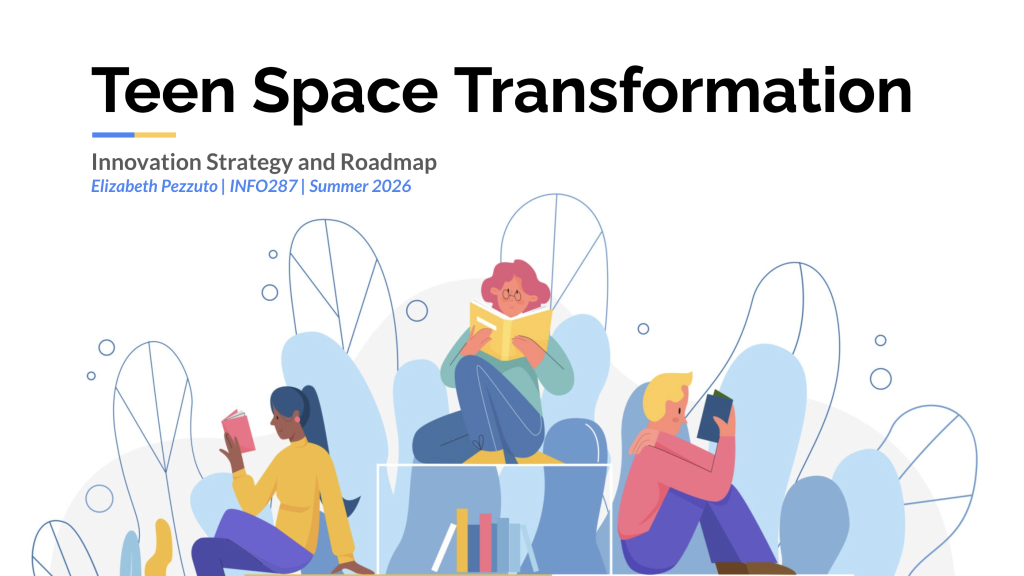
The Teen Space Transformation project seeks to refresh and revitalize an under-utilized teen space in a small town library. Through direct collaboration with tweens and teens, the goal is to create a welcoming “Third Place” for our community’s young adults that meets their unique developmental, educational, and technological needs.
Please click on the image below to access the PDF version of my Innovation Roadmap presentation “TEEN SPACE TRANSFORMATION”.
ようこそみなさん!日本の図書館について学んでみましょう。

Hello everyone! Let's learn about libraries in Japan.
The United States library system is deeply embedded throughout the country. Approximately 97% of Americans live within 5 miles of a public library (IMLS, 2019). I was interested to know how Japan’s library system compared to ours. While there are some similarities in general practice and traditions of librarianship, I discovered that more than 20% of Japan’s towns and municipalities have no access to a library (Omori & Ueda, 2024). What could be the reason for the gap in library access in Japan?
After World War II, Japan notably did not have a robust library system, and in fact instead had many “home libraries” (known as bunko) scattered about the country and intended for use within their respective neighborhoods (Kanna, 2003). These were some of the early roots that spawned immense growth in the 1970s, particularly with a focus on children’s literacy (Kanna, 2003; see also Omori & Ueda, 2024). However, there were still lingering challenges within the library profession that may have contributed to slower growth and spread of Japan’s public library system.
In his study, Alix (2021) identified three categorical challenges in Japanese libraries today: recognition of librarians as professionals, inadequate quality of LIS education, and disconnects in community engagement. Further, with Japan’s significant and increasing aging population (29.4% in 2025), programs were not always sufficient or otherwise patrons were not able to access library services (see Donkai & Mizoue, 2014).
However, ongoing changes with approach to librarianship, mindfulness of community needs, and infrastructure have manifested across the country (see Aoyagi, 2026). In particular, the IFLA-UNESCO Public Library Manifesto 2022 has had a global effect on public libraries in many countries—Japan included—repositioning libraries as critical entities in building “a more equitable, humane, and sustainable society” (Aoyagi, 2026). Worthy of note, a cohort study of Japanese adults found an association between the environmental factor of public libraries (having libraries available, size of collection, availability of digital books, the community aspect, etc.) and a reduction in functional disability (Otani et al., 2025). It is clear that another wave of library “growth” is occurring in Japan, echoing its previous boom in the 1970s, but with the benefits of today’s technology, modernization, and changing views in librarianship (see Aoyagi, 2026; Kanna, 2003; Omori & Ueda, 2024).
Let’s take a tour of some of Japan’s modernized libraries that have adopted more strategic and user-centered approaches than in the past. You will notice a common thread of large, open, airy spaces that encourage people to not only visit, but to stay and use the library however they wish. These library environments, augmented by awe-inspiring (but also functional) architectural design, bring not only community members through their doors, but welcome both local and foreign visitors, as well.
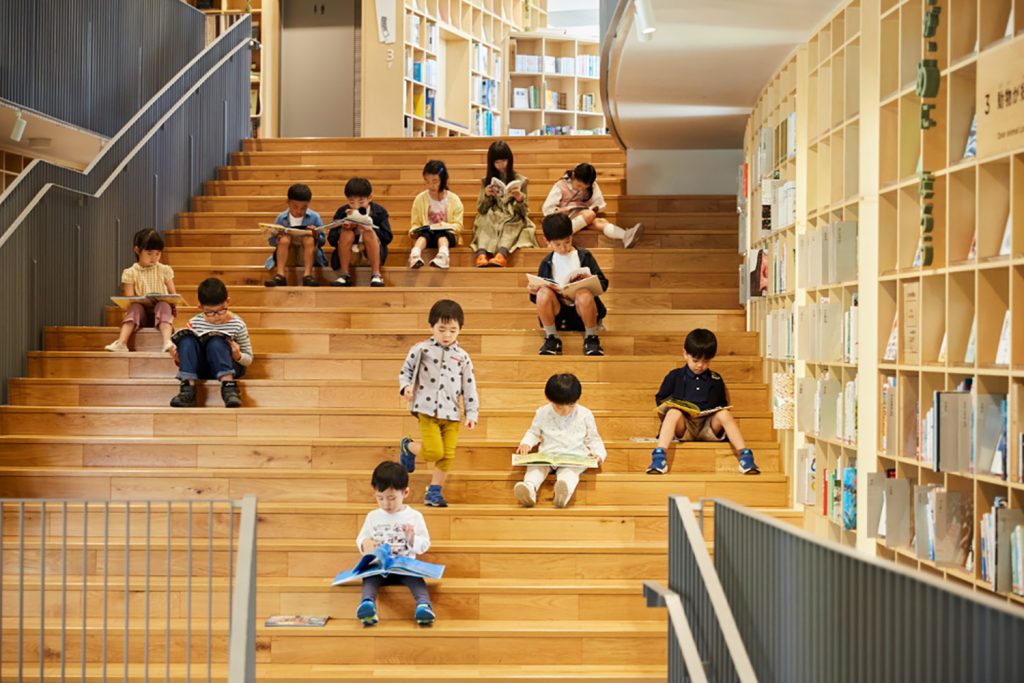
Children reading inside Nakanoshima (Web Japan, n.d.)
Designed and funded by famed architect Tadao Ando and opening in July 2020, this library contains books and materials geared specifically towards children. Every wall is a bookcase containing approximately 20,000 books not strictly organized into sections: the intent is to encourage children and their caregivers to explore freely (Creative Island Nakanoshima, n.d.; Time Out, 2025; Web Japan, n.d.). However, books cannot be checked out; rather, patrons are encouraged to read anywhere within the library or out on the grounds, which is the public Nakanoshima Park (Time Out, 2025).
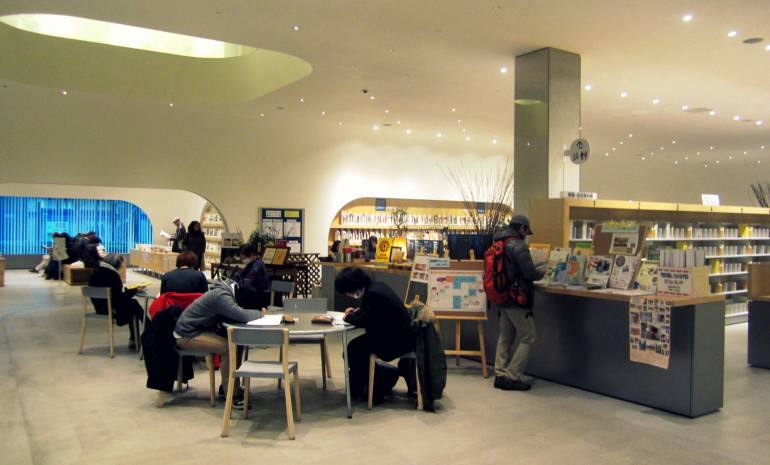
Musashino Place interior (Mineta, 2013)
Musashino Place is actually a combination of a library and a community center, emphasizing a place of social connection for all ages. Programming includes opportunities for individuals to come together to peruse hobbies and take classes. This is of particular importance for the elder Japanese population to have welcoming institutions such as Musashino Place to stay connected with their community while also participating in lifelong learning endeavors (Mineta, 2013; Web Japan, n.d.).
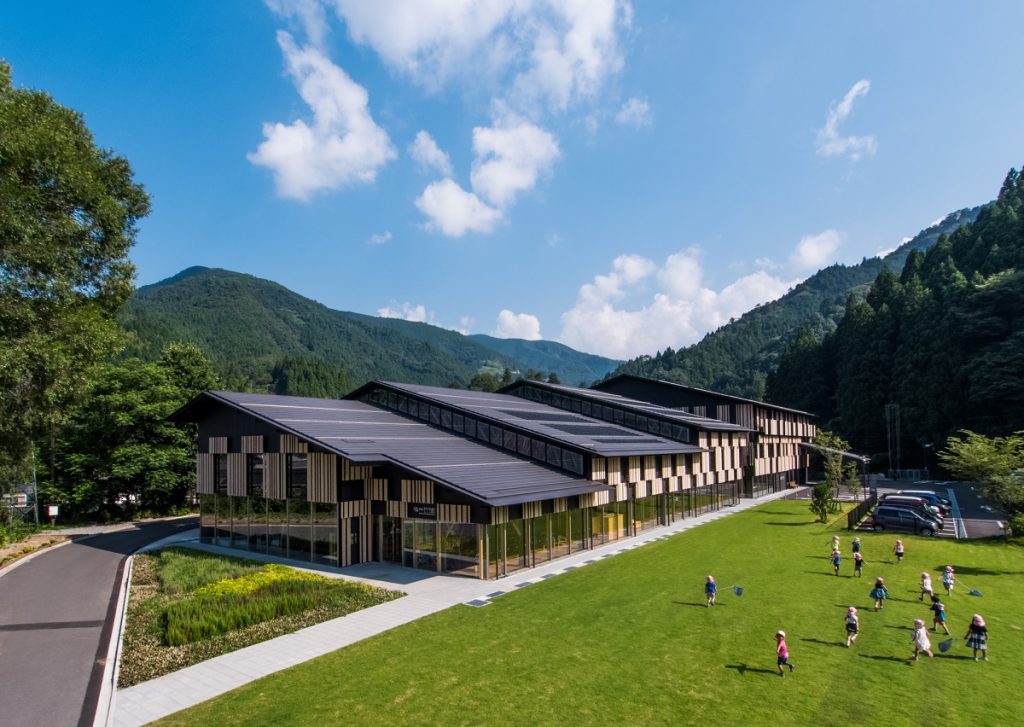
Exterior, Yusuhara Community Library (Kengo Kuma & Associates, 2018)
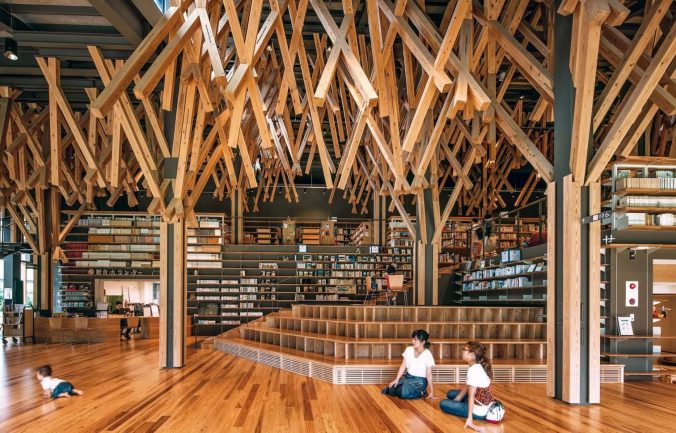
Yusuhara has been dubbed as a “town above the clouds”. The library has become an important part of this rural town, promoting community, social connections, and exchange of information between and among the generations of those living there. Further, the Yusuhara Library follows Japanese tradition of removing shoes upon entering a home: patrons are encouraged to do the same here (Kengo Kuma & Associates, 2018). The image at the top of this blog post shows the architecturally-striking, open interior of the library, which encourages a welcoming third space in this closeknit community.
@kevandchen There were students studying for free, wrapped in calm, surrounded by pages, and the lingering aroma of Starbucks in the air. ☕📚 Does your country have a library like this? #takeo #saga #takeocity #japan #sagacity
The Takeo City Library is an interesting example of a newer model that has been adopted in several Japanese public libraries: combining the traditional library structure with a bookstore. Here, the library teamed up with Tsutaya (a large bookstore chain) and Starbucks to encourage additional revenue and increased foot traffic. Patrons can read any books within the institution, but taking anything home requires checking it out (as with a typical library) or buying it. Apparently, this model has worked quite well for its users and community. However, the flip-side is that the focus remains on books and less on other traditional library services (Coffman, 2017).
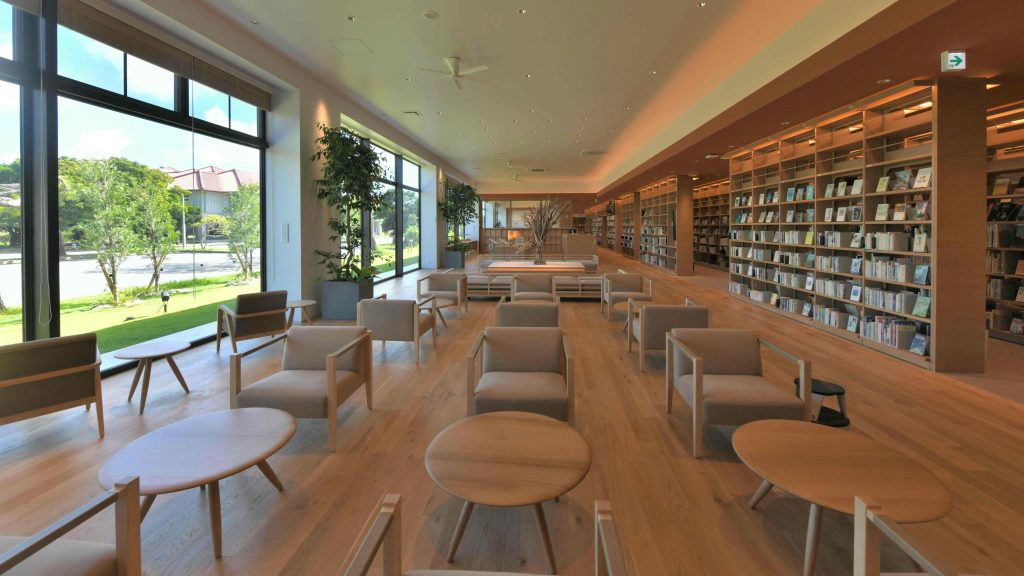
Interior, Yomitan Village Library (Culture Convenience Club, Co, Ltd., 2025)
Similar to the Takeo City Library, the Yomitan Village Library has adopted the dual-model of library and retail store, with a Starbucks as well as a bookstore that also sells regional Yomitan crafts and goods. However, it has also positioned itself as a multicultural center and event space, holding 150 events per year that bring people from around the region. These events range from business and professional seminars to craft-related events and workshops to showcases for students (Culture Convenience Club, Co, Ltd., 2025). Not only does this approach provide continued learning opportunities, it encourages people from all over the region to visit and take part.
Alix, F. A. (2021). The history and current challenges of libraries in Japan. SLIS Connecting, 10(1). https://aquila.usm.edu/slisconnecting/vol10/iss1/9/
Aoyagi, E. (2026, March 12). Japanese public libraries: growing in significance in line with the changing times. Meiji.net. https://english-meiji.net/articles/5592/
Coffman, S. (2017). Japan Is transforming libraries into ‘vibrant community hubs’ … by doubling down on books. Information Today, 41(6), 25. https://www.infotoday.com/OnlineSearcher/Articles/The-Searchers-Viewpoint/Japan-Is-Transforming-Libraries-Into-Vibrant-Community-Hubs–By-Doubling-Down-on-Books-121584.shtml
Creative Island Nakanoshima. (n.d.). Children’s Book Forest Nakanoshima. https://en.nakanoshimalab.jp/spots/1278/
Culture Convenience Club, Co., Ltd. (2025, October 2). Yomitan Village Library, a multicultural co-creation hub that nurtures and cultivates “authenticity,” will reopen on October 1, 2025 [Press Release, translated from Japanese]. https://www.ccc.co.jp/news/press/20251002_001327.html
Donkai, S., & Mizoue, C. (2014). The public library in an aging society: Developing active library participation in Japan. In Du et al., (Eds.) Library and information science research in Asia-Oceania: Theory and practice (pp. 266-283). https://ebookcentral.proquest.com/lib/sjsu/detail.action?docID=3312898
IMLS. (2019). Characteristics of public libraries in the United States: Results from the FY 2019 Public Libraries Survey: Supplementary Tables [Report]. https://www.imls.gov/sites/default/files/2021-08/fy19-pls-results.pdf
Kengo Kuma & Associates. (2018). Yusuhara Community Library / Yururi Yusuhara. https://kkaa.co.jp/en/project/yusuhara-community-library-yururi-yusuhara/
Kengo Kuma & Associates. (2018). Yusuhara Community Library [Image]. https://kkaa.co.jp/en/project/yusuhara-community-library-yururi-yusuhara/
Kanna, K. (2003). The development and present state of library services to children in Japan. Library Management, 24(1/2), 79-85. http://doi.org/10.1108/01435120310454548
Kuma, K. (n.d.). Biblioteca, Yusuhara [Image]. Arquitectura Viva. https://arquitecturaviva.com/works/biblioteca-yusuhara-7
Mineta, G. B. (2013, January 28). Musashino Place, a chic library with a soundproof basement for all ages. Tokyo Cheapo. https://tokyocheapo.com/entertainment/musashino-place-a-chic-library-with-a-soundproof-basement-for-all-ages/
Omori, Y., & Ueda, N. (2024, March 19). New libraries offer boost to withering downtowns; Fifth of municipalities without any library. The Japan News. https://japannews.yomiuri.co.jp/society/general-news/20240319-175310/
Otani, S., Sato, K., & Kondo, N. (2025). Public libraries and functional disability: A cohort study of Japanese older adults. SSM – Population Health, 29, 101762. https://doi.org/10.1016/j.ssmph.2025.101762
Time Out. (2025, March 10). Nakanoshima Children’s Book Forest. https://www.timeout.com/osaka/things-to-do/nakanoshima-childrens-book-forest
Web Japan. (n.d.). Japanese libraries: Spaces that encourage a lifelong love of reading. https://web-japan.org/trends/11_food/202510_libraries.html
Featured image attribution: “Biblioteca, Yusuhara” (c) Masaki Hamada (Kuma, n.d.)
As part of my Assignment X, I discussed the importance of third place—a physical gathering place outside of home and work or school for people to connect. I touched on the challenges of forging and maintaining in-person connections due in part to our reliance on modern technology and social media. For my reflection on hyperlinked communities, however, I am going to shift gears just a bit and delve into one positive outcome of social media that can and should be utilized by libraries to promote literacy and a general love of reading.
I have a somewhat unique position as both an author and a reader who has experienced the rise of #bookstagram and later #BookTok from both sides. As an author, I have used Instagram and TikTok to connect to readers with my books, and have also observed how readers “spread the love” of their favorite reads and introduce their followers to new books every day. As a reader, I have also been part of that community. Further, though I realize this is anecdotal data, I have encountered many individuals indicating they were never readers but now love to read thanks to book-forward social media content. As I move into librarianship, that experience and knowledge has been a spark of excitement and great potential for connecting with patrons, particularly the up-and-coming generations. But how can we use social media effectively to connect with and relate to our younger patrons?
TikTok’s BookTok subculture (#BookTok) is just as it sounds: a community where books are the primary focus (Dera, 2024). Generally, TikTok users skew towards the younger age groups; similarly, the BookTok subculture is mainly comprised of Millennials and Gen Z (Dera, 2024; see also Jensen, 2022). Other characteristics include being a tight-knit member base that naturally excludes non-readers thanks in part to the platform’s algorithm behavior. Additionally, there is a canon and history to the popular and trending genres and books over time: for example, YA was most popular in the early #BookTok days (i.e. just before COVID) but has since been overtaken by romance and fantasy. Further, the nature of the platform and community enables increased connections to readers and authors from marginalized groups. Tropes, character types, themes, and community memes that key into emotional reactions, needs, or particular vibes are king (see Jensen, 2022). Dera (2024) also noted that BookTok has transcended the virtual boundary; for example, teens discuss or share books they discovered on TikTok with their real life friends. Regarding the content itself, users typically employ strong affective components to further draw in and connect with followers (see Dera, 2024). The fervor of TikTok’s #BookTok community propelled a rise in book sales across the board and even led to many book series becoming television series (Brown, 2022a; see also Dera, 2024; Jensen, 2022). Ultimately, the true net positive was the creation and building of a community centered around books and reading (Brown, 2022a; Dera, 2024).
Below are two BookTok videos from two book influencers on TikTok utilizing emotion-driven content and humorous community “canon” (respectively) to connect with and relate to their viewers.
@yannareads Its safe to say, I AM UNWELL 🙆🏼♀️ #ironflame #forthwing #booktok #books #tbr
@courtneystbr Which ones are you guilty of? Bc it’s definitely all of them for me😭😭 #romantasybooks #romantasybooks #romantasybooktok #fourthwing #booktok #bookrecs #throneofglass
As librarians working with social media, it is necessary to understand what platforms our patrons are using and how they are using it. For example, targeting senior patrons’ interests on TikTok would not be as effective because older generations predominantly use Facebook as their social media platform. According to Pew Research Center (2025), 57% of American adults aged 65 and over use Facebook while only 12% of that same group uses TikTok. Conversely, 63% of American adults aged 18 to 29 use TikTok: their usage is the highest of any age group. Not to forget Instagram, the age 18-29 group also boasts the highest usage at 80%, compared to only 19% of the 65+ group. I use these two bookend age groups to signify the difference in social media usage. As such, we must meet them where they are in the virtual world if we wish to make meaningful and effective connections.
One of my goals as a future youth services librarian is to tap into BookTok to better connect with our Millennial, Gen-Z, and eventually Gen-Alpha patrons. Currently, as a circulation aide, I have little input into our library’s social media (we primarily use Facebook and Instagram, but we could utilize them better). However, I hope to see it utilized in the future. I feel it can be a powerful way to generate the seeds of connection. What could begin as virtual social connection could translate to in-person social connection. After all, one of the biggest challenges faced by libraries (especially those in smaller communities) is simply getting people in the door. What better way than by putting a little of ourselves out there and lead with humor, warmth, camaraderie, and a message of welcome?
Below are a some examples of two libraries who are keying into the #BookTok community. I encourage you to check these out and also explore other hashtags such as #librariansofbooktok, #librariansoftiktok, and #librarytiktok.
I enjoyed this simple TikTok utilizing humor to connect with a common problem among most readers: picking that ONE favorite book! It has the dual effect of making the librarian (and by extension, the library) feel more relatable and approachable. The video utilizes the #BookTok hashtag as well as several library/librarian subcommunity hashtags.
@fowlervillelibrary The struggles of working in a library…😂#Inverted #librarytiktok #booktok #librariesoftiktok #librarian #librariansoftiktok #library #librarybooks
This TikTok honestly made me want to visit this library. It conveys subtle humor while also projecting a welcoming vibe. Their entire TikTok has some fantastic examples of connecting with the #BookTok community, but this one in particular tickled me.
@cityofmarionlibraries The library will never let you down 💕📚 #marionlibraries #librariesoftiktok #librariansoftiktok #booktok
Brown, H. (2022a, October 20). The influence of #BookTok. The Prowler. https://cfhsprowler.com/8806/showcase/the-influence-of-booktok/
Brown, H. (2022b, October 20). TikTok book banner [Image]. The Prowler. https://cfhsprowler.com/8806/showcase/the-influence-of-booktok/
Dera, J. (2024). BookTok: A narrative review of current literature and directions for future research. Literature Compass, 21(10-12), e70012. https://doi.org/10.1111/lic3.70012
Jensen, K. (2022, February 10). As seen on #BookTok: Inspiring young readers, TikTok is a boon for books. School Library Journal. https://www.slj.com/story/as-seen-on-booktok-inspiring-young-readers-tiktok-is-a-boon-for-books-libraries
Pew Research Center. (2025, November 20). Social media fact sheet. https://www.pewresearch.org/internet/fact-sheet/social-media/
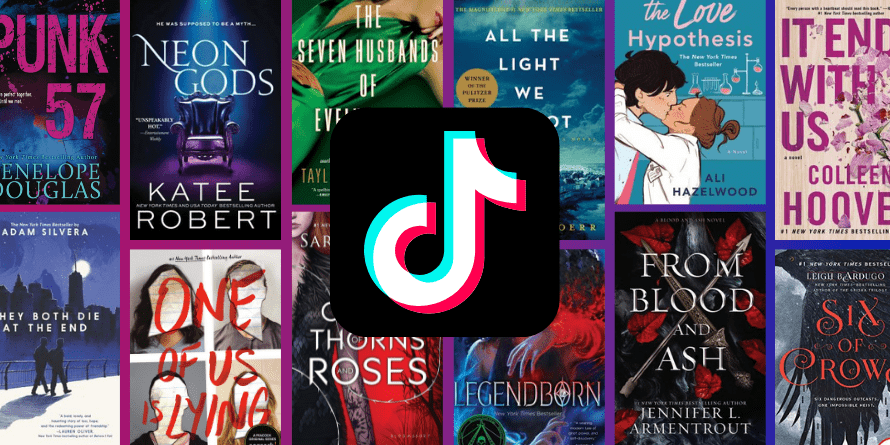
Featured image attribution: Brown, 2022b
As I embarked on this semester’s course materials, one of the themes that stood out was the idea of “third place” as well as the broader implications of libraries as places made for people…not books. I wanted to explore the idea of third place to better understand its benefit—ultimately, its necessity—to society as a whole, particularly in light of today’s over-reliance of (and dare I say, addiction to) technology and how that has impacted general human social connection.
In my small town library, which is adjacent to the middle school, I see our humble teen area go mostly unused and underdeveloped. Worse, adults infiltrate the space before school ends which further deters students from using it when they arrive. Though it is a small space, it is still a designated area that could have so much more life to it—something that feels more welcoming and cozy for students who hang out in the library after school. Being “only” a circulation aide at this point, there seems to be little meaningful effect I can make at this time. Thus, this topic not only resonates with me, but remains top of mind in my work as well. It is so critical for that age group to have a safe place where they can hang out, connect with each other, and—hopefully—build a connection with the library as well.
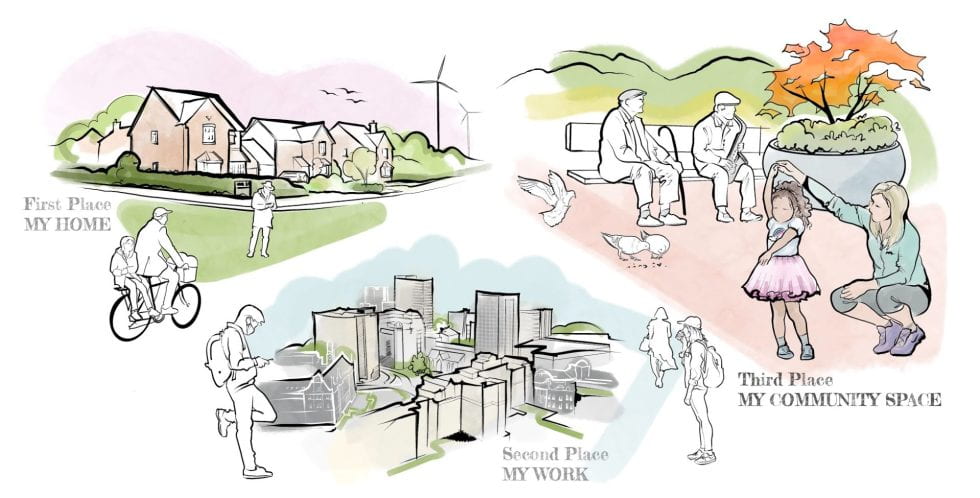
Sociologist Ray Oldenburg coined the phrase “third place”—a freely accessible space where individuals gather to connect socially and foster a sense of community (Leferink, 2018; Roberts-Ganim, 2023). This third place is distinctly different from the home (“first place”) and work or school (“second place”) (Project for Public Spaces, n.d.; Roberts-Ganim, 2023). The primary characteristics of third places are: 1) they are neutral spaces that foster social equity; 2) the main activity is conversation; 3) they are welcoming to strangers but regulars also have deep attachments; and 4) they provide warm spaces rife with a sense of a belonging (Project for Public Spaces, n.d.). Libraries, bars, restaurants, parks, barber shops, and cafes are just a few examples of third places where people can gather and built community (Oldenburg & Christensen, 2025; Roberts-Ganim, 2023).
"When the COVID-19 lockdowns started, a Boston reporter asked if we thought third places would ever come back. We answered with a resounding “Yes!”: we knew that Zoom meetings and happy hours would never replace face-to-face interaction."
— Oldenburg & Christensen (2025)
The concept of third places is perhaps more important and relevant than ever. In an age of marked technological reliance and the addictive pull of social media, we are in the firm clutches of a “loneliness epidemic”. Physical and mental health issues, modern conveniences and technology, and the COVID-19 pandemic have all contributed to increased loneliness and social isolation in the United States (Rodriguez, 2024). Social media connections and followers may feel plentiful and fill a temporary void, but are not likely the people to turn to in the event of a crisis or other life-altering event. Further, loneliness has very real and damaging effects on individuals’ health, longevity, and well-being (Office of the Surgeon General, 2023; Rodriguez, 2024). Figure 1 details how level of social connection influences health: decreased social connection leads to increased negative health outcomes (see Office of the Surgeon General, 2023).
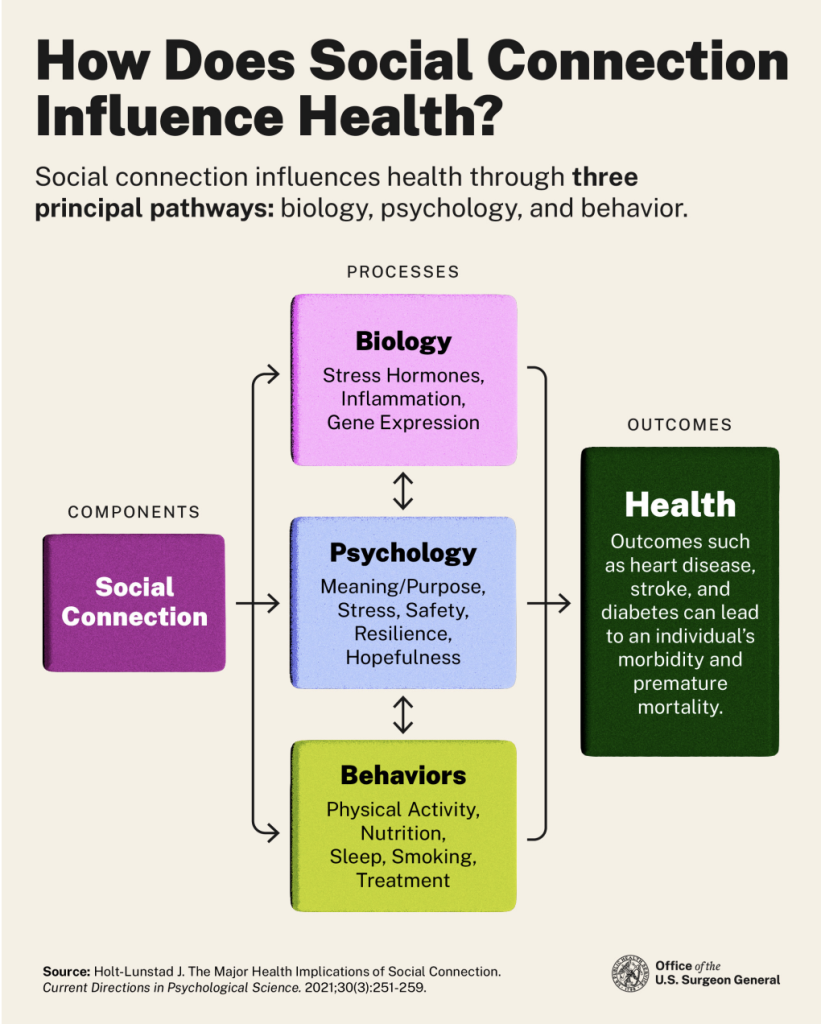
Figure 1: How does social connection influence health? (Office of the Surgeon General, 2023).
Communities with greater social connections have better health outcomes, are better prepared for large-scale events such as natural disasters, have lower levels of violence, demonstrate stronger economic prosperity, and tend to be more active in local government (Office of the Surgeon General, 2023). Another important finding to highlight is that more diverse social networks increase empathy, which is a critical hallmark of altruism and understanding (Office of the Surgeon General, 2023). However, especially in this tech-focused era, it is apparent that finding, building, and fostering in-person social connections has become more difficult for many (Roberts-Ganim, 2023). For some, it is the decrease in third places that exist in their community. Others are unable to access third places due to economic or transportation challenges. Thus, social—human—connections must be nurtured with purpose: ultimately, we must work harder to fight the temptation to simply “stay home” (Oldenburg & Christensen, 2025; Roberts-Ganim, 2023; see also Office of the Surgeon General, 2023).
"We have to be intentional about building socials connections in our life."
— U.S. Surgeon General Dr. Vivek Murthy (Rodriguez, 2024)
As information professionals serving a variety of communities, it is important to be aware of how individuals within those communities may be affected by loneliness and isolation. Further, this knowledge should color our approach to programming, outreach, inclusion, and even simply how the third place is embodied and fostered within our libraries. Stephens (2019) discussed the necessity to remember our physical spaces in the library and identified a variety of “zones” that represent different purposes (e.g. creativity, community, curiosity, etc.). Not only should we consider a variety of spaces, but the development of those spaces should always involve the end users (Leferink, 2018; Stephens, 2018). Involving patrons and soliciting input ensures we act on and provide for their needs. And let’s face it: being a welcoming and effective third place that chips away at the loneliness epidemic gripping our country seems like a pretty good way to serve our communities!
As this is an area that resonates with me, I sought out examples outside of the course materials of how other libraries are creating communal spaces with purpose. Below are four videos demonstrating some fantastic spaces and ideas to meet community needs. These spaces were developed to bring people together for different reasons (such as specific needs, activities, programs, etc.) that in turn encourages communication, conversation, and connection.
As I discussed regarding our small library above, I can only dream of having a space like this for our teens. However, what most resonates here is the care the librarians of Monroe County have taken in developing a welcoming spaces for teens to hang out, socialize, learn, create, and play. Size and space limitations can be circumvented by using what you have creatively and efficiently. And, of course, we must make sure we are meeting the needs of our particular community’s teens.
I love the consideration taken here at the Corner Brook Public Library. As you will see in the video, these are not major or overwhelming changes, but rather thoughtful additions to the space (such as special signing, quiet areas), collection (activities and games), and health and informational resources. They identified a group with particular needs and limitations (dementia and Alzheimer’s patients) and implemented effective ways to make the library welcoming and accessible to them.
Libraries are often a refuge for the homeless population in various communities. The Salt Lake City Public Library sends a strong message to these patrons that they are truly welcome within their doors by giving them a space to relax, breathe, and connect with others who are struggling with similar challenges. I found this very inspiring as a way to further bridge the gap to this population which in turn can better connect them to the resources and assistance they need.
I have a soft spot for this video as it showcases libraries from my home state. The long-running New England television show Chronicle explored interesting spaces found in Massachusetts libraries, including a fully-functioning kitchen classroom as well as live plants and experimental growth projects accessible to all patrons.
IFLA. (2021). 2021 CAT A – My third place [Image]. https://iflaeurope.eu/index.php/youth/entry/my-third-place-60edb5efb7ebc2.73333502
Leferink, S. (2018, January 24). To keep people happy…keep some books. OCLC Next. https://blog.oclc.org/next/to-keep-people-happy-keep-some-books/
Office of the Surgeon General. (2023). Our epidemic of loneliness and isolation [Report]. U.S. Department of Health and Human Services. https://www.hhs.gov/sites/default/files/surgeon-general-social-connection-advisory.pdf
Oldenburg, R., & Christensen, K. (2025, March 21). Third places, true citizen spaces. The UNESCO Courier. https://courier.unesco.org/en/articles/third-places-true-citizen-spaces
Project for Public Spaces. (n.d.). Ray Oldenburg. https://www.pps.org/article/roldenburg
Roberts-Ganim, M. (2023, November 1). Third places: What are they and why are they important to American culture? University of Chicago English Language Institute. https://esl.uchicago.edu/2023/11/01/third-places-what-are-they-and-why-are-they-important-to-american-culture/
Rodriguez, A. (2024, March 23). Americans are lonely and it’s killing them. How the US can combat this new epidemic. USA Today. https://www.usatoday.com/story/news/health/2023/12/24/loneliness-epidemic-u-s-surgeon-general-solution/71971896007/
Stephens, M. (2019). Wholehearted librarianship: Find hope, inspiration, and balance. ALA Editions.
Featured image attribution: “2021 CAT A – My Third Place” (IFLA, 2021)
Hello, I’m Liz!
Hyperlinked Libraries is my final class before graduation, so I am really excited to be ending my journey with this particular topic. I’m eager to dive deeper into this area, especially regarding how we can more effectively serve our communities.
I currently work in Circulation at my local public library (best commute I’ve ever had BTW), but before my foray to librarianship, I worked for over a decade in medical device manufacturing as a quality/regulatory engineer, then another 7-8 years writing and publishing fantasy books. I still write, but it’s taken a backseat while I focus on starting a new career.
I’m a mom of two kiddos: one in elementary school and one in middle school. We have a dog and two guinea pigs. I’m into anime and manga, reading (particularly romantic fantasy), writing, otome games, and Lego. I also play the piano.
© 2026 Libraries to the Future
Theme by Anders Noren — Up ↑