
Hyperlinked Symposium: 3-2-1 Hyperjump!
For Modules 11 & 12, I really enjoyed the concept of “Embracing Messy Learning”. Joshua Block advocates for nonlinear processes that emphasize students’ agency, their focus and commitment through growing pains, stretching, and struggle. As a late-diagnosed neurodivergent, I’ve had many years of studying to reflect on why my process, being different from the conventional approaches expected, is not inherently bad. When I have to adhere to the exact steps and outcomes planned for a different learning style, the material has less impact and a shorter lifespan in my memory. The course output becomes less potent as juicy knowledge mulled into wisdom, and feels like something I just graze past, like viewing famous destinations on a bus tour.
If I don’t allow learning to be messy, I eliminate authentic experiences for students as thinkers and creators (Block, 2014).
That is why I will always be a proponent of creative problem-solving, real case studies, and experiential opportunities. We want the content we offer to stick! We want to engage in a way that gets our hands dirty with the gritty details. To embody the challenges to understand why something is approached a certain way. An easy way to relate to this (as an older sibling) is: no matter how much I explain to my little brother, I’ve learned that talking at him is futile. Sometimes we just have to let them bump their heads, trip over those rocks, and blunder in order to get it. Designing learning spaces is similar. Even though we want to see a wall of projects that celebrate participants’ abilities to produce tangible outcomes that look a certain way, sometimes we’re only teaching them to refine skills of re-creation or replication. If we allow meandering and experimentation, they gain texture and ripen in their own due time (even if it may look like throwing spaghetti on a wall). I understand that it’s not always possible due to time constraints and other systems and structures we have to adhere to, but it feels so validating to come across advocacy work like Block’s article.
Secondly, I want to relate to the Professional Learning Experience content. I have found it so eye-opening to follow the amazing blogs, vlogs, and social media content created by librarians and archivists. They are very honest about career expectations and serve as a more informal Personal Learning Network (PLN). For example, @ablacklibrarian on IG recently made this clip speaking up about vocational awe: https://www.instagram.com/p/DbW5ttIpQnj/
I definitely think this topic should be amplified loud and early in our MLIS journeys. In the course readings, Kelsey Simon introduces the concept of emotional labor. I also relate this to a recent episode of Code Switch in recognition of how important it is to have relevant career advice that viscerally understands your specific lived experiences and identities. As a recovering high achiever who has experienced burnout in my first career, I wish for younger professionals to enter the workforce equipped with this wisdom:
Jodi-Ann Burey, a disabled black author, writes about the barriers and biases Black women face in workplaces: compassion fatigue, nervous system disease, and compounding discriminatory stressors that worsen their health outcomes…just to name a few! This brings me to my last point: for all managers and future leaders out there, please commit to continuous learning about cultural humility as PLE. That way, marginalized and underrepresented workers don’t have yet another hurdle and layer of advocacy to take on. Especially in positions of power, it will be crucial to set aside capacity specifically to address and prioritize the pain points of the staff who uphold your institution. It’s 2026! It’s about damn time we raise the bar for better, safer workplaces with more empathetic management.
References
Block, J. (2014, January 7). Embracing messy learning. Edutopia. https://www.edutopia.org/blog/embracing-messy-learning-joshua-block
KayKay [ABlackLibrarian]. (2026, July). Vocational awe and libraries [Video]. Instagram. https://www.instagram.com/p/DbW5ttIpQnj/
NPR Podcasts. (2026, July 31). Work does not deserve your full self | Code Switch [Video]. YouTube. https://www.youtube.com/watch?v=FVaHELOk2is
Simon, K. (2020). Emotional Labor, Stressors, and Librarians Who Work with the Public. School of Information Student Research Journal, 10(1). https://doi.org/10.31979/2575-2499.100106
View here – https://canva.link/jannaw287inspirationreport
Note: Slide 4 includes a text-as-audio clip (experimenting with Canva AI). You’ll have to unmute the presentation by hovering your mouse over the bottom edge of the screen until the control bar appears.
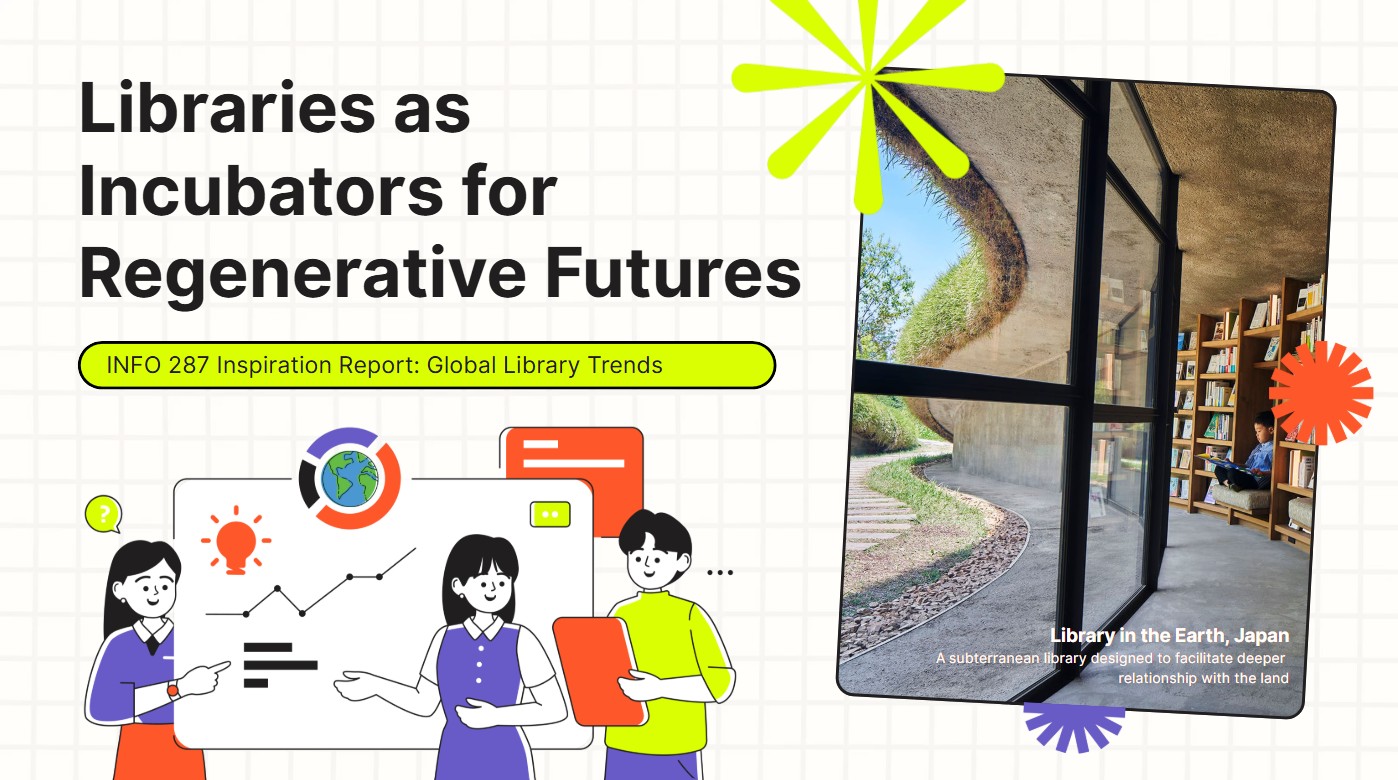
Storytelling is humanity’s oldest technology. Through Module 10, we learn how keeping, sharing, and making stories about our lived experiences deepens our felt sense of shared humanity. Here, I can offer two anecdotes:
Narrative inquiry reminds me of an exercise I was introduced to during an online workshop during the early days of lockdown and virtual facilitation. It was an event hosted by David Ryan Barcega Castro-Harris, a Restorative Justice practitioner. He taught us a unique way of engaging with others, a method borne from restorative circle keeping that helps participants find safety and bridge the distance over Zoom. The practice is to ask, “Who are you?”, listen, and repeat seven times. Each layer reveals another facet of the storyteller’s identity and complexity. The activity also asked me to reflect and ask myself what ways I want to show up and be seen or understood today. When we tried this technique with each other, every person had their own distinct way of responding. This question opened up lots of colorful stories for some, while others listed off ways they are in relation to the world, through titles used by loved ones, backgrounds they come from, or even emotions they are riding out in that very moment.
David also hosts a podcast, where he invites his guests to open with a self-introduction using this practice. Take a listen!
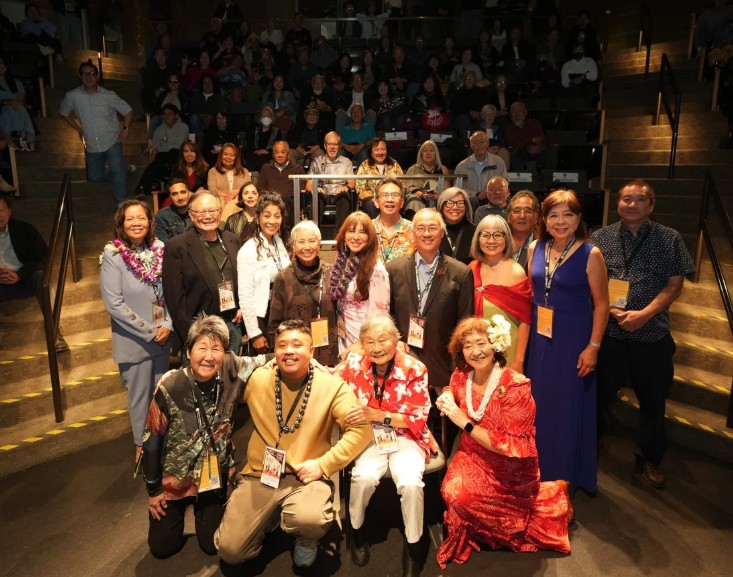
During my years in Los Angeles, I worked at Visual Communications, a media arts nonprofit. There was a program integral to the organizational mission, called Digital Histories. It’s a series of monthly workshops aimed at connecting and engaging with the underrepresented and misrepresented Asian Pacific American (APA) older adult population. Led by professional filmmakers and documentarians, the Digital Histories program cultivates participants’ artistic expression and teaches media literacy to seniors in the community. Since its inception in 2003, the Digital Histories program has produced over 225 short films.
Seniors are particularly marginalized and alienated, so a major benefit of the program is that it helps them connect with new people and discover new skills. The purpose of encouraging them to use their unique voices and perspectives and to shape their own narratives is so that our society continues to honor the fact that passing down stories is an act of power capable of transforming future generations.
We see the positive impact of storytelling, allowing artists to explore and share stories of family histories, coming to terms with a gay child, and senior love and dating. The exhibition of these films educates viewers about APA history in California and illuminates how place helps shape identity and community.
Every year, the cohort’s screenings are sold-out programs at the LA Asian Pacific Film Festival (even with a matinee and evening screening!), and as always, there is not a dry eye in the house. Luckily, you can watch the projects from home, right here: https://vcmedia.org/dh-alumni-projects
References
Digital Histories. (n.d.). Visual Communications. https://vcmedia.org/digital-histories
Parque Biblioteca (Library Parks)
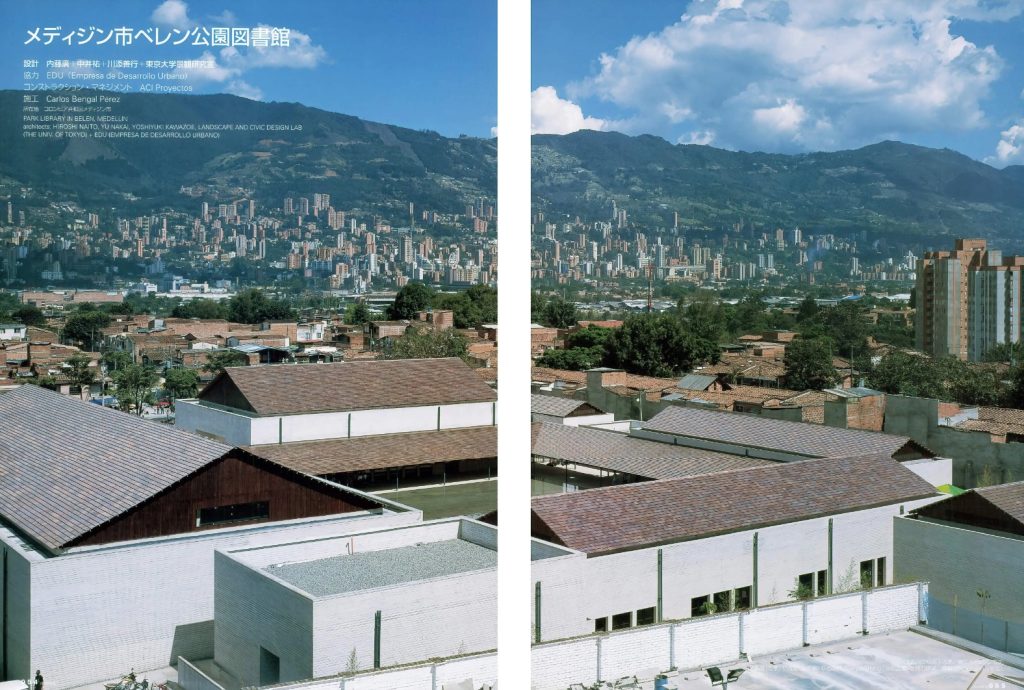
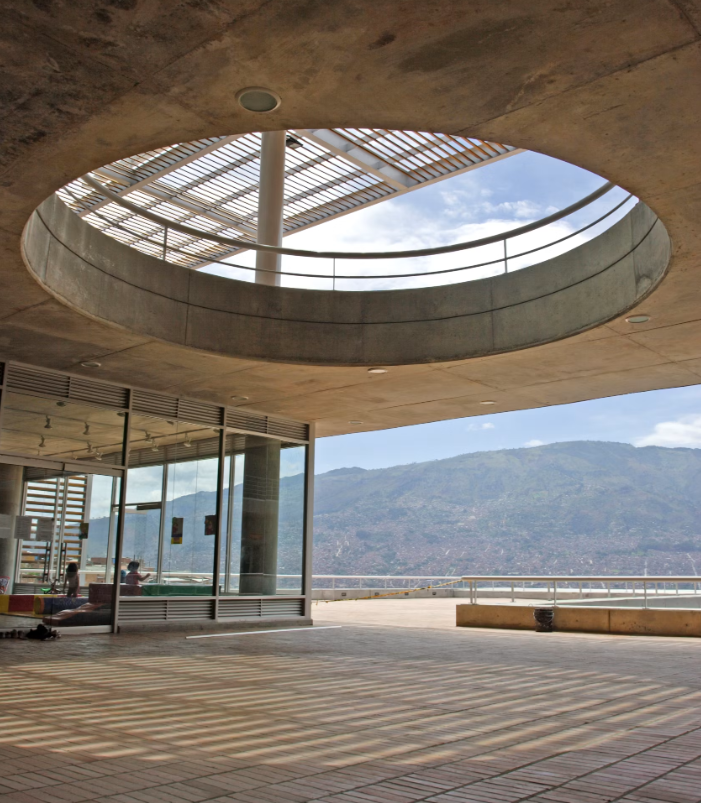
Library parks, coined to describe the multi-purpose urban complexes developed in Medellín, Colombia, reimagine libraries as community centers and catalysts for social well-being. In underserved neighborhoods recovering from socio-economic damage, these campuses combine libraries with green spaces, auditoriums, art galleries, childcare centers, computer labs, and other neighborhood organizations to expand access to education, culture, and social services. Library park projects were strategic in fostering civic engagement, digital inclusion, and community well-being.
By bringing broader infrastructure improvements, library parks enhanced the economic prospects of local residents (Holmes & De Piñeres, 2014). This new model showed the world another way to invest in collective futures. There are 10 library park sites in total, built between 2005 and 2011. The concept has sparked inspiration around the world, including Manguinhos Library Park in Rio de Janeiro, Brazil.
Module 8
Similarly, Anythink Nature Library in Thornton, Colorado, was designed to help visitors reconnect with nature. Features of this campus model include indoor and outdoor programming spaces, gardens, and nature trails that help reintegrate life back into our daily experiences.
In Des Moines, Iowa, we learned about the Outreach Project, a public library and social work partnership helping patrons in crisis by connecting them to trained social services staff or supporting organizations that address psychosocial needs, such as finding housing, obtaining an ID, or accessing public benefits (State Library of Iowa Continuing Education, 2023).
These examples all point to an evolution of service models, in which libraries are melding and integrating various social benefits onsite to support their communities in a more holistic approach. Like Occupational Therapists, both professions aim to “enable people to engage in all the activities that give their life meaning, meet their personal needs, and fulfill their obligations,” which is actually quite a broad umbrella of possibilities and definitions. (Sidenote: OT was a career path I almost pursued! Funny how the same core concepts resonate deeply for me, and I am drawn to this type of work and influence). By designing library programs and spaces, the LIS profession is able to shape many lives and experiences for the better.
All over the world, libraries are adapting to meet their communities’ needs… Who else is gonna do this? – Pam Sandlian Smith, TEDx talk
References
AnyThink Nature Library (n.d.). Anythink. https://www.anythinklibraries.org/anythink-nature-library/?fbclid=IwAR2DgO-k8nU6kNUODo7vTlRXKiEiYSoSeQMC8Aq0QnoLMZoT3d-QKpbSl5M
Biblioteca La Quintana – Tomas Carrasquilla by La Rotta Arquitectos. (2014, October 20). Architizer. https://architizer.com/projects/biblioteca-la-quintana-tomas-carrasquilla/
Holmes, J. S., & De Piñeres, S. a. G. (2014). Medellín’s Biblioteca España: Progress in unlikely places. Stability International Journal of Security and Development, 3(1), 2. https://doi.org/10.5334/sta.cz
PARK LIBRARY IN BELEN, MEDELLIN | Projects Top | Shinkenchiku.DATA. (n.d.). https://data.shinkenchiku.online/en/projects/articles/SK_2008_06_054-0
State Library of Iowa Continuing Education. (2023, February 14). ILOC 2023 | The Outreach Project: A Library-Social Work Partnership [Video]. YouTube. https://www.youtube.com/watch?v=7iquPzVICfI
TEDx Talks. (2013, December 16). What to expect from libraries in the 21st century: Pam Sandlian Smith at TEDxMileHigh [Video]. YouTube. https://www.youtube.com/watch?v=fa6ERdxyYdo
The Gentle Art of World Domination: Art, Occupational Therapy, and Libraries – Library as Incubator project. (2017, April 11). Library as Incubator Project. https://web.archive.org/web/20180601002304/libraryasincubatorproject.org/?p=19205
In exploring library environments around the world, it is hard not to spotlight the 2024 IFLA/James Bennett Public Library of the Year: the Beijing Library. The jaw-dropping photographs left me awestruck! This award is presented to a library that has best combined open, functional architecture with sustainable and creative IT solutions, and has integrated both digital developments and local culture. Check out this walkthrough video~
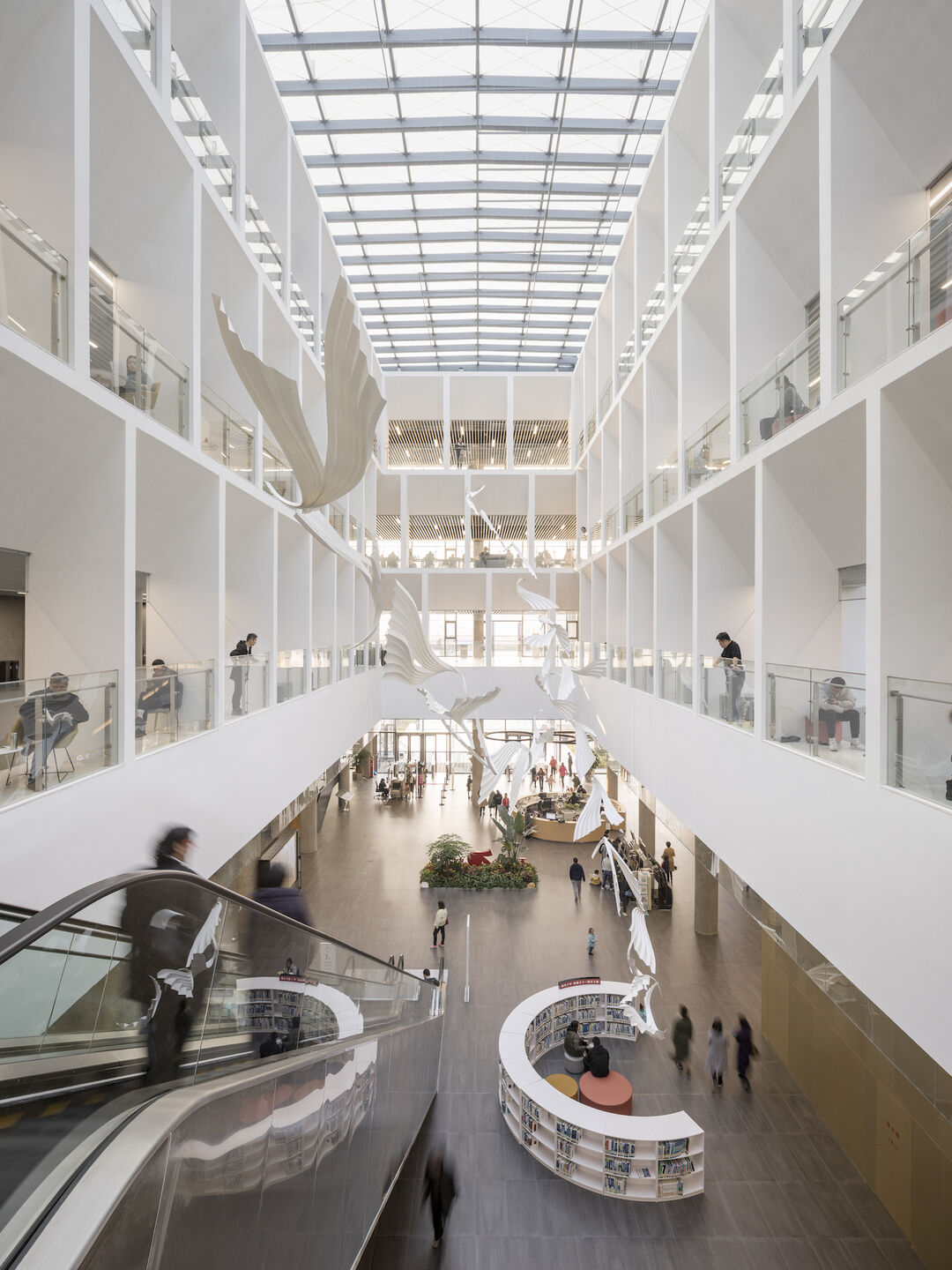
I feel this unique sense of nostalgia seeing China’s booming cultural scene while being of the diaspora. Enviable solarpunk innovations, the (bittersweet) “Chinamaxxing” trend online these days… there is a tension between familiarity and distance, simultaneously. The country my parents took a leap of faith away from; the culture that we savored in morsels, through music and movies – although oftentimes months or years after the original publication. Yet, retaining my heritage was made possible by the inclusive collection of my local Bay Area library. I got to grow in both worlds, simultaneously. I felt that this sentiment was beautifully captured by Pyatetsky (2015):
Although not all immigrants are refugees, they have left their countries, are in unfamiliar territory, and may not have a lot of knowledge about their new culture or a large support structure. As an immigrant myself who regularly used my American public library for access to materials, I cannot emphasize enough how important it was for my family and me to be able to integrate into the community with the help of our local library.
I loved reading about how libraries in Europe are supporting refugees. Of host communities “providing information about refugees to the greater community…about the realities of refugees’ lives, and to support refugees themselves, celebrating their achievements, as well as helping with understanding of why they have become refugees” (Pyatetsky, 2015).
Libraries are spaces to grow capacity in our hearts. Module 6 is a celebration of both built environment and built belonging. The intentionality and strategic vision sow seeds that, hopefully, thrive and blossom once deep roots are nurtured.
Particularly this summer, amidst fascist immigration policies, we’ve been called to reflect on the concept that we are all guests here on Indigenous lands. It is a responsibility, a token of appreciation, and a form of accountability to better steward the world we build here. Librarianship is a form of that stewardship. There is a craft and skill set involved in caring for the shared resources, knowledge, and community. We have ancient technologies (storytelling) and new ones (digital possibilities) to weave together. That’s such a fascinating challenge, and I feel honored to explore!
We have to continue examining how the LIS and GLAM professions address significant barriers or incompatibilities. How can our technologies better integrate with and honor the paradigms of indigenous wisdoms?
In one of the readings, Maeva Masterson shared the Aboriginal perspectives of library goers in Galiwin’ku, Australia: “When I talked to the community library officers, they explained to me that the concepts of fiction and non-fiction were largely absent in their community’s culture” (Thompson & Trevaskis, 2018). For them, the lack of relatability to the Dewey Decimal System required rethinking Eurocentric structures. This ABC News article led to my favorite quote of the Module:
They can come into their library, and they don’t have to reinterpret the world to be able to access a book
I’m so passionate about libraries as safe spaces and as environments that foster utmost inclusivity. We get to create that through cross-pollinating and birthing new cultures – how rad!
References
Pyatetsky, J. (2015, November 24). Refugees supported by public libraries in Europe. Public Libraries Online – A Publication of the Public Library Association. https://publiclibrariesonline.org/2015/11/refugees-supported-by-public-libraries-in-europe/
Thompson, J., & Trevaskis, L. (2018, August 22). Galiwin’ku library closes book on the Dewey Decimal System to prioritise Yolngu culture. ABC News. https://www.abc.net.au/news/2018-08-22/remote-galiwinku-library-closes-book-on-dewey-decimal/10147024
My career before embarking on the MLIS journey involved running community spaces. I worked at a nonprofit, on the edge of two social ecologies: real estate and philanthropy, consulting on community space projects for Google.org, LinkedIn, CZI, and the Golden State Warriors Foundation. I facilitated a network of several nonprofit-centered spaces that uphold the shared vision of facilities that foster connection, including CalEndow, KFF, Omni Commons, and Restore Oakland. Because of this work experience, I immediately resonated with the Four-Space Model (Jochumsen et al., 2012). In the Bay Area, there were plenty of initiatives that tried to answer to all four needs: inspiration space, learning space, performative space, and meeting space. The TEDx Talk embedded below is an example of the conversations that fueled the visions at work.
Replace the term “community space” with “libraries,” and you’ll find there’s plenty of overlap in objectives and shared strategies. The key points in Module 4 highlight how libraries create and facilitate connections. For example, I really enjoyed Shannon Mattern’s piece in the Places journal. Our libraries function as part of infrastructural ecologies:
“And we must consider how those infrastructures can embody the epistemological, political, economic and cultural values that we want to define our communities”, (Mattern, 2014).
Perhaps my favorite aspect of a future in library work is that I can continue committing to the purposeful work of increasing access and bridging communities through participatory practices. As Mattern reiterates:
Public libraries are often seen as “opportunity institutions,” opening doors to, and for, the disenfranchised… A recent report by the Center for an Urban Future highlighted the benefits to immigrants, seniors, individuals searching for work, public school students and aspiring entrepreneurs: “No other institution, public or private, does a better job of reaching people who have been left behind in today’s economy, have failed to reach their potential in the city’s public school system or who simply need help navigating an increasingly complex world.”
It truly takes a village – especially cross-sector partnerships and hyperlinked approaches – to build a resilient safety net for all. When we are hyperlinked, we are less likely to allow each other to fall through the cracks. If social services and resources can be accessed in libraries, if civic engagement, relationship-building, and placemaking can be deepened through library programs and small daily interactions of care, we stand to strengthen the social threads that bind us in a holistic, healthy ecosystem. (Read the 11 Principles for Creating Great Community Places here: https://www.pps.org/article/11steps)
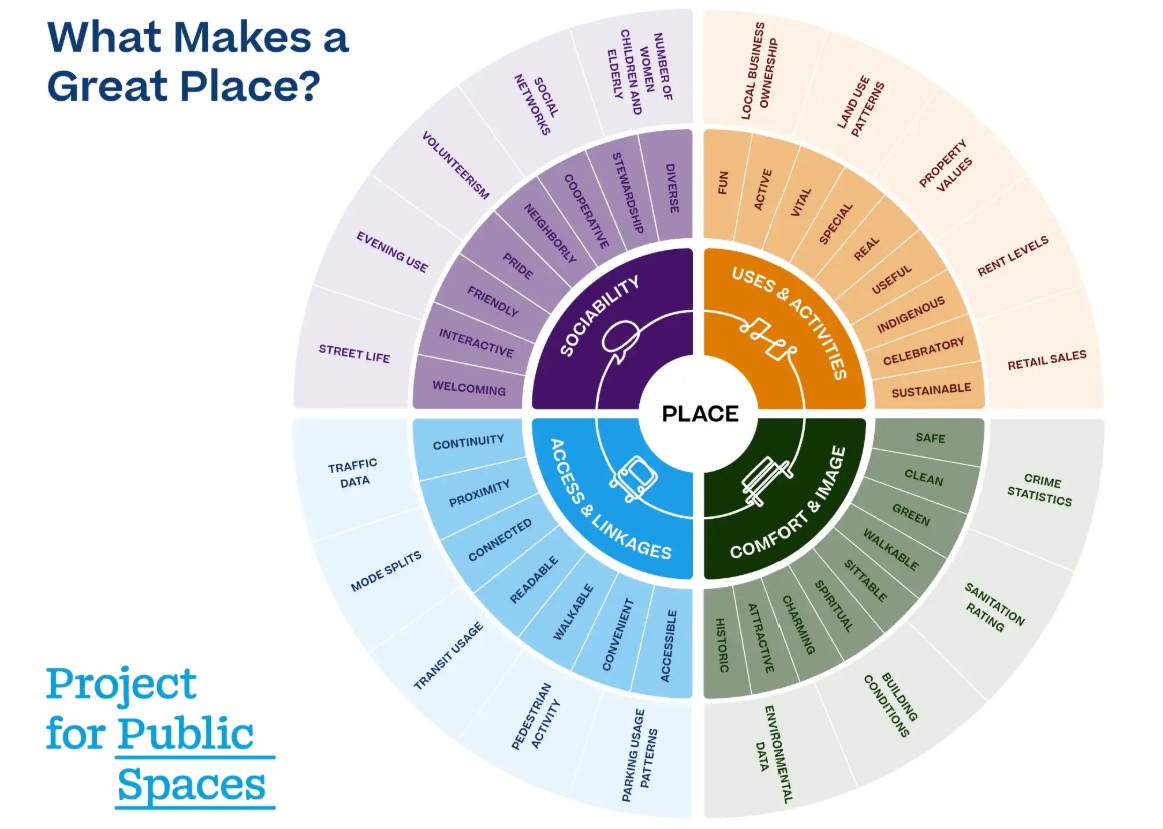
Participatory culture is especially meaningful to me because it brings in voices that are often discounted elsewhere in society. Libraries are where certain people who may not receive the dignity and respect of being treated as patrons, clients, or constituents elsewhere are intentionally welcomed and integrated into the iterative design and evolution of a place they also belong to.
Libraries blend the edges of information science, third spaces, and a rad petri dish of socialism. I’m excited to be entering this field and bring my nonprofit experience to library management and budget-conscious program production. I am inspired by Professor Stephen’s quote:
“We do this with humanity and heart”
References
Jochumsen, H., Rasmussen, C. H., & Skot‐Hansen, D. (2012). The four spaces – a new model for the public library. New Library World, 113(11/12), 586–597. https://doi.org/10.1108/03074801211282948
Mattern, S. (2014). Library as Infrastructure. Places Journal. https://doi.org/10.22269/140609
TEDx Talks. (2021, March 30). Changing the narratives with futuristic thinking: youth engagement | Ilana Lipsett | TEDxArochukwu [Video]. YouTube. https://www.youtube.com/watch?v=7gVMh_kyTVs
What is placemaking? (2007). Project for Public Spaces. https://www.pps.org/article/what-is-placemaking
One of my gig work roles right now is helping the City of Portland administer vouchers for low-income residents to purchase E-bikes. This role, largely customer support, has shown me important perspectives on society, and reconnect with community at the grassroots level.
Firstly, the digital gap is exponentially widening. This is a concern as more and more applications to social benefits are fully online. While it reduces overhead costs not to have an office location, many of the callers I serve ask (out of frustration) if they can just come in and finish the application in-office. A lot of my time is spent on coaching callers over the phone on how to use their devices, how to answer CAPTCHA, and how to upload different file types. While this work (on good days) brings me joy (I know, it’s definitely not everyone’s cup of tea, but I grew up coaching my immigrant parents through much of the same painful workflows), I am concerned as the digital gap continues to accelerate and become more complex.
People are afraid of scams and other technicalities they don’t have proper training in. Phone screens are challenging for elders, but they also don’t own any larger devices. Sometimes, since it can take multiple days of exchanges to resolve their cases, we build rapport and develop a faint sense of familiarity. The callers will keep yapping and start telling me stories about their current lives and their troubles as they get left behind by a rapidly evolving society. I realize I’m witnessing the loneliness epidemic firsthand, and try to hold space for their feelings of being left behind.
If a caller is grappling with an issue that I know can be better addressed in-person, I always make a point of asking, “Are you able to access a public library?” and I love it when the answer is, “Oh, I forgot I can get this type of support in a library!”
For Module 5, the focus is on libraries’ ever-expanding catch-all role in society. The communities that libraries often act as a safety net for include the elderly and unhoused. As Tareq Nurul Hasan writes, libraries serve as sanctuaries for mental health and well-being. Maintaining a non-judgmental attitude and providing trustworthy service without stigma is a shared practice. After my hotline shifts, I feel more resolute about ensuring my future purpose can address these issues.
References
Hasan, T. N. (2023, June 27). ‘Free, non-judgemental, accessible’: How your local library is a sanctuary of health and wellness. SBS Language. https://www.sbs.com.au/language/bangla/en/article/free-nonjudgmental-and-accessible-how-your-local-library-is-a-sanctuary-of-health-and-wellness/t15blzsi9
Williams, A., & Muller, C. (2021, March 17). Libraries are bridging the digital divide. Internet Society. https://www.internetsociety.org/blog/2021/03/libraries-are-bridging-the-digital-divide/
Hi all,
Thanks for landing here with me. My name is Janna (she/they), and I am looking forward to our Hyperlinked course because I truly believe in libraries’ potential and their role in building better futures. I come from a career supporting historically marginalized and economically disenfranchised communities. Libraries are among the few institutions with a shared commitment to uplifting the needs of these constituents. Some areas of interest currently include information literacy and bridging the digital divide. I think some of the values of Hyperlinked Libraries mirror those used in grassroots community organizing, such as participatory and compassion-centered engagement.
This is one of my first electives, as I just finished INFO 200 last semester. Blogging was a lot of fun, and I enjoyed Professor Michael’s lecture recordings. This semester, I want to do more audio or podcast-adjacent posts! I’d love to take this chance to explore my narrative voice (even though I’m the type of person who cringes when I hear my voice played back).
Here’s a little infographic I made on Canva:

I’m excited about exploring global library communities and reading your perspectives on LIS throughout this semester!
Warmly,
Janna