Monthly Archives: July 2026

Reflection Blogging: Power of Stories

Storytelling is humanity’s oldest technology. Through Module 10, we learn how keeping, sharing, and making stories about our lived experiences deepens our felt sense of shared humanity. Here, I can offer two anecdotes:

Narrative inquiry reminds me of an exercise I was introduced to during an online workshop during the early days of lockdown and virtual facilitation. It was an event hosted by David Ryan Barcega Castro-Harris, a Restorative Justice practitioner. He taught us a unique way of engaging with others, a method borne from restorative circle keeping that helps participants find safety and bridge the distance over Zoom. The practice is to ask, “Who are you?”, listen, and repeat seven times. Each layer reveals another facet of the storyteller’s identity and complexity. The activity also asked me to reflect and ask myself what ways I want to show up and be seen or understood today. When we tried this technique with each other, every person had their own distinct way of responding. This question opened up lots of colorful stories for some, while others listed off ways they are in relation to the world, through titles used by loved ones, backgrounds they come from, or even emotions they are riding out in that very moment.

David also hosts a podcast, where he invites his guests to open with a self-introduction using this practice. Take a listen!

During my years in Los Angeles, I worked at Visual Communications, a media arts nonprofit. There was a program integral to the organizational mission, called Digital Histories. It’s a series of monthly workshops aimed at connecting and engaging with the underrepresented and misrepresented Asian Pacific American (APA) older adult population. Led by professional filmmakers and documentarians, the Digital Histories program cultivates participants’ artistic expression and teaches media literacy to seniors in the community. Since its inception in 2003, the Digital Histories program has produced over 225 short films.

Seniors are particularly marginalized and alienated, so a major benefit of the program is that it helps them connect with new people and discover new skills. The purpose of encouraging them to use their unique voices and perspectives and to shape their own narratives is so that our society continues to honor the fact that passing down stories is an act of power capable of transforming future generations.

We see the positive impact of storytelling, allowing artists to explore and share stories of family histories, coming to terms with a gay child, and senior love and dating. The exhibition of these films educates viewers about APA history in California and illuminates how place helps shape identity and community.

Every year, the cohort’s screenings are sold-out programs at the LA Asian Pacific Film Festival (even with a matinee and evening screening!), and as always, there is not a dry eye in the house. Luckily, you can watch the projects from home, right here: https://vcmedia.org/dh-alumni-projects
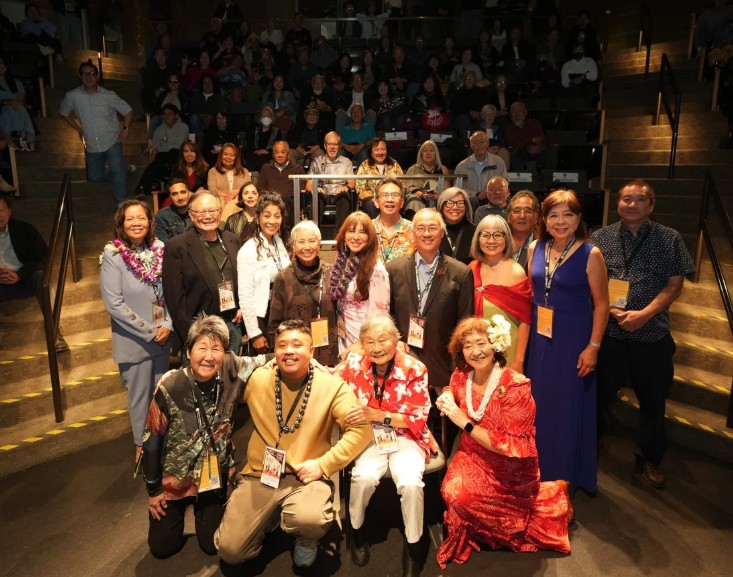
Source: https://vcmedia.org/digital-histories


References

Digital Histories. (n.d.). Visual Communications. https://vcmedia.org/digital-histories
Reflection Blogging: New Models

Parque Biblioteca (Library Parks)

Library parks, coined to describe the multi-purpose urban complexes developed in Medellín, Colombia, reimagine libraries as community centers and catalysts for social well-being. In underserved neighborhoods recovering from socio-economic damage, these campuses combine libraries with green spaces, auditoriums, art galleries, childcare centers, computer labs, and other neighborhood organizations to expand access to education, culture, and social services. Library park projects were strategic in fostering civic engagement, digital inclusion, and community well-being.

By bringing broader infrastructure improvements, library parks enhanced the economic prospects of local residents (Holmes & De Piñeres, 2014). This new model showed the world another way to invest in collective futures. There are 10 library park sites in total, built between 2005 and 2011. The concept has sparked inspiration around the world, including Manguinhos Library Park in Rio de Janeiro, Brazil.

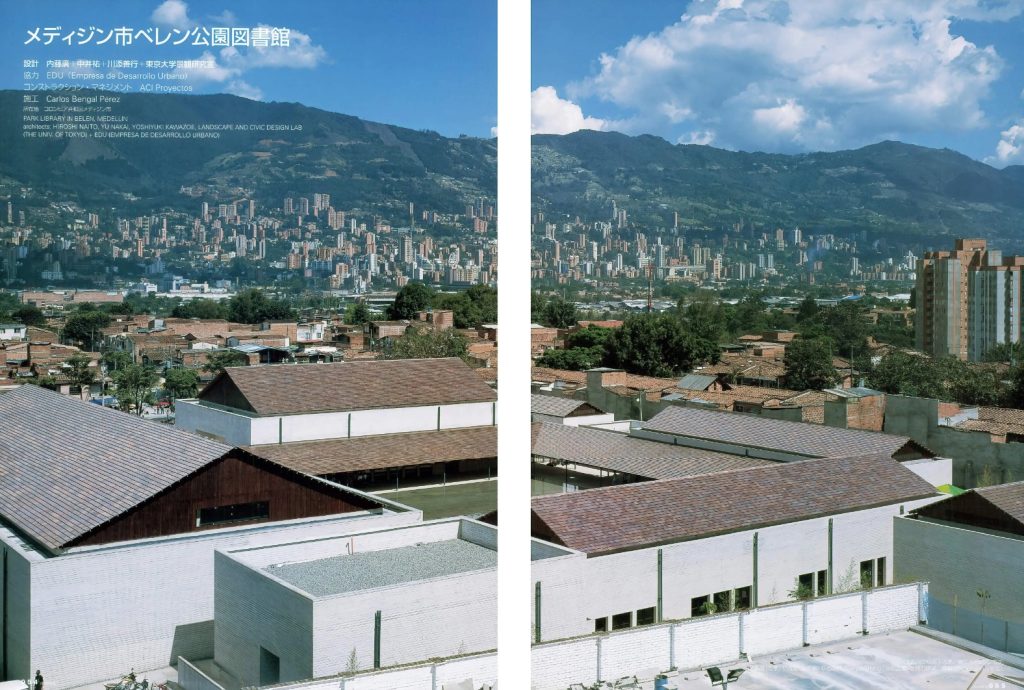
Belén Library Park designed by Japanese architect Hiroshi Naito
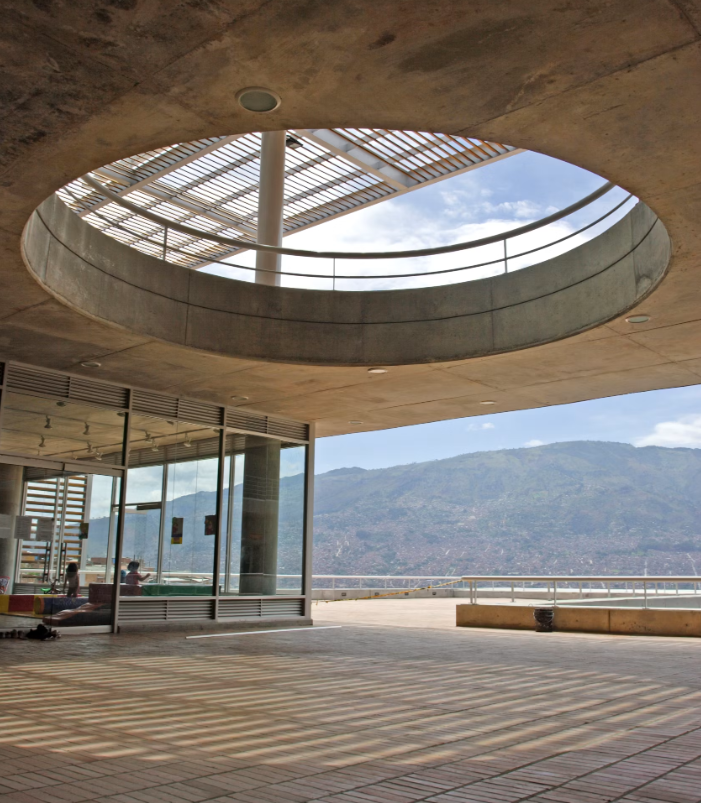
La Quintana library park (Parque Biblioteca Tomás Carrasquilla), a central cultural zone uniting the surrounding neighborhoods naturally separated by La Quintana Creek.

Module 8 

Similarly, Anythink Nature Library in Thornton, Colorado, was designed to help visitors reconnect with nature. Features of this campus model include indoor and outdoor programming spaces, gardens, and nature trails that help reintegrate life back into our daily experiences.

In Des Moines, Iowa, we learned about the Outreach Project, a public library and social work partnership helping patrons in crisis by connecting them to trained social services staff or supporting organizations that address psychosocial needs, such as finding housing, obtaining an ID, or accessing public benefits (State Library of Iowa Continuing Education, 2023).

These examples all point to an evolution of service models, in which libraries are melding and integrating various social benefits onsite to support their communities in a more holistic approach. Like Occupational Therapists, both professions aim to “enable people to engage in all the activities that give their life meaning, meet their personal needs, and fulfill their obligations,” which is actually quite a broad umbrella of possibilities and definitions. (Sidenote: OT was a career path I almost pursued! Funny how the same core concepts resonate deeply for me, and I am drawn to this type of work and influence). By designing library programs and spaces, the LIS profession is able to shape many lives and experiences for the better.

All over the world, libraries are adapting to meet their communities’ needs… Who else is gonna do this? – Pam Sandlian Smith, TEDx talk

References

AnyThink Nature Library (n.d.). Anythink. https://www.anythinklibraries.org/anythink-nature-library/?fbclid=IwAR2DgO-k8nU6kNUODo7vTlRXKiEiYSoSeQMC8Aq0QnoLMZoT3d-QKpbSl5M

Biblioteca La Quintana – Tomas Carrasquilla by La Rotta Arquitectos. (2014, October 20). Architizer. https://architizer.com/projects/biblioteca-la-quintana-tomas-carrasquilla/

Holmes, J. S., & De Piñeres, S. a. G. (2014). Medellín’s Biblioteca España: Progress in unlikely places. Stability International Journal of Security and Development, 3(1), 2. https://doi.org/10.5334/sta.cz

PARK LIBRARY IN BELEN, MEDELLIN | Projects Top | Shinkenchiku.DATA. (n.d.). https://data.shinkenchiku.online/en/projects/articles/SK_2008_06_054-0

State Library of Iowa Continuing Education. (2023, February 14). ILOC 2023 | The Outreach Project: A Library-Social Work Partnership [Video]. YouTube. https://www.youtube.com/watch?v=7iquPzVICfI

TEDx Talks. (2013, December 16). What to expect from libraries in the 21st century: Pam Sandlian Smith at TEDxMileHigh [Video]. YouTube. https://www.youtube.com/watch?v=fa6ERdxyYdo

The Gentle Art of World Domination: Art, Occupational Therapy, and Libraries – Library as Incubator project. (2017, April 11). Library as Incubator Project. https://web.archive.org/web/20180601002304/libraryasincubatorproject.org/?p=19205

Reflection Blogging: Hyperlinked Environments

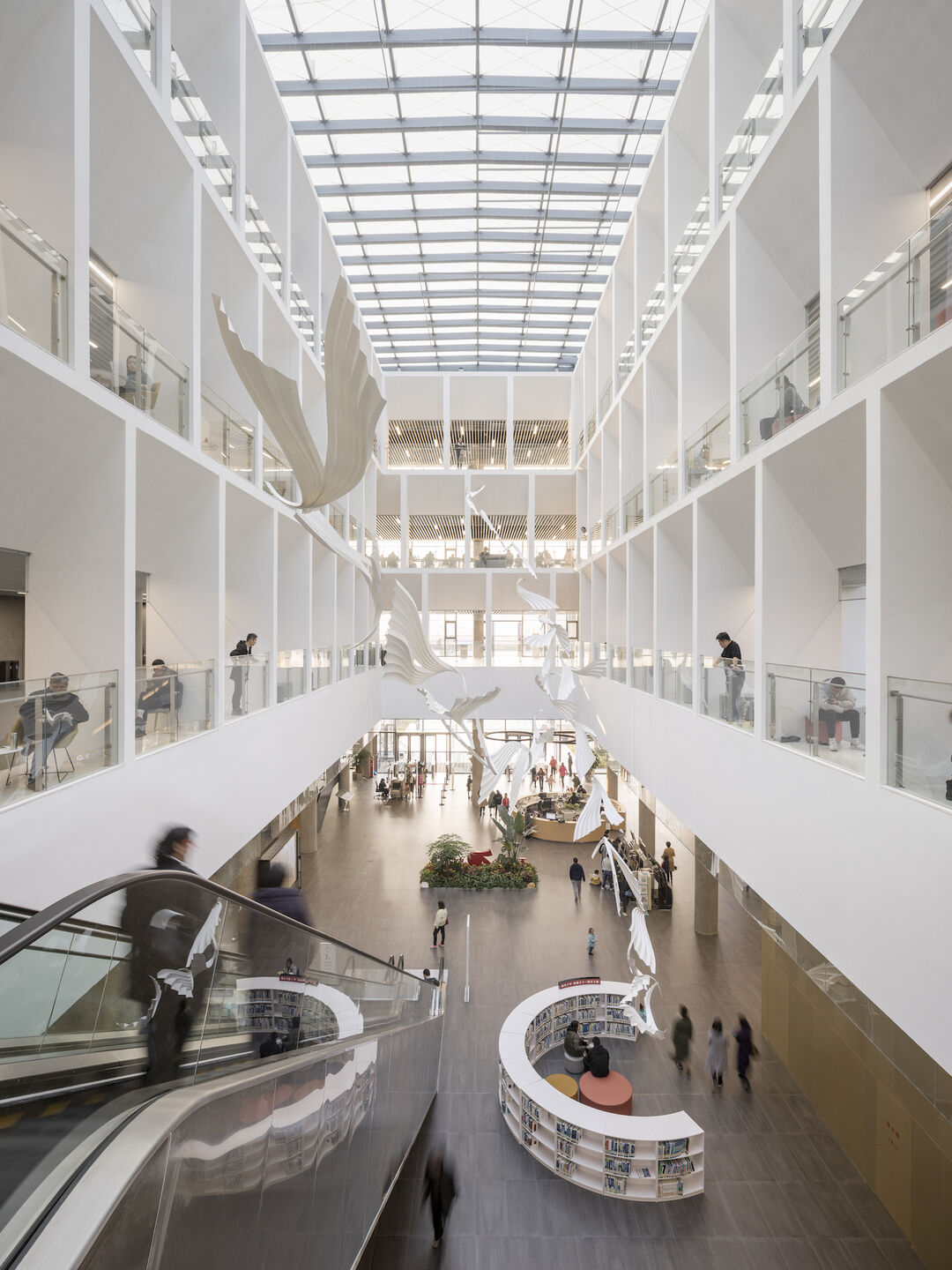
In exploring library environments around the world, it is hard not to spotlight the 2024 IFLA/James Bennett Public Library of the Year: the Beijing Library. The jaw-dropping photographs left me awestruck! This award is presented to a library that has best combined open, functional architecture with sustainable and creative IT solutions, and has integrated both digital developments and local culture. Check out this walkthrough video~

Ningbo New Library built by Schmidt Hammer Lassen Architects, Photograph by Adam Mørk

I feel this unique sense of nostalgia seeing China’s booming cultural scene while being of the diaspora. Enviable solarpunk innovations, the (bittersweet) “Chinamaxxing” trend online these days… there is a tension between familiarity and distance, simultaneously. The country my parents took a leap of faith away from; the culture that we savored in morsels, through music and movies – although oftentimes months or years after the original publication. Yet, retaining my heritage was made possible by the inclusive collection of my local Bay Area library. I got to grow in both worlds, simultaneously. I felt that this sentiment was beautifully captured by Pyatetsky (2015):

Although not all immigrants are refugees, they have left their countries, are in unfamiliar territory, and may not have a lot of knowledge about their new culture or a large support structure. As an immigrant myself who regularly used my American public library for access to materials, I cannot emphasize enough how important it was for my family and me to be able to integrate into the community with the help of our local library.

I loved reading about how libraries in Europe are supporting refugees. Of host communities “providing information about refugees to the greater community…about the realities of refugees’ lives, and to support refugees themselves, celebrating their achievements, as well as helping with understanding of why they have become refugees” (Pyatetsky, 2015).

Libraries are spaces to grow capacity in our hearts. Module 6 is a celebration of both built environment and built belonging. The intentionality and strategic vision sow seeds that, hopefully, thrive and blossom once deep roots are nurtured.

Particularly this summer, amidst fascist immigration policies, we’ve been called to reflect on the concept that we are all guests here on Indigenous lands. It is a responsibility, a token of appreciation, and a form of accountability to better steward the world we build here. Librarianship is a form of that stewardship. There is a craft and skill set involved in caring for the shared resources, knowledge, and community. We have ancient technologies (storytelling) and new ones (digital possibilities) to weave together. That’s such a fascinating challenge, and I feel honored to explore!

We have to continue examining how the LIS and GLAM professions address significant barriers or incompatibilities. How can our technologies better integrate with and honor the paradigms of indigenous wisdoms?

In one of the readings, Maeva Masterson shared the Aboriginal perspectives of library goers in Galiwin’ku, Australia: “When I talked to the community library officers, they explained to me that the concepts of fiction and non-fiction were largely absent in their community’s culture” (Thompson & Trevaskis, 2018). For them, the lack of relatability to the Dewey Decimal System required rethinking Eurocentric structures. This ABC News article led to my favorite quote of the Module:

They can come into their library, and they don’t have to reinterpret the world to be able to access a book

I’m so passionate about libraries as safe spaces and as environments that foster utmost inclusivity. We get to create that through cross-pollinating and birthing new cultures – how rad! 

References

Pyatetsky, J. (2015, November 24). Refugees supported by public libraries in Europe. Public Libraries Online – A Publication of the Public Library Association. https://publiclibrariesonline.org/2015/11/refugees-supported-by-public-libraries-in-europe/

Thompson, J., & Trevaskis, L. (2018, August 22). Galiwin’ku library closes book on the Dewey Decimal System to prioritise Yolngu culture. ABC News. https://www.abc.net.au/news/2018-08-22/remote-galiwinku-library-closes-book-on-dewey-decimal/10147024