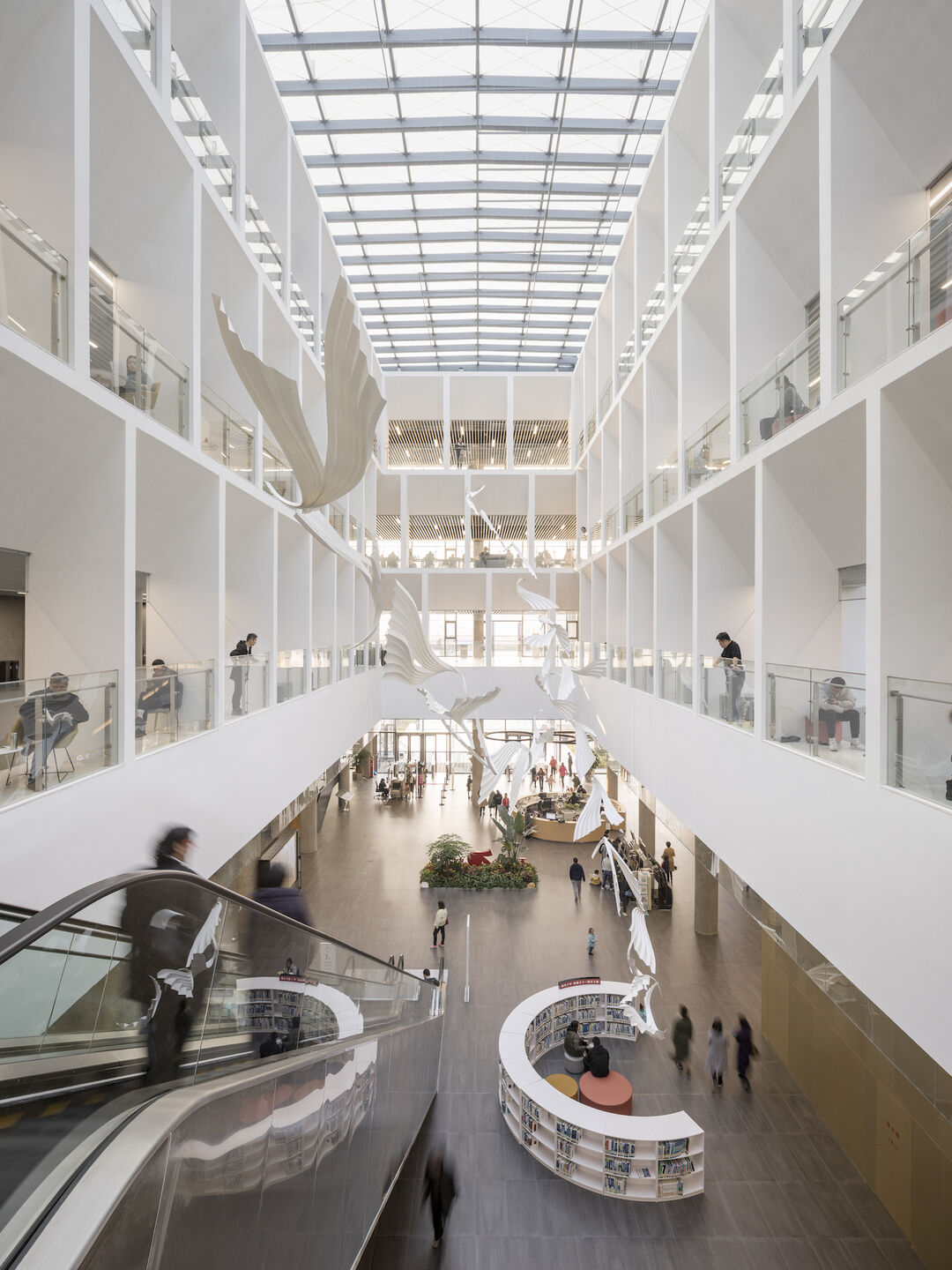
In exploring library environments around the world, it is hard not to spotlight the 2024 IFLA/James Bennett Public Library of the Year: the Beijing Library. The jaw-dropping photographs left me awestruck! This award is presented to a library that has best combined open, functional architecture with sustainable and creative IT solutions, and has integrated both digital developments and local culture. Check out this walkthrough video~
I feel this unique sense of nostalgia seeing China’s booming cultural scene while being of the diaspora. Enviable solarpunk innovations, the (bittersweet) “Chinamaxxing” trend online these days… there is a tension between familiarity and distance, simultaneously. The country my parents took a leap of faith away from; the culture that we savored in morsels, through music and movies – although oftentimes months or years after the original publication. Yet, retaining my heritage was made possible by the inclusive collection of my local Bay Area library. I got to grow in both worlds, simultaneously. I felt that this sentiment was beautifully captured by Pyatetsky (2015):
Although not all immigrants are refugees, they have left their countries, are in unfamiliar territory, and may not have a lot of knowledge about their new culture or a large support structure. As an immigrant myself who regularly used my American public library for access to materials, I cannot emphasize enough how important it was for my family and me to be able to integrate into the community with the help of our local library.
I loved reading about how libraries in Europe are supporting refugees. Of host communities “providing information about refugees to the greater community…about the realities of refugees’ lives, and to support refugees themselves, celebrating their achievements, as well as helping with understanding of why they have become refugees” (Pyatetsky, 2015).
Libraries are spaces to grow capacity in our hearts. Module 6 is a celebration of both built environment and built belonging. The intentionality and strategic vision sow seeds that, hopefully, thrive and blossom once deep roots are nurtured.
Particularly this summer, amidst fascist immigration policies, we’ve been called to reflect on the concept that we are all guests here on Indigenous lands. It is a responsibility, a token of appreciation, and a form of accountability to better steward the world we build here. Librarianship is a form of that stewardship. There is a craft and skill set involved in caring for the shared resources, knowledge, and community. We have ancient technologies (storytelling) and new ones (digital possibilities) to weave together. That’s such a fascinating challenge, and I feel honored to explore!
We have to continue examining how the LIS and GLAM professions address significant barriers or incompatibilities. How can our technologies better integrate with and honor the paradigms of indigenous wisdoms?
In one of the readings, Maeva Masterson shared the Aboriginal perspectives of library goers in Galiwin’ku, Australia: “When I talked to the community library officers, they explained to me that the concepts of fiction and non-fiction were largely absent in their community’s culture” (Thompson & Trevaskis, 2018). For them, the lack of relatability to the Dewey Decimal System required rethinking Eurocentric structures. This ABC News article led to my favorite quote of the Module:
They can come into their library, and they don’t have to reinterpret the world to be able to access a book
I’m so passionate about libraries as safe spaces and as environments that foster utmost inclusivity. We get to create that through cross-pollinating and birthing new cultures – how rad!
References
Pyatetsky, J. (2015, November 24). Refugees supported by public libraries in Europe. Public Libraries Online – A Publication of the Public Library Association. https://publiclibrariesonline.org/2015/11/refugees-supported-by-public-libraries-in-europe/
Thompson, J., & Trevaskis, L. (2018, August 22). Galiwin’ku library closes book on the Dewey Decimal System to prioritise Yolngu culture. ABC News. https://www.abc.net.au/news/2018-08-22/remote-galiwinku-library-closes-book-on-dewey-decimal/10147024