
In 2006, Karen Schneider published a post titled “The User Is Not Broken: A meme masquerading as a manifesto” on her blog, the Free Range Librarian. A particular thought from her discussion stood out to me, and that is “the user is the sun”. For this assignment, I want to dig deeper into this notion and reflect on this concept exactly two decades after Schneider’s post.
How is the user “the sun”?
In “The User Is (Still) Not Broken” written by Bryan Kenney in 2014, the author expands on the idea of the user being the sun as depicted in Schneider’s post. He emphasizes that libraries should focus on the people and how they interact with the systems created; the user is never wrong, but rather, the systems are broken (Kenney, 2014). This idea aligns with the hyperlinked library practice as outlined in “The Heart of Librarianship” where author Michael Stephens (@michael) states that libraries must evolve to meet user preferences even if the journey to accomplishment is inevitably evolutionary and most definitely chaotic (Stephens, 2016). The user should be the center of gravity for library services and resources, and we must be ready to evolve and keep up with interests.
What is holding libraries back?
Like Stephens, I also find myself pondering intensely about this question because, really, what exactly are the factors preventing libraries from moving forward and making executive decisions that may potentially alter entire organizational landscapes? Take my workplace, for instance—the Monterey Park Bruggemeyer Library has over 1,300 ESL and Citizenship learners yearly, but our in-house literacy collection is not only outdated, but also poor in circulation. Regarding this issue, management has yet to implement weeding procedures and give directions to update the catalogs to include newer, more relevant books that reflect the needs of learners wanting more bilingual materials. I have come to the conclusion that there could be many factors barring libraries, including my place of employment, from truly evolving: a lack of intention from management, a lack of budget to purchase new collections and renovate library spaces, and even a fear of hard labor (all the re-cataloging) going in vain.
Embracing hyperlinked library practices
The San Francisco Public Library’s (SFPL) teen space, “The Mix”, is a great example of user-centered creation where a group of teenagers collaborated with an architect to design a teen exclusive zone with study nooks, white boards and projectors, and chill seating areas that allow eating (O’Brien, 2019). The library simply asked the teens what they wanted in this space, and it delivered in the final outcome. “The Mix” illustrates how dynamic and creative change can be when users are involved in the decision making process and design. Perhaps when users are consulted about library decisions, the fear of the evolution of library services is mitigated because there is a sense of affirmation from target audiences.
How to be a good planet
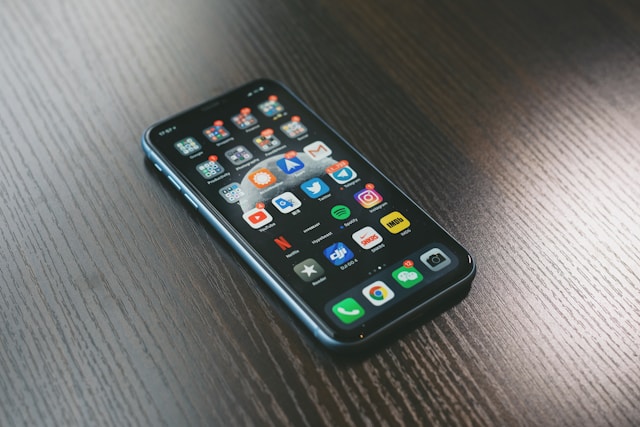
As a LIS student who currently works in a public library, I can see that I have already been implementing Library 2.0 changes to my organization before even realizing the term existed! Through daily interactions with community patrons, I have developed a strong understanding of what programs they want to see in the library. Every year, I make it a priority to lead a 3-week phone technology workshop where I focus on helping ESL learners understand elements of the phone in English. This may only be one instance, but if we, as information professionals, involve users in defining library services, then we are moving in a positive direction that brings us closer to Library 2.0.
In order for a planet to be a successful planet, it must orbit the sun. If the user is the sun, then we need to continuously change and maintain relevancy to stay connected to the sun.
References
Casey, M. E., & Savastinuk, L. C. (2007). Library 2.0: A guide to participatory library service. Information Today, Inc. https://287.hyperlib.sjsu.edu/wp-content/uploads/2019/07/Library2.0Text.pdf
Kenney, B. (2014, January 27). The user is (still) not broken. Publishers Weekly. http://www.publishersweekly.com/pw/by-topic/industry-news/libraries/article/60780-the-user-is-still-not-broken.html
Literacy for All of Monterey Park. (2025). LAMP monthly statistical report 2024-2025 [Internal statistics]. Monterey Park Bruggemeyer Library.
Monterey Park Bruggemeyer Library. (n.d.). Literacy for All of Monterey Park. https://www.montereypark.ca.gov/264/English-Classes-Citizenship
O’Brien, C. (2019, June 24). How San Francisco’s public libraries are embracing their changing role. Shareable. https://www.shareable.net/how-san-francisco-public-libraries-are-embracing-their-changing-role/
Schneider, K. G. (2006, June 3). The user is not broken: A meme masquerading as a manifesto. Free Range Librarian. http://freerangelibrarian.com/2006/06/03/the-user-is-not-broken-a-meme-masquerading-as-a-manifesto/
Stephens, M. (2016). The heart of librarianship: Attentive, positive, and purposeful change. ALA Editions. https://www.dropbox.com/s/gc9ecokb972xgil/HeartofLibrarianship.pdf?dl=0
I totally got on board with your post about the challenges of library staff to implement changes to allow for Library 2.0. I know in my library, its mostly due to lack of staff, with some budget constraints in there too. The ability to show the user that the library listens to what they need is a big thing. I like that you are helping ESL patrons use their phones by teaching them how to use it in English. Sometimes it doesn’t have to involve technology, but simply putting yourself out there and encouraging use of the resources at the library. Some of the other examples that Stephens provided from various libraries that included interactive panels to tell and share stories, provide feedback on books, services, programming, and more is something that I wish my library would do more of.
Hi Ruby – I really enjoyed your post, especially the frank discussion regarding constraints that are sometimes placed on library staff. I have found myself getting excited about ideas presented in our readings, only to come back to reality with the thought that the leaders at my place of employment would never let me do that. It doesn’t always feel like we as individual library staff have much agency for change. I really appreciated your last paragraph, where you talked about your work. It is a great reminder that we can all do little things to improve our services and help our patrons. Thanks for sharing!
Hi Ruby! I love that you mentioned that the road to evolving (AKA libraries meeting user preferences) is chaotic (@michael, 2016). What’s change without a little chaos? In my opinion, chaos is a catalyst for transformation. I think a lot of leaders in the library world are afraid of chaos because trying something new is indeed very scary. But as information professionals, and hopefully, future library leaders, we need to grow comfortable with the uncomfortable.