Reflection #2 – The Hyperlinked Museum Experience

The readings in Module 6 on Hyperlinked Museums, Galleries & Archives reminded me of an interaction I had with a staff member when I visited the Art Institute of Chicago. I had difficulty locating Grant Wood’s American Gothic (1930) and asked the nearest staff member for directions. He simply said, “You should download the app.” Needless to say, I was a little taken aback by the brevity of his response because I expected him to direct me to the room using the map I had in my hand. His impersonal response made me realize two things: 1) this museum is very cool for having an interactive app, and 2) staff are so dismissive here! 

Photo by Liza Rusalskaya on Unsplash

I did not end up downloading the app (because I was nearing the end of my visit and had zero signal), but it made me think about new ways of learning in museums that transcend object-based exploration. In “How does learning happen in museums”, the writers talk about using technology to understand how learning happens in museums and how it can enhance visitors’ experiences (Oliveira and Barba, 2018). In their study, they identified two main groups of museum-goers: the highly engaged group and the less engaged group. Through Bluetooth technology, researchers were able to capture information about participant interaction with specific exhibits and create personalized guides to navigate visitors across installations. 

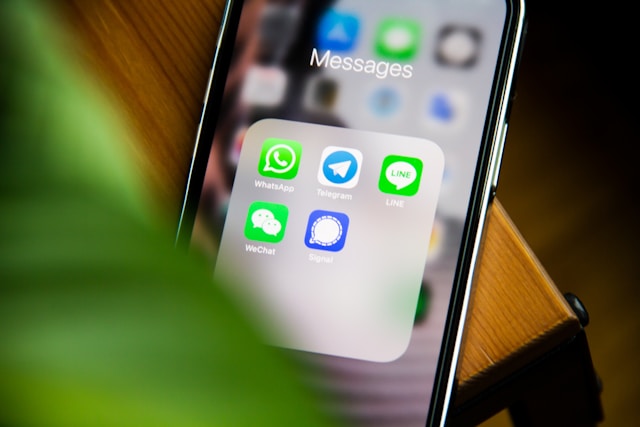
For instance, the Art Institute app has a location-aware interactive map and audio storytelling; it has a search function that enables users to learn more about a specific piece of artwork and a list of featured tours. The app comes in various languages to accommodate international visitors. In “How technology is bringing museums back to life”, Charr emphasizes that “[t]echnology shouldn’t be an enemy of culture” but rather an asset that can help museums increase focus on their collections (Charr, 2020). I can definitely see the appeal of museum apps and how they can assist visitors when tour guides are not present. Sometimes, people prefer listening to audio guides rather than reading museum descriptions on dull placards. Technology is a useful tool when implemented correctly. 

References

Art Institute of Chicago. (n.d.). Mobile app & audio tours. https://www.artic.edu/visit/explore-on-your-own/mobile-app-audio-tours 

Charr, M. (2020, June 17). How technology is bringing museums back to life. MuseumNext. https://www.museumnext.com/article/how-technology-is-bringing-museums-back-to-life/ 

Oliveira, E. A. & de Barba, P. (2018, December 18). Bluetooth technology has helped reveal how visitors explore museum exhibitions, and how much they learn in the process. Pursuit. https://pursuit.unimelb.edu.au/articles/how-does-learning-happen-in-museums

Reflection #1 – 2026 ALA Annual

While combing through this week’s reading materials, I read Loida Garcia-Febo’s article titled “Serving with Love: Embedding equality, diversity, and inclusion in all that we do”. Upon encountering this article, I thought to myself, “Wow, the timing couldn’t be better”. Currently, as I write this reflection post, I am sitting in front of Gate H6 at O’Hare International Airport waiting to board my return flight back to LAX. 

You may be wondering, “That’s so random… why?”

Photo by Ruby Zhu

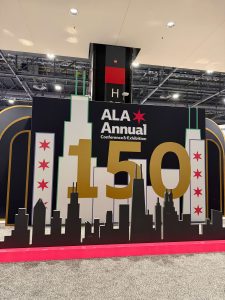
This week is the ALA 2026 Annual Conference and Exhibition, and I was invited to attend the Spectrum Leadership Institute as one of the scholars in the 2025-2026 cohort. With this opportunity, I met and networked with upcoming librarians and library professionals who are also BIPOC. Many of the stories shared between scholars, panelists, and keynote speakers embraced the values as highlighted in previous ALA President Garcia-Febo’s article, especially fighting for people from vulnerable groups and creating community spaces that reflect the needs of those people (Garcia-Febo, 2018). I was truly moved by the energy in the conference room and felt a sense of solidarity from a bunch of strangers from different parts of the country who share the same heart.

At today’s lunch reception, before I trekked over to the airport, we had our current ALA President-Elect Tamika Barnes speak a little about her hopes for the scholars and her lifelong experience up until her current leadership position at ALA. She reminisced about her days as a reference librarian and her transition to management and leadership. One of the scholars posed a great question regarding leadership and how to be an effective leader. Barnes’ response mirrored what Stephens (@michael) wrote in “The Heart of Librarianship” and the importance of listening. Listen to what people want and what their requests are; at the same time, pay attention to what they are not saying and the services they are not utilizing (Stephens, 2016, p. 43). 

I am incredibly grateful and honored to be a part of the Spectrum family and ALA community. It gives me hope to see more faces that look like mine in this profession. I am looking forward to my journey forward as a hyperlinked librarian and building a foundation where communities can thrive.

References

Garcia-Febo, L. (2018, November 1). Serving with love: Embedding equality, diversity, and inclusion in all that we do. American Libraries Magazine. https://americanlibrariesmagazine.org/2018/11/01/serving-with-love/ 

Stephens, M. (2016). The heart of librarianship: Attentive, positive, and purposeful change. ALA Editions. https://www.dropbox.com/s/gc9ecokb972xgil/HeartofLibrarianship.pdf?dl=0