I have always loved hearing peoples’ stories. Whether via radio programs like The Moth, podcasts, blogs, or just sitting at a coffee shop talking to friends. A good story can bring you to a different place, build empathy, and make connections across huge barriers. I had a friend recently who was telling me about their work with The Shoah Foundation through USC. They work to interview and document stories from Holocaust survivors, building an interactive, visual archive.
“The USC Shoah Foundation records, preserves, and shares survivor and witness testimonies so that all can learn from the past, reflect on the present, and build a better future.
My friend reflected on how important the work is, especially as there are fewer and fewer living Holocaust survivors. There is nothing more powerful than hearing a story directly from someone who lived it, in their own words, with their own emotions coming through.
I’ve thought a lot about storytelling and survival in the past year an a half. I also love the idea of using emojis to connect and bring storytelling to a more accessible space, where anyone can participate, and even my 3 year old can read the stories. So I have created my own:
👶🌴⚽🎵
🎓⛄🎶📚
🌴👩🏫👩❤️👩👶👶
🔥🌄🏡😢
🌲🏠👩👩👧👦📚
I used to live in Altadena, California. I was born there, left a bit for college, then returned and started a family. Then the unthinkable happened. In January, 2025, my home and the homes of over 4,500 other Altadena families were lost in the Eaton Fire. Many of our community spaces were lost: my favorite hardware store, the bar my wife and I had our first date, my family’s favorite restaurant. I still feel like I’m living in an alternate reality. There are some people working on gathering stories. My mother was interviewed for the New York Times. But there isn’t a single, focused collection that I know of yet. My friend did gather keys, in a project known as The Keychain Project, each one from a home or apartment that burned.
My wife and I documented the few months after the fire before we moved with a series of selfies, one on each porch of the temporary houses we stayed in while we were homeless, wandering around LA suburbs, seeking stability for our two kids. A visual story in its own right.
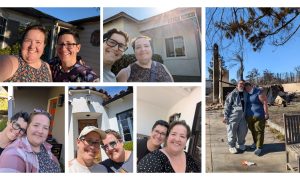
Now my family lives in Portland where we are building new memories. But those stories will always be a part of our lives.
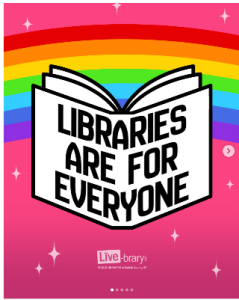 One way that this can be accomplished through the Library 2.0 lens is by participating in social media! Librarians on TikTok, Instagram, and other social media platforms create content that highlights how everyone belongs at the library. The Suffolk County Library in New York on Instagram and features pride posts using the power of hashtags. #librariesAreForEveryone. Users can build and add to the conversation by commenting on posts, using the hashtag, and re-sharing to their social media community.