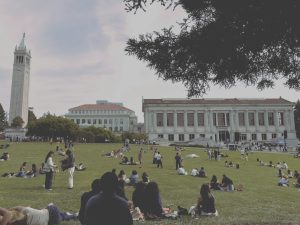
In this reflection blog, I wanted to take a deep dive into academic libraries and explore how they fit the hyperlinked library model. The readings from this module gave me a lot to think about regarding how academic librarians can serve their community, largely consisting of students. Two themes from the readings I will discuss further are connection and exploration; these concepts embody the foundational values of the hyperlinked library model.
Connection:
As Brian Mathews (2015) discusses in his article “The Evolving & Expanding Services Landscape Across Academic Libraries,” the services that academic libraries provide to their students have grown beyond traditional reference transactions. Academic libraries offer services that focus on fostering students’ academic development and wellbeing. This includes offering writing centers, study spaces, and career services. Mathews also describes scenarios in which professors and other individuals utilize the academic libraries for meeting spaces to facilitate discussions. When I look back at my own experiences at university, I remember the numerous hours spent at the library studying for exams. However, I also can recall many occasions in which the library provided opportunities encouraging connections with others. Examples that come to mind are my friends and I petting puppies at stress relief events during finals, and student study groups in library rooms scribbling away on whiteboards.
“Reference questions are declining but the questions amongst our communities are only becoming more complex and interpersonal. One of the best things we can do is provide the literal and figurative table for people to meet and get the help they need” (Mathews, 2015).
Exploration:
Another important aspect for academic librarians is to encourage exploration. At the center of their studies, curiosity is needed of students to accomplish their academic pursuits. Deitering and Rempel (2017) discuss ways that academic librarians can encourage exploration including urging students to select topics that they know little about, contextualizing goals around curiosity rather than on just locating information sources, creating opportunities for student success in the information search process, introducing new information resources, and reducing the stakes of in-class assignments. In my academic studies, I developed the ability to seek out information I was intrigued by. This skill has remained vital even beyond my university days. As library and information professionals, I think this is a crucial skill that we can impart to individuals, giving them the tools to be curious and satisfy their curiosity.
In summary, the academic library setting carries the core essence of the hyperlinked library model. They are open, participatory, and collaborative places that can cultivate an environment full of meaningful connection and exploration. The next important step, I believe, would be for the library departments to market these services to their student populations whether through the classroom or other outreach avenues. With the vital services the library provides, it’s critical that students know these services are available to them.
References:
Deitering, A.-M., & Rempel, H. G. (2017). Sparking curiosity – Librarians’ role in encouraging exploration. In the Library with the Lead Pipe. https://www.inthelibrarywiththeleadpipe.org/2017/sparking-curiosity/
Mathews, B. (2015, May 27). The evolving & expanding service landscape across academic libraries. The Chronicle Blog Network. https://www.chronicle.com/blognetwork/theubiquitouslibrarian/2015/05/27/the-evolving-expanding-service-landscape-across-academic-libraries/
During my undergrad, I remember staying in the campus library until midnight studying for finals with a few of my classmates. It is truly remarkable how students have built a community within a library with a clear purpose in mind. Surprisingly, I have not met with an academic librarian before, but since working in an academic library, I am able to witness the types of questions that reference librarians get. I too agree that the types of questions received are becoming more complex and interpersonal, and I wonder how academic librarians prepare with these curveballs thrown in their way. Great insightful post!
@Amanda I’m glad you took a look at academic library specifically for this reflection post. I like your ideas and how they connect to your own history with academic libraries as well as our resources. I appreciate your use of the exploration article as well.
@amanda I work in an academic library as a subject librarian. I love the idea of encouraging students to explore (especially new topics), but I’m not sure how to practically go about it, as I’m not the person giving assignments. When a student comes to me for help, I do show them a variety of sources and discuss the exploratory nature of the research process, but I feel a bit constrained otherwise. Do you have any ideas about how to encourage them to explore new topics?
@cassandra I’m obviously not an expert and still learning along with you, but my first thought is to collaborate with faculty to create opportunities for the students to explore within their coursework. I remember in my undergrad prerequisite classes there were times when a librarian led us through how to do research/use databases to explore topics, and that was very foundational for my understanding and ability to search and discover information. What you’re already doing on an individual level sounds great as well. Perhaps another possibility, separate from the classroom, could be to design library programs like a workshop that encourage students to dive deeper into your academic subject.
@amanda, I enjoyed reading your post about connection and exploration. It made me think about my days in college and while the internet was still growing and the physical collection still had more of a role in research, those librarians were extremely helpful and also knew the value of connection back then.
I agree with exploration that students need to be more engaged with their projects than just a means to an end. I also feel like collaborations with the faculty to work with librarians to help facilitate this curiosity would be extremely helpful and students would see the added benefit of these types of connections and resources and would produce higher quality projects.
All too often students still have the old stereotype of what a library was and not realizing what a library currently is and has to offer in the form of resources, not just books, and spaces for them to grow, connection, created, etc.