The Library as a Space for Infinite Learning, Innovation, and Community
Ylibrary? Making the case for the library as space for infinite learning by Professor Michael Stephens (2014) is super resonant with my takeaways from this class and my decision to become a librarian. Initially, the primary driver of this career change was my passion for books – opened up the world of possibilities and opportunities for me as a young child of refugees with little money, expand my worldview and cultivate my empathy, continue to be sources of learning and hope for me – and my desire to help all young people access books and a life-long love of reading. As I finish my second semester of the MLIS program, I learn more about what librarianship is and continue to discover that it aligns with my values on an even deeper level than I have ever imagined. Helping improve access to information, innovation, and opportunity for each individual to achieve their goals and dreams. Moving the needle towards a liberated world, dismantling barriers and gatekeeping.
In Ylibrary?, Professor Stephens writes:
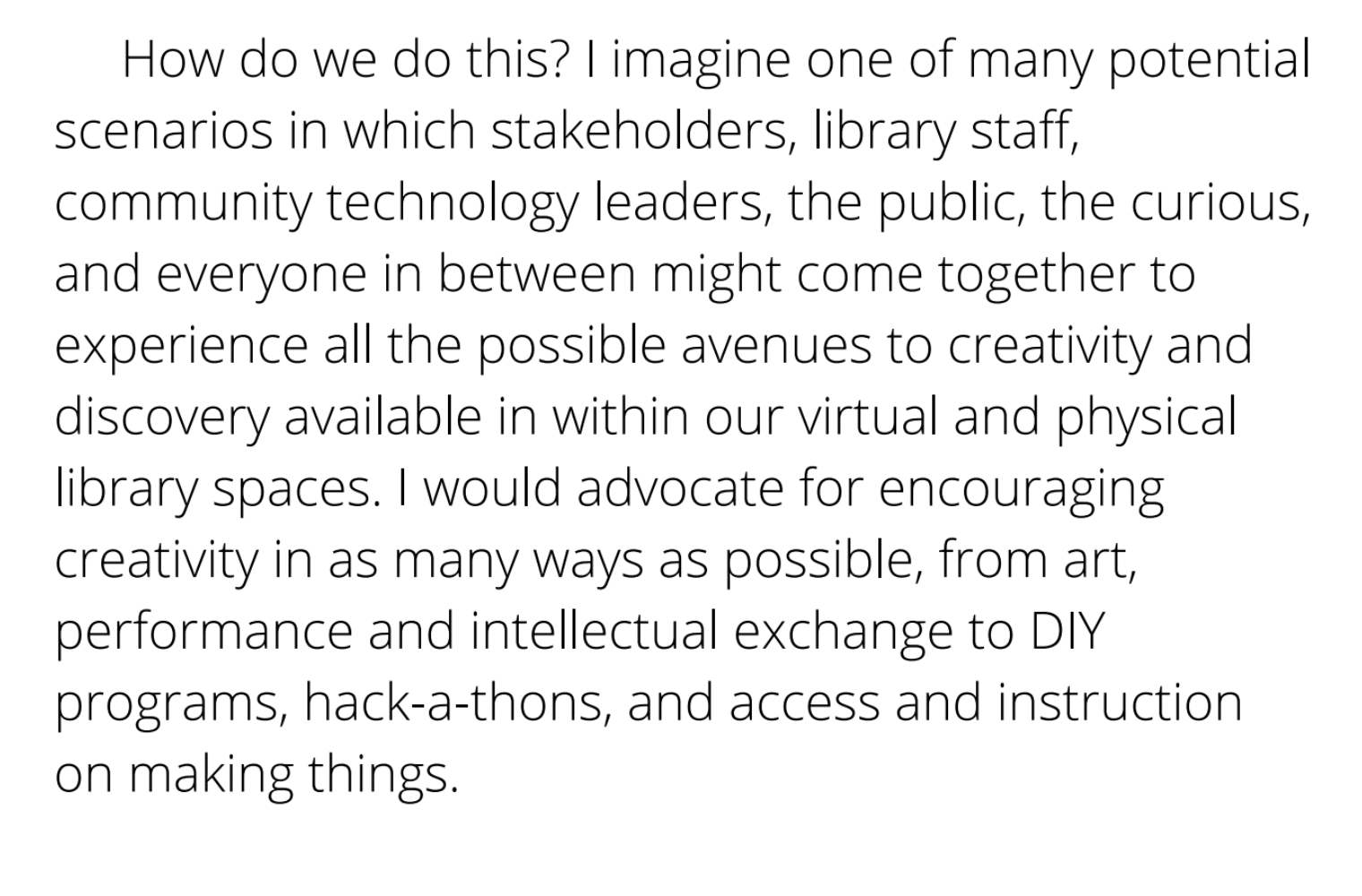
Inspired by this passage and his discussion on the fourth wall of “The Chattanooga Public Library – “a space for creation and production of new knowledge and new things” (2014), ideas bloom in my mind. I dream of dynamic, participatory-based, community-led programs in Silicon Valley libraries that meet weekly. One where
- Community members – youth and those who are socially excluded – are engaged and invited to join using strategies from Working Together Project toolkit to combat systemic barriers
- Participants discuss their needs and ideas to move their communities forward
- A diverse group of community members – experts in all fields – discuss and flesh out these ideas
- Partnerships with Silicon Valley technology leaders result in innovation and the development of apps and other technologies to achieve these ideas
- Repeat steps 1-4
- As the program continues, it can evolve:
- Learnings from this program will be used to inform library service
- The program can transcend help libraries transcend beyond its physical walls, moving into tech sectors, educational institutions, prisons, housing shelters, etc. that will uplift all community members out of generational cycles of oppression
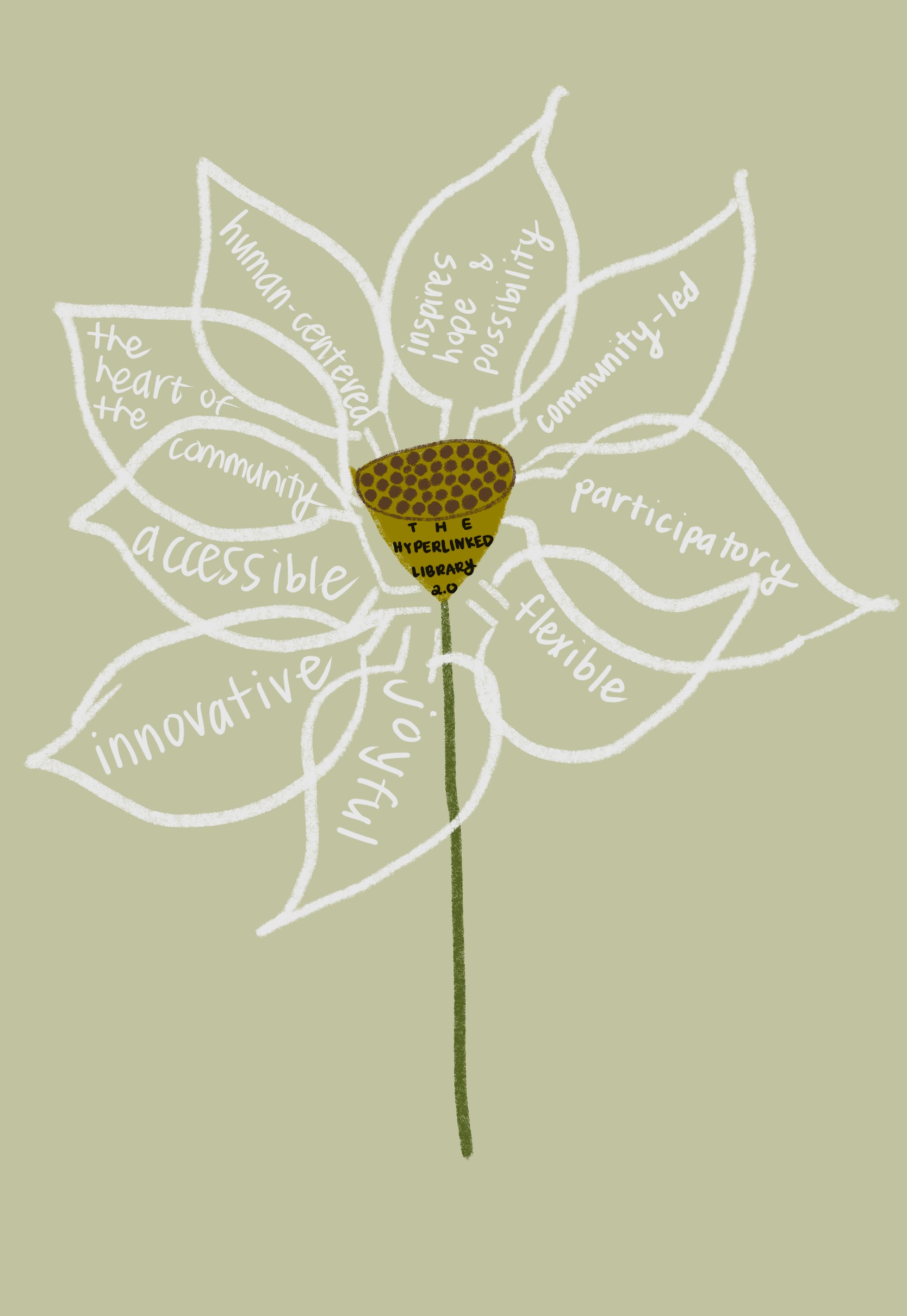
Imagine the possibilities that evolving libraries could explore, the innovation that could come about, the hearts that could be encouraged, the hope that could be cultivated, the progress towards liberation that could take place…
 (CodeSignal, 2026).