The Uncensored Library
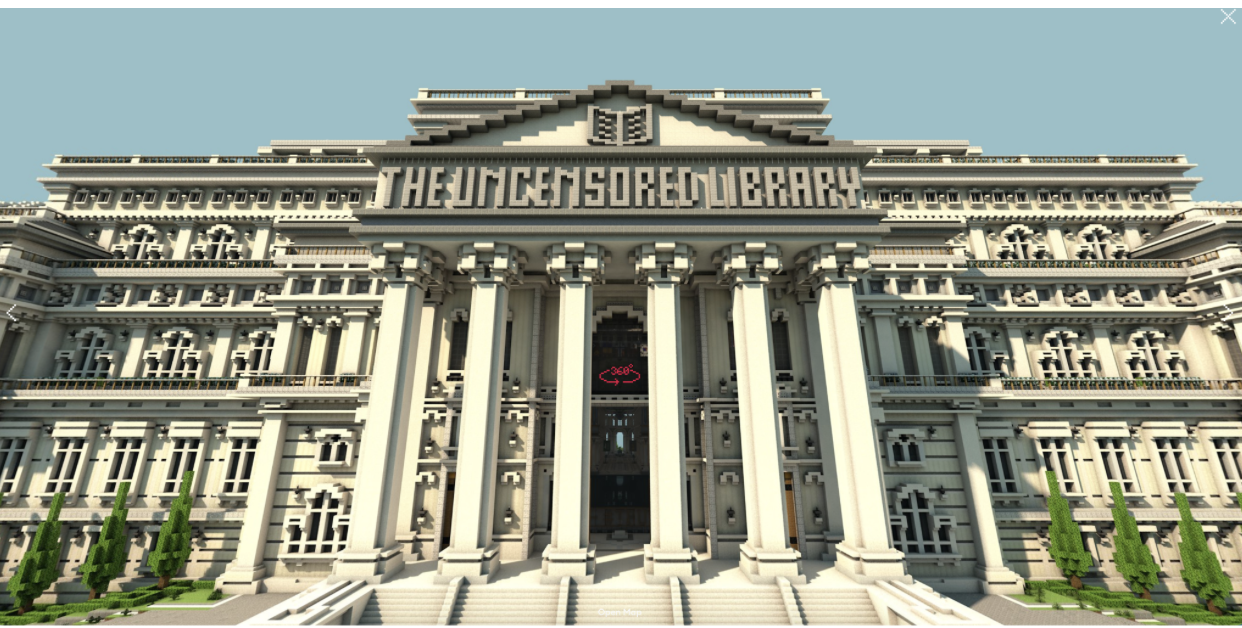 The Uncensored Library server/map on Minecraft has a powerful purpose in fighting against internet censorship by publishing articles by writers who have been banned, imprisoned, exiled, or killed. Specifically, this library honors the voices and perspectives of Jamal Khashoggi from Saudi Arabia, Nguyen Van Dai from Vietnam, Javier Valdez from Mexico, MadaMasr and Al-Manassa from Egypt, and exiled journalists from Russia. Their library honors the voices and legacy on an extremely popular gaming platform – this opens up the many possibilities to what librarianship in terms of information sharing and retrieval can look like.
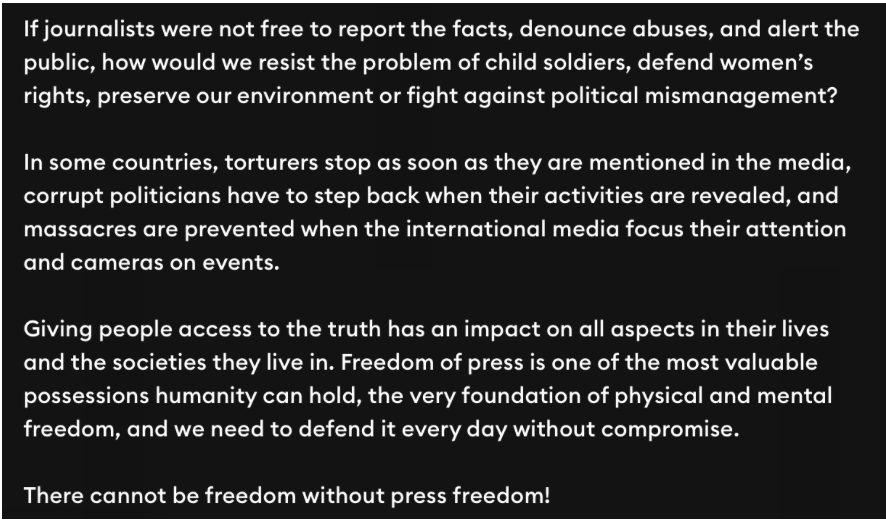
This text under the Reporters without Borders section of the map underscores the importance of press freedom.
Questions
- Can this truly be called a library with only five articles being published?
- Why does the main page talk about having articles from the United States, Iran, Brazil, and Belize but I cannot find them on the map? Were these removed? Are they accessible from a different map that is not on their official website?
- Why is this library not updated frequently – what are the barriers?
- How often is this library frequented and to what degree do users engage with the articles published?
- How could this actually act as a library, where there is an abundance of articles and texts?
- What might social engagement look like in an uncensored library on a gaming platform?
- How could participatory service allow for more frequency in updates?
- What are the risks and dangers involved in maintaining such a library?
Real-World Applications
Censorship is something many public school teachers, librarians, and other industries are facing in America. Book bans are discussed in PBS News Hour’s documentary, The Librarians. The Minecraft Uncensored Library sparks the possibility of using digital, non-traditional spaces to host information in the face of book bans.
Hi Stephanie – Thanks for bringing censorship into the discussion. It is such an important topic! Thanks also for sharing the Uncensored Library link. I had no idea this was a thing – bypassing internet censorship through video games. Very cool! I recently learned about another online censorship project called Save Our Signs (https://sites.google.com/umn.edu/save-our-signs/home). It’s a crowdsourced effort to photograph federal signs at national parks and historical sites to document how the government is altering small but important wording that changes the sign’s meaning and our understanding of history.
Hi Rachel! Thank you so much for sharing and amplifying the project, Save Our Signs – I had no idea there was censorship going on in our National Parks. I will do my part to keep a look out for signs of censorship, track any that I find as well as add photos to preserve a more complete story (I say more rather than absolutely because National Parks have harmed indigenous communities). Upon researching, Park Truth is an archive that preserves indigenous history in the face of recent National Park censorship. It doesn’t feel good that there are two separate sources and would love for the integration indigenous truths into all preservation and anti-censorship projects (and everything in general).