In the introduction for this module, Professor Stephens states that part of engaging hyperlinked communities is “weaving the library into the fabric of the community, ensuring that our services resonate with and reflect the diverse voices we aim to support” (Stephens, 2025). Reaching out and encouraging community members to share their ideas and opinions is one-way libraries can support the needs and interests of various user groups. A great example of this is highlighted in Smith’s (2017) article about Madison Public Library’s (MPL) takeover. To reorient MPL towards community-led initiatives, the library undertook the Library Takeover project. Through this project, community members were given full control of creating and leading three library programs, resulting in unique programming that was never done before at the library.
In Smith’s (2017) article, one of MPL’s librarians mentions that not knowing what was going on and giving up some control of the program planning was scary, but the results were great and they were able to learn from community members and reach different users. I think this is a great example of how community input can lead to diverse programs that appeal to the interests of different community members. In my own experience, I have worked at a library where programming was repetitive and appealed to only a set type of community member. My goal when I joined their library was to introduce programs that would appeal to different user groups. When proposing my ideas, there was some pushback from the branch manager who thought the programs would not appeal to our patrons. I think there was a fear that doing something different would be a waste of our resources and result in low attendance numbers. However, the results were great, and we found there was an interest in our community for diverse programs that appealed to different interests. Pictured below is one example of a program that was different from what we usually offered, but that was well received by community members.

Partial image of Japanese wagashi program flyer.
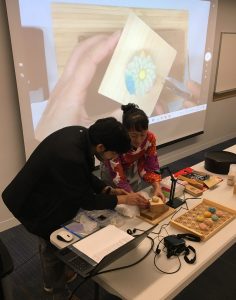
Image of a patron participating in wagashi making program.
From my experience, I saw how a library can fall into a routine that, while comfortable for staff, can exclude community members. Trying something different may be scary, but as demonstrated through MPL’s Library Takeover, the results can be surprising and lead to new connections. For smaller libraries, a similar project may not be possible, but community input can be gathered through surveys, outreach, or even an advisory group that includes community members. To ensure that we are reflecting the various interests and needs of our community members, it is important to gather their input and be brave enough to step out of our comfort zones.
References
Smith, C. (2017, June 25). Madison’s library takeover. American Libraries Magazine. https://americanlibrariesmagazine.org/blogs/the-scoop/madisons-library-takeover/?utm_content=buffer8a08c&utm_medium=social&utm_source=facebook.com&utm_campaign=buffer
Stephens, M. (2026). Module 5: Hyperlinked communities. https://287.hyperlib.sjsu.edu/module-5-hyperlinked-communities/
Great blog post! I agree that it’s much more effective to ask library patrons about the kinds of programs they want rather than assuming we know what they will enjoy. At my branch, there are a few programs that have lower attendance, and I think that’s because they don’t always reflect our patrons’ interests. If we took the time to ask the community what they wanted, I believe we would see greater participation and more successful programming.
Alexandra – I enjoyed your reflections on the library takeover. What an interesting and useful idea for libraries to relinquish some control and let the community come in to create programming. It feels a little unknown, it feels like there could be chaos, but I really like what happened at MPL and I think it can be replicated.