
In module 8, there are many articles and resources of information to learn from. On the New Models page of the Hyperlinked Library page, there are articles related to rethinking the services that libraries provide to achieve a more connected world. One of the articles I read titled Centering Your Library Around the Community, that was featured on the Library Journal webpage, talks about how libraries are trying to get a better understanding of its library users and how to better accommodate those users. When it comes to libraries, they are always having to ask, “Who is part of our community and who do we serve?”. There are many aspects to look into for what community a library serves. Who is coming in? What are they looking for? What are the ways that we can provide information for the types of resources they are looking for?
These questions all help us to understand better who we are serving and what we can do to improve our services for those that want to use our facilities. Steps that can be taken for finding this out can be using the census data for the surrounding community for analysis on things such as race, diversity and ethnicity, gaining insight from realtor data, and looking at county, city, and local news websites for formulating projections on how the community data might change in the future. Data is always changing and libraries need to be able to keep up with that evolving data and make sure that they are always up to date or even steps ahead of their community data.
Another big question for libraries could be “Is our library located in a good spot that would allow us to reach as much of the community as possible?”. This question can then be attributed to questions such as: Is the library in a walkable location? Is it accessible through public transit? “By looking at the site location, adjacencies to main thoroughfares, retail development, city parks etc. we can determine the extent of the immediate community being served” (VerKuilen 2023). Libraries that are closer to public transportation ports can better serve a larger community, while those that are not, would have to think about services that would provide drive-up and remote access.
In the end, the main focus of libraries is to serve the community they are based in and provide as many services and resources as possible to different backgrounds and communities. Whether you are a student, a community member, young or old, the library should be a place where anybody is accepted and able to find the information and resources they are looking for.
References
HBM Architects (2023). Centering Your Library Around The Community. Library Journal. https://www.libraryjournal.com/story/centering-your-library-around-the-community-lj230207.
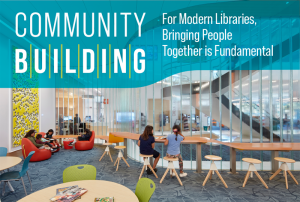
Pierce, D. (2023). Community Building [Photograph]. Library Journal. Community Building: For Modern Libraries, Bringing People Together Is Fundamental | Library Journal
@amoreno0617 I am glad you highlighted these questions that libraries should be asking. It’s so interesting about libraries being close to transportation ports. Our goal at Elk Rapids Library was to be within one mile, meaning walking distance, of the schools, which it is, and that there be sidewalks for the students to use, which there will be, they are going to be installed by the village.
Hi Anthony,
@amoreno0617
I like how you pointed out the importance of conducting a community needs assessment to get to know your community and better serve community patrons. Reflecting on the location of the library being centrally located is also a very good point. That is one of the challenges for many families in the city I live in. Some families do not have access to transportation and cannot easily visit the many branches located in our city. That is why the library started its mobile library, which would do outreach and help communities far from the library access library books and resources. I often think of the City of Vancouver, B.C., and wish that more cities in the U.S. had been built around the concept of a walkable city for this reason. Access to information and resources at a walkable distance truly makes all the difference for families struggling to make a living. Great post.