Recent Comments
When it comes to infinite learning, libraries can serve as a hub for continuous learning, knowledge, creativity and connections. In this week’s module, we talk about infinite learning and the three sub-modules: learning everywhere, the library as classroom, and professional learning experiences. As the world changes, and the ways of getting information changes as well, the idea of learning is happening in more places and in many different ways than ever before. Learning is more than just what we do in classrooms. Libraries should take this opportunity, of outside the classroom learning, and provide services and resources through platforms such as mobiles, in-house programming, and professional development.
In the article 8 Awesome Ways Libraries Are Making Learning Fun, Jordan Lloyd Bookey talks about how libraries have offered more and more literacy spaces. He mentions how libraries are still thought about as antiquated places that are not moving with the modern times by more people than we would like. He proceeds to talk about the different resources that libraries are providing to the public to welcome them to the library space and make them more welcoming spaces. These services include technology classes, literacy rooms, playtimes, art studios, nature walks, lunch at the library, and important issue talks. As times are changing, so too are the resources and spaces that the library provides.
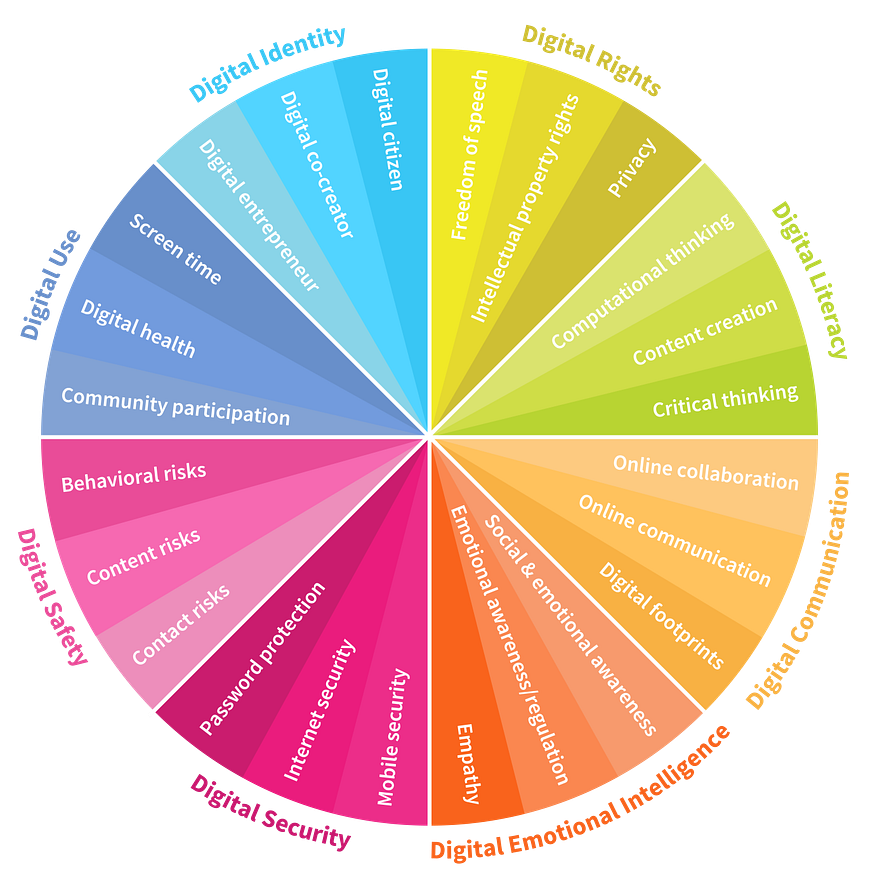
In another article titled 8 digital skills we must teach our children; the World Economic Forum talks about the different digital skills that children should learn and know about to be successful in today’s world. “Experts are predicting that 90% of the entire population will be connected to the internet within 10 years” (World Economic Forum 2016). With this metric, we can always be prepared and make sure that children, and even some adults, are understanding of the technological ways that our world is evolving. As technology has become more widely available, children are using digital technology and media at younger and younger ages. According to this article, children spend an average of seven hours a day in front of screens. There are always pros and cons for technology use in children, but it is our job as librarians to educate children to lean more into the pros than the cons. Having an understanding of the use of technology, especially at an early age, can have many beneficial effects. Children can use their technology knowledge to become better at researching, using school programs, and even increase their literacy skills through the use of technology. The main takeaway for this article is that digital intelligence is of the utmost importance when it comes to the growing need and usefulness of technology. As the article mentions, “Above all, the acquisition of these abilities should be rooted in desirable human values such as respect, empathy, and prudence” (Park 2016).
References
Bookey, J. L. (2017). 8 Awesome Ways Libraries Are Making Learning Fun. HuffPost. https://www.huffpost.com/entry/8-awesome-ways-libraries_b_7157462.
Park, Y. (2016). 8 Digital Skills We Must Teach Our Children. Medium. https://medium.com/world-economic-forum/8-digital-skills-we-must-teach-our-children-f37853d7221e#.789qtaw64.
Park, Y. (2016). Digital Intelligence [Photograph]. Medium. https://medium.com/world-economic-forum/8-digital-skills-we-must-teach-our-children-f37853d7221e#.789qtaw64.
The library is an essential location for stories to be shared. Some would say that the library is THE place for people to look for stories shared through books, articles, magazines, etc. Libraries have always been about stories but as technology and communication has changed, so too have libraries and librarian’s roles. Librarians have taken roles such as amplifiers, facilitators, and co-creators. As librarians have known that sharing stories is always important for the library and others alike, they have taken the next step in allowing others to share their stories. The idea of Human Libraries originated in Denmark back in 2000. “The first human libraries in the United States were held in 2008 by the Bainbridge Public Library (BPL) in Bainbridge Island, Washington, and Santa Monica (Calif.) Public Library (SMPL)” (Wentz 2013). The Human Library takes checking out books and other resources into checking out ‘Human books’ that allow for people to have one-on-ones with each other to learn about different cultures, backgrounds, history, etc. This allows for people to be more open-minded to stories and backgrounds that they might not be familiar with or may not have experienced personally. This works hand in hand with how libraries operate already, as the library is always trying to find ways to be more inclusive and diversified to different subjects, authors, and stories.
Public libraries, specifically, may benefit from this ‘Human Library’ experience because their communities might be more diversified than an academic library, allowing for learning and growth in the community. The human library will also connect the library to the public, connect the public to itself, and connect other communities to the library. As mentioned earlier, Bainbridge Public Library and Santa Monica Public Library contacted each other about how to enact this program and actually were able to increase and share their resources for other library programs as well. Having the ability to connect libraries to each other can have many benefits and these benefits will roll down to the community and allow for the libraries to reach more communities and provide more resources. As we know, libraries are constantly having to prove that they are a pivotal resource in a community, and this could one of those pushes that shows that they are worth keeping.
References
(n.d.) (2025). The Human Library [Photograph]. Peninsula Jewish Community Center. The Human Library – Peninsula Jewish Community Center
Wentz, E. (2013). The Human Library: Sharing the Community with Itself. Public Libraries Online. https://publiclibrariesonline.org/2013/04/human_librar/.
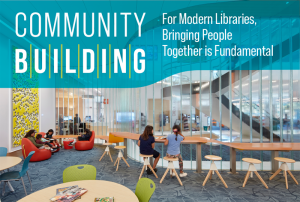
In module 8, there are many articles and resources of information to learn from. On the New Models page of the Hyperlinked Library page, there are articles related to rethinking the services that libraries provide to achieve a more connected world. One of the articles I read titled Centering Your Library Around the Community, that was featured on the Library Journal webpage, talks about how libraries are trying to get a better understanding of its library users and how to better accommodate those users. When it comes to libraries, they are always having to ask, “Who is part of our community and who do we serve?”. There are many aspects to look into for what community a library serves. Who is coming in? What are they looking for? What are the ways that we can provide information for the types of resources they are looking for?
These questions all help us to understand better who we are serving and what we can do to improve our services for those that want to use our facilities. Steps that can be taken for finding this out can be using the census data for the surrounding community for analysis on things such as race, diversity and ethnicity, gaining insight from realtor data, and looking at county, city, and local news websites for formulating projections on how the community data might change in the future. Data is always changing and libraries need to be able to keep up with that evolving data and make sure that they are always up to date or even steps ahead of their community data.
Another big question for libraries could be “Is our library located in a good spot that would allow us to reach as much of the community as possible?”. This question can then be attributed to questions such as: Is the library in a walkable location? Is it accessible through public transit? “By looking at the site location, adjacencies to main thoroughfares, retail development, city parks etc. we can determine the extent of the immediate community being served” (VerKuilen 2023). Libraries that are closer to public transportation ports can better serve a larger community, while those that are not, would have to think about services that would provide drive-up and remote access.
In the end, the main focus of libraries is to serve the community they are based in and provide as many services and resources as possible to different backgrounds and communities. Whether you are a student, a community member, young or old, the library should be a place where anybody is accepted and able to find the information and resources they are looking for.
References
HBM Architects (2023). Centering Your Library Around The Community. Library Journal. https://www.libraryjournal.com/story/centering-your-library-around-the-community-lj230207.
Pierce, D. (2023). Community Building [Photograph]. Library Journal. Community Building: For Modern Libraries, Bringing People Together Is Fundamental | Library Journal
Can we talk about how far we have gone when it comes to technology and virtual environments? Being an avid gamer growing up, spending more time inside than outside, I have always known that video games and virtual worlds would become a central part of everyone’s lives. Going back to even movies about virtual reality, such as Tron for example, we knew that the time spent in parts of our lives in virtual reality would become, well, reality. In module 6, I read about Metaverse and Minecraft’s Uncensored Library. I have spent countless hours playing Minecraft and not once have I thought about it being used the way it has been used by the Reporters without Borders organization. Giving countries with strict press laws and regulations access to books and other sources that would otherwise be banned is genius, to say the least. I am glad that not only young people are getting a use out of Minecraft, but also reporters and those wanting to have access to information that they might otherwise not be able to have access to.
Another idea that has been getting bigger recently is the idea of Metaverse. Personally, I have only used a VR headset once in my life, and it was to play a video game. Even though I haven’t had much experience with VR, as a gamer I can see how it would catch people’s attention, even if they are not video game players themselves. Having other VR platforms that are not video game based, such as Spatial, Engage, and Mozilla Hubs, is such a great advancement to VR and technology. I have heard about some major libraries having VR tours available to those visiting their websites wanting to get a better understanding of what the library looks like and what it has to offer. Libraries such as Cupertino Library, Gilroy Library, and Los Altos Library, allow patrons to visit their websites to take 360-degree tours in and around their buildings. This service allows those that might not be able to visit different libraries the chance to understand what libraries have to offer and what they should expect if they ever were to get the chance to visit such libraries. As technology advances, so too will the availability and creativity of VR and what it will provide for us. We have just broken through to the things that VR has to offer, and I am excited to see what else is in store for us.
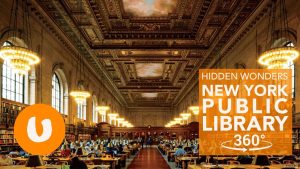
360-degree New York Public Library Tours
References:
360-degree New York Public Library Tours. From Youtube, by Urbanist, 2017. Copyright 2017 by Urbanist.
Virtual Library Tours. (n.d.). Retrieved July 8, 2026, from Santa Clare County Library District: https://sccld.org/virtual-tours/#ca-360
In the modern day of libraries, there are increases in the need to reach out to as much people as possible. Whether this is with programs, resources, books, etc., libraries are finding themselves more creative than ever before. I am sure most of us have heard of a book fair or book club, but today we are talking about Bookmobiles!
Bookmobiles have become more popular in the world of libraries and sharing stories in general. These bookmobiles are a way for the library to engage with the community in other ways than programs. Sometimes libraries are only located in the center of town or in major cities, so those community members that are outside of town or the city centers can have a way to still enjoy what the library has to offer: books! In Zealand, Denmark, a bookmobile stops 25 times around the municipality of Roskilde every week. “According to Statistics Denmark, the use of public libraries is strongly dependent on how far citizens live from their nearest library” (Lauersen 2025). Bookmobiles are more than just bringing books to people, it also gives community members a chance to chat with each other, speak to library staff, and learn about what their local libraries have to offer without having to take a trip to the library.
As libraries are greatly interested in bringing free and equal access to information, education, and cultural activities, bookmobiles are a great avenue of spreading information. In the context of the bookmobile of Roskilde, they have been offering mobile library services and a bookmobile to their municipality since 1947.
As technology has advanced, and become more available, especially to younger people, “the increasing use of social media is linked to less leisure reading and weaker attention spans” (2025). According to the international PIAAC study, one in five adults in Denmark have low literacy skills. Reading has lots of advantages, including having an increased level of literacy skills. These advantages include sharpening our abilities to concentrate, immerse ourselves into something, other than our screens, and has a beneficial effect on our mental health.
As public libraries, and even academic libraries, are trying to find more ways of bringing their communities together, bookmobiles should be on the radar. Even if the community members don’t participate in the bookmobiles as they come around town, the bookmobiles serve as a reminder that the community library is trying its best to involve and connect their community to each other.
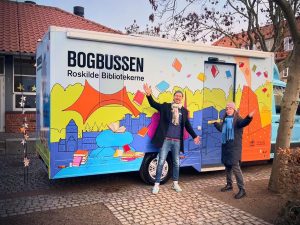
Figure 1
References
Hansen, S. R., Hansen, T. I., & Pettersson, M. (2021). Children’s and Young People’s Reading 2021: English Summary.
Hansen, S. R., Hansen, T. I., & Pettersson, M. (2021). Bookmobile in Roskilde Municipality. [Photograph]. The Library Lab. The necessary nearness – an ode to bookmobiles – The Library Lab
Lauersen, C. (2025, February 5). The necessary nearness – an ode to bookmobiles. Retrieved from The Library Lab: https://christianlauersen.net/2025/02/05/the-necessary-nearness-and-ode-to-bookmobiles/
The first thing that comes to mind when people think of the library are aisles and aisles of books. Of course, back then having physical books was the way to find information whenever you needed it. In today’s world, as technology has evolved and decreased the need for physical information, such as books, magazines, maps, etc., you would think that the aisles of books would decrease as well. So why haven’t they? When you go to your public library or any library on campus, there are still hundreds upon hundreds of physical books. The reason may be simpler than you think.
The concept of Third Places
Libraries, and other physical locations such as restaurants, cafes, and concert halls, are considered as Third Places. This term was first coined by sociologist Ray Oldenburg in 1989 in his book, The Great Good Place. Oldenburg describes the Third Place as “a space where people meet to unmind, discuss, and talk about things that matter to them, their neighborhood, and their community” (Leferink 2018). It is coined the Third Place because it is a space that is distinct from both the work environment and the domestic space of home and family life. Third Places are about sociability and the need for someone to find their identity rather than about isolation. As mentioned earlier, technology is getting rid of the need for physical information needs but yet, people still want books to be present at libraries.
Contact Day
In 2017, on Dutch Contact Day, staff at the library of Free University of Amsterdam were planning to renovate their library. With this renovation in mind, they allowed for suggestions from students and staff about what the new library could look like. The number one suggestion that students made for the renovation? They wanted physical books around them. The want for physical books was more than just for the information they provided but because they provided the atmosphere and comfort that students liked. During Contact Day, an environmental psychologist, Joren van Dijk, helped attendees explore and address this topic. During his research, he explained the importance of physical space and how the library was one of those places that people liked to gather to meet, learn, and engage with each other.
Improving the library experience
Leferink talks about three things that libraries can do to improve their spaces for patrons. These three things include: involving end users in the design, bringing the outdoors in, and offering a range of different spaces. The end users, or those who benefit from the programs and services offered at the library, should be included in big decision making when it comes to library environment. Including these suggestions from library patrons can allow for the library to better respond to diverse needs and wishes. “Participation in the design process can also increase the involvement of end users at the library; the library transitions from a library to their library” (Leferink 2018). Introducing nature to the library has great impact to people. Research shows that seeing or experiencing nature results in “increased focus, cognitive flexibility and creativity” (Kent 2023). If more library patrons are better concentrated, they will be more willing to spend more time at the library. As libraries offer many services to many people, there is always going to be differences in how library patrons like to enjoy their services. The library needs to be able to offer spaces for those that like to meet with others and engage. It also needs to offer spaces for those that enjoy more quiet spaces for studying and reading. As a Third Place, the library needs to be able to offer services and locations for a multitude of its patrons needs and wants if it wants to succeed.
References
Kent, J. T. (2023, December 5). Your brain on nature: how exposure to natural environments heals, calms and cures. Retrieved from Nevada Today: https://www.unr.edu/nevada-today/news/2023/atp-nature-and-the-brain
Leferink, S. (2018, January 24). To keep people happy…keep some books. Retrieved from Next.
Oldenburg, R. (1989). The great good place: cafes, coffee shops, community centers, beauty parlors, general stores, bars, hangouts, and how they get you through the day. New York: Paragon House.
Hello all.
My name is Anthony Moreno and I am currently residing in Southern California (about 30 minutes from Disneyland!). I chose this course because I wanted learn all about the emerging trends that are happening in information science today and hopefully learn how to keep up with the ever-evolving world of information science. I am excited to learn all about the new trends and technology that can be used in my future career. As of now, I want to work as a reference librarian, preferably in an academic setting. I currently am working at a public library that allows me to work in different areas of a library, including reference, circulation, reshelving books, and kid, adult, and teen programs.
I look forward to meeting all of you and reading your posts and what kind of interests you may have! It is very nice to meet you!
Thank you,
Anthony Moreno