I am fascinated by the Anythink Nature Library. As a lover of the outdoors, gardening, and nature in general, this sparked some interesting ideas. My first inclination was to explore the concept of bringing nature into libraries, especially in areas lacking green spaces, such as city centers. Whether adding exterior gardens (culinary, native plants, etc.) or holding classes with a local Master Gardener goup, I think there is something special about connecting people with nature in some form. As I explored this idea, the issue of loneliness kept coming up. Specifically, isolation and the impact technology has had on our very human experience of connection. I was recently at a deli with a friend, where I observed two tween girls come in to get smoothies. They were huddled around their cell phones at their table, yet they were interacting with each other, chatting and giggling. They had arrived on their bikes together, out on a summer day. Despite their phones being always at hand, they were spending time together, IRL. It felt like an anomoly to see two kids out on bikes unsupervised. Awesome! Why did that seem outside the norm to me? I see so many adults and kids glued to their phones, distracted, and disconnected. I think nature and being outdoors can support more awareness and possibly foster connection. This can be self-awareness and also the noticing of others. When we look up and around, it can be amazing what we may have been missing, IRL.
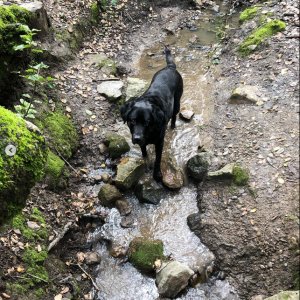
My late dog, Boston. A master at enjoying nature.
In Trend Towards IRL Events With More Authenticity. What’s Behind It, Lee (2026) discusses the desire to be more connected in real life, with real connections. He raises the idea of “digital fatigue”, which is interesting and somewhat ironic. Our whole world operates using technology. We do so much living “online”, but at what cost to our mental and emotional health? Libraries have (and I think some are seizing) a real opportunity to create these IRL experiences that are authentic and can connect people. Bonus if you can incorporate a natural element either by experience or environment. The Anything Nature Library references the Environmental Kinship Model as a foundational element in the creation and fostering of experiences in the natural world, while also incorporating learning and exploration.
The Environmental Kinship Model has three important attributes which are helpful to think of as a framework for planning programming and space. They are Practical, Inclusive, and Community. The Anythink Nature Library (Anythink Libraries, n.d.) is incorporating these simple, yet quite “deep” elements . From indoor/outdoor programmings areas to a cafe for gathering and relaxing, this library will offer such a variety of spaces for patrons to truly be immersed. I wish I could be there for their grand opening next month!
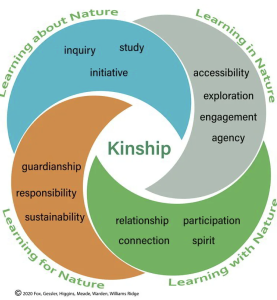
Image Source: https://mindstretchers.academy/pages/environmentalkinship
References:
Anythink Libraries. (n.d.). Anythink Nature Library. https://www.anythinklibraries.org/anythink-nature-library/
Environmental Kinship International. (n.d.). Environmental Kinship. Mindstretchers Academy. https://mindstretchers.academy/pages/environmentalkinship
Lee, B. Y. (2026, January 25). Trend towards IRL events with more authenticity. What’s behind it. Forbes. https://www.forbes.com/sites/brucelee/2026/01/25/trend-towards-irl-events-with-more-authenticity-whats-behind-it/
Cara – So glad that you highlighted the environmental kinship model. I think it’s something that many libraries could use for inspiration, even if they don’t have access to an amazing space and plot of land like anything. I could imagine off-site programs in forest preserves or parks, etc.