“It’s not schools themselves, obviously, that stand in the way of progress. It’s our nostalgia for what schools are supposed to be. It’s our lack of a modern context for developing a vision for what schools might become” (Richardson, 2014).
So often it seems that we resist change in our schools and libraries, lament how we “used to learn”, and all the while fail to enact meaningful and scalable change that can invigorate these spaces for our learning community. As a child of the 1980’s I did not have an iPad, Chromebook, or chat with my teachers via email and Google Classroom. My first experience with “modern” technology was with the Apple IIe! It was a pretty magical moment when I was in the computer lab for the first time and got to play Where in the World is Carmen San Diego. Technology has changed so many aspects of my life. Mostly for the better, sometimes not. However, it is not going anywhere. Today, our students live in a fully digital world. They have not known a before or after, so why are we so slow to modernize aspects of education? Why are we stuck when it comes to school libraries?
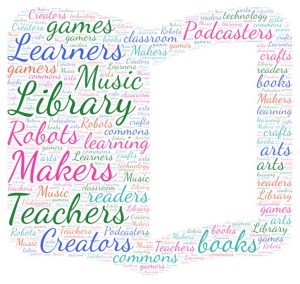
Humankind and technology will continue to evolve, yet somehow we have become entrenched in a vision of school libraries that does not meet the moment. The school library environment is long overdue for a makeover. Loertscher (2008), describes a new vision for the school library. The goal of this new vision in centered around the learning commons. He explains, “The main objective of the open commons is to showcase the school’s best teaching and learning practices.” His idea of creating a dynamic space that is physical, virtual, and is operated and used by teachers, teacher librarians, specialists, and other specialized staff is a far cry from the historical model. This model invites all members to participate, which in turn creates a dynamic synergy across all channels, versus the school library remaining in a silo, continuing to mothball.
“The middleman is vanishing as peer to peer interactions flourish. Teachers no longer stand between the content and the student” (Richardson, 2016). We need a more holistic approach when imagining our school libraries and the role they will play in our educational system. What would it look like to have school libraries that are more of a lively and active commons? What would the experience be like for our students and staff? I would hope engaging, maybe even invigorating, and above all, meaningful. Not just teaching to the test, following dry and standardized curriculum, but a more interconnected and interpersonal experience.
References:
Cord, D. J. (2018, December). Helsinki invests in its people with a library that reinvents the genre. This is Finland. https://finland.fi/life-society/helsinki-invests-in-its-people-with-a-library-that-reinvents-the-genre/
Loertscher, D. V. (2008, November 2). Flip this library: School libraries need a revolution. School Library Journal. https://www.slj.com/story/flip-this-library-school-libraries-need-a-revolution
Jenkins, H. (2013, May 7). Henry Jenkins on participatory culture: Big thinkers [Video]. Youtube https://www.youtube.com/watch?v=1gPm-c1wRsQ
Richardson, W. (2016, May 14). 16 Modern realities schools (and parents) need to accept. Now. Medium. https://medium.com/modern-learning/16-modern-realities-schools-and-parents-need-to-accept-now-64b98710e4e9
Richardson, W. (2014, July 7). Schools at the crossroads. Will Richardson. http://willrichardson.com/schools-at-the-crossroads/

 highlighting books that were currently “streaming”. We jumped on the Netflix and Amazon bandwagon, and it worked! The power of connecting to something students engage with daily should not be underestimated. Will we reverse the cell phone ban? That warrants a larger discussion with the team. How could we employ the device that is basically an appendage for most middle schoolers? That remains to be seen. I think we would have to have a structured, intentional use, which requires more nuance. This could be a #BookTok activity or maybe QR codes for activities, challenges, or games. I do know that I want this coming school year to be different for my students. In A Beautiful Obsession, Pewhairangi (2014), ends with The Philosophy of Love. The “e” in love stands for experimentation, “A willingness to experiment, free from orthodoxy and convention because this is when magic happens” (p.50). Maybe this is the year we invite the students onto our proverbial lawn with phones in hand. Let’s see what magic we can make together.