Reflection on Hyperlinked Environments

As someone who loves and adores the South, I was delighted to see that Tennessee was included as a case study for hyperlinked public libraries. Most times, Tennessee is known for the egregious policies being enacted on a population that does not reflect those making the governmental decisions. I was especially excited that Memphis was highlighted in a positive light, and that east Tennessee was represented with the Chattanooga Public Library.  As outlined in How Memphis Created the Nation’s Most Innovative Public Library, “Memphis, Tennessee is one of the poorest cities in the nation” (Grant, 2021). Poverty is many times correlated with violence or danger, especially in communities of color. The Memphis Safe Task Force, a multi-agency group of federal enforcement including the FBI and Homeland Security, was brought forth by the president roughly a year ago. Here, we see two very different ways to address a city. The federal attempt to address Memphis has been to increase policing funds to deploy the Tennessee National Guard, while the local city library system increases their budget to provide more buildings and services.  Most notably, MPL is the only public library system in the country with its own television and radio show, and it is a direct response to the “issue of youth hanging around”. Cloud 901 was created with state-of-the art equipment alongside the expertise of local artists (Grant, 2021). Memphis may have one of the highest rates of poverty, but it’s also the home of blues, jazz, rock-and-roll, and so many other music genres that are the foundation of many of the newer genres we have today. To see the birthplace of so much music and art be invested into in such an intentional way is beautiful, even more so knowing that it’s the library’s doing. It cost roughly two million to create Cloud 901, and I wonder how many more initiatives could be created with the 28 million monthly cost of the Memphis Safe Task Force (Congressional Budget Office, 2026). I dream of living in a state that addresses its systemic issues through opportunity and creativity at the governmental level.

Also investing into youth on the other side of the state in a similar way, the Chattanooga Public Library provides a “rock instrument library for ages 10-17 with guitars, drum kits, keyboards, and amps” (Chattanooga Public Library, n.d.). Lending libraries provide the unique opportunity for patrons to explore different items they may not otherwise get to. I am endlessly impressed by the ways libraries identify innovative ways to implement technology in their hyperlinked communities to further opportunities and skills. I can’t help but think of all the money spent on policing and how it could be spent on more state-of-the-art studios and instruments to lend out to youth. I am all for hyperlinked environments that use technology for the people instead of technology used against the people.
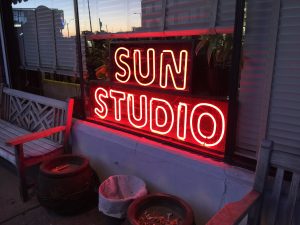
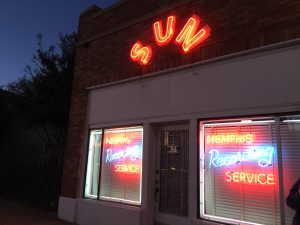
Images I took on Memphis field trip for my course Intro to Social Movements, Social Action, and Restorative Justice.

References:

Chattanooga Public Library. (n.d.). Noise closet. https://chattlibrary.org/noise-closet/

Congressional Budget Office. (2026, January 28). Estimating the costs of troop deployments to U.S. cities. https://www.cbo.gov/system/files/2026-01/61943-Troop-Deployments.pdf

Grant, R. (2021, November). How Memphis created the nation’s most innovative public library. Smithsonian Magazine.

Trump, D. J. (2025, September 15). Restoring law and order in Memphis. The White House.


Reflection on Hyperlinked Communities

I am a big fan of looking at things through the lens of community. For my information communities class, I zeroed in on the information needs of folks experiencing homelessness. I found that many people experiencing homelessness look for information regarding essential needs like food and employment. Almost equal to vital resources, folks look to meet recreational needs like catching up shows on a library computer. At the end of the day, we’re all just trying to survive and have some fun while we do it.

Looking at this module’s materials, I was most intrigued by resources provided to parents and their children. As a child who grew up spending a lot of time in laundromats, I immediately recognized the logos on the washing machines shown in the “Wash & Learn Library Pop-Up Library Program” video. I also had a visceral response to the sign on the laundromat wall emphasizing that no playing was allowed. I grew up incredibly low-income to a single, immigrant mom. For most of my life, we did not have a consistent and accessible mode of transportation. My siblings and I went everywhere with my mom, laundromat included. We spent hours upon hours at the laundromat every week without the opportunity to leave and enclosed in a tiny, enclosed space that was not play friendly. For Wash & Learn to have youth from their own community provide access to information and resources is incredibly brilliant. Not only do they understand their community best, but they are also safe and credible hyperlinks. Further, just because someone is not in the physical building of a library does not mean they could not benefit from the library’s resources. It may mean there are some barriers in place, whether it be time, awareness, etc. The youth in this program remove so many barriers and meet people where they are at. I like that this is a mutually flourishing program, youth connect and learn from one another while community members learn about resources.

As a new parent that works while in school, the initiative highlighted in the Libraries in Balance section of Wholehearted Librarianship felt like a soft balm on my tired, overworked mom head and heart. To further promote kindness in a New Zealand academic library, “student parents are allowed to bring their children because childcare is a barrier to studying” (Stephens, 2019). From New Zealand to the United States, childcare is a huge barrier. I have very limited childcare because the hourly rate is higher than my current position’s hourly rate.I currently do schoolwork only after completing a full workday followed by my child’s bedtime routine. Many times, this means I am doing schoolwork in the middle of the night, a few hours before getting up to get ready for work. If I could comfortably bring my child to a shared space and get work done, that would be a game changer. This is true for me and so many other single moms I know. So many parents want to go back to school to be able to provide more opportunities to their children, but the barriers are endless and exhausting.

To connect the Wash & Learn program and the New Zealand academic library’s kindness initiative, A Beautiful Obsession synthesizes efforts in a beautiful way. David Lankes states, “Our buildings, our books, our services, our catalogs must not be channels of assistance we provide, but part of a powerful platform that enables our communities to success” (Pewrainangi, 2014). The library community, whether in a laundromat or a physical library building, is a platform for hyperlinks connecting us to promote success. I believe that all flourishing is mutual, just like I am trying my best to provide for my nine-month-old son as a library staff member, so is the mom at the Wash & Laundromat with her one-year-old son. We are better for connecting to one another and providing essential and recreational opportunities to survive and hopefully have some fun while we do so.

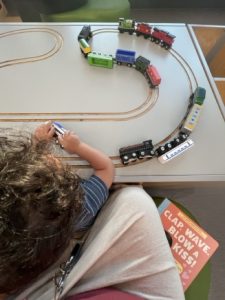
My nine-month-old son, Alex, and I in the children’s area of our local library.

References:

Bibliothèques Sans Frontières. (2017, October 11). “Wash & learn” pop-up library program in the Bronx [Video]. YouTube. https://www.youtube.com/watch?v=9HM7pQiqDZY&t=2s

Pewrainangi, S. (2014). A Beautiful Obsession.

Stephens, M. (2019). Wholehearted librarianship: Finding hope, inspiration, and balance. ALA Editions.

Assignment X: Chaotic Good, Transformative Disruption, and the Power of Stories 

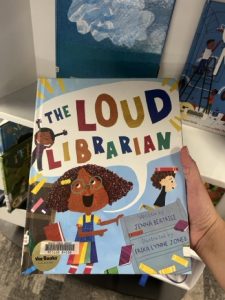
Book found on the bookmobile at an elementary school stop that I think is representative of the topic.

I was born and raised in Nashville, Tennessee. I’d like to think of Nashville like the heart of the South while also being the belly of the beast. It is where so many things are forced to confront one another: religious governing policies, systematic disinvestment of public education, prioritizing business’ profit over people, and the highest maternal mortality rate in the country. It is also where a lot of the Civil Rights Movement took place and significantly moved the country towards integration. Championed by young adults attending college in Nashville, the Civil Rights Movement developed many leaders we recognize and honor today. Among those local leaders, John Lewis is widely recognized for his rebellious, yet heart-centered approach to bettering access for all. 

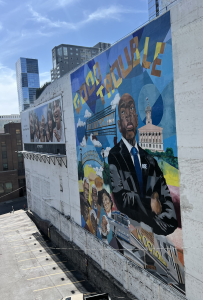
I currently work at the main Nashville Public Library located downtown. One of the many streets between the staff parking garage and the library building was recently renamed “Rep. John Lewis Way S”. Every day, on my morning trek from the parking garage over to the library, I get to see a vibrant mural of John Lewis alongside other activists. It notes a part of the phrase Lewis is known for “Get in good trouble, necessary trouble, and help redeem the soul of America” (Lewis, 2020) 

Image of John Lewis Mural located downtown Nashville  

Over and over, Professor Stephens emphasizes that the Hyperlinked Library is about the heart. In his book, The Heart of Librarianship, the chapter on embracing chaos is a call to “try out a new thing without regard to the way ‘it’s always been done’” (Stephens, 2016). When I think of heart accompanied by some level of chaos, I think of John Lewis’ work, story, and legacy of “good trouble”.  

Although the Civil Rights Movement and library services are very distinct, they are also similar in many ways. The Civil Rights Movement focused on access; the access of people of color to spaces, whether that be physical or more systemic. And to be frank, libraries themselves were segregated not too long ago. Today, library services are still seeking access to spaces for connection through many ways including evolving technology. As noted in “Think Like a Startup”, “what we really need right now are breakthrough, paradigm-shifting, transformative and disruptive ideas” (Matthews, 2012). I can think of a few examples in alignment with this framework at each of the library systems I have worked at. 

Before working at the Nashville Public Library, I worked at the Denver Public Library and had the privilege to work with their Plaza program. Plaza translates to “an open meeting space” in Spanish and that is exactly what it is. Based on community needs, the program takes place at several branches throughout the entire system, multiple times a week. Plaza provides English classes, citizenship preparation, and resource navigation.  They provide laptops and hotspots for people to take home and continue learning English at home free of cost, using their library card’ s access to a language learning platform. Plaza is chaos and like nothing I have ever seen in any other library system. It is loud, celebratory, and representative of what connection can look like with people from all over the world. Most participants are immigrants, refugees, or asylees that eventually became paid staff members that teach newcomers. It is also a program that receives a lot of pushback from branch staff for how “disruptive” the program can seem. Plaza challenges the notion of a quiet, isolated library experience. It is learning through storytelling and connecting to vital resources in a shared, hands-on, and accessible environment. I considered it the heart of the Denver Public Library, as did many other Plaza staff members and participants.  

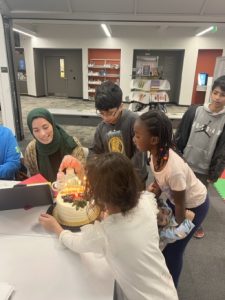
Image of our Plaza celebrating a patron’s birthday for the first time in the U.S. after setting her up with her own laptop and hotspot to take home. 

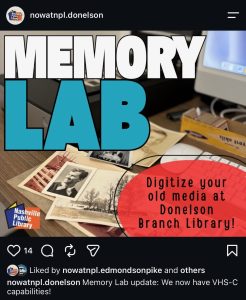
The Nashville Public Library recently started a Memory Lab, helping families preserve physical materials in a digital format. Our library director, Terri Luke, introduced it as “more than technology- it’s a creative space where anyone can reconnect with their historyand all of the stories, memories, and history will be given new life” (Leyva, 2026). . The service launched in March of this year and was immediately popular. The demand was much higher than the library could supply. Staff took it upon themselves to seek community support through unused technology for further expansion to provide more access to patrons.  

Instagram post from the Nashville Public Library Donelson Branch about the Memory Lab 

Tying the concept of “good trouble” from the Civil Rights Movement to the Hyperlinked Library’s encouragement of transformative, and at times chaotic, change alongside the power of stories, I hope to be a librarian that listens to other’s experiences and readily accepts change as needed to propel us forward and provide more opportunities to continuously learn and connect. 

References 

Lewis, J. (2020, July 30). Together, you can redeem the soul of our nation. The New York Times. https://www.nytimes.com/2020/07/30/opinion/john-lewis-civil-rights-america.html 

Leyva, D. (2026, March 18). Nashville Public Library launches Memory Lab. https://www.tennessean.com/story/news/local/davidson/2026/03/18/nashville-library-digitize-old-photos-vhs-tapes-slides/89207874007/ 

Matthews, B. (2012, April). Think Like a Startup. Facing the Future. https://vtechworks.lib.vt.edu/server/api/core/bitstreams/77d2cb98-ddab-4543-9e47-b011819231b3/content 

Stephens, M. (2016). The heart of librarianship. ALA Editions. 

Introduction

Hello everyone, my name is Gabby and I am currently in my last year of the MLIS program. I have been in the program for over two years now, and have worked in libraries for the past five years. I began as a library associate at the Denver Public Library and now I do similar work at the Nashville Public Library. Before working in libraries, I was a middle school special education teacher and decided to pivot when I saw a lot of systemic inequity impacting the literacy rates of my students.

I love libraries for many reasons, but I would say the access, dignity, and creativity that libraries nurture are what I connect to the most. I was drawn to this course because of its centering on evolving services that lead with the heart. I am really excited to wrap up the program with a course that is reflective in an intentional way while also learning alongside others.

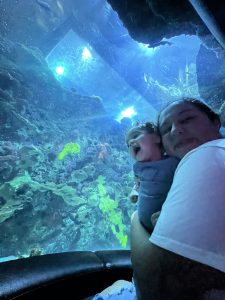
Here is a picture of me and my tiny baby I had last semester! He loves water and fish, and was probably a mermaid in his past life. Although he keeps me on my toes and incredibly tired, having a baby has made me see life and libraries in a new way. I get to experience the world from the perspective of someone that is seeing everything for the first time, and it makes me so excited to embrace his wonder, and ultimately the wonder of everyone who enters our evolving library spaces.