New Horizons Past & Future
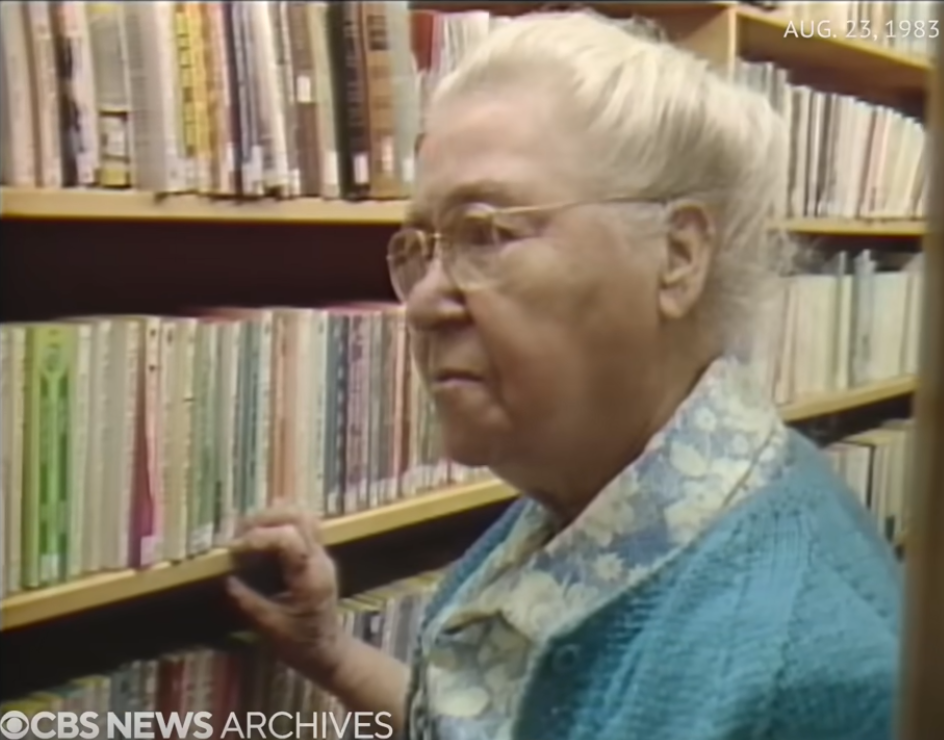
The life blood of libraries is their communities. How does this play into the concept of trends? While not impossible to predict, trends are subject to quick changes, quick fails, and most importantly, new trends. Looking at constants- the consistent elements- of a particular pattern can also be relevant and revealing. After watching the 2022 video Beyond books: The 21st century public library (a video included in module 9’s, “Things to Watch”) I was algorithm’d to a wonderful 1983 Charles Kuralt interview of Frances O’Brien, a teacher who started her own library in 1928, from her front porch, to provide books for her students. This led to her expanding her book collection and creating a community library open 24/7 for the Blue River, Oregon community: She wanted everyone to read, so she opened a library that never closes (1983). It’s a gem of a story and I hope you watch. The O’Brien Memorial Library continues to this day.
What struck me about these two videos, separated by over 40 years, is how much they have in common. While the ways libraries serve their communities have clearly changed, their underlying purpose has not. Both videos demonstrate that libraries represent accessibility, opportunity, learning, and connecting people with resources they might not otherwise have.
Innovative is not a new concept. Frances O’Brien was rethinking what a library could be just as much as today’s librarians are. Neither example is about simply providing more books or newer technology; both are about recognizing a need in the community and finding a creative way to address it. I remember a time while growing up, that to be called, “trendy,” was basically saying, “you are the status quo and don’t have a mind of your own.” In a weird way I think that feeling has slightly stuck with me. I’m a bit leery of what is deemed a “new trend,” not because I’m not interested in emerging technologies, or that I’m a luddite, or that I have held on too tightly to my 15-year-old self. I guess I want to dig through to find the why of it; to understand the motivation and the intention behind the trend. What is the long-term impact? What about the short-term? It’s interesting because, yet again, we come back to people and community- to ideas that shape us individually and collectively- ultimately influencing and connecting us together; trends don’t exist without our shared energies! And this is where I start entering my existential train of thought. All aboard!
Ok, back to libraries! Thankfully, libraries appear to be willing to evolve without losing sight of why they exist in the first place. Technology, programming, and library spaces will continue to morph to accommodate new ideas, but the commitment to accessibility, learning, and community is at the core. Innovation can result in introducing something entirely new, but it also can mean looking at an old idea and finding a new and creative way to interpret it. Miguel Figueroa, former director of the ALA Center for the Future of Libraries and interviewed for the “Beyond Books” video, speaks to innovations emerging in libraries: “We don’t know what that next thing might be.” Looking at libraries across different decades makes this concept clear; technology, services, and spaces may look very different, but the basic idea remains consistent: libraries respond to what their communities need. We may not know exactly what the next big trend will be, but libraries have shown again and again that they can adapt, experiment, and grow while still remaining a place for people to learn, share, and belong.
This is a nice link about Trends | Center for the Future of Libraries
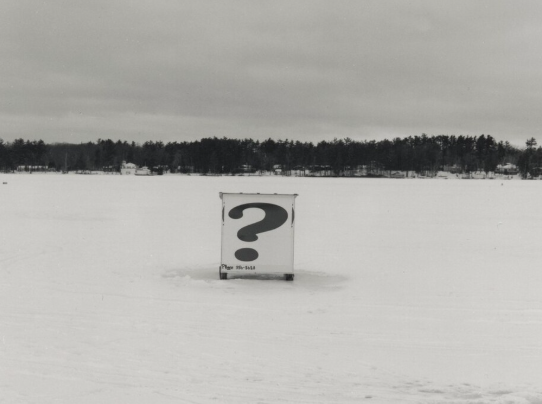
Photo: Minocqua, Wisconsin by Lewis Koch Copyright free image from National Gallery of Art



3 Comments
Michael Stephens
@collectingtjp This: “Technology, programming, and library spaces will continue to morph to accommodate new ideas, but the commitment to accessibility, learning, and community is at the core.” So good!
I’m so glad you included Francis O’Brien in this reflection.
Tara
@michael I had never heard of Ms. O’Brien before writing this post- what an amazing person!
Michael Stephens
@collectingtjp oh yes. I remember seeing her when I added that resource to the course, but it was nice to be reminded of her story.