Reflection Blog: The Power of Stories
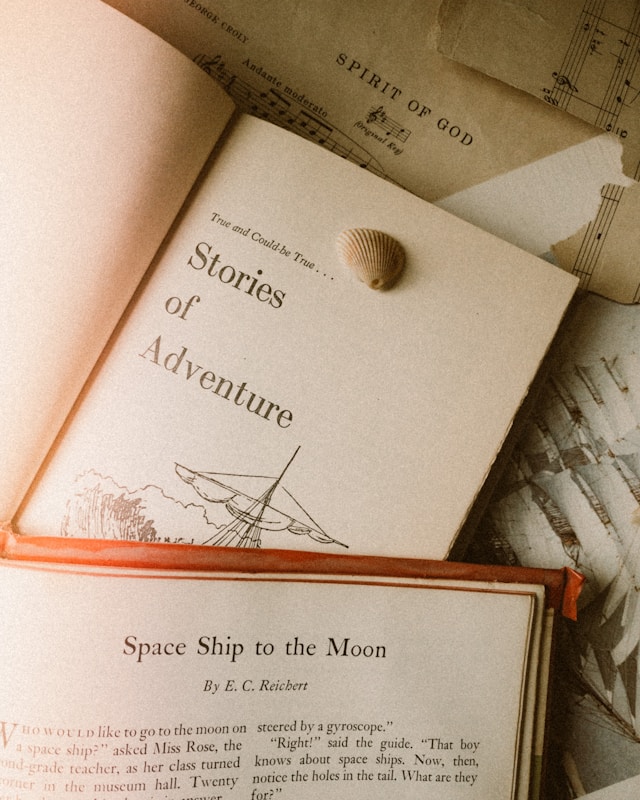
There is nothing more human than allowing someone to share their story. Libraries are often thought of as places where stories are preserved. Yet stories do not exist only on shelves—they also live within the people who create and share them. We develop stories as we go through life. Stories are an internal resource, and libraries can do a lot to tap into the power that they hold. As exemplified through the module “The Power of Stories,” libraries are finding creative ways to bring diverse forms of storytelling into the institution, especially oral storytelling.
Oral storytelling has been around for as long as human language. Different cultures around the world use storytelling as a way to transfer information, preserve traditions, and build relationships. Stories also have a way of building connections among strangers. Rudine Sims Bishop (1990), though referring to physical books, coined the metaphor “windows, mirrors, and sliding glass doors.” She proposed that stories can serve as windows into different worldviews and that they have the potential of becoming immersive experiences that individuals can “step” into, as if passing through a sliding glass door. Further, if conditions are just right, books can act as a mirror and reflect the reader’s own lived experiences. The metaphor applies to oral storytelling.
I have heard of human libraries prior to starting this class, but had not delved into the concept until now. There are online spaces that have a similar goal (such as the Ask Me Anything forum on Reddit), but there are very few physical places that I am aware of that function in the same way. Face-to-face interaction with the living books you check out offers a richer experience than what the online sphere can currently give. Non-verbal body language and paraverbal communication are more legible when meeting someone in-person. Also, as Wentz (2013) pointed out, the exchange of ideas impacts the living book as much as it does the person who decided to hear their story.
Libraries can be platforms for community members to become storytellers. Through intentional programming and services, library staff can foster genuine connections between patrons and encourage the exchange of ideas. This module has given me a lot of material to mull over as I consider what programming for my library location may look like
References
Bishop, R.S. (1990). Mirrors, windows, and sliding glass doors. Perspectives: Choosing and using books for the classroom, 6(3), ix–xi. https://scenicregional.org/wp-content/uploads/2017/08/Mirrors-Windows-and-Sliding-Glass-Doors.pdf
Wentz, E. (2013). The human library: sharing the community with itself. Public Libraries Online. https://publiclibrariesonline.org/2013/04/human_librar/



One Comment
Iris
Hi Ina,
Though it’s been around for awhile, I first heard about StoryCorp in Module 10. I love that libraries are bringing in storytelling this way; it’s a wonderful way for people to find common ground and connection. Thanks for the reminder about Reddit’s AMA. I had forgotten about it and will need to check it out again. =)
Iris